
You meticulously water, carefully fertilize, and dedicate time to all the recommended lawn care practices, yet your grass still appears lackluster, failing to respond with the vibrant green vitality you expect. This common frustration can often lead homeowners to question their methods, but the solution might be surprisingly simple: lime.
Understanding Lime: The Foundation of a Healthy Lawn
Lime, in the context of lawn care, is not the citrus fruit. Instead, it refers to an inert mineral derived from crushed limestone. Its primary components are calcium carbonate, and in some forms, magnesium carbonate. These two essential nutrients are absolutely critical for robust and healthy turf growth. Mined directly from the earth as raw limestone, it undergoes processing to create a fine powder or, more commonly for home use, a granulated or pelletized form that is easy to apply as a crucial soil amendment.
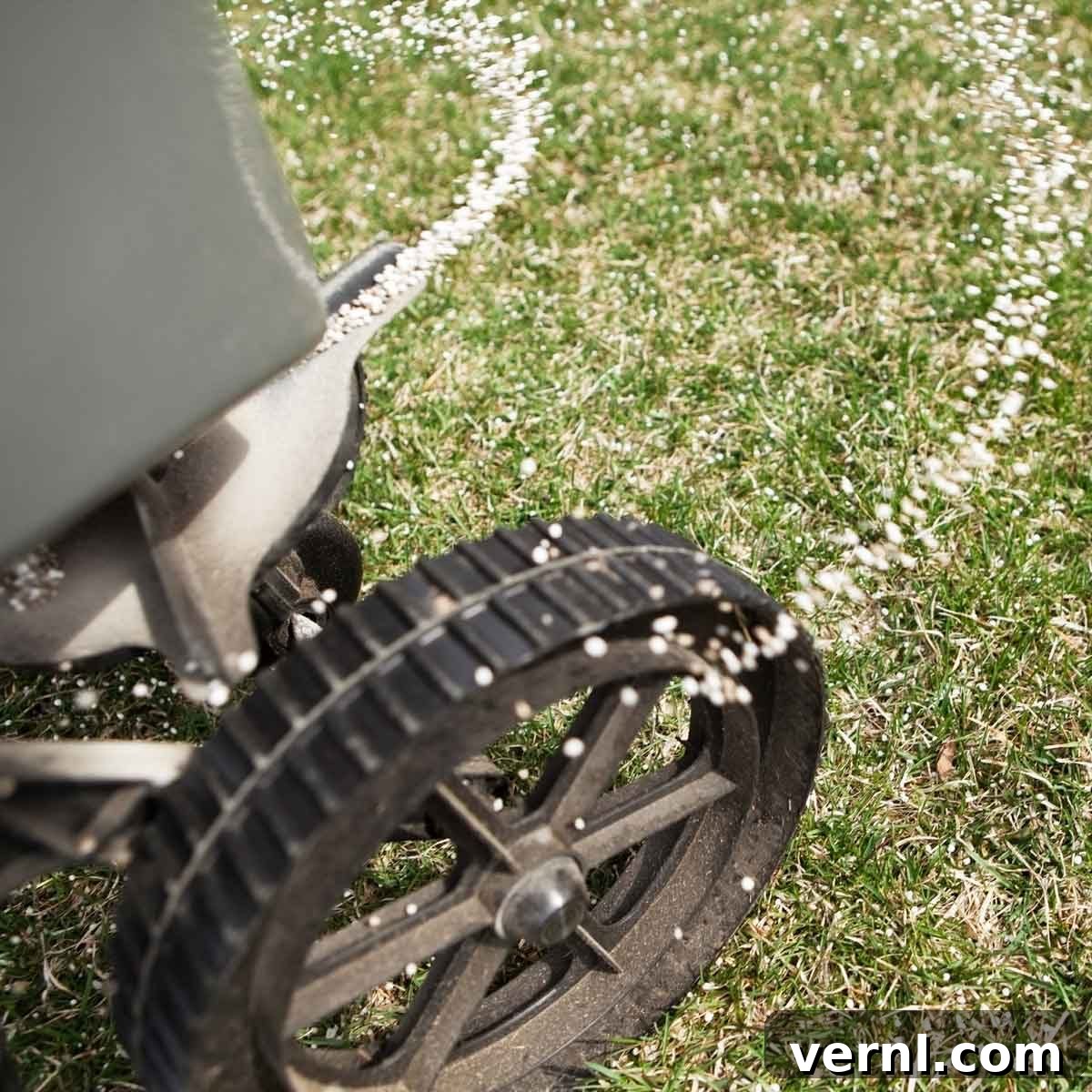
While traditional powdered lime can be quite dusty and challenging to spread evenly, modern pelletized lime offers a significant advantage. Its granular consistency resembles that of a typical fertilizer, making it far simpler to handle and distribute across your lawn using a standard broadcast spreader. This ease of application ensures more consistent coverage and reduces mess.
When it comes to safety, lime is generally considered low-hazard. It has little to no discernible odor, and when applied according to label instructions, it poses minimal risk. However, it’s always prudent to take basic precautions. The fine dust from lime can sometimes cause irritation to bare skin or airways. Therefore, wearing gloves, safety glasses, and a dust mask during application is highly recommended. Furthermore, it’s crucial to water the lime into your lawn thoroughly before allowing children or pets to play on the treated area. A quarter to half an inch of rain or water from your sprinkler system will help integrate the lime into the soil and minimize surface contact.
The Critical Role of Soil pH
Beyond supplying vital calcium and magnesium, lime’s most significant contribution to lawn health is its ability to raise the pH level of your soil. Soil pH is a fundamental measure of its acidity or alkalinity, expressed on a scale from 0 to 14. A pH reading below 7.0 indicates acidic soil, while a reading above 7.0 signifies alkaline soil. A pH of exactly 7.0 is considered neutral.
For most turfgrass varieties commonly found in home lawns, the optimal pH range for nutrient availability and vigorous growth is between 6.0 and 7.0. This slightly acidic to neutral range is where essential macro and micronutrients, such as nitrogen, phosphorus, potassium, iron, and manganese, are most soluble and readily available for absorption by grass roots. When the soil pH deviates significantly from this preferred range, especially when it becomes too acidic (below 6.0), a phenomenon known as “nutrient lockout” can occur. In this scenario, even if your soil contains ample nutrients, the extreme pH levels can bind them up, making them inaccessible to your grass. This often explains why your lawn might appear pale, patchy, or stunted, even after you’ve diligently applied fertilizer. The nutrients are there, but the grass simply can’t utilize them.
Does Your Lawn Really Need Lime? The Importance of a Soil Test
It’s a common misconception that all lawns benefit from lime. In reality, applying lime when your lawn doesn’t need it is not only a waste of money and your valuable time but can also be detrimental, potentially raising the pH too high and leading to its own set of nutrient availability problems. The only definitive way to determine if your lawn requires lime is by conducting a soil test.
Soil tests are readily available. You can purchase DIY kits from garden centers, or for more comprehensive and accurate results, send a soil sample to a university extension service or a professional lawn care laboratory. These tests provide detailed insights into your soil’s composition, including its current pH level, nutrient deficiencies, and often, a specific recommendation for how much lime (if any) is needed to bring the pH into the optimal range. If your soil test reveals a pH below 6.0, an application of lime is likely beneficial. The ultimate goal of liming is to gently raise and stabilize that soil pH within the ideal 6.0 to 7.0 window, creating the perfect environment for your grass to thrive.
Beyond pH: The Microscopic World Beneath Your Turf
Maintaining your lawn’s pH within this optimum range does more than just ensure efficient nutrient uptake. It also profoundly impacts the microbial ecosystem beneath your feet. Healthy soil is a bustling metropolis of beneficial microorganisms, including countless species of bacteria, fungi, and other tiny organisms. These invisible allies play an indispensable role in soil fertility and overall turf health. They are responsible for breaking down thatch, decomposing organic matter, and converting complex fertilizer compounds into forms that grass roots can readily absorb.
For instance, nitrogen-fixing bacteria convert atmospheric nitrogen into plant-usable forms, while various fungi help decompose tough organic materials. When soil pH is balanced, these microbial populations flourish, creating a dynamic and active soil environment. This vibrant microbial activity essentially “turbo-charges” your soil, making your fertilization efforts more effective and promoting a self-sustaining, resilient lawn. Conversely, highly acidic soils can suppress these beneficial microbes, leading to slower decomposition, nutrient cycling issues, and a less vigorous lawn.
Key Indicators: Signs Your Lawn May Need Liming
While a soil test is the most accurate method, your lawn itself might display certain visual cues indicating it’s struggling with acidic soil and could benefit from a lime application. Look for these common signs:
- Subdued Fertilizer Response: You’ve applied your regular fertilizer, expecting a noticeable boost in color and growth, but your lawn remains dull, pale green, or simply doesn’t show the vibrant response it should. This is a classic sign of nutrient lockout, where the acidic pH prevents the grass from absorbing the nutrients you’re providing.
- Proliferation of Acid-Loving Weeds: Certain weeds are highly tolerant of, and often thrive in, acidic soil conditions that stress desirable turfgrass. The presence of weeds like plantain, knotweed, sheep sorrel, red sorrel, and even dandelions in abundance can be a strong indicator of low soil pH. These resilient plants have adapted to conditions that are unfavorable for most turfgrasses, giving them a competitive advantage.
- Moss Invasion: If you notice moss growing in patches throughout your lawn, especially in shady or damp areas, it’s a significant red flag. While moss can also be indicative of poor drainage or excessive shade, it is very often a tell-tale sign of highly acidic soil. Moss prefers the low pH environments that deter healthy grass growth, effectively outcompeting the turf and forming dense, unwelcome mats.
The How and When: Applying Lime for Optimal Results
Timing and proper application are crucial for maximizing the effectiveness of liming your lawn. Generally, throughout most regions of the U.S. and Canada, the best times to apply lime are in the spring or fall. These periods offer ideal conditions for the lime to integrate into the soil without causing stress to the grass during peak growth or drought.
In northern climates, applying lime in October or November, before the ground freezes solid, allows autumn rains to begin working the lime particles into the soil profile. The subsequent snowmelt and the natural freeze/thaw cycles of winter and early spring further assist in breaking down the lime and distributing it evenly, ensuring it’s well-incorporated by the time spring growth begins. Spring applications, typically in March or April, are also effective, allowing the lime to start working as the soil warms and grass begins its active growing season.
Determining the Correct Application Rate
Your comprehensive soil test report will almost certainly include a specific recommendation for the amount of lime to apply, tailored to your lawn’s unique pH value and soil type. This is crucial because the “lime requirement” varies significantly. Soils that are only slightly acidic might require a relatively modest application, such as 25 to 50 pounds per 1,000 square feet annually. However, severely acidic soils may need substantially more. It’s often recommended to split heavier applications into two treatments: one in the spring and another in the fall. This approach prevents overwhelming the soil with too much product at once, reduces the risk of run-off, and allows for a more gradual, sustained pH adjustment.
Always adhere closely to the recommendations provided by your soil test, as over-liming can elevate the pH too high, leading to its own set of nutrient deficiencies.
Choosing and Applying the Right Lime Product
When purchasing lime, consider investing a little more in pelletized dolomitic lime. While “cheap stuff” in powder form might seem appealing due to a lower upfront cost, it’s often messier, harder to spread evenly, and can create more dust. Pelletized lime, on the other hand, is engineered for ease of use. Its uniform granules flow smoothly through a broadcast spreader, ensuring consistent coverage without clumping. Dolomitic lime specifically offers the added benefit of supplying both calcium and magnesium, addressing potential deficiencies in both crucial nutrients while simultaneously working to raise your soil’s pH.
To apply, fill your broadcast spreader according to the manufacturer’s instructions and the recommended application rate from your soil test. Walk at a steady, even pace, ensuring overlapping passes to avoid streaking or uneven distribution. For very large areas, it can be helpful to divide your lime into sections and apply a measured amount to each section to guarantee proper coverage. After application, remember to thoroughly water the lawn to help the lime dissolve and begin its work of balancing your soil’s pH and fostering a lusher, healthier turf.