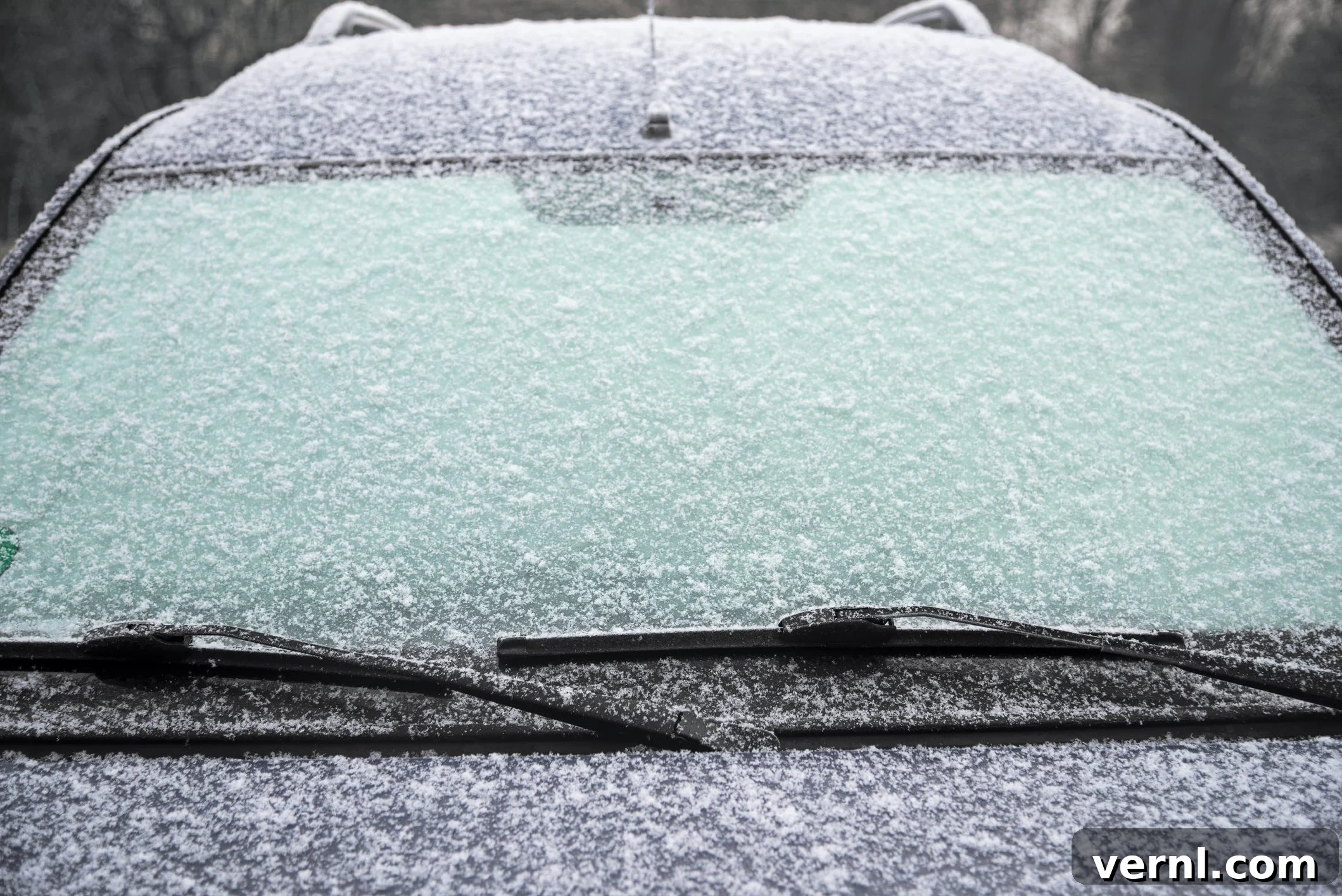
There’s nothing quite like the unwelcome surprise of a stubbornly iced-over windshield on a freezing winter morning. The thought of shivering in the cold, endlessly scraping away layers of ice, is enough to make anyone dread their morning commute. But what if there was a quicker, easier, and even more satisfying way to banish that icy grip? Imagine stepping out to your car, a simple spray bottle in hand, and watching the ice melt away with minimal effort. This isn’t a fantasy; it’s the reality offered by effective DIY ice melting sprays.
In this comprehensive guide, we’ll dive deep into the world of homemade de-icers. We’ve tapped into the expertise of two industry professionals who shared their tried-and-tested recipes. I personally put these solutions to the test, comparing their efficacy against each other and even against the common (but ultimately flawed) warm water method. Get ready to discover simple, safe, and surprisingly powerful solutions that will transform your winter mornings from frustrating battles with ice into quick, hassle-free departures.
Understanding the Science: How Ice Melting Sprays Work Their Magic
At its core, an ice melting spray works on a fundamental scientific principle known as freezing point depression. Water freezes at 32°F (0°C). When you introduce certain substances, like alcohol, vinegar, or salt, into water, they interfere with the water molecules’ ability to form a stable crystalline structure, which is ice. This interference effectively lowers the freezing point of the solution.
When you spray this specialized mixture onto an icy surface, the solution makes contact with the frozen water. Because the spray has a lower freezing point than the ice itself, it actively works to melt the existing ice even when the ambient temperature is below 32°F. The dissolved substance prevents the melted water from immediately refreezing at the previous temperature, allowing you enough time to wipe away the slush and achieve a clear view.
However, it’s crucial to understand that not all de-icers are created equal, and their effectiveness is directly tied to the ambient temperature. As environmental sustainability expert Gavon Barkdull explains, “Applying the solution is straightforward — simply spray it onto the icy surface and wait a few moments before wiping or scraping the ice away.” But he also cautions that if the temperature drops below the new, lowered freezing point of your specific ice melt solution, the spray might still melt the ice initially, but then rapidly refreeze, potentially creating an even worse problem. This is why selecting the right DIY de-icer for your local winter conditions is key to success.
My own experiments highlighted this point perfectly. I tested both expert recipes on iced-over glass, and for comparison, I also tried a simple spray of warm water. As anticipated, the warm water melted the ice instantly. However, before I could even grab a cloth, the melted water began to refreeze, turning into a new, thin sheet of ice. This demonstrated the critical advantage of specialized ice melting sprays: they don’t just melt; they prevent immediate refreezing, giving you the time you need to clear your windshield completely.
Meet Our De-Icing Experts
The insights and recipes in this guide come from two distinct but equally valuable perspectives, ensuring we cover both high-performance and environmentally conscious solutions for ice removal.
- Al Lijee founded myWindshield in 2014, driven by a vision to revolutionize the U.S. auto glass industry. With over a decade of firsthand experience in auto glass, Al brings a wealth of practical knowledge to the table. His company has since grown into a trusted network of more than 300 top-tier auto glass shops and mobile glaziers nationwide. Al’s recipe is born from years of dealing with icy vehicles and finding practical, effective solutions that are safe for vehicle surfaces.
- Gavon Barkdull is the co-founder and CEO of Zestain, an innovative resource hub dedicated to promoting sustainability and zero-waste practices for companies and products. Zestain’s mission extends beyond business, aiming to inspire a global community towards a greener, more responsible future. Gavon’s expertise focuses on solutions that are not only effective but also harmless to the environment, pets, and children, making his recipe ideal for those seeking an eco-conscious approach to winter car care.
DIY Low-Temperature Ice Removal Spray: The Isopropyl Alcohol Solution
When temperatures plummet and ice clings stubbornly, you need a robust solution that won’t let you down. Al Lijee’s recipe offers just that – a powerful, fast-acting de-icer designed to tackle even extreme cold. This homemade mixture leverages the potent freezing point depression properties of isopropyl alcohol, making it an indispensable tool for harsh winter conditions.
Ingredients for Your High-Performance De-Icer
- Tap water: Easily accessible and forms the base of your solution.
- Isopropyl alcohol (70% or higher): This is the star ingredient. While 70% isopropyl alcohol is generally the most affordable and readily available option, higher concentrations (like 91% or 99%) are also perfectly suitable and can even slightly enhance performance. Ensure it’s plain isopropyl alcohol, as dyes or scents found in some rubbing alcohols are unnecessary and could potentially leave residue.
- Empty spray bottle: A durable spray bottle with a fine mist setting will ensure even application and efficient use of your de-icer.
Simple Instructions for Mixing
- Achieving the right balance is key: Mix one part water to two parts isopropyl alcohol. For example, if you use one cup of water, you’ll add two cups of isopropyl alcohol.
- Once mixed, simply store the solution in your spray bottle. Shake gently before each use to ensure the ingredients are well combined.
“Mixing and using this solution is straightforward and requires no special tools or complex procedures,” notes Lijee. He emphasizes its gentleness, stating, “Unlike some commercial deicers that can contain harsh chemicals, this homemade spray is gentle on car surfaces and doesn’t pose a risk of damaging your glass or paint.” This assurance is invaluable, as protecting your vehicle’s finish is just as important as clearing the ice.
The effectiveness of this solution stems from isopropyl alcohol’s extremely low freezing point—around minus 80 degrees Fahrenheit (-62°C) for a 70% concentration. While diluting it with water raises this temperature, Al Lijee confirms that this specific 1:2 ratio has proven effective in his extensive experience, even in frigid conditions as low as minus 20 degrees Fahrenheit (-29°C). My own rigorous testing of this recipe yielded excellent results: it efficiently cleared ice from the test glass, leaving behind a perfectly clear surface with no immediate refreezing, solidifying its place as a top-tier solution for severe winter weather.
DIY Eco-Friendly Ice Removal Spray: The Vinegar Solution
For those who prioritize environmental consciousness and household safety, Gavon Barkdull offers an ingenious alternative. His recipe replaces the alcohol with common household vinegar, creating an ice melting spray that is both effective and incredibly benign. This blend is biodegradable, non-toxic, and completely safe for pets, children, and the environment, making it an ideal choice for the eco-aware motorist.
Ingredients for Your Gentle De-Icer
- Water: The universal solvent and base for this environmentally friendly mixture.
- White cleaning vinegar: The active ingredient in this solution. White vinegar, specifically cleaning vinegar (which often has a slightly higher acidity), is preferred due to its purity and lack of particulates that might clog your spray nozzle.
- Empty spray bottle: A reliable spray bottle will ensure easy and consistent application.
Simple Instructions for Mixing
- The ratio for this blend is similar to the alcohol-based one: Mix one part water to two parts vinegar. For instance, if you use half a cup of water, you’ll combine it with one cup of white cleaning vinegar.
- Once thoroughly mixed, transfer the solution into your spray bottle for convenient storage and use.
Barkdull highlights that this vinegar-based recipe performs optimally in temperatures just below freezing, typically ranging from 20 to 32 degrees Fahrenheit (-6 to 0 degrees Celsius). My own tests corroborated this, showing that the solution effectively removed ice from the test glass without any immediate refreezing in moderately cold conditions. However, it’s important to note its limitations: in genuinely frigid winter weather, significantly below freezing, the vinegar solution may not melt the ice at all, or it might struggle to do so efficiently. In such cases, you’ll need to be quick in cleaning off the melted ice to prevent it from refreezing.
When preparing this specific mixture, I consciously opted for white cleaning vinegar over apple cider vinegar. While apple cider vinegar shares similar de-icing properties, it often contains sediment and debris that, over time, could potentially clog the fine nozzle of a spray bottle, hindering its performance and requiring more frequent cleaning or replacement of the bottle. White cleaning vinegar offers a clear, consistent solution, ensuring hassle-free application throughout the winter season.
Optimal Storage and Longevity Tips for Your Homemade Ice Removal Sprays
Proper storage is essential to maintain the effectiveness and readiness of your DIY ice removal sprays, ensuring they’re always available when you need them most. The storage recommendations vary slightly depending on the type of de-icer you’ve prepared, primarily due to their differing freezing points.
For the isopropyl alcohol mixture, you can confidently store it directly in your car. The high alcohol content significantly lowers its freezing point, making it highly unlikely to freeze even in extremely cold conditions. This means it will be immediately accessible and ready for use right when you trudge out to your vehicle on a frosty morning – a major convenience factor that can save you precious minutes and frustration.
Conversely, if you’ve prepared the vinegar mixture, it’s advisable to store it indoors, ideally in a garage or utility room where temperatures remain above freezing. The freezing point of the vinegar solution is much closer to 32 degrees Fahrenheit (0°C). Leaving it in your car overnight when temperatures dip significantly below freezing could easily result in the spray bottle freezing solid, rendering it useless until it thaws and potentially damaging the bottle itself.
Regardless of which homemade de-icer you choose to create, ensuring your spray bottle has a good, tight seal is paramount. A well-sealed bottle will prevent evaporation of the active ingredients (especially alcohol), maintain the solution’s concentration, and significantly extend its shelf life. With proper storage, both the isopropyl alcohol and vinegar de-icers can remain effective and ready for use throughout the entire winter season, offering reliable performance whenever ice strikes.
Beyond Sprays: Complementary Ice Removal Strategies and Prevention Tips
While homemade de-icing sprays are incredibly effective, combining them with other smart strategies can make your winter mornings even smoother. Here are some additional tricks and preventative measures to consider:
- Salt Water Mixtures: A mixture of salt and water can indeed lower the freezing point of water, making it a viable option in a pinch, especially in milder freezing temperatures (down to about minus 5 degrees Fahrenheit / -20°C). However, salt isn’t as effective at depressing the freezing point as isopropyl alcohol, and it comes with a significant drawback: salt can be corrosive to your car’s paint, clear coat, and undercarriage over time. If you use a salt water solution, ensure you rinse your car thoroughly once the weather warms up to prevent long-term damage.
- Pickle Juice: Believe it or not, pickle juice is a surprisingly effective de-icer! The high salt content from the pickling brine essentially makes it a pre-mixed salt water solution. It offers the same benefits (lowering freezing point) and drawbacks (potential for corrosion) as a DIY salt water mixture, but it’s a quirky, ready-made alternative if you happen to have some on hand.
- Strategic Parking (East-Facing): This simple trick leverages the power of nature. If your schedule permits and it’s a sunny day, try to park your car with its windshield facing east. As the sun rises, its rays will directly hit your windshield, helping to melt away ice and frost naturally. While it won’t work for early risers driving before dawn or on consistently cloudy days, it’s a passive, energy-free method that can significantly reduce the amount of scraping or spraying you need to do.
- Windshield Covers or Cardboard: The simplest prevention is often the best. Covering your windshield with a dedicated car cover, a large towel, or even a piece of cardboard secured under your wipers can prevent frost and ice from forming in the first place. This creates a barrier between the cold air and your glass, keeping it clear overnight.
- Essential Winter Car Kit: Always keep a high-quality ice scraper and a sturdy snow brush in your car. Even with the best de-icer spray, a scraper might be needed for thicker ice, and a brush is indispensable for clearing snow from your entire vehicle, including the roof and lights.
- Avoid Harmful Methods: Never use boiling water on your windshield. The sudden extreme temperature change can cause the glass to crack or shatter. Similarly, using credit cards or other hard objects to scrape ice can scratch the glass or damage the object itself. Stick to safe, proven methods.
Embrace a Clearer Winter Ahead
Navigating winter weather doesn’t have to be a constant battle against stubborn ice. By arming yourself with the knowledge and simple recipes shared in this guide, you can transform your frosty mornings from frustrating chores into quick, effortless tasks. Whether you opt for Al Lijee’s high-performance isopropyl alcohol spray for extreme cold or Gavon Barkdull’s eco-friendly vinegar solution for milder freezes, you now have effective, expert-backed tools at your disposal.
These DIY de-icers offer more than just convenience; they provide a cost-effective, safe, and often more environmentally conscious alternative to many commercial products. Remember to choose the right solution for your specific temperature conditions, store your mixtures appropriately, and consider incorporating complementary prevention strategies to maximize your winter readiness. Say goodbye to endless scraping and hello to clear visibility and stress-free winter commutes. Stay warm, stay safe, and enjoy a perfectly clear view all season long!