
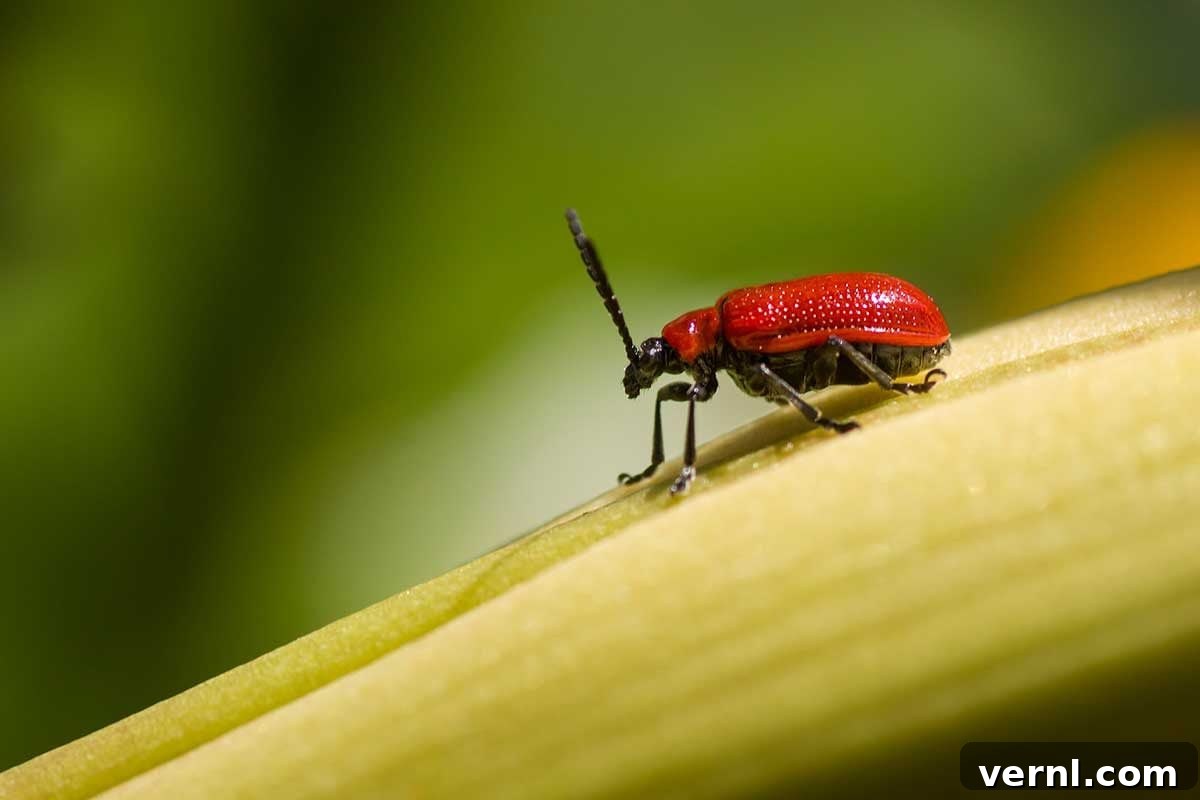
Leaf beetles, members of the expansive Chrysomelidae family, represent one of the most diverse and widespread groups within the insect kingdom. Their sheer numbers and incredible variety are truly astounding. With at least 35,000 known species globally, and approximately 2,000 species inhabiting North America alone, these fascinating insects display a remarkable spectrum of appearances. They range from iridescent green and gold to striking red striped or yellow striped patterns, captivating observers with their vibrant hues. Their forms are equally varied, encompassing everything from familiar plump and rounded shapes to bizarre, alien-like structures that are as intriguing as they are unique. While their beauty and diversity are undeniable, leaf beetles can also pose a significant threat. Unchecked populations can inflict considerable damage on both ornamental landscapes and crucial vegetable gardens, impacting plant health and yield.
For gardeners and plant enthusiasts, understanding leaf beetles is crucial for maintaining a thriving green space. This comprehensive guide will delve into what leaf beetles are, the common types you might encounter, the specific ways they can harm your plants, how to identify their presence, and most importantly, effective strategies for their removal and long-term prevention.
What Are Leaf Beetles?
Leaf beetles belong to the scientific family Chrysomelidae, a name derived from Greek words meaning “golden beetle,” aptly describing the metallic sheen of many species. This family is one of the most widely dispersed and successful among all beetles, which itself is a testament to their adaptability, considering beetles constitute the largest animal group on Earth. These resilient insects are found in nearly every terrestrial habitat across the globe, from temperate forests to arid deserts, demonstrating their capacity to thrive in diverse ecological niches.
As their common name explicitly suggests, leaf beetles primarily feed on the leaves, stems, roots, flowers, and fruits of plants and various food crops. This herbivorous diet places them in direct conflict with human agricultural interests and gardening efforts. Their size can vary significantly, with species ranging from a tiny less than 1/16-inch to a more substantial 3/4-inch in length. Despite their varied sizes, all species of adult leaf beetles possess the ability to fly, a trait that greatly facilitates their dispersal across vast habitats and allows them to quickly locate new food sources. They are capable of inhabiting a wide range of climates, though particularly harsh or prolonged winter freezes can significantly reduce or even decimate local populations, acting as a natural control mechanism.
The life cycle of a leaf beetle typically involves four stages: egg, larva, pupa, and adult. Eggs are often laid on the underside of leaves or in the soil, depending on the species. The larval stage is often the most destructive, as larvae are voracious feeders, sometimes causing more significant damage than the adult beetles. Larvae can be grub-like, caterpillar-like, or even spiny, and they feed on roots, stems, or leaves, developing rapidly before pupating. The pupal stage is generally inactive, occurring in the soil or on the host plant, eventually emerging as the adult beetle ready to mate and continue the cycle. Understanding this life cycle is key to effective pest management, as control methods may target different stages of development.
Types of Leaf Beetles
The vast diversity of leaf beetles means that specific species often have particular preferences for certain host plants. While some leaf beetles are highly specialized, targeting only one type of food crop like soybeans or potatoes, others are more generalist feeders, adapting to a broader range of vegetation. Identifying the specific type of leaf beetle infesting your garden is a critical first step in implementing an effective pest control strategy. Here are some of the most common and notable leaf beetle species you’re likely to encounter in your home garden:
- Bean Leaf Beetle (Cerotoma trifurcata). These distinctive pests, ranging in color from yellow to red, are characterized by their prominent black markings, often including four black spots and a black triangle near the head. They exhibit a strong preference for soybeans but will also readily feed on other legumes such as green beans, clover, and even cucurbits like pumpkins and cucumbers. Both adults and larvae cause damage; adults chew holes in leaves, while larvae feed on roots and root nodules, potentially stunting plant growth.
- Cereal Leaf Beetle (Oulema melanopus). Easily recognized by its bright red head and thorax contrasting with dark blue, almost metallic-looking wing covers, the cereal leaf beetle is a serious crop pest primarily targeting cereal grains such as wheat, oats, barley, and rye. However, they can also cause significant damage to ornamental grasses, making them a concern for landscape enthusiasts. Larvae are particularly damaging, stripping the green tissue from leaves, leaving behind a translucent, “window-pane” effect.
- Colorado Potato Beetle (Leptinotarsa decemlineata). Perhaps one of the most infamous leaf beetles, this destructive pest is easily identified by its distinctive yellow-and-black striped pattern. It is an extremely prolific feeder that primarily targets potatoes but also readily infests most nightshade plants, including eggplant, peppers, and tomatoes. Both the adults and their brick-red, humpbacked larvae are voracious defoliators, capable of completely stripping plants of their leaves if left unchecked, leading to severe yield losses.
- Cucumber Beetles. This category encompasses several distinct species of leaf beetles, all known for their detrimental effects on cucurbit crops such as cucumbers, squash, melons, and gourds. Common types include the striped cucumber beetle (yellow with three black stripes) and the spotted cucumber beetle (yellow with twelve black spots). Both the adult beetles and their larvae cause damage; adults chew holes in leaves and flowers, while larvae feed on roots and tunnel into stems. Beyond direct feeding damage, cucumber beetles are notorious vectors for bacterial wilt disease, which can quickly devastate an entire crop.
- Mexican Bean Beetle (Epilachna varivestis). Often mistaken for ladybugs due to their similar rounded, domed shape and spotted appearance, Mexican bean beetles are far from beneficial. These orangish-brown beetles are covered in black spots and are highly destructive to legumes. They are particularly fond of beans (snap beans, lima beans, pole beans) but will also attack peas and soybeans. Unlike most leaf beetles that feed on the upper surface, Mexican bean beetles feed from the underside of leaves, leaving a characteristic lace-like skeletonized pattern on the upper surface.
- Scarlet Lily Leaf Beetle (Lilioceris lilii). As its name suggests, this small, bright-red beetle is a specialized and highly destructive pest of true lilies (Lilium species) and fritillaries. It can also cause damage to other plants in the lily family, such as hollyhock and hostas. Both adults and their slug-like, excrement-covered larvae can rapidly defoliate plants, skeletonizing leaves, chewing holes in buds, and even girdling stems, leading to severe aesthetic and physiological damage.
- Tuber Flea Beetle (Epitrix tuberis Gentner). This minute, shiny black beetle, barely larger than a pinhead, is a significant pest of potatoes and other root vegetables. While the adults cause some damage by chewing small “shot-holes” in leaves, the primary damage comes from their larvae. These larvae tunnel into the developing tubers, creating shallow grooves and tunnels that significantly reduce the quality and marketability of the crop, making them susceptible to rot and secondary infections.
- Viburnum Leaf Beetles (Pyrrhalta viburni). These invasive brown beetles are a serious threat to viburnum shrubs, which are popular ornamental plants. Native to Europe, they have become established in North America and can rapidly decimate susceptible viburnum species. Both adult beetles and their yellowish-green larvae feed on leaves, skeletonizing them from the underside. Repeated defoliation weakens the plants, making them more vulnerable to winter injury and eventually leading to the death of the shrub over several years.
How Leaf Beetles Impact the Garden
“Leaf beetles are voracious feeders that can inflict significant injury and, in severe cases, even lead to the death of plants and trees,” explains Josh Matta, senior biologist for Spectrum Brands, a company renowned for producing a wide array of household products, including effective insecticides. Their feeding habits extend beyond mere cosmetic damage; by consuming plant tissue, they directly interfere with the plant’s ability to photosynthesize, thereby reducing its energy production and overall vigor. This systemic weakening makes plants more susceptible to a cascade of other problems. For instance, compromised plants become easier targets for secondary pest infestations and are less capable of warding off various diseases. Furthermore, some species of leaf beetles are known vectors for plant pathogens, actively spreading viral and bacterial diseases from infected plants to healthy ones through their feeding activities, exacerbating the damage.
The impact of leaf beetles can vary depending on the plant’s age and overall health. While most leaf beetle damage to mature fruits and vegetables is often cosmetic, appearing as surface blemishes or small holes, the consequences for young plants can be far more severe. Seedlings and newly transplanted plants are particularly vulnerable; a significant leaf beetle infestation can quickly defoliate them, leading to stunted growth, reduced vitality, and in many cases, outright plant death. Even on established plants, extensive feeding can significantly reduce crop yields, impacting both the quantity and quality of harvested produce. For ornamental plants, the aesthetic value is diminished by chewed, discolored, or skeletonized leaves, reducing the plant’s appeal in the landscape.
Signs of Leaf Beetles
Detecting the presence of leaf beetles early is paramount for effective management, as prompt action can prevent widespread damage. Most of the tell-tale signs of a leaf beetle infestation are visibly manifest directly on the plant leaves, stems, and sometimes the fruits or roots. According to Matta, diligent observation can reveal several common indicators:
- **Small, Irregular Holes in Leaves:** One of the most common and immediate signs of leaf beetle activity is the appearance of numerous small, often circular or irregular holes in the plant foliage. These holes are created as the adult beetles or their larvae chew through the leaf tissue. Depending on the species, this might look like a “shot-hole” pattern, as if the leaves have been peppered with tiny pellets.
- **Discolored Leaves or Presence of Dark Droppings (Frass):** Infested leaves may begin to show signs of discoloration, turning pale, yellow, or brown as the feeding damage progresses and the plant’s health deteriorates. Additionally, careful inspection might reveal tiny, dark, pellet-like droppings, known as frass, scattered on the leaves or on the soil beneath the plant. This frass is the excrement of the beetles and is a clear indicator of their active presence.
- **Yellow and Brown Leaves, Eventually Falling to the Ground:** As feeding damage accumulates and the plant’s ability to photosynthesize is severely compromised, affected leaves will often turn yellow, then brown, and eventually wither and fall prematurely. This accelerated leaf drop is a strong signal of stress and heavy pest pressure, indicating that the beetles are significantly impacting the plant’s health.
- **Partially or Completely “Skeletonized” Leaves:** A highly destructive and distinctive sign of leaf beetle damage is when leaves become “skeletonized.” This occurs when the beetles, particularly the larvae of some species, chew away most of the soft green leaf tissue between the veins, leaving behind only the tougher vascular network, creating a lace-like or skeletal appearance. This severe defoliation significantly impairs photosynthesis and can lead to rapid decline.
- **Damage to Fruits and Vegetables:** For plants bearing fruits or vegetables, leaf beetles can cause small, round feeding holes directly on the produce. These holes might sometimes be surrounded by a larger brown or necrotic area, indicating cellular damage. While this is often cosmetic, it can make the produce unappetizing, susceptible to rot, and unmarketable.
- **Presence of Beetles or Larvae:** The most direct sign, of course, is the actual sighting of the adult beetles themselves, or their larvae, often found clinging to the undersides of leaves, along stems, or near the base of the plant. Their appearance varies widely by species, from shiny and metallic to dull and grub-like, so familiarizing yourself with common garden pests is beneficial.
How to Get Rid of Leaf Beetles
Once leaf beetles have established themselves in your garden, a decisive approach is necessary to mitigate their damage. You can eradicate leaf beetles using both chemical and natural, organic methods, depending on your preferences and the severity of the infestation.
Chemical Control Methods
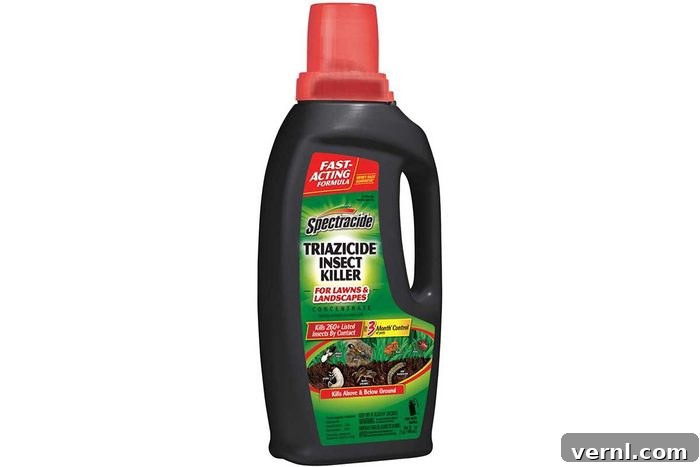
For gardeners facing severe infestations or those who prefer a more immediate and potent solution, chemical insecticides can be highly effective. Josh Matta from Spectrum Brands recommends products like Spectracide Ready-to-Spray Triazicide Insect Killer for Lawns & Landscapes. These products typically contain active ingredients like pyrethroids, which are synthetic compounds that mimic natural pyrethrins found in chrysanthemums, providing quick knockdown power against a wide range of insects.
“To effectively protect your lawn and gardens, mornings are generally the best times to spray,” advises Matta. “During the cooler morning hours, insects tend to be less active and more sluggish, making them easier targets for insecticide application. Always be sure to meticulously read and strictly follow all instructions and safety precautions detailed on the product label to ensure effective control and minimize any potential risks to yourself, pets, beneficial insects, and the environment.” When using chemical treatments, it’s also crucial to consider the harvest interval for edible crops to ensure the produce is safe for consumption.
Natural and Organic Control Methods
For those who prefer eco-friendlier and non-toxic approaches, several natural methods can be highly successful in managing leaf beetle populations:
- Hand-Picking and Soapy Water Traps: For smaller infestations or more manageable plant sizes, manual removal is often the simplest and most direct method. Regularly inspect your plants, especially the undersides of leaves, and physically pick off any adult beetles or visible larvae. You can drop them into a wide jar or bucket filled with soapy water (a few tablespoons of dish soap per gallon of water). The soap breaks the surface tension of the water, causing the beetles to drown quickly. This method is most effective when done consistently, ideally daily, during peak activity.
- Homemade Insecticidal Soap Spray: Beyond just trapping, a simple homemade insecticidal soap solution can be sprayed directly onto the beetles. Fill a spray bottle with water and add about four tablespoons of mild liquid dish soap (avoid harsh detergents). Spray the solution directly onto the beetles and their larvae. The soap works by disrupting their cell membranes and suffocating them. Ensure thorough coverage, paying close attention to the undersides of leaves where pests often hide. This solution needs to come into direct contact with the insects to be effective and is generally safe for most plants, though a patch test on a small area is recommended.
- Neem Oil: An organic insecticide derived from the neem tree, neem oil acts as an anti-feedant, repellent, and insect growth regulator. It disrupts the life cycle of many pests, including leaf beetles, by interfering with their hormonal systems. Mix neem oil according to package directions and spray it thoroughly over affected plants, covering all leaf surfaces. Regular application (e.g., weekly) may be necessary for severe infestations. Neem oil is generally safe for beneficial insects once dry.
- Diatomaceous Earth (DE): This finely powdered natural substance is made from fossilized diatoms. When insects crawl over it, the microscopic sharp edges of the DE scratch their exoskeletons, leading to dehydration and death. Sprinkle food-grade diatomaceous earth around the base of affected plants and lightly dust the leaves, especially after rain or watering. It’s safe for humans and pets but can harm beneficial insects, so apply judiciously.
How to Prevent Leaf Beetles From Coming Back
Preventing leaf beetle infestations is often more effective and sustainable than battling them once they’ve taken hold. Implementing a robust prevention strategy, combining cultural practices with biological controls, can significantly reduce the likelihood of these pests returning season after season.
Because leaf beetles are typically most active during the spring and summer months, Matta suggests that “planting later in the spring could potentially help you avoid many of the adult beetles that have been overwintering and are ready to emerge and lay eggs.” By delaying planting, you might miss the peak emergence period of the first generation of adults, allowing young plants to establish themselves before heavy pest pressure arrives.
“It’s also critically important to care for and maintain your garden regularly,” he emphasizes. A healthy, well-maintained garden is inherently more resilient to pest attacks. “Make sure to consistently remove leaf litter and dead branches, especially during the fall, as these provide ideal overwintering sites for adult beetles. Additionally, diligent weed control is essential, as many weeds can serve as alternate host plants for leaf beetles, allowing them to sustain populations even when preferred crops are not available. Most importantly, make it a habit to inspect your plants for any signs of damage or beetle presence regularly, ideally daily or every few days. Early detection allows for immediate treatment, preventing small problems from escalating into major infestations.”
Beyond these foundational practices, consider integrating the following proactive strategies for robust leaf beetle prevention:
- **Plant Aromatic Herbs (Companion Planting):** Certain aromatic herbs, such as garlic, mint, rosemary, and catnip, emit strong scents that can naturally deter leaf beetles and other common garden pests. Planting these herbs strategically near plants that are particularly vulnerable to leaf beetle infestations can create a protective barrier.
- **Encourage Natural Predators:** Create a welcoming habitat for beneficial wildlife that preys on leaf beetles. This includes installing birdbaths and feeders to attract birds, many of which are insectivores. Consider adding bird and bat houses to your yard, as bats are excellent nocturnal predators of flying insects. Diverse plantings that provide shelter and alternative food sources will also attract predatory insects like lacewings, assassin bugs, and predatory wasps.
- Introduce Beneficial Insects: Actively consider releasing beneficial insects into your garden. Ladybugs (specifically true ladybugs, not Asian lady beetles, which can be pests themselves) are natural predators of many leaf beetle eggs and larvae, as are lacewing larvae and certain parasitic wasps. These natural enemies can provide effective biological control without the need for chemical intervention.
- Crop Rotation: For vegetable gardens, practice crop rotation diligently. Avoid planting the same type of crop (or crops from the same plant family) in the same spot year after year. This helps break the life cycle of soil-dwelling pests like leaf beetle larvae and reduces the buildup of pest populations in specific areas.
- Floating Row Covers: For susceptible young plants and vulnerable crops, consider using physical barriers such as floating row covers. These lightweight, breathable fabrics can be draped over plants, creating a physical barrier that prevents adult beetles from landing on and laying eggs on the foliage. Ensure the covers are securely anchored to the ground to prevent beetles from crawling underneath.
- Choose Resistant Varieties: When possible, select plant varieties that are known to have natural resistance or tolerance to leaf beetle damage. While complete immunity is rare, some varieties are less preferred by pests or can better withstand feeding pressure.
- Maintain Soil Health: Healthy soil leads to healthy plants, which are inherently more resilient to pest and disease pressure. Improve soil structure and fertility through regular additions of organic matter, compost, and proper fertilization based on soil tests.
By integrating these preventative measures with timely intervention when beetles are detected, you can foster a healthy, vibrant garden ecosystem that naturally resists leaf beetle infestations, allowing your plants to thrive without extensive damage.