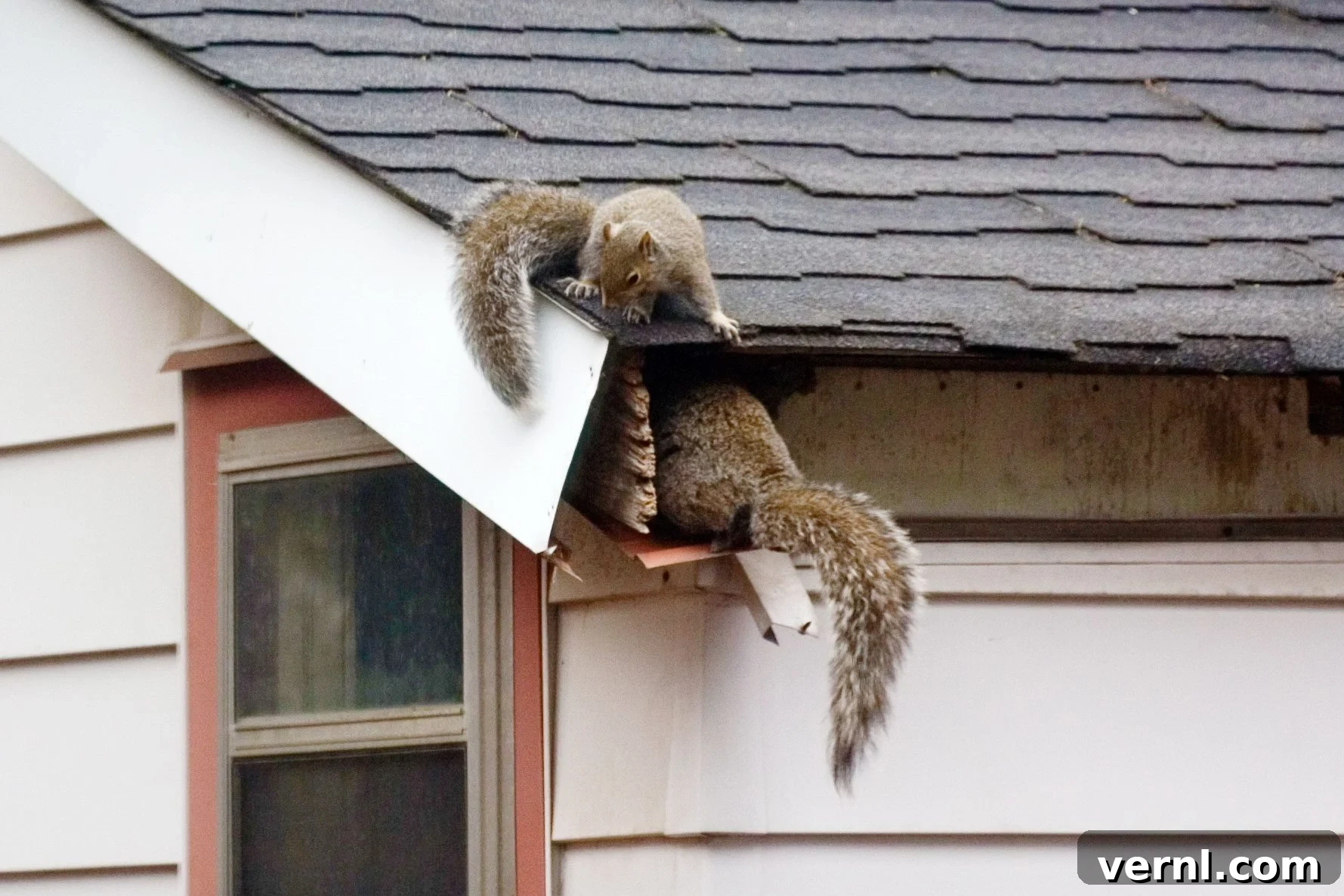
While often seen as charming and entertaining creatures, with their playful antics providing hours of amusement, squirrels can quickly transition from cute backyard visitors to destructive household pests. These ingenious rodents are notorious for damaging homes, meticulously tearing up yards, and if they manage to infiltrate your living space, the consequences can range from minor annoyances to a significant disaster. The most effective approach to managing these agile invaders is proactive prevention. However, if you’re already facing a squirrel problem, understanding how to address it effectively is crucial.
It’s important to set realistic expectations when dealing with squirrels. Their intelligence and adaptability mean they won’t easily abandon a comfortable habitat or reliable food source on your property. The University of Georgia Extension wisely advises property owners to consider the severity of the issue: Are squirrels merely a minor annoyance, or are they causing tangible financial damage? While the occasional acorn buried in your lawn might only cause cosmetic disruption, and pulling a few sprouted saplings every few weeks might seem like a manageable trade-off, a full-scale squirrel removal and exclusion effort is a substantial undertaking. It demands significant time, consistent effort, and often financial investment. Before embarking on an eradication campaign, ensure you are fully prepared for the ongoing commitment required.
Understanding how to manage other common nuisances, such as getting rid of raccoons, can also provide valuable insights into broader wildlife control strategies.
Signs You Have a Squirrel Problem
“Squirrels are persistent rodents, and their constantly growing teeth necessitate continuous gnawing on various surfaces of a residence or building,” explains Meg Pearson, a wildlife division training manager at CritterControl.com. This incessant gnawing habit is common among all rodents, including beavers, mice, and rats, serving the vital purpose of keeping their incisors at a manageable length.
Evidence of squirrel activity can manifest in numerous ways. Outdoors, you might observe squirrels chewing on siding, fascia boards, wooden deck railings, or even the bark of trees and cherished ornamental plants. A particularly concerning sign is a hole gnawed under your eaves, in the soffit, or around roofline vents. Such breaches are often direct entry points for squirrels seeking refuge in your attic, where they might store food caches, build nests, or raise their young. The University of Alabama Extension points out that squirrels are even capable of chewing through softer metals, such as lead roof vent coverings, showcasing their remarkable destructive capabilities.
Once squirrels gain entry into your home’s interior spaces, they are frequently heard before they are seen. “If they make entrance into the attic, you’ll hear distinct scurrying, running, or scratching noises,” Pearson notes. These sounds are often most pronounced in the early morning or late evening when squirrels are most active. Beyond auditory cues, an unexplained foul odor that you cannot locate could tragically indicate a squirrel has become trapped within a wall void or another inaccessible area and has died.
In your outdoor spaces, signs of a squirrel problem include young plants in your garden being dug up or pulled out, newly planted bulbs mysteriously disappearing, and birdfeeders being regularly emptied, with preferred seeds consumed and less desirable ones scattered across the ground. A more severe and visually damaging sign is when nuisance squirrels gnaw entire rings around the circumference of trees, a process known as girdling. Girdling severs the tree’s circulatory system, preventing the flow of nutrients and water, and often leads to the death of the tree.
What Attracts Squirrels to Your Yard and Home?
“The primary factors influencing where squirrels choose to nest and live are shelter and readily available food sources,” states Meg Pearson. Squirrels primarily consume what is known as “mast,” which refers to the dry fruits produced by woody plants. This includes a wide variety of nuts and seeds, such as acorns from oak trees, hickory nuts, beech nuts, black walnuts, and various pine seeds. If your property features these types of trees, it is highly probable that squirrels will find your yard an attractive habitat.
Beyond their dietary needs, squirrels also require secure locations to store their vast stashes of nuts and to hide from predators. This makes quiet, uninhabited spaces within your home, such as attics, crawlspaces, wall voids, and even uncapped chimneys, highly appealing to them. Your yard itself presents numerous attractions; digging squirrels frequently pockmark lawns with holes where they bury their acorn and nut caches, while ground squirrels can cause significant damage with their elaborate burrow systems.
Birdfeeders, despite homeowners’ best efforts, are often treated by squirrels as an irresistible, 24-hour buffet. Regardless of the continuous innovations from the ever-growing squirrel baffle industry, these clever rodents frequently find ways to access the easy meal provided. The scent of seeds and nuts acts as a powerful beacon, drawing them in.
Gardens are another abundant source of sustenance for squirrels, offering a veritable cornucopia of treats, from corn on the cob to ripe tomatoes, berries, and even certain root vegetables. Squirrels are remarkably adaptable in their dietary habits, extending beyond typical nuts and fruits to consume a wide array of human-generated food sources. Urban squirrels, in particular, commonly feast on discarded trash and uneaten food scraps. Therefore, if your property is located near an alley, a public park, or a commercial district, the likelihood of encountering active squirrel populations dramatically increases, as these areas often provide a consistent and easy food supply.
How To Get Rid of Squirrels in Your House or Attic
If you’ve discovered that a squirrel has taken up residence inside your home, the immediate priority is to locate all potential entry points. Thoroughly inspect your eaves, soffits, roofline, and areas around utility lines for any gaps, holes, or weakened sections. It’s also possible that squirrels gained entry through a crawlspace or foundation vents and then climbed vertically into your walls or attic, so a comprehensive check underneath your house is also vital. Once you’ve identified these access points, prepare to make permanent repairs once the squirrels have safely exited.
The University of Alabama Extension suggests that once an entry point is found, implementing one-way exclusion doors is an effective strategy. These specially designed devices, as their name implies, allow the squirrel to exit the structure through the opening but prevent them from re-entering. To maximize effectiveness and ensure no squirrels are trapped inside, it’s critical to install these doors during periods when squirrels are typically foraging outdoors, usually in the morning and early evening. Avoid sealing up the entry hole midday, as squirrels might be resting or nesting inside, leading to unintended consequences.
A crucial consideration, especially during spring and summer, is the possibility that mother squirrels may have entered your home to give birth and raise their young. Sealing an entry point while babies are still inside is inhumane and can lead to severe problems, including the decomposition of deceased animals within your walls, resulting in terrible odors and potential secondary pest infestations. If you suspect or find baby squirrels, it is imperative to call a professional wildlife removal specialist. They are equipped to handle such delicate situations humanely, ensuring both the mother and her young are safely and ethically relocated. Attempting DIY removal in such cases can cause undue stress to the mother and leave you with vulnerable, dying baby squirrels within your home.
Pearson strongly advises against DIY squirrel removal in residential structures. “Squirrels are wild animals and should not be handled or trapped by anyone who has not received proper training and certification,” she emphasizes. Their bites can be painful and transmit diseases, making professional intervention the safest and most effective course of action for indoor infestations.
How To Get Rid of Squirrels in Your Yard or Garden
“Convincing squirrels to permanently vacate your yard is an especially challenging endeavor,” cautions Meg Pearson. While removing their primary food sources may encourage them to seek better meal tickets elsewhere, a complete absence of squirrels is often unrealistic unless your property is devoid of trees and resembles a concrete parking lot. Furthermore, simply removing existing squirrels without implementing significant changes to exclude them will likely result in new squirrels quickly moving into the vacated territory.
Habitat Modification and Exclusion Strategies:
- Food Source Removal: Be diligent about harvesting ripe fruits and vegetables promptly. Secure trash cans with tight-fitting lids and consider placing them inside a shed or garage. Ensure pet food is not left outdoors, especially overnight. While challenging, making bird feeders truly squirrel-proof involves specific designs (e.g., caged feeders, weight-activated perches) or placement (e.g., away from jumping points).
- Landscape Maintenance: Trim tree branches that extend within 8-10 feet of your house, fence, or other structures, eliminating easy access routes. Remove fallen nuts, seeds, and fruits from your yard regularly. Secure compost piles and eliminate potential nesting sites like brush piles, dense shrubbery, and wood stacks.
- Physical Barriers: For gardens, consider erecting sturdy wire mesh fencing (e.g., hardware cloth) that is buried several inches deep to deter digging. Tree wraps made of metal or slick plastic can prevent squirrels from climbing specific trees, particularly if they are girdling.
Relocation Challenges and Ethical Considerations:
Many states and local jurisdictions have strict regulations regarding wildlife removal and relocation. Before attempting to trap and relocate squirrels from your yard or garden yourself, it’s crucial to understand these laws. Beyond legalities, the efficacy and ethics of relocation are highly debated. A study of Eastern gray squirrels revealed that a staggering 97 percent of squirrels translocated away from their home turf did not survive. Relocation often places animals in unfamiliar territories with established populations, leading to stress, starvation, predation, and ultimately, a low survival rate. Even with the best intentions, relocation is rarely a humane solution for the squirrel.
Scare Tactics and Repellents:
Squirrels are responsive to fear, so the presence of a dog or cat can sometimes deter them, but only if your pet is consistently outdoors during the squirrels’ active hours. Visual deterrents like whirligigs and scarecrows, or fake owls (as suggested by several university extension services), may initially keep them at bay. However, squirrels are highly intelligent and adapt quickly, often becoming accustomed to static deterrents within a short period, rendering them ineffective in the long term. For better results, these tactics should be moved frequently and combined with other methods.
Chemical repellents containing capsaicin (the active ingredient in chili peppers) are known to deter squirrels due to their unpleasant taste and sensation, particularly if applied directly to plants or bark they are chewing. These repellents typically need frequent reapplication, especially after rain, to maintain their effectiveness. When considering any pest control product, exercise caution with anything marketed as an ultrasonic device for pest control; scientific evidence consistently shows no proof that these devices effectively deter squirrels or other rodents.
Calling a Pro vs. DIY Squirrel Removal
“Squirrels can be exceptionally difficult to trap and remove, especially when they have established themselves within a home’s structure,” states Pearson. If you are experiencing persistent nuisance squirrels on your property, particularly those that have breached your home’s defenses, engaging a professional trained in wildlife removal is often the most sensible and effective course of action. These experts offer a comprehensive service that includes not only the humane removal of the animals but also critical exclusion work to prevent future infestations, along with necessary repairs and sanitization.
While their agile movements and bushy tails may make squirrels appear charming, it’s crucial to remember that they are wild rodents. They are capable of biting when threatened and can carry various diseases, some of which are transmissible and dangerous to humans, such as leptospirosis, salmonellosis, and even Lyme disease (via ticks they may carry). If you opt to attempt squirrel removal yourself, whether through humane trapping and release (where legal) or more lethal methods like traps or shooting (again, where legally permitted), always prioritize your safety and the safety of your family and neighbors. Always research and understand local and state laws regarding wildlife control before taking any action.
FAQ
How do I keep squirrels out of my house?
Preventing squirrels from entering your home requires a multi-faceted approach. First, eliminate common attractants: ensure bird feeders are squirrel-proof or removed, bring pet food inside, and secure garbage bins with tight-fitting lids. Second, conduct a thorough inspection of your home’s exterior and seal all potential entry points. Pay close attention to gaps around utility lines, loose fascia boards, damaged roof vents, uncapped chimneys, and any openings in your foundation or crawlspace. Using strong-smelling plants around your home’s perimeter, such as peppermint, can also act as a natural deterrent, though their effectiveness may vary.
Is it legal to kill squirrels?
The legality of killing squirrels varies significantly by location. While squirrels are generally considered an unprotected species in many areas, whether or not it is permissible to kill them depends on the specific state, county, and even municipal laws where you reside. Some states may classify them as game animals, requiring a hunting license and adherence to specific seasons and methods. Others may allow landowners to remove them as pests. It is absolutely essential to research and understand the wildlife control laws for your specific locality before attempting any lethal methods of squirrel removal to avoid legal repercussions.
What diseases can squirrels carry?
Squirrels, like many wild rodents, can carry various diseases and parasites that pose risks to humans and pets. These include leptospirosis (a bacterial disease), salmonellosis (bacterial food poisoning), tularemia, and ringworm. They are also common carriers of fleas, ticks, and mites, which can transmit other diseases such as Lyme disease (from ticks) or typhus (from fleas). Direct contact, bites, or contact with their urine and feces can be routes of transmission.
When are squirrels most active?
Squirrels are generally most active during the daylight hours, particularly in the early morning and late afternoon. These are typically their prime foraging times. Their activity levels can fluctuate with seasons; they are often very busy caching food in the fall and are quite active in the spring when raising young. During the hottest parts of summer or the coldest parts of winter, their activity may be slightly reduced, but they remain active year-round.
Can squirrels cause electrical fires?
Yes, squirrels can absolutely cause electrical fires. Their constant gnawing habit extends to electrical wires, both inside and outside your home. When squirrels chew through the insulation of electrical wiring, it exposes the conductive wires, which can lead to short circuits. These shorts generate intense heat and sparks, igniting nearby flammable materials such as insulation, wood, or nesting materials, resulting in potentially devastating house fires. This is one of the most dangerous forms of damage squirrels can inflict on a property.
About the Experts
Meg Pearson is a seasoned wildlife division training manager at CritterControl.com, bringing extensive expertise in wildlife behavior and humane pest management strategies.