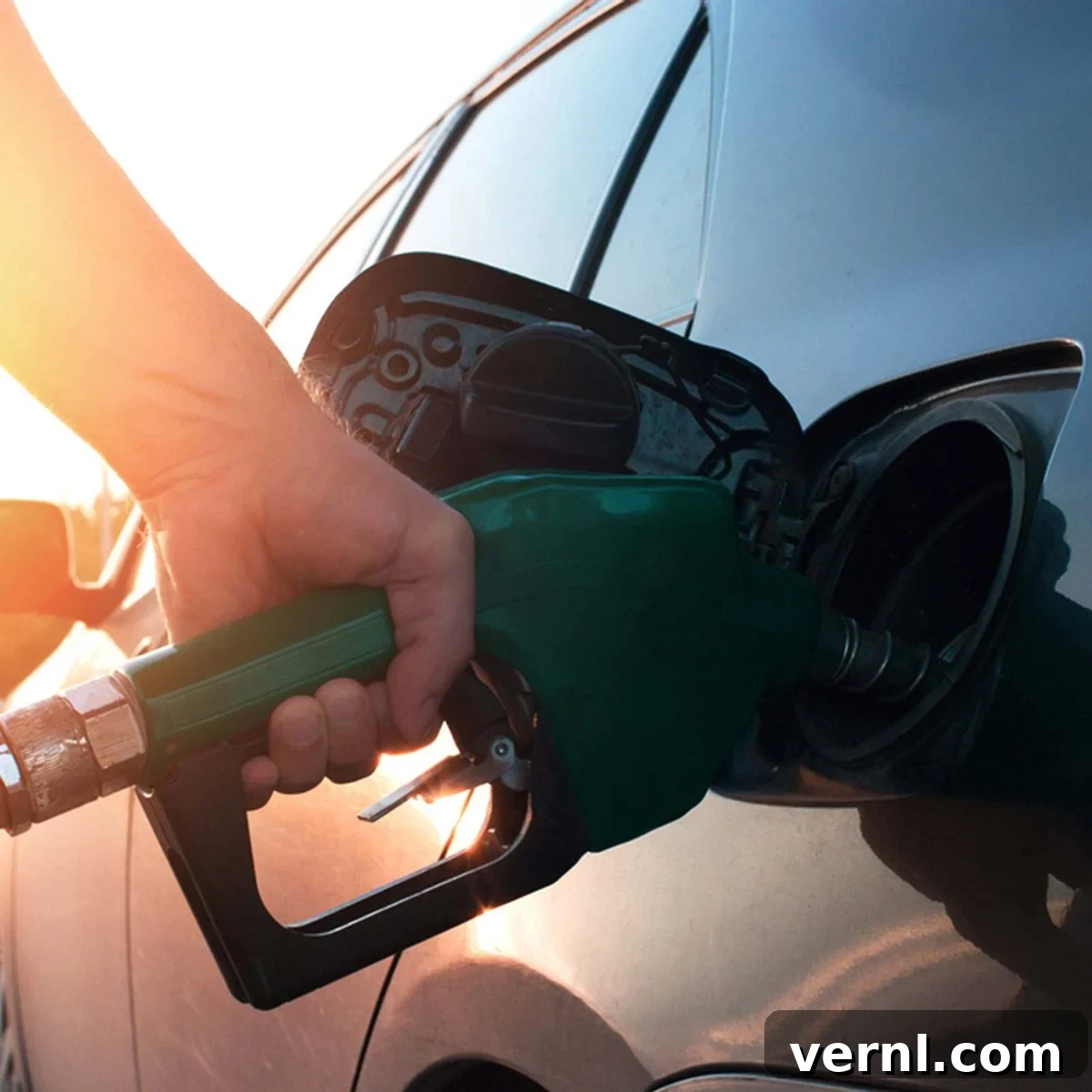
It’s a common scenario: you pull up to the gas station, ready to refuel, only to realize the fuel pump is on the wrong side for your car. This minor inconvenience often sparks a moment of curiosity, leading many to ponder: why exactly is my car’s fuel door on the left (or right) side? Is it a random choice by engineers, or is there a method to this automotive madness? The truth is, the placement of your car’s fuel door is far from arbitrary. It’s a fascinating blend of practical engineering constraints, crucial safety regulations, manufacturing efficiency, and even considerations for driver convenience and gas station traffic flow.
While it might feel like a simple design decision, the exact location of the fuel filler neck involves a complex interplay of factors that car manufacturers meticulously weigh during the vehicle development process. So, if you’ve ever found yourself stuck in a long line for gas and wondering about the rationale behind your fuel door’s position, prepare for an insightful journey into the world of automotive design.
The Engineering Behind Fuel Door Placement: More Than Meets The Eye
At first glance, one might assume that engineers simply “draw straws” to decide which side the fuel door goes on. However, industry experts confirm a more strategic approach. According to Mark Schirmer, a spokesperson for Ford, as reported on theAllstateBlog, engineers are granted considerable freedom to position the fuel door on the side that facilitates the “easiest packaging.” But what does “easiest packaging” truly entail?
The underbody of any modern vehicle is a densely packed marvel of engineering. It houses a myriad of critical components, including the exhaust system, suspension components, brake lines, electrical wiring harnesses, and, of course, the fuel tank itself. The fuel tank’s design and its specific placement within the vehicle’s chassis are primary determinants. The filler tube, which connects the external fuel door to the internal fuel tank, must navigate this intricate landscape without interfering with other systems. Nissan’s Steve Yaeger further elaborated on this, telling theAllstateBlog that engineers “would quickly encounter restrictions in trying to route the filler tube to the same side on every vehicle” due to all the structure and components located underneath.
Consider the logistical nightmare of attempting to route a standardized filler tube across every single vehicle model, irrespective of its engine configuration, drivetrain (front-wheel, rear-wheel, all-wheel drive), or chassis layout. Each vehicle platform presents unique challenges, requiring bespoke solutions for optimal component integration. The path of the filler tube must be clear, unobstructed, and designed to minimize bends or kinks that could impede fuel flow or create points of weakness. Furthermore, it must be routed away from potential heat sources like the exhaust system and protected from road debris or impacts.
While the idea of a car having dual fuel doors – one on each side – might seem incredibly convenient, it remains an impractical fantasy. Manufacturers face significant constraints. Firstly, there’s a lack of available space. Incorporating a second fuel door, filler neck, and associated safety mechanisms would require significant re-engineering of the vehicle’s structure, potentially impacting trunk space, structural integrity, or adding unnecessary weight. Secondly, there isn’t sufficient consumer demand to justify the added complexity and cost in manufacturing. The engineering effort and additional materials would translate into higher vehicle prices, a trade-off that most consumers would likely not accept for a minor convenience.
Driver Preference and Road Systems: A Global Perspective
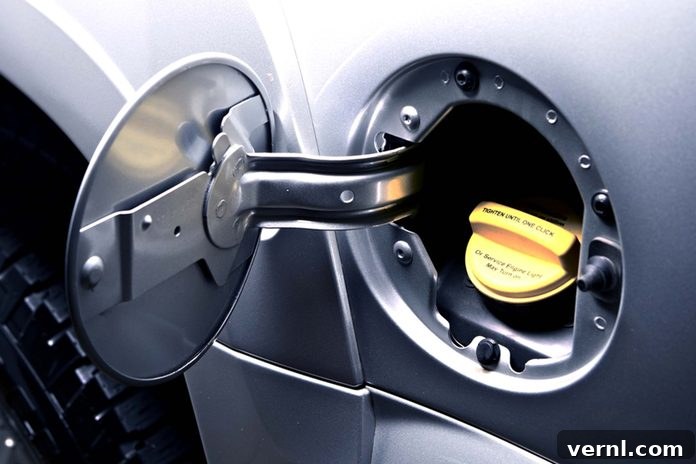
Beyond the nuts and bolts of engineering, driver habits and regional road systems also play a subtle, albeit unconfirmed, role in fuel door placement. Mark Schirmer of Ford suggests that Americans tend to prefer fuel doors on the left side of their cars. This preference is likely rooted in the mechanics of refueling in a left-hand drive (LHD) country. When approaching a gas pump, drivers in LHD countries typically position their vehicle such that the left side is closer to the pump. This allows them to exit the driver’s side and access the fuel door with minimal movement, enhancing convenience and efficiency at the station.
It stands to reason, then, that drivers in countries with right-hand drive (RHD) systems – such as the U.K., Australia, New Zealand, India, Japan, and South Africa – might favor a right-hand-side fuel door for similar reasons. In these nations, drivers operate from the right side of the vehicle and would naturally position their car with the right fender closer to the pump for easier access. While this logical assumption about driver preference holds true for many, it’s important to note that there isn’t definitive data to universally confirm this as a primary design factor across all global automotive markets. Due to global manufacturing processes, a specific car model sold in an RHD country might still feature a left-side fuel door if its primary market is LHD, or if the engineering constraints dictate that placement universally.
Safety Regulations: Non-Negotiable Requirements
While driver preference might influence design, safety regulations unequivocally dictate specific parameters for fuel system design and placement. These regulations are paramount, ensuring the integrity of the fuel system in various scenarios, particularly during a collision or accident. Current regulations, such as those detailed in the U.S. Code of Federal Regulations (49 CFR 393.65) for fuel systems, demand several critical aspects regarding the fuel filler’s location:
- Widest Part of the Car: The filler must be positioned at or near the widest part of the car. This strategic placement offers a degree of protection, as the wider body panels are more likely to absorb minor impacts, shielding the vulnerable fuel filler neck from direct damage.
- Inboard of Any Crumple Zones: Critically, the fuel filler must be located inboard of any designated crumple zones. Crumple zones are specifically engineered sections of a vehicle designed to deform and collapse in a collision, absorbing kinetic energy and protecting the passenger compartment. Placing the fuel filler within these zones would compromise its integrity during an impact, increasing the risk of fuel leakage or fire.
- Safe from Dripping onto Hot Exhaust Bits or Electrical Wiring: Preventing fire hazards is a top priority. The fuel filler and associated plumbing must be routed and positioned to ensure that any accidental fuel spillage or drips cannot come into contact with hot components like the exhaust manifold or vulnerable electrical wiring. This meticulous attention to detail prevents potential ignition sources.
It’s crucial to observe that these regulations focus on the structural and safety integrity of the fuel system’s placement rather than specifying a particular side (left or right). This allows manufacturers the flexibility to design for optimal packaging while still adhering to stringent safety standards that protect both occupants and the environment.
The “Equilibrium” Argument: Optimizing Gas Station Flow
Beyond individual vehicle design, there’s an intriguing theory that suggests fuel door placement plays a role in overall gas station efficiency. Robert Frank, in his writings for PBS Newshour, champions the “equilibrium” argument. This theory posits that if every car had its fuel door on the same side, it would lead to significant inefficiencies at gas stations. Imagine a scenario where all cars had a left-side fuel door: approximately 50 percent of the pumps (the right-side ones, assuming pumps are designed for access from either side) would be underutilized or require drivers to awkwardly maneuver their vehicles against the natural flow of traffic. This would inevitably lead to longer lines and increased waiting times at the pumps designated for the “correct” side.
By having a mix of vehicles with left-side and right-side fuel doors across the general car population, gas stations can achieve a more balanced distribution of demand. This “equilibrium” allows for more efficient use of all available pumps, reducing congestion and minimizing the overall time spent by drivers waiting to refuel. It’s a subtle but significant benefit that contributes to a smoother and more efficient refueling experience for everyone. This aspect highlights how individual design choices can have collective impacts on infrastructure and daily routines.
The Dashboard Secret: Never Forget Your Fuel Door Side Again
Despite all the engineering, safety, and efficiency considerations, it’s perfectly normal for drivers – especially those with new cars, rental vehicles, or shared family cars – to occasionally forget which side their fuel door is on. The mild embarrassment of pulling up to the wrong pump, having to sheepishly get back in the car, and repositioning it, is a universal experience. Fortunately, car manufacturers have provided a simple, elegant solution right on your dashboard.
If you glance at the fuel gauge on your dashboard, you’ll notice a small, diamond-shaped arrow (or sometimes a triangle). This tiny arrow points directly to the side of the car where your fuel door is located. It’s a brilliant, understated design feature that saves countless drivers from awkward moments at the pump. Make it a habit to check this indicator before you pull into the station, and you’ll always choose the correct pump with confidence.
Understanding the placement of your car’s fuel door is more than just trivia; it’s an appreciation for the intricate design processes that shape our vehicles. From the complex dance of underbody components to crucial safety regulations and even the subtle impact on gas station logistics, every detail serves a purpose. As you continue to drive, remember these insights and perhaps even share this handy dashboard tip with fellow motorists. And while you’re thinking about your car’s functionality, don’t miss out on these 100 maintenance tips that will extend the life of your car, ensuring it runs smoothly for years to come. Staying informed about your vehicle’s features and needs is key to a safe and enjoyable driving experience. (Bonus: Find out 12 things to do now to improve gas mileage and save at the pump!)