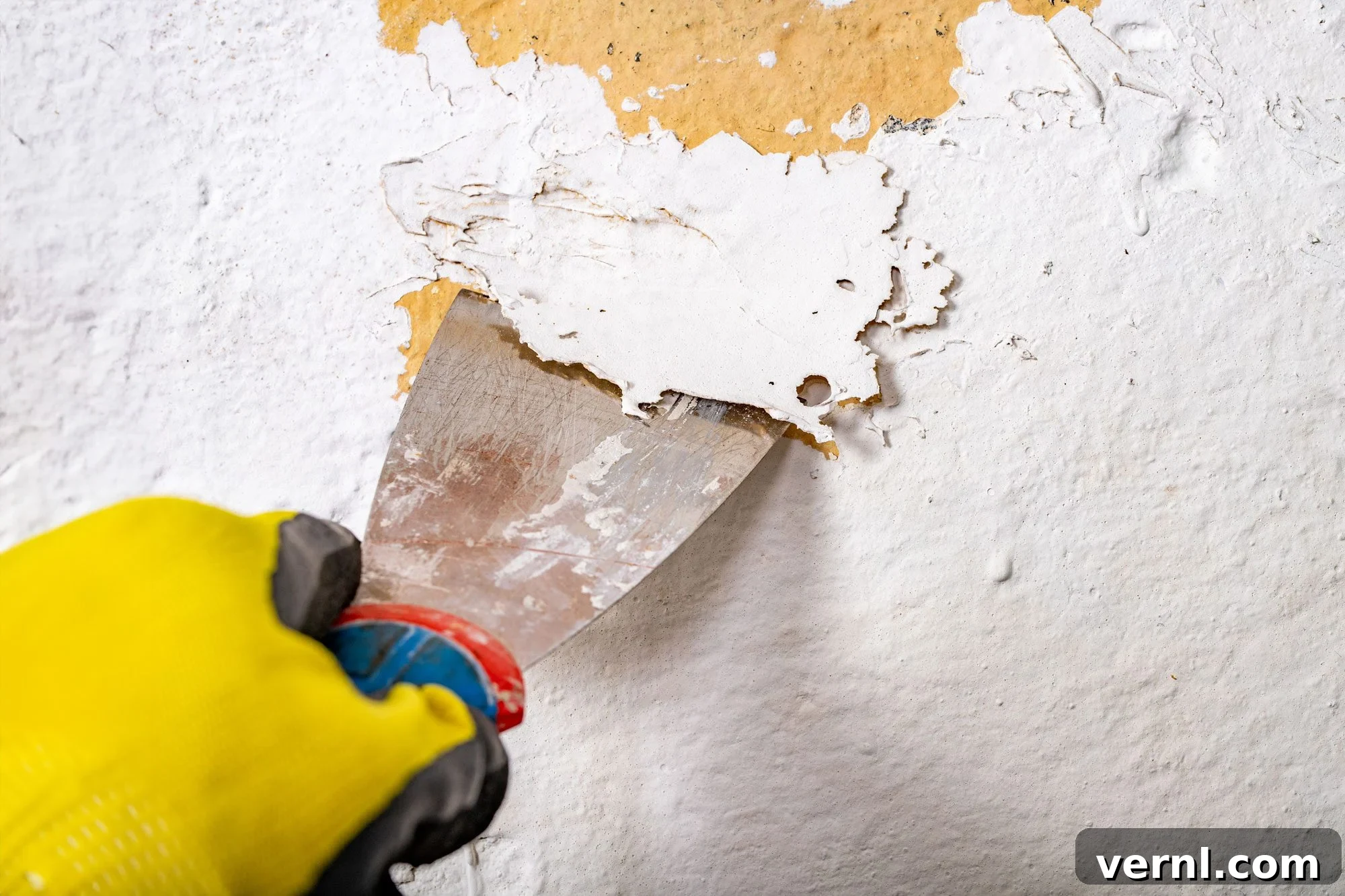
If you reside in a home constructed before 1978, a fundamental understanding of the history of lead paint regulation is not merely beneficial—it’s essential. This knowledge is paramount for safeguarding the health and well-being of your family and tenants, as well as for making informed decisions regarding property maintenance and renovations.
The presence of lead paint, particularly when disturbed during renovation or repainting projects, can unleash a silent, serious health threat. As a homeowner and landlord in the New England region, I’ve experienced firsthand the gravity of lead paint exposure. I made the proactive decision to have it professionally removed from several of my properties, prioritizing the safety of my loved ones and those who lease from me. For those wondering how to assess their own homes, here’s an overview of how to identify lead paint and what steps to take next.
To provide a comprehensive and authoritative guide, we’ve enlisted the expertise of two distinguished professionals: Bob Carroll, Ph.D., from Indiana University, and Shayne Pancione, owner of Pancione Painting Plus. Together, we will delve into the critical timeline of when lead paint was officially banned in the U.S., illuminate the profound health threats it continues to pose, and outline practical, actionable steps for homeowners who discover it within their residences. This guide aims to equip you with the knowledge needed to navigate the complexities of lead paint responsibly and effectively.
About the Experts
Bill Carroll, Ph.D. is an esteemed adjunct professor of chemistry at Indiana University, bringing a wealth of scientific knowledge and historical context to the topic of lead paint. Prior to his current role, he served as the vice president of industry issues for Occidental Chemical Corporation and currently leads Carroll Applied Science in Dallas, Texas. His expertise provides invaluable insight into the chemical properties and industrial history of lead-based products.
Shayne Pancione is the dedicated owner of Pancione Painting Plus, based in Easthampton, Massachusetts. As a certified lead-safe renovator, Pancione possesses over 30 years of extensive experience in the painting industry. His practical knowledge and hands-on expertise in lead paint identification, containment, and removal offer critical real-world advice for homeowners facing this challenge.
When Was Lead Paint Banned? A Historical Overview
The dangers of lead have been recognized for centuries, with early warnings dating back to antiquity. A notable early American figure, Benjamin Franklin, penned a letter to a friend in 1786 specifically cautioning against the health hazards associated with lead exposure. Despite such early recognition, the path to a global ban on lead paint was a long and arduous one, stretching over more than a century.
Remarkably, the first country to enact a comprehensive ban on lead paint was not the United States, but France, which implemented its prohibition in 1909. This significant step highlighted an early international awareness of the public health crisis posed by lead-based paints, particularly concerning children.
In the United States, the movement to ban lead paint began at the local level. In 1951, Baltimore, Maryland, took a pioneering stand, becoming the first U.S. city to ban both the use and sale of lead paint within its jurisdiction. New York City followed suit in 1960, enacting similar protective measures. However, the transition from localized bans to nationwide legislation proved to be a protracted process. It took more than a decade before the U.S. Congress formally addressed the issue through comprehensive national legislation, culminating in the passage of the Lead Poisoning Prevention Act in 1971. This act marked a critical turning point, providing federal funding for lead paint inspection and removal programs, particularly in housing for low-income families.
However, a complete and outright ban on all consumer use of lead paint across the United States did not materialize until 1978. In that year, the Consumer Product Safety Commission (CPSC) issued a landmark prohibition on the use of lead in virtually all consumer products, including household paints, children’s toys, and certain items of furniture. While this was a monumental victory for public health, it’s crucial to understand its limitations: the ban applied to new products manufactured *after* 1978. This meant that millions of existing houses across the nation remained coated with the toxic paint, creating a legacy of potential exposure that continues to this day. The ban also didn’t address industrial uses or certain specialized applications, highlighting the ongoing vigilance required.
Decades later, recognizing the persistent threat posed by disturbing existing lead-based paint during property work, the Environmental Protection Agency (EPA) introduced a crucial regulatory update. In 2008, the EPA issued the Renovation, Repair and Painting (RRP) Rule. This mandate requires that any renovation, repair, or painting projects that may disturb lead-based paint in homes, childcare facilities, and schools built before 1978 must be completed by lead-safe certified contractors, such as Shayne Pancione. The RRP Rule was a critical measure to prevent lead contamination and exposure during work on older properties, ensuring that professionals adhere to stringent safety protocols to protect both workers and occupants.
Does All Paint Made Before 1978 Contain Lead? Understanding the Nuances
It’s a common misconception that all paint manufactured and applied before the 1978 ban automatically contains lead. The answer is a definitive “No.” While the risk is significantly higher for homes built in this era, the presence of lead paint is not universal. Several factors influenced whether a particular paint product contained lead, offering some important nuances for homeowners to consider.
Lead paint was highly valued for several key attributes that made it a preferred choice for consumers and contractors alike. Its exceptional durability meant paint jobs lasted longer, resisting wear and tear, and maintaining their finish for extended periods. Additionally, lead pigments were known to facilitate faster drying times, a significant advantage for painters and property owners seeking quicker project completion. These qualities made lead-based paints a premium product in the market.
However, as the dangers of lead exposure began to become more widely recognized and scientifically documented, paint manufacturers initiated a gradual shift away from lead pigments. As early as the 1940s, some forward-thinking manufacturers began voluntarily removing lead from their formulations. This proactive move was driven by growing public health concerns and the emergence of viable alternatives. Instead of lead, companies started incorporating non-lead pigments such as zinc oxide, which offered similar durability and opacity without the toxic properties. Concurrently, the industry also began to develop and produce new water-based, lead-free paints, marking a significant transition towards safer product lines.
Another crucial factor in the presence, or absence, of lead in older paints was cost. Lead pigments were relatively expensive ingredients. Consequently, many lower-priced paint formulations often contained little to no lead, as manufacturers opted for more affordable, non-lead-based alternatives to keep production costs down. This means that homes where budget-friendly paints were historically used might, paradoxically, have a lower likelihood of containing lead paint compared to those that utilized higher-end, more durable, and often lead-containing options. Therefore, while a pre-1978 construction date serves as a critical red flag, it doesn’t automatically confirm the presence of lead paint in every layer or on every surface. Nonetheless, for any home built before 1978, it is always safest to assume lead paint is present until proven otherwise through testing.
Why Was Lead Paint Banned? Unpacking the Health Hazards
The ban on lead paint was a monumental public health achievement, driven by an overwhelming body of evidence demonstrating lead’s severe toxicity to humans. Lead is a naturally occurring metallic element, but despite its natural origin, it is highly toxic when ingested or inhaled, even at very low levels. The reasons for its prohibition are deeply rooted in its devastating impact on human health, particularly among the most vulnerable populations.
As Dr. Bill Carroll eloquently states, “It is most dangerous to children because it can impact mental and physical development.” Children are uniquely susceptible to lead poisoning for several reasons. Their developing bodies absorb lead more readily than adults, and their rapidly growing brains and nervous systems are highly vulnerable to its damaging effects. Common routes of exposure for children include ingesting lead-containing dust from deteriorating paint chips or contaminated soil, and mouthing objects or hands that have come into contact with lead residue. The health consequences for children can be profound and irreversible, manifesting as developmental delays, significant reductions in IQ, learning disabilities, behavioral problems such as hyperactivity and aggression, reduced growth, hearing problems, and even kidney damage.
While children are at the highest risk, prolonged or significant lead exposure also poses serious health threats to adults. Adults can experience a range of symptoms and conditions, including high blood pressure (hypertension), joint and muscle pain, headaches, memory and concentration problems, digestive issues, nerve disorders, kidney dysfunction, and reproductive problems. Pregnant women are a particularly vulnerable group; lead exposure can lead to miscarriage, premature birth, low birth weight, and developmental problems for the fetus, as lead can cross the placental barrier.
Despite the long-standing awareness of lead’s dangers—dating back to ancient civilizations and reinforced by figures like Benjamin Franklin—it wasn’t until extensive scientific research and robust public advocacy efforts gained significant momentum in the 1960s and 1970s that a total ban on lead paint finally became a reality. These crucial decades saw a surge in epidemiological studies and medical breakthroughs that unequivocally determined even low levels of lead exposure could lead to significant, irreversible health issues, especially in children. Public health campaigns played a vital role in raising awareness, pressuring policymakers, and ultimately securing the legislation necessary to protect future generations from this pervasive environmental toxin. The ban was not just a legal formality but a life-saving intervention, acknowledging the profound and lasting harm lead could inflict.
How Do You Know if You Have Lead Paint in Your House? Testing Methods Explained
The first and most critical step in addressing potential lead paint hazards is determining whether it’s actually present in your home. If your home was constructed before 1978, there is a distinct possibility it contains lead paint, and this likelihood generally increases with the age of the house. This is due to the historical prevalence of lead-based paints in earlier construction. However, simply having an older home is not enough to confirm its presence; specific testing is required.
To definitively know whether your home’s painted surfaces contain lead, these surfaces need to be tested. There are several reliable methods available, ranging from professional assessments to DIY kits, each with its own advantages and limitations.
One of the most accurate and thorough approaches is to hire a certified lead inspector or risk assessor. These professionals are specially trained and equipped to conduct comprehensive evaluations. They often use specialized equipment such as X-ray fluorescence (XRF) analyzers, which can detect lead through multiple layers of paint without disturbing the surface. As Dr. Carroll explains, “This technique identifies specific chemical elements,” providing precise and immediate results regarding lead content. A certified inspector can assess various painted components throughout your home, including walls, windows, doors, and exterior surfaces, to provide a detailed report on the location and concentration of lead paint hazards. They can also perform lead dust and soil sampling to determine if lead has spread to other areas of the home or yard.
Alternatively, you can collect paint chip samples yourself and send them to an accredited laboratory for analysis. This method involves carefully scraping small paint chips from different suspect areas of your home and mailing them to a lab that uses precise analytical techniques, such as atomic absorption spectroscopy or inductively coupled plasma mass spectrometry, to quantify the lead content. While this method is highly accurate, it requires careful sample collection to ensure representativeness and can take several days or weeks to get results.
If you prefer a more immediate and budget-friendly option, you can opt for a home test kit. These kits are readily available at most home centers and hardware stores. As Shayne Pancione notes, “These tests are affordable and easy to use.” Home test kits typically include a swab that is pressed against or rubbed on a cleaned painted surface. The swab contains chemicals that react with lead, causing it to change color if lead is present. While convenient, it’s important to understand that DIY test kits offer a qualitative (yes/no) indication rather than a quantitative measurement of lead. Their accuracy can vary, and they may not detect lead if it’s buried under many layers of non-lead paint. They are best used for quick screening or for testing small, accessible areas, but professional testing is recommended for definitive results or when planning extensive renovations.
In addition to testing painted surfaces, especially in homes with children or where renovations are planned, it’s prudent to consider lead dust testing. Lead dust, generated from deteriorating paint or renovation activities, is a primary route of exposure. Professional lead assessors can collect dust samples from floors, windowsills, and other surfaces using specialized wipes, which are then analyzed in a lab to determine lead levels and inform cleanup or remediation strategies.
What Should You Do if You Have Lead Paint in Your House? Mitigation and Remediation Strategies
Discovering lead paint in your home can be concerning, but it’s important to approach the situation calmly and strategically. The key is to mitigate the risk of exposure effectively. Here are detailed steps to consider, ranging from interim controls to permanent abatement, ensuring the safety of your household.
- Leave it Alone if Intact: The most immediate and often safest action to take is to not disturb lead paint if it is in good condition. If the paint is not deteriorating—meaning it’s not chipping, cracking, peeling, or flaking—it poses a significantly lower risk. Intact lead paint, especially when covered by layers of non-lead paint, can often be safely managed in place. It’s best to leave it undisturbed until you have a comprehensive plan to address it, whether that involves encapsulation or professional removal. Regular cleaning of painted surfaces can also help minimize lead dust accumulation.
- Consider a Professional Risk Assessment: For a thorough understanding of the lead hazards in your home, especially if you have children or are planning renovations, a certified lead risk assessment is invaluable. A certified risk assessor will conduct a detailed evaluation of your home, identifying the presence, location, and condition of lead-based paint. This assessment often includes visual inspections, dust sampling, and sometimes soil sampling, particularly in high-traffic areas or where children play. The assessor will then provide a comprehensive report outlining existing lead hazards in and around your home and offer tailored recommendations for reducing exposure. These recommendations can range from simple interim controls to more extensive abatement strategies, guiding you toward the most effective and appropriate course of action for your specific situation.
- Encapsulation for Certain Situations: Encapsulation is a method of safely managing lead paint by creating a durable, impermeable barrier over the lead-painted surface. This involves applying a specially formulated coating—an encapsulant—that effectively seals the lead paint, preventing the release of lead dust and chips. Encapsulants are thicker and more durable than regular paint and are designed to bond securely to the underlying surface. However, encapsulation is not suitable for all situations. It cannot be used on lead paint that is already chipping, peeling, or in poor condition, as the encapsulant needs a stable surface to adhere to. It is also generally not recommended for movable surfaces like doors and windows, or on high-impact areas, as wear and friction can damage the encapsulant over time. Encapsulation is a cost-effective solution for intact surfaces and can be a good temporary or long-term measure when performed correctly by a qualified professional.
- Hire an Abatement Company for Complete Removal: If the lead paint is in poor condition, if there are young children in the home, or if a professional risk assessment indicates a high-risk scenario, complete lead paint abatement might be the best course of action. Abatement refers to the permanent removal of lead-based paint and lead hazards. “The best and surest way to reduce the risk is to have it removed,” emphasizes Dr. Carroll. Due to the significant health risks involved in disturbing lead paint, the EPA strongly recommends hiring a professional abatement company. These companies are certified, equipped with specialized tools, and trained in stringent safety protocols, including containment, negative air pressure, worker protection (respirators, protective clothing), and proper disposal of lead-contaminated waste. Abatement techniques can include chemical stripping, wet scraping, heat guns (used carefully to avoid vaporization), component replacement (e.g., removing and replacing lead-painted windows), or encasement (building a new, permanent surface over the lead paint). While it can be more costly and disruptive than other methods, abatement offers a permanent solution to the lead paint hazard.
- Take Precautions with Remodeling, Repair, or Painting Projects: Any project that disturbs lead paint can release dangerous lead dust and chips into the air, posing significant health risks. If you plan to undertake any remodeling, repairing, or painting projects in a pre-1978 home, even seemingly minor ones, it is absolutely crucial to proceed with caution.
- Hire a Lead-Safe Certified Contractor: For any project that involves disturbing more than a minimal amount of painted surface, you must hire a lead-safe certified home contractor. This is mandated by the EPA’s Renovation, Repair, and Painting (RRP) Rule for homes built before 1978. As Shayne Pancione stresses, “Certified renovators go through rigorous training to become certified and will take all necessary precautions.” These professionals are trained to implement lead-safe work practices, including containment of the work area, meticulous cleanup procedures using HEPA-filtered vacuums, and proper waste disposal, all designed to protect occupants and workers from lead exposure.
- DIYer Recommendations (with extreme caution): While professional contractors are always recommended for lead paint disturbance, the EPA also provides recommendations for DIYers who are completing very small-scale home projects that might disturb minor amounts of lead paint. These recommendations typically involve extreme caution and strict adherence to safety measures such as:
- Avoiding dry scraping, dry sanding, or abrasive blasting.
- Using wet sanding techniques to minimize dust.
- Wearing appropriate personal protective equipment (PPE), including an N95 respirator.
- Establishing containment zones with plastic sheeting.
- Thorough cleanup using a HEPA vacuum and wet wiping.
- Proper disposal of contaminated materials.
However, it’s vital to understand that DIY mitigation of significant lead paint hazards is highly discouraged due to the complexity of safely containing and removing lead. When in doubt, always consult with a lead-safe certified professional to ensure the health and safety of everyone in your home.