
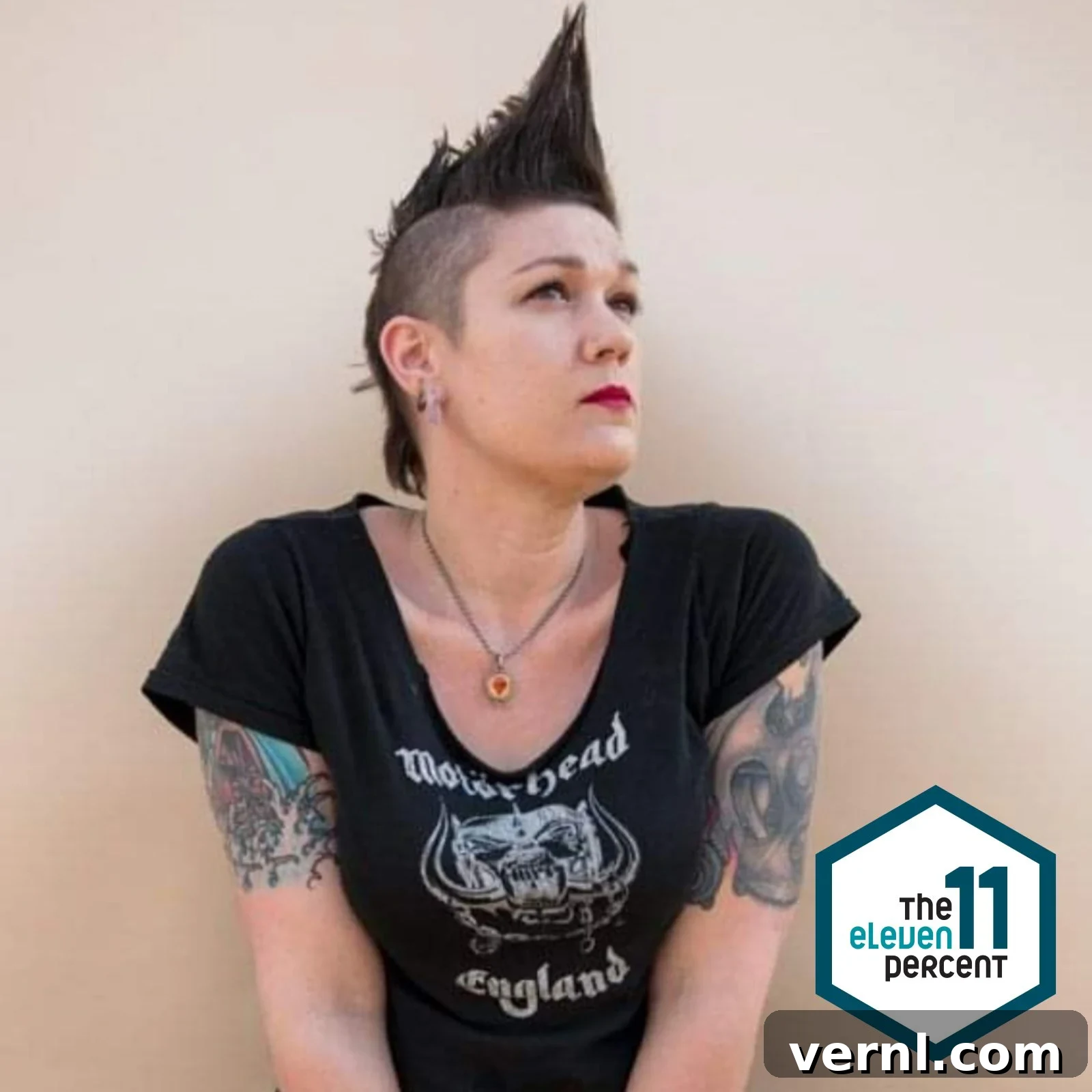
In an era where skilled trades are more vital than ever, the landscape of the workforce is slowly but surely evolving. This series proudly shines a spotlight on the trailblazing women who are reshaping traditional industries, contributing their expertise and passion to fields historically dominated by men. Today, women constitute a growing segment of the American workforce, making up 11 percent of the construction workforce alone, and their presence in other trades, such as automotive repair, is equally significant and inspiring. We aim to celebrate these individuals by sharing their unique career journeys, challenges, and triumphs in their respective fields. Do you know an extraordinary woman whose story deserves to be heard? We encourage you to email us here with your nominations.
Valerie Adams began her journey into the world of automotive repair nearly three decades ago, demonstrating an early aptitude and passion for mechanics. In her sophomore year of high school, she proactively enrolled in a vocational-technical program, laying the groundwork for her professional career while simultaneously working as a nighttime janitor to cover car insurance and fuel expenses. This early dedication and work ethic propelled her forward, culminating in her graduation in 1999 with a certified state automotive inspection license. Upon completing her program, she immediately transitioned into the professional workforce, ready to apply her newly acquired skills.
However, like many women balancing career aspirations with family life, Valerie eventually paused her professional endeavors for a decade to dedicate herself to raising her two children. Her commitment to her family was unwavering, yet her passion for the automotive trade never waned. In 2016, she made a triumphant return to the industry, playing a pivotal role in establishing an all-female auto shop – a testament to her vision for a more inclusive trade. Today, Valerie not only continues to work on cars with expertise but also stands as a passionate advocate for women seeking to forge their own paths within the automotive industry, actively championing their inclusion and professional development.
We recently had the privilege of speaking with Valerie Adams to gather her invaluable insights and perspectives on the current state and future of the auto mechanic industry, particularly concerning the experiences of women within it.
Q: What initially drew you to pursue a career in the trades, specifically automotive repair?
A: “My upbringing significantly shaped my career path. Both of my parents were quintessential blue-collar workers, instilling in me a strong work ethic and a practical approach to problem-solving. My mom always had a penchant for cool cars, and my dad was a skilled backyard mechanic, which meant our yard was perpetually filled with vehicles in various states of repair. Growing up with limited financial resources, my parents were masters of creative engineering, always finding ingenious ways to fix things around the house to make ends meet. This environment fostered a deep appreciation for practical skills and resourcefulness.
When the opportunity to attend a vocational-technical school presented itself, I was immediately captivated. The idea of learning a tangible trade, especially one involving mechanics, deeply resonated with me. I’ve always been drawn to solving puzzles and finding practical solutions to problems. In any situation, whether it’s a household issue or a complex car malfunction, I feel an intrinsic drive to improve it. Fixing cars, in particular, offers an incredibly satisfying outlet for this need. Vehicles often arrive in a state of disrepair, and it’s immensely rewarding to apply both my hands-on skills and my intellectual capacity to diagnose issues and restore them to optimal condition. It’s a tangible way to make a difference and see the direct impact of my work.”
Q: Reflecting on your early career, did you encounter challenges in finding auto shops willing to hire a female mechanic?
A: “After graduating from my program, the job search was far from straightforward; it took me weeks to secure a position. The resistance I faced was often explicit and disheartening. I distinctly recall one manager expressing uncertainty about hiring me because of my gender, concerned that upper management might disapprove of ‘a lady’ working in the shop. Another manager flat-out stated that I would be ‘too much of a distraction’ to the male mechanics, an incredibly frustrating and dismissive comment.
Eventually, I did land a job, but the circumstances were far from ideal. The individual who hired me was subsequently fired, and the pervasive rumor was that my hiring was the direct cause, which made my initial tenure incredibly uncomfortable and isolating. This period also marked my first experience with overt sexual harassment in the workplace. Despite these deeply challenging conditions, I was resolute in my decision to persevere. My ambition to excel and establish myself in this career field was stronger than the obstacles placed before me.
My experiences at a subsequent shop were equally illustrative of the systemic biases at play. They would parade me in front of customers, using my presence as a token gesture to demonstrate their commitment to ‘equality.’ However, this performative inclusivity didn’t extend to providing me with the same level of training and opportunities for skill development that my male counterparts received. I was consistently relegated to basic tasks like new car checks and oil changes, while the male mechanics were given more complex and growth-oriented assignments. I strongly felt they were intentionally stifling my professional growth, keeping me at a foundational level. Frustrated by the lack of genuine opportunity, I eventually took a job as a janitor at a dealership closer to home, hoping for a different path.
Even there, the path to becoming a mechanic was convoluted. I was told that if I could find and train another janitor to replace me, they would then consider letting me work as a mechanic. I was just 21 years old at the time, eager for any opportunity to advance in my chosen field, so I reluctantly accepted. However, I distinctly remember having to ‘bite my tongue’ because the suggestion was incredibly condescending and, frankly, ‘cringey.’ It underscored the persistent battle for recognition and equitable treatment that women in this industry often face.”
Q: In your extensive experience, what concrete steps can auto shop employers take to cultivate a more equitable and supportive environment for all mechanics, especially women?
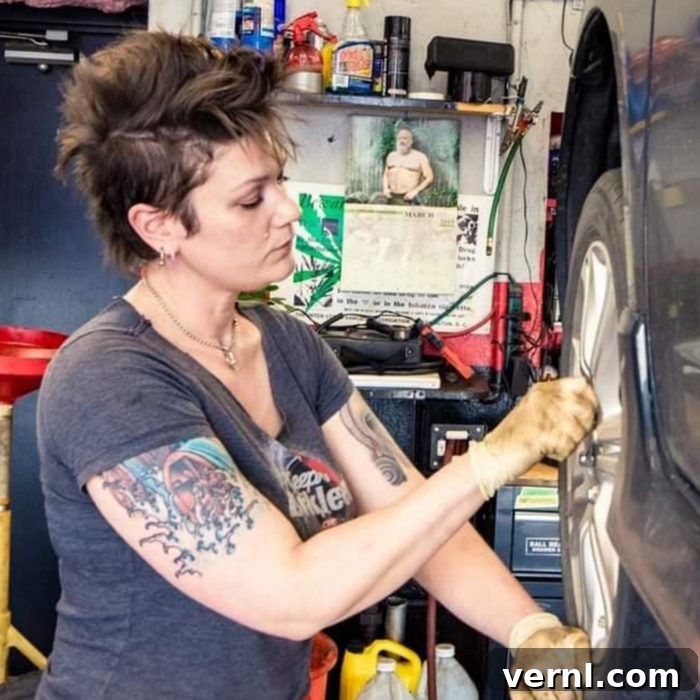
A: “To address this crucial question, I must wholeheartedly commend my current employer, Marco Motors. They have genuinely fostered the most successful, collaborative, and genuinely supportive work environment I have ever experienced throughout my career. Their philosophy is simple yet profoundly effective: happy employees are productive, high-quality employees. This belief translates into practical accommodations for family needs, understanding the importance of work-life balance for all staff. They actively work to maintain a low-stress atmosphere, which allows us to concentrate fully on the intricate task of fixing cars, rather than being constantly pressured or forced into unhealthy competition with one another. During my time at Marco Motors, I’ve had the invaluable opportunity to substantially enhance my skills as a mechanic, engage in meaningful collaboration with my colleagues, and genuinely enjoy my time at work.
Specifically concerning women in the industry, there’s a common misconception among many establishments that they need to create a ‘super special’ or entirely separate environment to accommodate female mechanics. From a woman’s perspective, this often misses the mark entirely. It’s not primarily about having a separate bathroom or superficial adjustments. What truly matters is being treated with the same respect, professionalism, and recognition as any other skilled professional. This means addressing core issues of workplace culture.
Employers must take a firm stance and promptly reprimand any mechanic who engages in inappropriate behavior, such as trying to touch colleagues while they are working. This zero-tolerance policy against harassment is fundamental. Furthermore, hiring decisions should be based purely on skill, experience, and potential, not on gendered stereotypes. It’s problematic when employers hire women because they believe women inherently possess ‘better attention to detail.’ While this trait might often be observed, employers frequently fail to understand the underlying reason for it: women in male-dominated fields often feel an immense pressure to be absolutely flawless, driven by the fear of losing their jobs because they are perceived as more expendable or less capable than their male counterparts. This isn’t about an innate biological trait; it’s a learned survival mechanism in a biased environment. True equity means recognizing and valuing competence, fostering an environment where everyone feels secure and respected, and providing equal opportunities for growth and advancement based on merit alone.”
Q: What are some of the most significant trends you are currently observing within the automotive repair industry?
A: “The automotive industry is in a constant state of evolution, and I’m seeing several notable trends that are impacting both mechanics and consumers. A major challenge facing many independent, smaller shops today is the increasing difficulty in servicing the highly complex features and advanced technologies found in new vehicles. These modern cars are essentially computers on wheels, requiring specialized, high-end diagnostic equipment and sophisticated software licenses that are incredibly expensive. Dealerships, with their larger corporate backing, can often afford these investments, but it places a significant financial burden on independent shops, making it tough for them to compete effectively.
Adding to this complexity, we often encounter situations where, while scrolling through diagnostic flow charts or technical manuals, we hit a roadblock: something labeled ‘proprietary technology.’ This designation effectively prevents us from accessing the crucial values, specifications, or detailed information needed to accurately diagnose and resolve a concern. This puts independent shops in a precarious position. We’re sometimes forced to either ‘wing it,’ which is professionally irresponsible, or spend valuable time calling around to other shops in the hope that someone might have the elusive information. More often than not, we have to direct customers back to the dealership for repairs. This is an outcome many customers actively try to avoid, as dealership services typically average about 36% more than what an independent shop would charge for comparable work. It highlights a growing accessibility issue for affordable and local car repair.
Another interesting trend I’ve noticed is the increasing effort by tool companies to appeal specifically to women mechanics. While the acknowledgment of women in the trade is a positive development, the execution often misses the mark. It’s great to be recognized, but please don’t try to market ‘pink and purple socks’ or tools to me. My primary concern isn’t the color of my tools; it’s their quality, durability, and most importantly, whether they come with a reliable warranty so I don’t have to repeatedly invest in replacements. Again, the key is to appeal to us as skilled professionals who value functionality and reliability, not as ‘ladies’ who might appreciate a specific aesthetic. Professionalism, practicality, and performance are what truly matter.”
Q: Are your children showing an interest in following your footsteps into the trades?
A: “My daughter, while incredibly talented in her own right, hasn’t shown a strong inclination towards the trades, which is perfectly fine. However, my 16-year-old son is currently enrolled in the very same automotive program that I attended years ago. It’s a wonderfully full-circle moment.
I remember when he was in eighth grade, all his classmates received permission slips to visit the local vocational-technical school. He was incredibly excited to get his signed, eager to explore the possibilities. Now, he’s in his second year of the automotive program there, completely immersed in learning the trade. What makes it even more special is that his current instructor turns out to be someone I was in school with during my time there. It just goes to show you that it really is a small world after all, and it’s incredibly rewarding to see him pursue a path that I found so fulfilling.”
Q: Beyond your daily work, how do you actively engage in mentoring the next generation of aspiring mechanics or tradespeople?
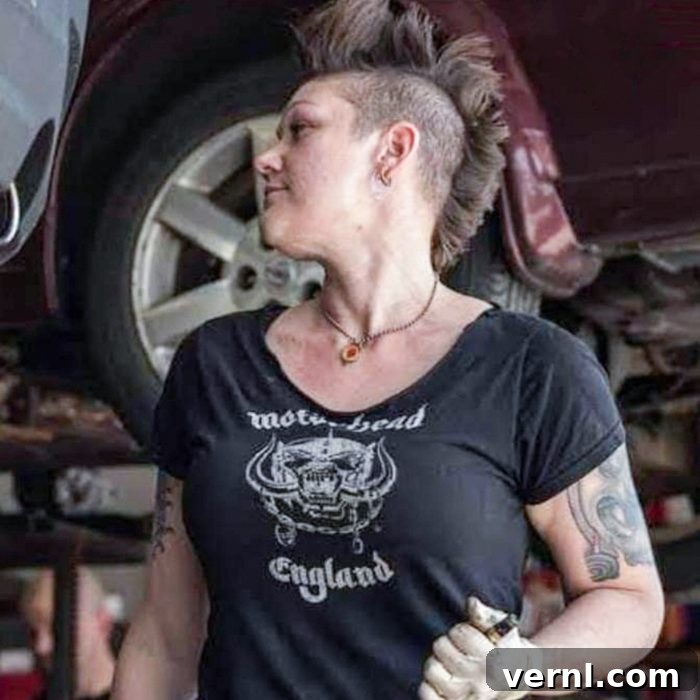
A: “Mentoring the next generation, especially young girls, has become a truly fulfilling aspect of my life. Most recently, I’ve had the wonderful opportunity to assist Girl Scouts in earning their automotive badges, which has been an incredibly rewarding experience.
To facilitate this, I developed a comprehensive curriculum specifically tailored for them. A significant part of this curriculum involved creating an informative slideshow, which my son graciously helped me assemble – a nice collaborative effort. Additionally, I set up a dedicated area within the shop, complete with a couple of cars and a table laden with various automotive parts, allowing them to engage in hands-on exploration and observation. The sessions went exceptionally well, exceeding my expectations. The girls were enthusiastic, engaged, and genuinely curious about how cars work. We’re now planning to replicate this program with other Girl Scout troops, an prospect I eagerly anticipate. It’s particularly gratifying to know that my garage fully supports this initiative, understanding the importance of inspiring young minds and demonstrating that the automotive field is accessible and exciting for everyone.”
About Valerie Adams
Valerie Adams boasts an impressive career spanning 25 years as a state-certified safety inspector. Her journey in the automotive industry began after graduating from the North Montco Technical Career Center’s esteemed automotive program. She then honed her skills as a mechanic before taking a temporary hiatus to focus on raising her children. Valerie made a powerful return to the automotive sector in 2016 and currently contributes her expertise and passion at Marco Motors, a respected, family-owned automotive shop nestled in Collegeville, Pennsylvania.
About the Writer: Karuna Eberl
Karuna Eberl is a cherished and regular contributor to Family Handyman. Over the past 25 years, she has built a distinguished career as a freelance journalist and filmmaker, dedicating herself to crafting compelling narratives about people, nature, travel, science, and history. Eberl’s exceptional talent has earned her numerous accolades for her impactful writing, her highly-regarded Florida Keys Travel Guide, and her critically acclaimed documentary, The Guerrero Project.