Bird watching is a beloved pastime, captivating millions across the United States with the vibrant colors, melodious songs, and intriguing behaviors of our feathered neighbors. With over 41 million backyard birders finding joy in this tranquil hobby, there’s no better time to join their ranks. Embarking on your birding journey can be incredibly rewarding, starting with familiarizing yourself with the species you’re most likely to encounter right outside your window. This comprehensive guide introduces you to 15 prevalent backyard birds, offering valuable insights into their distinct characteristics, identification markers, and proven strategies to welcome them to your personal green space. Get ready to transform your backyard into a bustling bird sanctuary!
While inviting birds to your yard is wonderful, sometimes certain species might choose less ideal spots for nesting around your home. For solutions, explore these effective bird nest repellents to protect your property.
American Goldfinch
Spinus tristis
The American Goldfinch is a true spectacle in any backyard, especially during spring and summer when males display their brilliant lemon-yellow plumage contrasting sharply with black wings and a black cap. Females, while also yellow, are typically a duller shade. As winter approaches, both sexes undergo a striking molt, adopting a more subdued, olive-brown coloration, making them blend seamlessly with the dormant landscape. These charming finches are primarily seed-eaters, showing a particular fondness for thistle (nyjer) seeds, which can be effectively offered in specialized thistle feeders designed to prevent waste. Beyond feeders, they are often seen foraging for seeds from various plants in gardens, including coneflowers, sunflowers, and dandelions. Their flight pattern is distinctively bouncy, a characteristic undulation as they move from tree to tree. Despite their seasonal color changes, their cheerful, lively chirps and calls remain a constant, delightful presence throughout the year, confirming their identity even in their winter camouflage.
Mourning Dove
Zenaida macroura
Mourning Doves are among the most gentle and graceful visitors to your feeders. Recognizable by their plump bodies, small heads, and long, pointed tails, these soft gray birds often exhibit a delicate pinkish hue on their chests. They are ground feeders, often seen pecking at seeds spilled from feeders or scattered directly on the ground. Their diet consists primarily of seeds, and they can consume a surprisingly large quantity, making them frequent and appreciated guests. The most iconic feature of the Mourning Dove is undoubtedly its mournful, yet soothing, “coo-OO-oo-oo-oo” call, a sound synonymous with peaceful mornings and quiet evenings. When startled or taking flight, their wings produce a distinctive, sharp whistling sound, a unique auditory cue that helps identify them even before you see them. These birds are often found nesting in trees and shrubs, building rather flimsy nests where they raise their young. Attracting them is simple: provide a constant supply of various seeds on a platform feeder or directly on the ground, and offer a shallow bird bath, as they are fond of drinking and bathing.
Blue Jay
Cyanocitta cristata
The Blue Jay is an unmistakable and charismatic bird, known for its vibrant blue, black, and white plumage, prominent crest, and bold personality. While some birders might label them as “bully birds” due to their assertive nature at feeders, often scaring away smaller species, their intelligence and playful antics are undeniable. Blue Jays are highly social, communicate through a wide range of calls, and are excellent mimics, often imitating the calls of hawks. They are also incredibly smart, known for their problem-solving abilities and tendency to cache acorns and other nuts for later consumption, playing an important role in forest regeneration. Keep a keen eye out, and you might witness them collecting and carrying away shiny objects like bottle caps, foil, or discarded bits of metal, a curious behavior that adds to their mystique. To successfully attract these magnificent birds, offer a variety of foods, with a particular emphasis on whole or shelled peanuts, which they adore. In parts of the western U.S. and Canada, related species like Steller’s Jays and Scrub Jays occupy similar ecological niches, showcasing regional diversity within the jay family.
American Robin
Turdus migratorius
Often hailed as the quintessential sign of spring, the American Robin is a familiar and cherished sight across North America. Despite this association, these resourceful birds are actually year-round residents in most parts of the U.S., adapting their behavior to the changing seasons. During warmer months, their diet consists predominantly of insects, particularly earthworms, which they expertly locate by hopping across lawns, pausing with their heads cocked, listening intently for subsurface movement. Their bright orange breast, dark head, and gray back make them easily identifiable. As winter descends and the ground freezes, insects become scarce. Robins then shift their diet to berries and fruits, retreating from open lawns into forests and dense thickets where they forage for sustenance under bark and among vegetation. As soon as the ground thaws in spring, these harbingers reappear in yards and parks, resuming their insectivorous diet and signaling the start of a new season. Attracting them involves a healthy lawn for foraging and providing sources of water. For those interested in attracting other species during the colder months, exploring tips for attracting winter birds can expand your backyard birding experience.
Ruby-Throated Hummingbird
Archilochus colubris
For many backyard birders, the Ruby-Throated Hummingbird is the ultimate avian jewel, a tiny dynamo of energy and beauty. Their iridescent green backs and glistening ruby-red throats (on males) sparkle in the sunlight, making them utterly captivating. What truly sets them apart is their astonishing aerial acrobatics: their wings beat so rapidly they create a blur, allowing them to hover effortlessly, fly backward, and dart with incredible speed. These aerial masters do not consume seeds. Instead, their diet is specialized, consisting primarily of nectar from flowers and sugar water from feeders, supplemented by tiny insects and spiders for protein. To successfully attract hummingbirds, strategic placement of red nectar feeders filled with a simple sugar-water solution (four parts water to one part sugar) is key. Additionally, planting nectar-rich flowers like bee balm, petunias, and impatiens will create a natural food source. Remember to keep feeders clean to prevent mold and bacteria. In the western U.S., you’ll encounter other magnificent hummingbird species such as Anna’s and Rufous Hummingbirds, each with their own distinct charm and fascinating behaviors.
Northern Cardinal
Cardinalis cardinalis
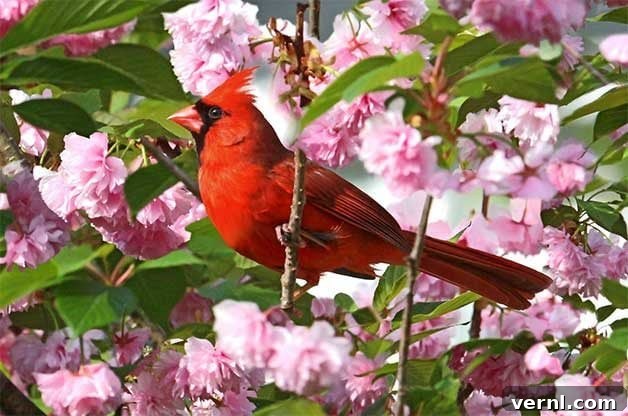
The Northern Cardinal is a year-round resident in much of its range and a universally recognized symbol of winter beauty, especially when perched against a snowy backdrop. The male is unequivocally striking with his brilliant crimson plumage, topped by a distinctive perky crest and accented by a black mask around his bright orange bill. While the female sports a more subdued brownish-red coloration, she too possesses the iconic crest and vivid orange bill, making her equally special and easy to identify. Their presence is often announced by their loud, clear, high-pitched “chip” call or their distinctive “what-cheer, cheer, cheer” or “birdie, birdie, birdie” songs, which can be heard year-round. Cardinals are typically found in dense shrubbery, woodland edges, and backyards, making them accessible subjects for birdwatchers. To draw more of these stunning birds to your yard, offer their favorite food: black oil sunflower seeds. These seeds are packed with nutrients and easy for cardinals to crack open. Learning about sunflower seed feeders and their optimal placement can further enhance your success in attracting these vibrant visitors, ensuring a constant spectacle of color and song.
Song Sparrow
Melospiza melodia
Though perhaps not the flashiest bird on this list, the Song Sparrow is incredibly widespread and common across North America, making its recognition a valuable skill for any aspiring birder. Its appearance can vary significantly depending on its geographical range, with over 20 recognized subspecies exhibiting differences in size and coloration. Generally, they are brown and streaky, with a distinctive central breast spot that serves as a key identification marker. Their songs are remarkably complex and varied, often beginning with three clear notes followed by a jumble of trills and buzzes, hence their name. However, for beginners, a more reliable identification cue is their obvious, sharp “chimp” call, often given when alarmed or communicating. Song Sparrows are typically found in brushy areas, thickets, and garden edges, often foraging on the ground for insects and seeds. They are persistent singers, especially during breeding season, and their adaptability allows them to thrive in diverse habitats, from suburban gardens to marshlands. Becoming familiar with their unique vocalizations and subtle markings will quickly make them a recognizable and welcome part of your backyard birding experience.
Black-Capped Chickadee
Poecile atricapillus
If you’ve ever dreamt of a wild bird confidently landing on your hand to take a seed, then the Black-Capped Chickadee is the bird for you! This charming and famously friendly species is one of America’s most beloved backyard birds, known for its small size, plump body, and distinctive black cap and bib contrasting with white cheeks and a gray back. Their engaging personalities and inquisitive nature make them a delight to observe. The iconic “chickadee-dee-dee” call, from which they get their name, is often one of the first bird calls many new birders learn to recognize, acting as a warning signal with more “dee” notes indicating greater danger. Beyond this, they also sing a clear, whistled “fee-bee” or “fee-bee-bee” song. Chickadees are active foragers, constantly flitting through trees and shrubs in search of insects, spiders, and seeds, often caching food for later consumption. They readily visit feeders, especially those offering black oil sunflower seeds or suet. There are six other equally endearing chickadee species found across North America, each possessing winning personalities and similar endearing behaviors, making the entire chickadee family a joy to encounter.
Tufted Titmouse
Baeolophus bicolor
Speaking of adorable, the Tufted Titmouse certainly fits the bill with its striking gray back, clean white belly, and charming rust-colored flanks. Its most distinguishing feature is the jaunty, pointed crest that gives it an alert and curious appearance. These active and vocal birds are a fantastic addition to any backyard, known for their persistent “peter-peter-peter” whistle and various scolding calls. Titmice are highly entertaining to watch at feeders; they often grab a single seed, fly to a nearby branch, and skillfully hold the seed between their feet while pounding it open with their strong bills to extract the nutritious kernel. This intelligent behavior is a hallmark of their foraging strategy. In the fall, their hoarding behavior becomes particularly evident as they meticulously store seeds and insects in tree bark crevices for sustenance during the colder winter months. They are often seen associating with mixed flocks of chickadees, nuthatches, and woodpeckers, demonstrating their social nature. To attract these delightful birds, offer black oil sunflower seeds, peanuts, and suet in various feeder types, and ensure there are plenty of trees and shrubs for cover and foraging opportunities.
Downy Woodpecker and Hairy Woodpecker
Picoides pubescens / Picoides villosus
One of the classic identification challenges for burgeoning birders involves distinguishing between the Downy Woodpecker and the Hairy Woodpecker. Both are strikingly similar in plumage: black and white with a white belly, black wings barred with white, and a distinctive red patch on the back of the male’s head. Both species also eagerly visit suet feeders, making direct comparison common. The key to differentiation lies primarily in size and bill length. The Downy Woodpecker is noticeably smaller, roughly the size of a sparrow, with a diminutive, stubby bill that is typically shorter than its head. In contrast, the Hairy Woodpecker is larger, closer to the size of a robin, and possesses a much longer, more robust bill that is almost as long as its head. While you can eventually learn to spot these subtle differences, a good rule of thumb for beginners is that the larger black-and-white woodpecker you observe is likely a Hairy Woodpecker, while the smaller one is a Downy. Additionally, their calls differ; the Downy’s call is a soft “pik” note, while the Hairy’s is a sharper “peek” and their drumming also varies in speed. Both play vital roles in controlling insect populations by foraging on tree trunks and branches.
Northern Mockingbird
Mimus polyglottos
True to its scientific name, Mimus polyglottos (meaning “many-tongued mimic”), the Northern Mockingbird is a maestro of vocalizations, capable of producing an incredibly diverse repertoire of songs and calls. An individual bird can have over 100 distinct songs, mimicking not only other birds’ calls but also an array of environmental sounds, from car alarms and squeaky gates to even human speech. This remarkable ability to mimic and string together various phrases into long, complex sequences makes them fascinating to listen to, especially during their nocturnal serenades. Mockingbirds are slender, gray-brown birds with a paler belly, and distinct white patches on their wings and outer tail feathers that are particularly noticeable in flight. They are highly territorial, often fiercely defending their nesting and foraging areas. Their diet consists mainly of insects during the warmer months and transitions to berries and fruits as the seasons change. To attract these vocal marvels to your yard, consider offering mealworms, either live or dried, and planting berry-producing bushes and trees such as elderberry, holly, or dogwood, which provide both food and excellent cover.
White-Breasted Nuthatch
Sitta carolinensis
The White-Breasted Nuthatch stands out among backyard birds for its unique and acrobatic foraging style. Unlike woodpeckers that typically climb upwards, nuthatches are famous for their ability to scale tree trunks and branches head-first, often appearing to defy gravity as they descend upside-down. This distinctive behavior allows them to discover insects and spiders hidden in bark crevices that other birds might miss. These compact birds have a striking appearance with a blue-gray back, a clean white belly, a black cap, and a short tail. Their nasal “yank-yank” call is quite distinctive and often heard echoing through wooded areas. White-breasted Nuthatches are opportunistic eaters, consuming a wide variety of foods, but they have a particular fondness for large seeds and nuts like peanuts and acorns. They often employ a clever technique: they wedge these larger food items into tree bark crevices and then use their strong, pointed bills to whack them open and extract the edible meat. Providing suet and black oil sunflower seeds, along with whole peanuts, will reliably attract these energetic and endearing acrobats to your feeders. North America is home to three other nuthatch species, all sharing this amazing climbing prowess.
Red-Bellied Woodpecker
Melanerpes carolinus
The Red-Bellied Woodpecker’s name can indeed be a source of confusion for new birders, as its most prominent red marking is the vibrant red cap and nape on the male’s head, which can be easily mistaken for the distinct “Red-Headed Woodpecker.” However, its name originates from the subtle, often difficult-to-see, reddish wash on its belly, which typically requires a close view in good light to discern. This medium-sized woodpecker features a striking black-and-white barred back (often described as zebra-striped) and a pale underside. Red-bellied Woodpeckers are common residents across the eastern half of the United States, preferring deciduous forests, suburban areas, and large parks. They are versatile foragers, consuming a diverse diet of insects, spiders, acorns, nuts, and various fruits. They are also known to store food in tree crevices for future consumption. To successfully attract these beautiful and active woodpeckers to your backyard, offering both suet and black oil sunflower seeds is highly effective. Their resonant drumming on trees and distinctive “churr-churr” calls are common sounds in areas where they reside, adding to the rich auditory tapestry of your garden.
Eastern Bluebird
Sialia sialis
Eastern Bluebirds are cherished for their brilliant sky-blue plumage, gentle demeanor, and melodious, soft warbling songs. Males boast a vivid blue back and head, a rusty-orange breast, and a white belly, while females exhibit a slightly duller but equally charming coloration. These iconic birds are primarily insectivores, making seed feeders ineffective for attracting them. Instead, their diet consists of a wide array of insects, including grasshoppers, crickets, and beetles, supplemented by berries during colder months. To draw these beloved bluebirds to your yard, offering live or dried mealworms in a specialized feeder is highly recommended. Beyond food, providing the right nesting conditions is crucial. Bluebirds are cavity nesters, and installing a properly designed and located bluebird nest box can significantly increase your chances of hosting a nesting pair. Eastern Bluebirds, as their name suggests, are found throughout the eastern half of the country, favoring open woodlands, orchards, and suburban areas with scattered trees. In the western half of North America, the Mountain Bluebird inhabits the Rocky Mountains, and the Western Bluebird fills in the Pacific coast and intermountain regions, offering regional variations of these captivating azure beauties.
Baltimore Oriole
Icterus galbula
Attracting Baltimore Orioles to your backyard might require a bit more specialized effort, but the breathtaking sight of these vibrant orange and black beauties makes it an incredibly worthwhile endeavor for any birder. Males are resplendent with their fiery orange underparts, rump, and shoulder patches, contrasting sharply with their black heads, backs, and wings. Females are typically a duller orange or yellow, with less defined markings. These stunning migratory birds spend their winters in Central America and return to North America in the spring, often arriving around the same time fruit trees begin to ripen. To entice them after their long journey, offer their favorite refreshments: halved oranges impaled on a feeder or a small dish of grape jelly. You can also provide nectar feeders (like hummingbird feeders) and offer suet or fruit in mesh bags. Their diet also includes insects and caterpillars. Baltimore Orioles are known for their distinctive, intricate woven hanging nests, often suspended from the tips of tree branches. Their rich, flute-like songs and chattering calls are a welcome sound of spring. In the western half of the country, their equally beautiful counterparts, Bullock’s Orioles, take their place, sharing a similar love for sweet treats and a preference for open woodlands and riparian areas.