
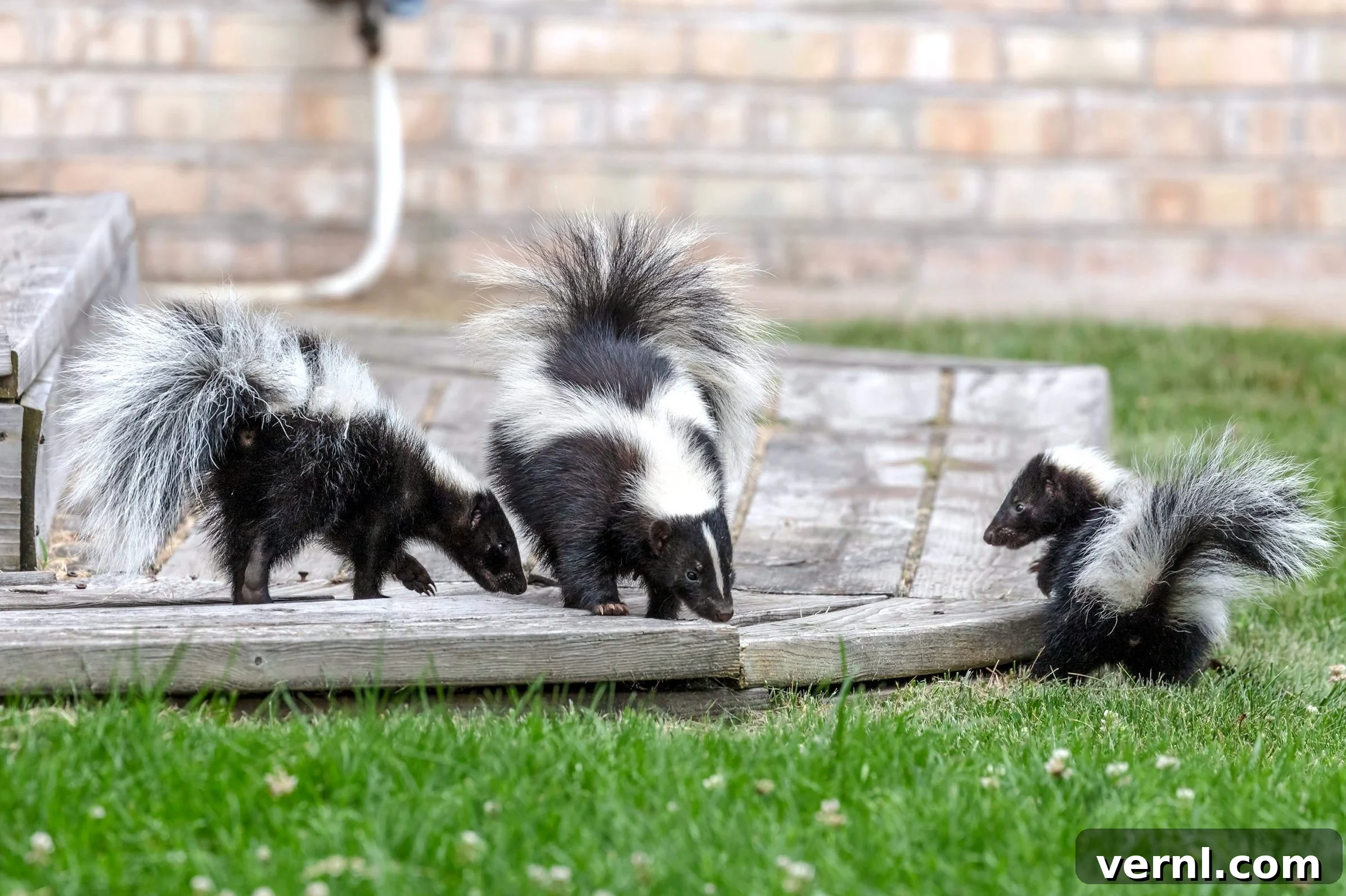
That unmistakable, pungent aroma drifting through the air often signals more than just a passing scent; it might be a subtle hint that nature’s most fragrant creatures, skunks, are active. Particularly during their mating season, which typically commences around Valentine’s Day and spans about two months, skunks can be especially aromatic. This period sees increased activity as they seek mates, making their presence, and their unique scent, more noticeable to nearby residents.
Despite their notorious smell, skunks are generally docile and quite nearsighted. These adaptable creatures are frequent visitors to residential neighborhoods, often going unseen due to their nocturnal habits. While they prefer to avoid human interaction, their quest for sustenance and shelter often brings them into close proximity with our homes and yards. To catch a glimpse of these shy animals, observe your surroundings at twilight, when they typically emerge from their dens to forage.
“Skunks, much like any other living organism, require essential resources such as food, water, and adequate shelter to thrive,” explains Thomas Ward III, a seasoned training specialist and wildlife biologist for Critter Control. “If these vital elements are readily available in your outdoor space, your yard may inadvertently become an attractive haven for skunks.” Understanding these basic needs is the first step toward effective skunk management and peaceful coexistence.
Where Do Skunks Live? Exploring Their Natural and Urban Habitats
The striped skunk, the most common species across North America, boasts an impressive range, residing in nearly every U.S. state and extending into central Canada. In their natural environment, these adaptable animals prefer to establish dens in secluded spots. You might find them denning under fallen logs, within dense brush piles, or utilizing abandoned burrows dug by other animals, such as woodchucks.
However, as human populations expand and suburban landscapes continue to emerge, the natural habitats available to native wildlife steadily diminish. “As humans urbanize the landscape and suburbs pop up, native wildlife has less and less habitat,” notes Nick Kilby, wildlife field services coordinator with Think Wild, Central Oregon. “With less habitat, they begin to make their homes in the only places available: yards and under decks.” This means your backyard, with its various structures and potential hiding spots, can become an ideal substitute for their vanishing wild homes.
Within a residential setting, skunks commonly seek refuge in quiet, undisturbed areas. This can include cozy spots beneath a deck, within a wood or rock pile, or under a shed or porch that offers easy access and concealment. Their poor eyesight, a trait evolved for detecting small insects close to the ground, can sometimes lead them into precarious situations. “Due to their extreme nearsightedness, an adaptation to hunting for insects like earthworms and grubs, skunks will sometimes fall into uncovered window wells, wander into garages or even fall into a pool,” explains John Griffin, senior director of urban wildlife programs at The Humane Society of the United States. These accidental encounters underscore the importance of securing your property to prevent harm to both skunks and your family.
What Do Skunks Eat? Uncovering Their Diverse Diet
Skunks are opportunistic omnivores with a diverse palate, primarily relying on a diet rich in insects. Their favorite meals often include grubs, crickets, beetles, and even the larvae found in wasp nests. Their keen sense of smell, compensating for their poor vision, allows them to efficiently locate these subterranean treats, often leading to characteristic cone-shaped diggings in lawns and gardens.
Beyond insects, skunks also supplement their diet with a variety of other readily available food sources. They are known to hunt and consume small rodents like mice and voles, playing a beneficial role in natural pest control. Their adaptability extends to consuming fruits, berries, nuts, and even carrion when other food sources are scarce. Furthermore, skunks are notorious scavengers. If household items such as uncovered garbage, discarded compost, or outdoor pet food are left accessible, these cunning animals will readily capitalize on these easy-to-access meals. This opportunistic feeding behavior is a primary reason skunks are often drawn into residential areas, highlighting the importance of securing potential food attractants around your home.
Are Skunks Dangerous? Understanding Their Behavior and Risks
Despite their formidable defense mechanism, skunks generally pose minimal threat to humans. They are typically shy and prefer to avoid confrontation. Like all wild mammals, however, their behavior can be unpredictable, and in extremely rare instances, they can carry rabies. Skunk spray, while incredibly potent and unpleasant, is primarily a deterrent. It can cause temporary eye irritation and, if accidentally ingested, may lead to illness. However, it’s crucial to understand that skunks view their spray as a last resort, a precious resource they are reluctant to expend. They typically only deploy it when they feel cornered, are directly threatened (often by an inquisitive pet), or perceive a danger to their young. If your beloved pet has unfortunately been sprayed, rest assured there are effective methods to get rid of skunk smell on a dog, minimizing discomfort for both you and your furry friend.
Fortunately, skunks are excellent communicators, provided you know how to interpret their signals. “Thankfully skunks are really great communicators, if you are paying attention,” says Griffin. “They give ample warnings that should be heeded, like stamping their front feet, raising their tail, hissing, arching their back, making short forward charges and twisting their hind end around in your direction.” These are clear indications that the skunk feels threatened and is preparing to spray. Some species, like the spotted skunk, even exhibit more dramatic displays. “Spotted skunks will even contort into a handstand, rump in the air with eyes still fixed on the threat,” Griffin adds. Recognizing these warning signs is vital for preventing a spray encounter. If you find yourself in the presence of a threatened skunk, the best course of action is to calmly and slowly retreat, giving the animal ample space to feel safe and disperse without resorting to its powerful defense.
What Damage Can Skunks Cause to Your Property?
While often benign, skunks can occasionally cause minor damage to residential properties, primarily stemming from their denning habits and foraging activities. When skunks choose to den under structures like decks, sheds, or porches, their digging can sometimes undermine foundations or damage insulation, although extensive structural damage is rare. The more common and noticeable issue is their diligent quest for food.
Skunks are particularly adept at digging for grubs and insects in lawns and gardens. This foraging behavior results in small, shallow, cone-shaped holes scattered across the landscape. These holes, typically 3-4 inches wide, are a clear indication of skunk activity. “When it rains heavily or the lawn is overwatered, grubs come to the surface where skunks smell them and start digging,” Griffin explains. This explains why damage can sometimes appear overnight after a particularly wet period. The good news is that this type of damage is often temporary and manageable. “Once the lawn dries out, and if the yard isn’t over-watered, the grubbing should cease,” Griffin advises. Managing lawn moisture and addressing grub populations can significantly reduce the appeal of your yard to foraging skunks, thus minimizing potential damage.
Are Skunks Misunderstood? Debunking Common Myths
Yes, skunks often bear an undeservedly negative reputation among the general public, largely due to their powerful, albeit rarely used, defensive spray. This perception often overshadows their true nature as generally mild-mannered, beneficial creatures.
“Skunk’s ability to spray can be frightening to a homeowner, but it is important to know that skunks do not want to waste their spray on you,” states Ward. This crucial point highlights that deploying their spray is a significant energy expenditure for a skunk. “Skunks utilize spray as a defense mechanism against predators, and once it is depleted, their glands take several days or more to regenerate it.” This recovery period leaves them vulnerable, making them extremely reluctant to use their spray unless absolutely necessary. Understanding this can help shift our perception from fear to a more informed perspective.
These shy, nocturnal neighbors also provide significant benefits to both human environments and local ecosystems. They act as natural predators and scavengers, maintaining ecological balance. “They provide free pest control by eating things many people don’t like, including insects, mice and even baby rats,” Griffin points out. By consuming large quantities of destructive insects like grubs, beetles, and crickets, skunks help protect gardens and lawns. Their omnivorous diet also means they help control rodent populations, naturally reducing potential disease vectors. Beyond pest control, their occasional digging can help aerate soil, and by eating fruits and berries, they contribute to seed dispersal. Recognizing these positive contributions can foster a greater appreciation for skunks and encourage more humane approaches to their management.
How To Prevent Skunks From Coming In Your Yard: Proactive Measures
“Skunks are opportunists at heart,” emphasizes Griffin, highlighting their tendency to gravitate towards easy resources. “They’re mainly attracted to low-hanging fruit like garbage and pet food left out at night, as well as convenient denning sites.” The most effective strategy for managing skunks is prevention – making your yard as unappealing as possible. By eliminating common attractants, you can significantly reduce the likelihood of these animals taking up residence.
Here are comprehensive ways you can make your property less inviting to skunks:
- Eliminate Food Sources: This is arguably the most critical step. Always bring pet food bowls inside, especially after dark. Secure all garbage cans with tight-fitting, animal-proof lids or bungee cords. Consider storing trash cans in a garage or shed until collection day. Clean up any fallen fruit from trees or berry bushes regularly. If you compost, ensure your compost pile is enclosed and not easily accessible.
- Remove Easy-to-Reach Water Sources: While less of a primary draw than food, standing water can attract wildlife. Remove accessible sources such as outdoor pet water bowls, decorative fountains that aren’t continuously circulating, and birdbaths that are low to the ground. Address leaky outdoor faucets or irrigation systems that create puddles.
- Eliminate Potential Denning Sites: Skunks seek safe, secluded places to rest and raise their young. Clear away brush piles, stacks of firewood, rock piles, and any other debris that could offer shelter. Keep your yard tidy and remove any ground-level clutter that might serve as a makeshift den.
- Secure Openings and Potential Traps: Skunks, due to their poor eyesight, can easily fall into or get stuck in various openings. Cover window wells securely with sturdy covers. Ensure any open vents, drains, or culverts are also protected with mesh.
- Block Access to Underside Structures: Inspect your property for open spaces under decks, porches, sheds, and crawl spaces. Skunks frequently utilize these areas for denning. Seal these openings using heavy-gauge wire mesh (such as galvanized hardware cloth with openings no larger than 1/4 or 1/2 inch) buried at least 6-12 inches into the ground and bent outwards in an “L” shape to prevent digging underneath. Make sure to do a thorough check around the perimeter of all ground-level structures.
How To Get Rid of Skunks: Humane and Effective Strategies
Before attempting to get rid of a skunk, it’s essential to consider whether intervention is truly necessary. Often, denning skunks are mothers raising their young or individuals seeking refuge from harsh winter conditions. In many cases, they will move on naturally once their immediate needs are met. “Tolerance is encouraged when it comes to skunks denning,” advises Griffin, emphasizing the importance of coexisting when possible. If you determine that removal is unavoidable, approach the situation with strategy and finesse. Be particularly cautious if you encounter a spotted skunk, as their populations are declining in many areas.
Here’s a step-by-step guide to humanely deterring or removing skunks:
- Check Local Regulations: Before taking any action, always consult your state’s wildlife department or local animal control. In some regions, skunks may be protected as furbearers or non-game animals, and there might be specific regulations regarding their capture or relocation.
- Employ Mild Harassment: For a skunk denning under a structure, begin with gentle persuasion. Loosely repack the den hole with leaves, straw, or crumpled newspaper. This makes the den feel less secure and appealing. Before doing so, ensure the skunk is not present or trapped inside, typically by observing activity around dusk or dawn.
- Introduce Light and Noise: If mild harassment isn’t enough, escalate by adding sensory deterrents. “Playing the radio at night or having flashing lights will also discourage skunks,” says Kilby. Skunks are nocturnal and prefer dark, quiet environments, so continuous light and noise can disrupt their habits and encourage them to relocate.
- Utilize Mild Animal Repellents: Certain scents can be off-putting to skunks. Placing a pan of ammonia-soaked rags or kitty litter near or inside the den opening can be effective. You can also spray the ground with castor oil, which skunks dislike. For a homemade solution, boil two quarts of water with two tablespoons of cayenne pepper (or two chopped jalapeños) and spray the cooled mixture on the ground around the den. Avoid commercial deterrents based on predator urine, which are often “created under inhumane conditions and are not necessary to repel skunks effectively,” according to The Humane Society.
- Install a One-Way Excluder Door: If other methods fail, a humane one-way excluder door can be temporarily installed over the main entry point of the den. This device allows the skunk to leave but prevents it from re-entering. Ensure all young are old enough to leave the den with their mother before installing this.
- Assist Trapped Skunks: If a skunk has wandered into your garage, simply leave the door open at dusk and into the evening. Skunks are nocturnal and will likely leave on their own when darkness falls. If one has fallen into an uncovered window well, gently place a rough board or a sturdy tree branch into the well, angled as an escape ramp. The Humane Society details how to do this safely without risking a spray. Retreat and allow the skunk to climb out on its own.
- Prevent Re-Entry: Once you are absolutely certain the skunk has vacated the premises, it is crucial to immediately and permanently seal all entry points. Use durable materials like heavy-gauge wire mesh buried into the ground, concrete, or robust wood to prevent future inhabitants. This reinforces the proactive prevention measures discussed earlier.
“Like most nuisance wildlife issues, an ounce of prevention is worth a pound of cure,” wisely concludes Ward. By understanding skunk behavior and implementing these humane strategies, you can effectively manage their presence around your home and foster a peaceful coexistence.