Maintain Connectivity: The Essential Guide to Uninterruptible Power Supplies for Your Home Network
In our increasingly connected world, a power outage can bring daily life to a grinding halt. When the lights go out, your home network, the backbone of modern living, becomes instantly helpless. Suddenly, working from home is impossible, that crucial email can’t be sent, online classes are disrupted, and your array of smart devices falls silent. The digital disruption caused by even a brief power interruption can be more than just inconvenient; it can impact productivity, communication, and even safety.
The Critical Need for Uninterrupted Power
Imagine being in the middle of an important video conference or submitting a time-sensitive document, only for your internet to drop without warning. For many, a reliable internet connection isn’t a luxury; it’s a necessity for remote work, online education, entertainment, and staying connected with loved ones. Smart homes rely on a constant network connection for everything from security cameras and smart thermostats to lighting and voice assistants. When your Wi-Fi dies, your smart home often goes ‘dumb’.
While an inverter generator offers a comprehensive solution for powering an entire home, it’s a significant investment, often overkill if your primary concern is merely keeping your essential network devices operational. For those who simply need to maintain their Wi-Fi and modem during short to medium-length power disruptions, a more focused, affordable, and practical solution exists: the battery backup, commonly known as an Uninterruptible Power Supply (UPS).
Understanding Uninterruptible Power Supplies (UPS)
A UPS unit is more than just a battery; it’s an intelligent power management system designed to provide instantaneous backup power to sensitive electronics. At its core, a UPS is a combination of a battery, an inverter, and a charging circuit, all encased in a compact unit. When plugged into a wall outlet, it constantly monitors the incoming power while simultaneously charging its internal battery and passing clean power through to your connected devices. The moment it detects a power failure or a significant voltage drop, the UPS seamlessly switches to battery power, ensuring that your devices—like your Wi-Fi router and modem—continue to operate without a single flicker or interruption.
Beyond simply providing backup power, most modern UPS units also offer surge protection. This crucial feature safeguards your valuable electronics from damaging voltage spikes that can occur during electrical storms or when power is restored after an outage. By filtering and regulating the power, a UPS helps to extend the lifespan of your network equipment, making it a dual-purpose investment in both uptime and protection.
Choosing the Right UPS: Size, Runtime, and Features
Selecting the appropriate UPS involves understanding its specifications, primarily rated in Volt-Amps (VA) and Watts (W). While VA represents the apparent power a UPS can deliver, Watts indicate the real power it can supply to your devices. Many manufacturers market their UPS systems using the VA measurement, but both figures are important. For most home networking equipment, which typically consumes relatively low wattage, focusing on the VA rating combined with the expected runtime is key.
For instance, a smaller 350-VA unit, often available for around $50, can power a standard Wi-Fi router for approximately two hours, depending on the router’s specific power consumption (wattage). On the other end of the spectrum, a large 2,200-VA system, costing upwards of $700, could keep a router running for an impressive 18 hours or more. The choice depends entirely on your specific needs and budget.
While a powerful, expensive system might be justifiable for professionals who rely on their computer and entire home network for their livelihood, most homeowners simply want to keep their Wi-Fi operational during typical outages. For this common scenario, a modest UPS unit offers the best balance of cost and performance. With this in mind, our comprehensive test focused on popular 600-VA units, which strike an excellent balance between affordability and sufficient runtime for most home networking needs.
Key Factors to Consider When Buying a UPS:
- VA and Wattage: Match the UPS capacity to the total power draw of your devices. For a router and modem, 600VA is often a sweet spot.
- Runtime: This is arguably the most critical factor for a home user. How long do you need your Wi-Fi to stay on? Look for units that specify runtime under typical loads.
- Number of Outlets: Ensure there are enough outlets for all the devices you intend to power (router, modem, maybe a VoIP phone or smart home hub). Look for a mix of battery-backed and surge-only outlets.
- USB Charging Ports: Some UPS models include USB ports, which can be incredibly useful for charging smartphones or tablets during an outage.
- LCD Display: A built-in LCD screen can provide valuable real-time information, such as battery status, load level, and estimated runtime, making it easier to manage your backup power.
- Software Integration: Higher-end units may come with software that allows you to monitor the UPS, schedule shutdowns, and manage power settings from your computer.
- Battery Replaceability: Over time, UPS batteries degrade. Look for models with user-replaceable batteries to extend the life of your unit.
HomeLAB’s UPS Test: Putting 600VA Units to the Challenge
To provide clear, real-world data, we subjected three popular 600-VA UPS units to a rigorous test. Our goal was to determine which unit offered the best performance in terms of runtime for a typical home Wi-Fi setup. The methodology was straightforward and designed to simulate a common power outage scenario:
- Initial Charging: Each UPS unit was fully charged for a minimum of eight hours, as recommended by the manufacturers, to ensure optimal battery performance.
- Consistent Load Application: Once fully charged, we connected our standard homeLAB Wi-Fi router, which consistently draws 15 watts of power. This represents a typical, low-power essential device during an outage.
- Simulated Outage: With the router connected and drawing power, the UPS unit was unplugged from the wall outlet, immediately activating its battery backup system.
- Monitoring Runtime: We then connected to the Wi-Fi network and continuously monitored the connection. The test concluded the moment the UPS battery died, and the Wi-Fi connection was lost.
This controlled experiment allowed us to directly compare the efficiency and battery capacity of each unit under identical conditions, providing a practical measure of their real-world performance.
Detailed Test Results and Analysis
The results of our HomeLAB UPS test revealed clear differences in performance among the three 600-VA units. While all offered a viable solution, one unit stood out for its superior runtime, a critical factor for sustained connectivity during an outage.
The Contenders:
-
Amazon Basics 600VA
- Cost: Approximately $60
- Run-time: Four hours
- Editor’s Note: The Amazon Basics unit offers a very attractive price point, making it an accessible entry-level option. However, its four-hour runtime, while decent for very short outages, may not be sufficient for longer disruptions, especially when compared to its competitors. For a few extra dollars, you might find significantly more peace of mind.
-
APC 600VA
- Cost: Approximately $75
- Run-time: Five hours and 10 minutes
- Editor’s Note: APC has long been a reputable name in the UPS market, known for its reliability and robust build quality. The APC 600VA unit performed admirably, delivering over five hours of continuous power. This extended runtime, coupled with the brand’s reputation for durability, justifies its slightly higher cost for many users seeking dependable performance.
-
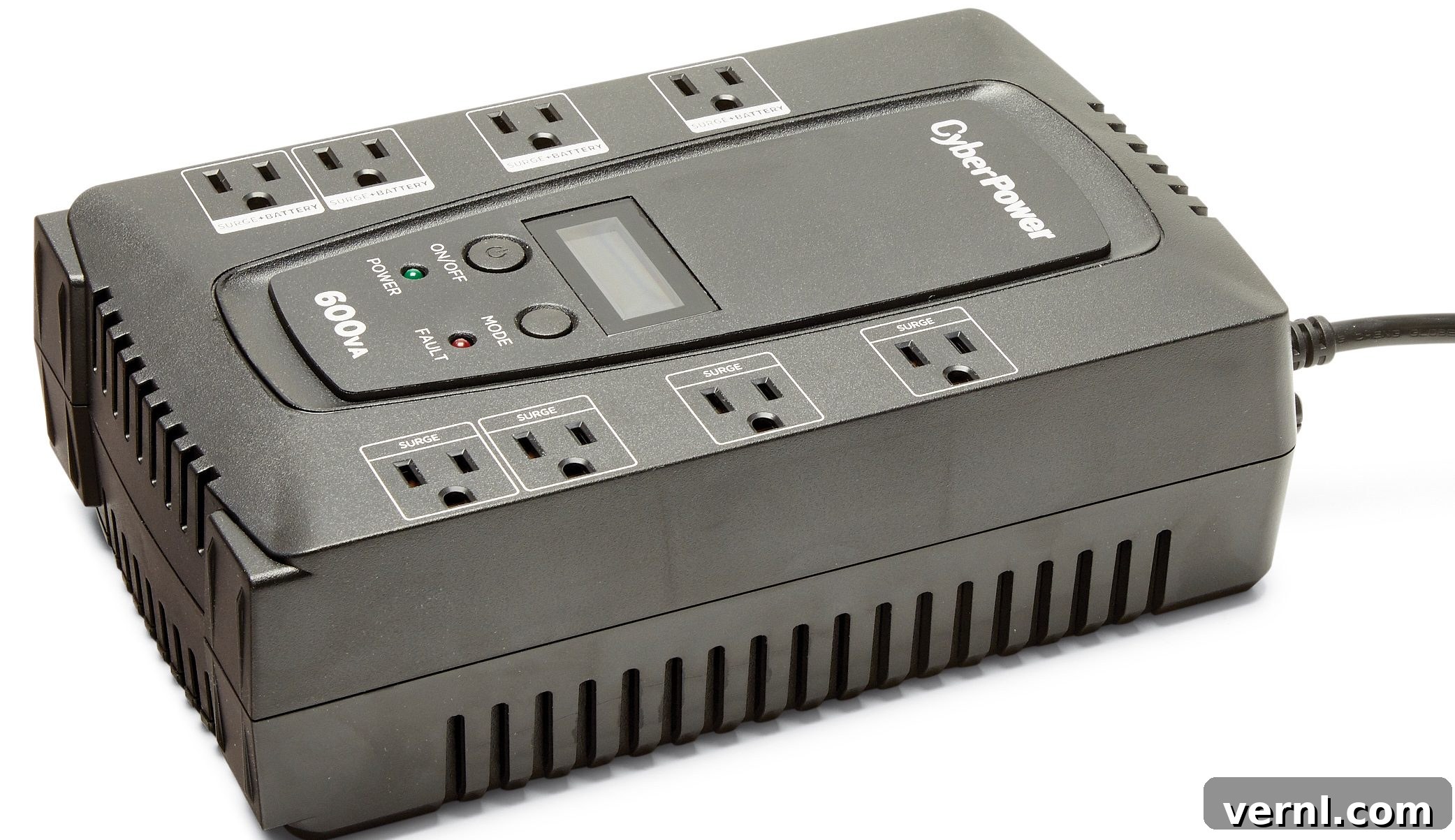
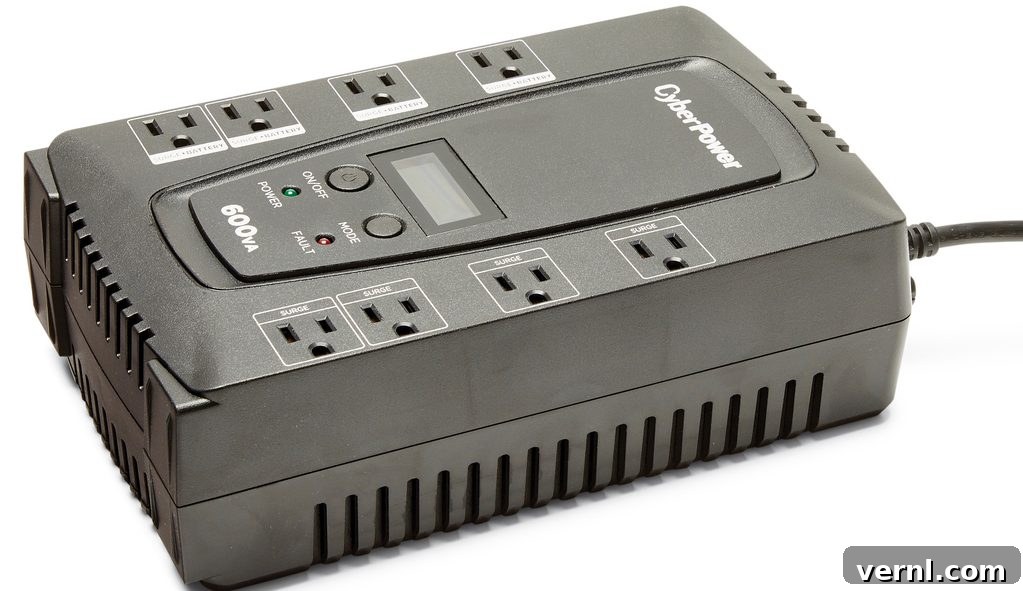
CyberPower CP600LCD 600VA
- Cost: Approximately $70
- Run-time: Five hours and 30 minutes
- Editor’s Note: The CyberPower 600VA emerged as the clear leader in our test. With an impressive runtime of five hours and 30 minutes, it provided the longest sustained power to our Wi-Fi router. Combined with a highly competitive price that often beats the APC model, its superior performance makes it our top pick for anyone needing reliable, extended backup for their home network. The LCD display is also a welcome feature for real-time monitoring.
Key Takeaways from the Results:
The CyberPower unit consistently outlasted its rivals, offering a valuable extra 20 minutes over the APC and a full 90 minutes more than the Amazon Basics model. This additional runtime can be crucial during longer outages, allowing more flexibility for work, communication, or simply staying informed. While the official prices are listed, it’s worth noting that these units are frequently found on sale online, so smart shopping can yield even better value.
The performance gap between the Amazon Basics unit and the other two was significant. While its cost-effectiveness is appealing, those prioritizing extended uptime will likely find the extra investment in an APC or CyberPower unit to be well worth it. APC’s strong brand reputation for reliability also plays a role in its appeal, even if its runtime was slightly edged out by CyberPower.
Beyond Wi-Fi: Other Uses for a Home UPS
While primarily focused on maintaining your Wi-Fi, a UPS offers versatility for other low-power, essential electronics in your home. Consider plugging in:
- VoIP Phone Systems: Keep your landline communication active even if traditional phone lines are down.
- Smart Home Hubs: Ensure your smart home ecosystem remains partially functional, allowing basic control of smart lights or sensors.
- Security Camera DVRs/NVRs: Maintain recording capabilities for a critical period, enhancing home security during an outage.
- Small LED Lamps: Provide essential emergency lighting in a specific area.
- Device Charging Stations: Use the UPS to charge your smartphone or tablet if it has USB ports, keeping communication lines open.
It’s important to remember that a typical home UPS is not designed for high-wattage appliances like refrigerators, microwaves, or desktop computers with powerful gaming GPUs. Stick to essential, low-power devices to maximize runtime.
Installation and Maintenance Tips for Your UPS
Setting up your UPS is straightforward. Simply plug it into a wall outlet, then plug your router, modem, and any other desired low-power devices into the UPS’s battery-backed outlets. Allow the unit to fully charge before its first use. For optimal performance and longevity:
- Ventilation: Place your UPS in a well-ventilated area, away from direct sunlight or heat sources, to prevent overheating.
- Avoid Overloading: Do not exceed the UPS’s wattage capacity. This will significantly reduce runtime and can stress the unit.
- Battery Health: Most UPS batteries last 3-5 years. When the battery life diminishes (indicated by shorter runtimes or error alerts), replace it with a compatible battery from the manufacturer or a reputable third-party supplier. Many models allow for user-friendly battery replacement.
- Regular Testing: Periodically test your UPS by unplugging it from the wall to ensure it kicks in properly and provides the expected runtime.
Conclusion: Invest in Connectivity and Peace of Mind
In an era where connectivity is king, investing in a reliable Uninterruptible Power Supply for your home network is no longer a luxury but a sensible necessity. For a relatively small investment, a UPS provides a robust defense against power outages, ensuring your Wi-Fi, modem, and other crucial low-power devices remain operational. This translates into continued productivity, uninterrupted communication, and invaluable peace of mind when the grid goes dark.
Our tests clearly demonstrated that while all 600-VA units provide a basic level of protection, the CyberPower CP600LCD offers exceptional value and superior runtime, making it our top recommendation for most home users. However, if brand reliability is your utmost priority, APC remains a solid choice. Regardless of your final selection, a well-chosen UPS is an essential tool for navigating the modern challenges of an unpredictable power supply, keeping you connected when it matters most.