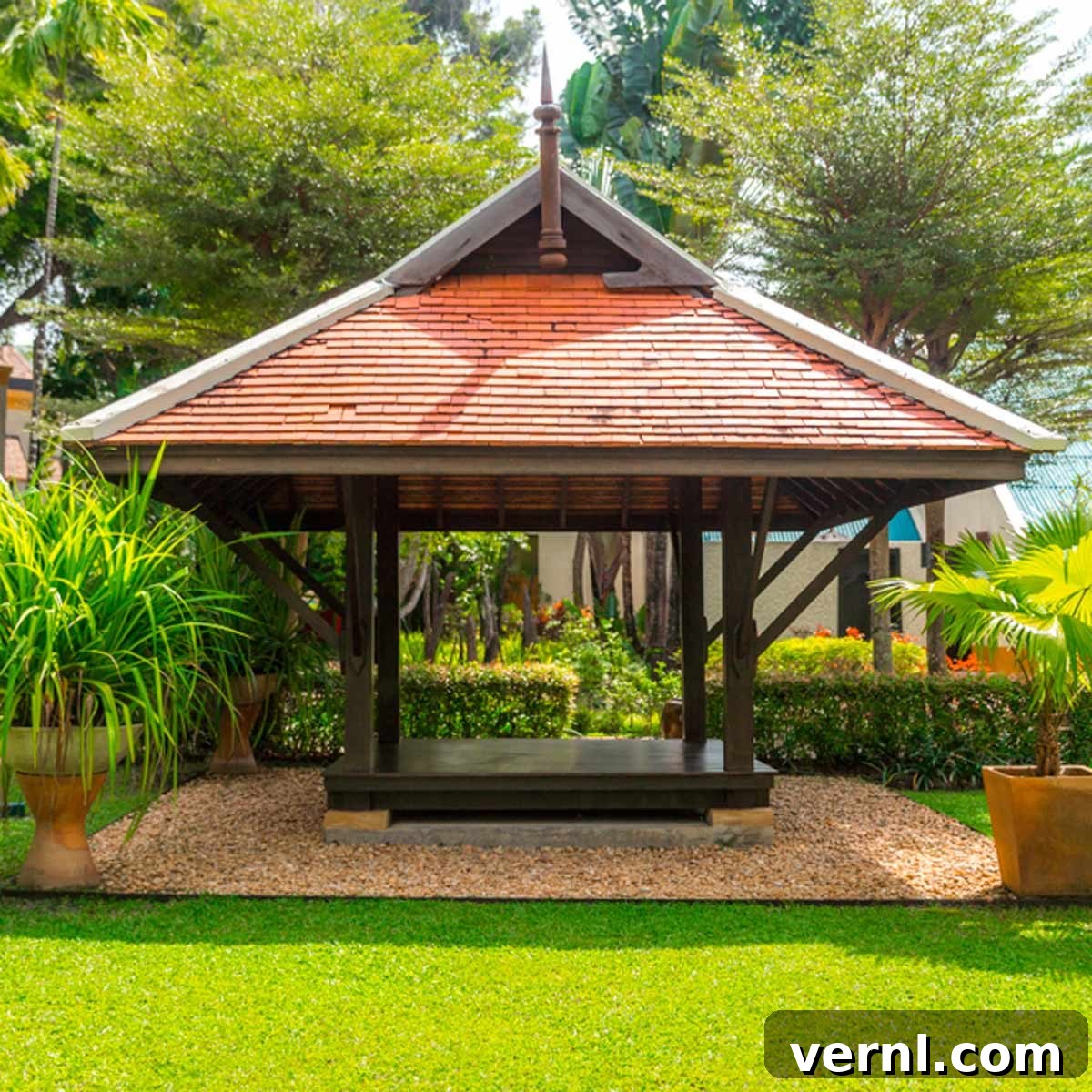
The Ultimate Guide to Gazebos: Elevate Your Outdoor Living Space
Imagine a tranquil retreat in your own backyard, a dedicated space where you can unwind, entertain, and simply savor the outdoors, regardless of the weather. That’s the undeniable allure of a gazebo. More than just a garden accessory, a thoughtfully placed gazebo transforms your outdoor area into a functional and beautiful extension of your home. With a robust roof offering consistent shelter from unexpected rain showers and ample open sides inviting cooling breezes, a gazebo provides the perfect sanctuary to enjoy your backyard to the fullest, fostering an inviting atmosphere for both serene relaxation and lively gatherings.
From intimate reading nooks to expansive entertainment hubs, gazebos are available in a diverse array of styles, sizes, and materials, ensuring a perfect match for every homeowner’s vision, budget, and garden aesthetic. This comprehensive guide will immerse you in the world of gazebos, covering everything from fundamental definitions and types to the intricate details of selecting, installing, and maintaining the ideal structure that will elevate your outdoor living experience for countless years to come.
What Exactly Is a Gazebo? Understanding This Classic Outdoor Structure
At its essence, a gazebo is a freestanding, covered outdoor structure, primarily distinguished by its open sides and a solid, protective roof. This enduring garden feature serves as both a picturesque focal point and a highly functional shelter, meticulously designed to offer comfort, shade, and protection from the elements. While contemporary designs can introduce variations, the quintessential gazebo often features an octagonal or hexagonal shape, though square, rectangular, and circular designs are also widely popular, each bringing its unique charm to the landscape.
Gazebo vs. Pergola: Clearing Up the Common Confusion
It’s common for homeowners to confuse gazebos with pergolas, but a fundamental difference in their design and function sets them apart. The critical distinction lies in their roofing structures:
- Gazebo: A gazebo boasts a fully covered, solid roof, providing complete protection from direct sun exposure and rain. This integral feature makes gazebos exceptionally well-suited for year-round enjoyment, ensuring maximum shelter and comfort even during challenging weather conditions.
- Pergola: Conversely, a pergola typically features an open, slatted roof or a series of crossbeams, offering only partial shade. While visually stunning, often adorned with vine-covered plants to create dappled sunlight, pergolas are primarily designed as architectural elements and shaded pathways rather than complete weather shelters. They often extend from a house or delineate a garden path, inviting a different kind of interaction with the outdoor environment.
In essence, a gazebo functions as a true outdoor room – a dedicated destination within your garden – offering a comprehensively protected space for relaxation, dining, or entertainment. A pergola, while undeniably enhancing outdoor aesthetics and providing a measure of shade, acts more as an open framework for greenery or a stylish transition area. While some gazebos can be attached to a house and designed with just three open sides, the most iconic and frequently chosen form remains a freestanding structure, inviting you to step into its embracing shelter.
Exploring the Diverse World of Gazebos: Permanent vs. Portable Solutions
Gazebos can be broadly classified into two primary categories, each presenting distinct advantages and catering to different needs, budgets, and desired levels of permanence. Understanding these types is crucial for making an informed decision about your outdoor structure.
Permanent Gazebos: Enduring Beauty and Lasting Value
Permanent gazebos are robust, durably constructed garden structures engineered to be a fixed and enduring feature within your landscape. These substantial structures are built with longevity in mind, designed to gracefully withstand diverse weather conditions and provide reliable shelter for many decades. They are typically fashioned from high-quality, weather-resistant materials such as pressure-treated woods (like cedar, redwood, or treated pine), advanced composite materials, or resilient vinyl. Crucially, permanent gazebos are anchored securely to a sturdy foundation, ensuring their stability and structural integrity.
Their roofs are invariably solid and can be finished with traditional shingles, durable metal panels, or cedar shakes, often mirroring the roofing materials of the main house for a cohesive and integrated aesthetic. A solid floor, commonly crafted from wood decking, composite boards, or poured concrete, further defines the space and significantly enhances its functionality and comfort. Beyond providing superior shelter and captivating aesthetic appeal, permanent gazebos are known to significantly increase property value and enhance the overall curb appeal of your home, making them a wise and lasting investment for homeowners seeking a dedicated, beautiful, and enduring outdoor living space.
Portable Gazebos: Flexible Shade and Ultimate Convenience
In stark contrast, portable gazebos prioritize flexibility, affordability, and ease of use. These temporary structures are engineered for quick and straightforward assembly and disassembly, rendering them ideal for occasional use, seasonal deployment, or for individuals who prefer not to commit to a permanent fixture. Portable gazebos typically feature lightweight metal frames (commonly constructed from aluminum or steel) that support a fabric roof, often made from materials like durable polyester or canvas, which are frequently treated for enhanced UV resistance and water repellency.
These models usually do not include a permanent floor, being designed to be set directly on grass, an existing patio, or a deck surface. They are typically secured with ground stakes, guy ropes, or weighted bases to ensure stability. Portable gazebos are incredibly versatile, offering instant shade and practical rain protection for a multitude of outdoor activities, including backyard barbecues, casual outdoor parties, family picnics, or simply providing temporary cover for a hot tub or a grilling station. While they may not possess the same grand aesthetic presence as their permanent counterparts, their inherent practicality and relative affordability make them an exceptionally popular choice for flexible, temporary outdoor solutions.
A growing category of “hardtop” portable gazebos now bridges the gap between temporary and permanent structures. These options offer more durable metal or polycarbonate roofs affixed to a semi-permanent frame, providing superior stability and extended longevity compared to traditional fabric-top models, while often retaining a degree of portability that a fully permanent structure cannot offer.
The Advantages and Important Considerations of Owning a Gazebo
Deciding to integrate a gazebo into your property involves a thoughtful evaluation of its numerous benefits against several practical considerations. A strategically chosen and well-maintained gazebo can profoundly enhance your lifestyle and significantly augment your property’s appeal, but it’s essential to grasp the full scope of what such an investment entails.
Pros: Why a Gazebo is a Worthwhile Investment for Outdoor Living
- Enhanced Outdoor Living Experience: A gazebo meticulously crafts a designated, sheltered haven that actively encourages more time spent enjoying the outdoors. It provides an ideal setting for dining al fresco, quiet reading sessions, comfortable relaxation, hosting intimate parties, or simply appreciating your garden in supreme comfort, shielded from the elements.
- Superior Weather Protection: Equipped with a robust, solid roof, a gazebo delivers excellent protection from direct, intense sunlight, harmful UV rays, and unexpected rain showers. This invaluable feature allows you to consistently enjoy your outdoor space, extending its usability and comfort across different seasons and weather conditions.
- Significant Aesthetic Appeal & Focal Point: Gazebos are inherently elegant structures that introduce architectural interest, charm, and a sense of timeless beauty to any landscape. They naturally serve as a stunning focal point, drawing the eye and substantially enhancing the overall visual splendor of your garden and property.
- Potential Increase in Property Value: A thoughtfully designed, expertly constructed, and well-maintained permanent gazebo is a highly desirable feature that can meaningfully increase the market value and overall attractiveness of your home, making it a sound and tangible investment.
- Remarkable Versatility: Gazebos offer incredible adaptability and can be customized for a diverse range of uses. They can comfortably house an outdoor kitchen, provide elegant cover for a hot tub or spa, function as a serene meditation space, or even transform into a quaint and inspiring outdoor office.
- Enhanced Privacy: While inherently open, gazebos can skillfully impart a welcoming sense of enclosure and privacy, particularly when complemented by strategic screening options or integrated within lush, mature landscaping.
Cons: Important Practical Considerations Before You Invest
- Initial Cost: Permanent gazebos represent a notable financial investment. Standard models typically range from $3,500 to nearly $10,000, with prices escalating significantly for premium materials, custom designs, and added luxury accessories such as a charming cupola, an intricate tiered roof, or integrated insect screening. Portable gazebos are considerably more affordable, often starting around $400, but generally offer reduced durability and aesthetic grandeur.
- Installation Complexity: Permanent gazebos demand a sturdy, professional-grade foundation and often require advanced construction skills. This frequently necessitates obtaining appropriate permits and undergoing inspections, which can add both to the overall cost and the project timeline.
- Ongoing Maintenance Requirements: Depending on the chosen construction materials, gazebos will require ongoing maintenance to preserve their appearance and structural integrity. Wooden gazebos, in particular, need regular cleaning, staining, or painting to protect them effectively from weathering, potential rot, and insect damage.
- Space Allocation: A permanent gazebo requires a dedicated footprint within your yard. Careful and meticulous planning is essential to ensure it integrates seamlessly and proportionally within your existing landscape without creating an overcrowded or disproportionate feel.
- Permits & Local Regulations: Constructing a permanent outdoor structure almost invariably requires adherence to local zoning regulations and the acquisition of specific building permits. Neglecting these administrative requirements can lead to costly fines, mandatory modifications, or even the forced removal of your gazebo.
- Durability Concerns (for portable models): While offering undeniable convenience, portable gazebos are inherently less durable than their permanent counterparts. Fabric roofs are susceptible to tearing, lightweight frames can bend or warp in strong winds, and they often necessitate seasonal storage during harsh weather conditions, which can limit their year-round usability.
Choosing Your Perfect Gazebo: Style, Size, and Integrated Features for Your Oasis
The process of selecting the ideal gazebo extends far beyond simply picking an aesthetically pleasing structure. It demands careful and deliberate consideration of its specific style, appropriate size, and the essential features that will most effectively complement your unique lifestyle and existing outdoor aesthetic. The good news is that there truly is a perfect style and size gazebo available for every backyard, from charming, quaint garden nooks designed for intimate moments to expansive, grand entertaining areas built for memorable celebrations.
Defining Your Gazebo’s Distinct Style
Gazebos are offered in an impressive and diverse array of architectural styles, ensuring there’s a design to perfectly harmonize with your home’s existing architecture and your personal design sensibilities:
- Traditional Victorian: These gazebos are immediately recognizable by their ornate detailing, intricate gingerbread trim, delicate spindle work, and often feature a majestic multi-tiered roof. They evoke a profound sense of historical elegance, romance, and timeless charm, making them perfect for classic garden settings and period homes.
- Rustic/Lodge: Often constructed from natural, minimally finished wood or sturdy logs, characterized by their simpler, more robust lines. These styles blend effortlessly into natural landscapes, woodland environments, or complement homes with a rustic, craftsman, or farmhouse aesthetic.
- Modern/Contemporary: Defined by clean lines, minimalist designs, and frequently incorporating materials like sleek metal, expansive glass, or innovative composite materials. These gazebos perfectly complement modern homes and contemporary landscapes, offering a sophisticated, understated, and highly functional elegance.
- Asian/Oriental: Drawing inspiration from traditional pagoda architecture, these styles often feature distinctive tiered roofs with gracefully upturned eaves. They bring a profound sense of tranquility, balance, and exotic beauty to a Zen garden or an oriental-themed landscape.
- Colonial: Characterized by classic symmetry, sturdy and straightforward posts, and often a more subdued, yet dignified, elegance compared to the more elaborate Victorian styles. These designs integrate seamlessly with traditional American home architecture and established garden schemes.
It is paramount to consider the architectural style of your home and the overarching theme of your garden to ensure your chosen gazebo feels like a natural, integral extension of your property, rather than an unrelated or haphazard addition.
Determining the Appropriate Size for Your Space
The optimal size of your gazebo should be primarily dictated by its intended primary use and the practical space limitations within your yard. Gazebos are thoughtfully sized to accommodate everything from a solitary, cozy retreat to a grand, celebratory venue:
- Small (8-10 feet in diameter or side length): Ideally suited for accommodating a couple of comfortable chairs and a small table, perfect for an intimate card game, a quiet conversation area, or a peaceful reading spot. These smaller dimensions are excellent for compact backyards or as a charming, understated garden accent.
- Medium (10-12 feet): Comfortably accommodates a small to medium-sized dining set or a spacious lounge area designed for a few people. This size is superb for casual family meals, entertaining a small group of friends, or simply enjoying everyday outdoor living.
- Large (12-16 feet and up): These generous dimensions are well-suited for hosting lavish dinner parties, accommodating larger family gatherings, or providing ample covered space for a hot tub or spa. Commercial-grade gazebos are even more expansive, specifically engineered to host significant events like weddings, corporate functions, and large outdoor parties.
Always meticulously measure your intended installation area and utilize temporary stakes or ropes to visually outline the gazebo’s footprint. This allows you to accurately visualize its scale and proportion within your yard before committing to a purchase. For further inspiration, be sure to explore our curated list of favorite backyard gazebo ideas for summer.
Integrating Essential Features and Smart Accessories
To truly maximize the comfort, functionality, and overall enjoyment of your gazebo, carefully consider incorporating thoughtful integrated features and practical accessories:
- Electrical Wiring: Running electricity to your gazebo unlocks a world of possibilities, providing essential power for lighting, entertainment systems, and charging devices.
- Thoughtful Lighting: Crucial for extending the usability of your gazebo into the evening hours. Options range from elegant overhead ceiling lights, charming string lights, stylish sconces, to convenient solar-powered fixtures. Thoughtful lighting significantly enhances the gazebo’s ambiance and practical utility at night.
- Ceiling Fans: A ceiling fan is a transformative addition, especially in warm and muggy climates. It provides much-needed air circulation, making the space considerably more comfortable and enjoyable during hot summer days and balmy evenings.
- Insect Screening: For effective protection against bothersome insects, particularly mosquitoes, consider installing retractable or fixed screens. This thoughtful addition transforms your gazebo into an insect-free sanctuary, perfect for enjoying peaceful evenings outdoors without interruption.
- Built-in Seating: Integrating custom benches or seating can efficiently save space while creating a cohesive and polished aesthetic within the gazebo.
- Heating Elements: For cooler climates or to comfortably extend the outdoor season, installing patio heaters or infrared heating elements can make your gazebo a cozy haven even on chilly days.
- Enhanced Flooring: Beyond the basic foundation, consider decorative flooring options such as interlocking tiles, comfortable outdoor rugs, or a beautifully finished wood deck to further enhance comfort, style, and personalization.
Strategic Placement: Finding the Ideal Location for Your Gazebo
The ultimate success and enjoyment of your gazebo project heavily depend on its strategic placement within your landscape. A meticulously chosen location can transform your gazebo into a true personal oasis, offering stunning views and achieving seamless integration with your garden design. Before any ground is broken, invest ample time in carefully walking around your property, observing various vantage points, and thoughtfully envisioning how the gazebo will organically fit into your overarching outdoor design.
Key Factors for Optimal Gazebo Placement
- Vantage Points and Captivating Views: Seek a location that not only offers an equally attractive view from your house looking towards the gazebo but also, critically, provides delightful vistas from inside the gazebo looking out into your meticulously designed garden, a serene water feature, or the natural landscape beyond. Strive to avoid positions that primarily overlook an unsightly fence or a neighbor’s intrusive window.
- Effortless Accessibility: Ensure your gazebo is easily and conveniently accessible from your main home. A thoughtfully designed pathway leading to it creates an inviting journey and significantly encourages more frequent use. While it should evoke a sense of a special destination, it should never feel inconvenient or cumbersome to reach.
- Dynamic Sun and Shade Patterns: Diligently observe the movement of the sun across your yard throughout various times of the day and across different seasons. Strategically position your gazebo to capitalize on natural shade provided by mature trees, or specifically locate it to provide essential shade in an area that receives intense, prolonged sun exposure. This crucial consideration is paramount for maximizing comfort and usability.
- Desired Privacy Levels: If privacy is a significant concern, consider areas that are naturally shielded by existing landscaping elements, robust fences, or strategically planted dense shrubbery. Supplementary screens, lattice work, or additional strategic planting can further enhance privacy without completely enclosing or isolating the structure.
- Harmonious Integration with Landscape: Carefully contemplate how the gazebo will seamlessly integrate with your existing garden design. It should unequivocally complement, rather than compete with, other established outdoor elements such as patios, ponds, elaborate garden beds, or existing hardscaping.
- Proximity to Essential Utilities: For permanent gazebos intended to feature lighting, ceiling fans, or other electrical amenities, carefully evaluate the cost-effectiveness and practical feasibility of running power lines to your chosen location. Similarly, proximity to a water source might be desirable for ease of plant care or cleaning.
Addressing Specific Yard Sizes and Navigating Regulations
- Small Yards: Do not be deterred if you possess a tiny yard. A thoughtfully chosen smaller gazebo or even a versatile pop-up portable gazebo can still provide a beautiful focal point and a cherished sense of destination without overwhelming the limited space. Consider corner placements or models specifically designed for compact outdoor areas.
- Local Zoning and Building Permits: This is an absolutely critical and non-negotiable step for any permanent outdoor structure. Always, without exception, check local zoning regulations and the specific rules of your homeowner association (HOA) before initiating any construction. A building permit will almost certainly be required for permanent structures to ensure they comply with essential safety and structural codes. Disregarding these vital regulations can lead to substantial costly fines, mandatory structural modifications, or even the unfortunate forced removal of your gazebo.
Investing the necessary time and effort in meticulously planning the perfect location will ensure your gazebo becomes a truly cherished and enduring addition to your home for many fulfilling years.
Gazebo Installation: From Foundation Work to Exquisite Finishing Touches
The installation process for a gazebo can vary significantly in complexity, ranging from a straightforward, leisurely afternoon assembly for lightweight portable models to a multi-stage, intricate construction project for robust permanent structures. A clear understanding of the steps involved is absolutely vital for ensuring a successful and satisfying outcome.
Effortless Portable Gazebo Setup
Portable gazebos are specifically engineered for uncomplicated and rapid assembly. They typically arrive with clear, concise instructions and require only minimal basic tools. The most crucial aspect of setting up a portable gazebo is ensuring it is staked or weighted securely in place, particularly if it will be exposed to even moderate winds. Supplementary weighted bases or sandbags can provide crucial additional stability. While these versatile structures can be placed almost anywhere – on a lawn, an existing patio, or a deck – always select a consistently level surface to guarantee optimum safety and stability.
Permanent Gazebo Construction: A Detailed Overview
Installing a permanent gazebo is a considerably more involved and labor-intensive process, frequently necessitating professional assistance or advanced DIY skills. This process invariably commences with the establishment of a robust and enduring foundation:
- The Foundation: This represents the absolutely crucial first step, providing the essential stability and ensuring the long-term longevity of your gazebo. Common foundation options include:
- Concrete Piers: Often employed for uneven terrain or when there is a desire to elevate the main structure off the ground, which also aids in ventilation. Robust posts are set into deep concrete footings that extend below the local frost line to prevent shifting.
- Concrete Slab: This option delivers the most solid, consistently level, and stable base. It requires meticulous proper grading of the site, adequate reinforcement, and professional pouring, often serving as the finished floor of the gazebo itself.
- Gravel Base with Pavers: A more economical and less intensive option, suitable for smaller, lighter permanent structures, or as a foundational sub-base for a subsequent wood deck floor.
Once your chosen foundation is expertly in place and has received all necessary approvals from local inspectors (if mandated), the actual construction of the gazebo structure can commence.
- Framing and Structural Integrity: The primary structure of the gazebo consists of sturdy vertical posts (typically 4×4 or 6×6 lumber), robust horizontal beams that interconnect these posts, and the essential rafters that form the framework of the roof. The complexity of this stage will naturally vary based on the specific design and overall size of the gazebo. Many high-quality gazebo kits are supplied with pre-cut and pre-drilled components, significantly simplifying the assembly process for DIY enthusiasts.
- Roof Installation: The roof is arguably the most defining and visually striking feature of any gazebo.
- Square or Gable Roofs: These designs are generally the most straightforward to install, offering a relatively uncomplicated construction process for the framework and covering.
- Hexagonal or Octagonal Roofs: While more traditional and often considered more aesthetically appealing, these intricate designs demand a higher degree of precision and effort in cutting and fitting the multiple rafters, making the installation more challenging and time-consuming.
- Tiered Roofs and Cupolas: Some premium kits feature a two-tiered roof design (which enhances both ventilation and visual appeal) and may include a charming cupola (a small, decorative structure on the peak, sometimes functional for added ventilation). These elements require additional steps and meticulous alignment during the installation phase.
Following the secure placement of the rafters, the roofing system is completed with materials such as plywood sheathing, a protective underlayment, and the final layer of shingles or metal panels.
- Flooring Options: If a concrete slab was not utilized as the integral floor, a beautiful wooden deck or durable composite decking can be expertly constructed on top of the established foundation.
- Railing and Decorative Elements: Railing, frequently referred to as knee walls, is a highly popular and functional addition. Railing panels are not only visually decorative, significantly contributing to the gazebo’s charm and aesthetic completeness, but they also serve crucial safety functions. They effectively direct foot traffic towards the entrance, provide a vital barrier to prevent stumbles or falls off the gazebo floor, and impart a comforting sense of enclosure without obstructing the desired views. Decorative elements such as elegant lattice work, intricate trim, and practical built-in benches are typically added during this finishing stage.
- Final Finishing Touches: This comprehensive stage encompasses the crucial tasks of sealing, painting, or staining all wooden components to protect them, installing insect screens, mounting lighting fixtures, installing ceiling fans, and integrating any other desired accessories or personalization elements.
Throughout the entire installation of a permanent gazebo, rigorous adherence to both manufacturer’s instructions and all pertinent local building codes is absolutely paramount to guarantee safety, ensure structural integrity, and maximize the longevity of your investment.
Maintaining Your Gazebo for Lasting Beauty and Optimal Functionality
Diligent and consistent maintenance is unequivocally crucial to preserving the inherent beauty, ensuring the structural integrity, and extending the optimal functionality of your gazebo. This proactive approach guarantees it remains a cherished and inviting component of your outdoor space for many fulfilling years. The specific maintenance tasks required will primarily depend on the construction materials used in your gazebo.
Maintenance Guidelines for Different Gazebo Materials
- Plastic and Composite Gazebos: These modern materials are widely celebrated for their exceptionally low maintenance requirements. They inherently resist common issues such as rot, insect infestation, and significant color fading far more effectively than natural wood.
- Routine Cleaning: These materials primarily require only periodic sweeping to remove accumulated leaves, general dirt, and various outdoor debris.
- Annual Deep Clean: An annual, thorough cleaning with warm water, a mild soap solution (such as diluted dish soap), and a soft-bristle brush is typically sufficient for effective cleaning. Rinse all surfaces thoroughly with a garden hose to completely remove any soap residue. For particularly stubborn grime or mildew, a pressure washer set to a low, gentle setting can be highly effective, but always test in an inconspicuous area first to prevent damage.
- Wooden Gazebos: While undeniably beautiful and classically charming, wooden structures demand more regular and attentive care to effectively protect them from the relentless onslaught of the elements and potential pest damage.
- Cleaning: Similar to composite materials, wooden gazebos greatly benefit from an annual cleaning using a mild detergent and a soft brush to efficiently remove dirt, unsightly mildew, and algae buildup.
- Sealing/Staining/Painting: This constitutes the single most critical aspect of wooden gazebo maintenance.
- Staining: Provides vital UV protection and beautifully enhances the natural grain of the wood. Reapplication is typically required every 2-3 years, depending significantly on local climate conditions and the quality of the product used.
- Painting: Offers a solid color finish and can provide robust, long-lasting protection. Repainting is generally needed every 3-5 years. Meticulous surface preparation, including thorough sanding and priming, is absolutely key for optimal adhesion and durability.
- Clear Waterproof Sealant: For those who cherish the natural, unadorned beauty of wood, a high-quality clear waterproof seal must be applied regularly (often annually or bi-annually) to effectively prevent moisture penetration, inhibit cracking, and safeguard against rot.
- Thorough Inspection: Regularly conduct detailed inspections for any tell-tale signs of insect infestation, wood rot, emerging splinters, or loose fasteners. Address any discovered issues promptly and thoroughly to prevent further, more extensive damage.
- Metal Gazebos (Frames): Common in both portable models and some hardtop permanent gazebos.
- Cleaning: Simply wipe down metal frames with a damp cloth to remove surface dirt and dust.
- Rust Prevention: Meticulously inspect for any scratches, chips, or abrasions in the paint finish that could potentially expose the metal and lead to rust formation. Promptly touch up any damaged areas with a suitable rust-inhibiting paint.
- Fabric Roofs (Portable Gazebos):
- Cleaning: Clean fabric tops with a mild soap solution and water, ensuring they are allowed to air dry completely and thoroughly before being folded and stored.
- Proper Storage: During off-seasons or periods of severe weather, always remove fabric tops and store them in a dry, well-protected place to significantly extend their lifespan and prevent premature wear.
- UV Protection: Consider applying specialized UV protectant sprays periodically to help prolong the fabric’s original color vibrancy and maintain its structural integrity against sun exposure.
Beyond material-specific care, it is also highly advisable to regularly inspect the foundation of your gazebo for any signs of settling, erosion, or cracking. Furthermore, ensure that all anchors, fastenings, and connections remain secure and tight. Proactive and consistent maintenance will not only keep your gazebo looking pristine and inviting but also unequivocally ensure its structural soundness, overall integrity, and unwavering safety for countless years of cherished enjoyment.
Embrace Outdoor Living with Your Dream Gazebo
A gazebo transcends the definition of merely an outdoor structure; it stands as a profound invitation to fully embrace and significantly enhance your outdoor lifestyle. Whether your vision encompasses a quaint, secluded spot for your tranquil morning coffee, a generously shaded haven for joyous family gatherings, or an elegantly sophisticated setting for captivating evening entertainment, a gazebo consistently offers unparalleled charm, remarkable functionality, and indispensable protection from the fluctuating elements. By diligently understanding the distinct types, various styles, and all essential considerations pertaining to strategic placement, meticulous installation, and diligent ongoing maintenance, you are now thoroughly equipped to confidently choose and expertly create the perfect gazebo that seamlessly complements your home and exquisitely reflects your personal taste.
Investing in a gazebo is, unequivocally, an investment in countless hours of serene outdoor enjoyment, profound relaxation, and the creation of cherished, enduring memories. Therefore, take this transformative leap, embark on designing your ideal outdoor sanctuary, and prepare to discover the truly transformative power of a beautiful, well-integrated gazebo in your very own backyard oasis.