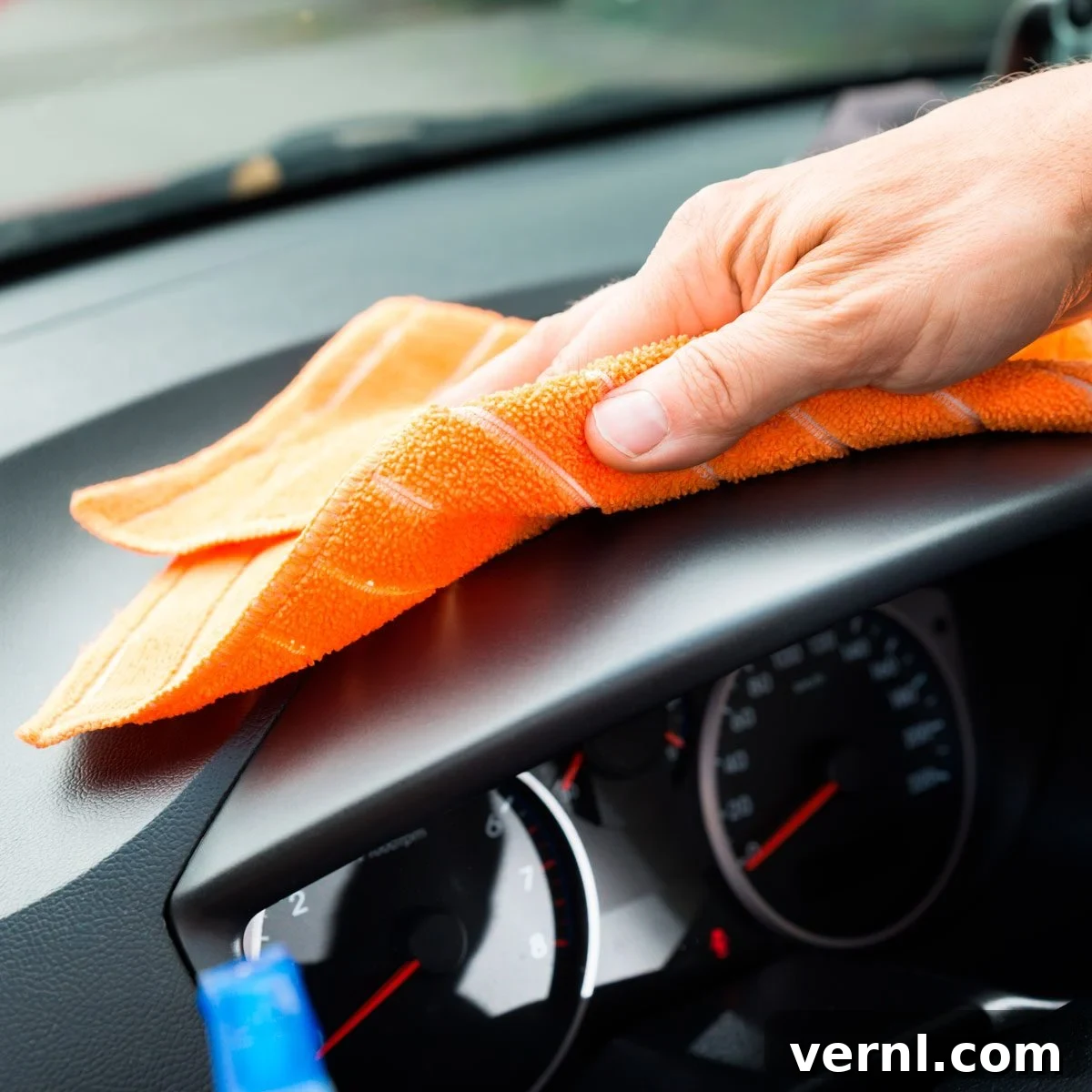
Our vehicles represent a significant financial investment and often serve as a personal sanctuary during our daily commutes. Given the considerable amount of money we spend on our cars and the time we spend inside them, maintaining their condition is paramount. This makes diligent car maintenance not just a good idea, but an essential practice, ideally without having to spend a fortune in the process.
The pursuit of economical and effective car care solutions has fueled an endless stream of DIY auto cleaning hacks. From innovative approaches like polishing your car with hair conditioner to more unconventional methods such as removing minor dents with a plunger and hot water, the internet is brimming with creative ideas. While some of these hacks deliver surprisingly great results, others, unfortunately, prove to be downright bad ideas, potentially causing more harm than good.
One particular hack that frequently garners attention involves using common household oils to polish and restore the shine of your car’s dashboard. This method typically falls somewhere in the middle of the effectiveness spectrum. It can indeed work wonders for a quick aesthetic touch-up, imparting a satisfying sheen and making your dashboard look refreshed. However, like many DIY solutions, it also comes with a few notable downsides that car owners must consider before making it a regular part of their car care routine.
Understanding the nuances of this approach—what it promises, what it delivers, and what its limitations are—is crucial for making an informed decision about your vehicle’s interior maintenance. Here’s a comprehensive look at everything you need to know about using oil to clean and condition your car’s dashboard.
The Appeal of Natural Oils: Why They Seem Perfect for Your Dashboard
The idea of transforming a dull, dusty dashboard into a gleaming surface with something as simple and readily available as kitchen oil is inherently attractive. Many enthusiasts suggest that a small amount of oil can make your dashboard appear as pristine as it did the day you first drove it off the dealership lot. This perceived efficacy, combined with convenience, makes the oil hack a popular choice. But what exactly gives these oils their restorative power, and which types are commonly recommended?
Common Household Oils for Dashboard Enhancement
When considering which oil to use, advice often points towards natural, food-grade options. Some experts advocate for the conditioning properties of olive oil, known for its ability to hydrate surfaces. However, virtually any kind of household oil is frequently cited as suitable, including common staples like vegetable oil or coconut oil. Beyond cooking oils, petroleum jelly stands out as a particular favorite among car enthusiasts, according to the Polymer Science Learning Center. Its non-evaporating nature and ability to create a protective barrier likely contribute to its popularity.
These natural alternatives appeal to car owners looking for quick, visible results without resorting to specialized, chemical-laden automotive products. They promise to restore a lustrous finish, making the dashboard look well-maintained with minimal effort or financial outlay.
Why Choose Oil? Unpacking the Key Benefits
The popularity of using natural oils for dashboard care isn’t just about achieving a quick shine; it stems from several practical and environmental advantages:
- Eliminates Harsh Chemical Odors: A significant draw is the ability to avoid the strong, often synthetic, “new car” or “chemical clean” smells that many commercial interior cleaners leave behind. Natural oils typically possess a very mild or neutral scent, ensuring your car’s interior smells genuinely clean and fresh, rather than artificially fragranced.
- Impressive Cost Savings: Automotive interior cleaners can represent a recurring expense, with bottles ranging anywhere from $2 to $10 or even more. By utilizing an oil you likely already have in your kitchen pantry, you effectively eliminate this cost, making it an incredibly budget-friendly approach to maintaining your car’s aesthetics. That money stays in your pocket for other needs.
- Eco-Friendly Car Care: In today’s environmentally conscious world, opting for natural oils contributes to a reduced ecological footprint. You lessen the demand for new plastic packaging, meaning one less plastic bottle to end up in landfills or at recycling facilities. Furthermore, you reduce the introduction of chemical formulations into the environment, promoting a more sustainable approach to car care. This makes using oil on your dashboard a choice that benefits your car, your finances, and the planet.
- Natural Luster and Conditioning: Oils work by penetrating the porous surface of dashboard materials such as vinyl, plastic, or even leatherette. This action hydrates the material, helping to restore its natural sheen and depth of color. This conditioning can also subtly mask minor surface imperfections, resulting in a rejuvenated and healthy-looking dashboard.
The Undeniable Drawbacks: Why Oil Might Not Always Be the Best Solution
While the immediate benefits of using natural oils on your dashboard are compelling, it’s crucial to delve into the potential long-term downsides and practical limitations. This popular hack, despite its widespread adoption, comes with a set of compromises that could impact the durability of your car’s interior and even your driving comfort and safety.
Critical Lack of UV Protection
Perhaps the most significant disadvantage of relying solely on natural oils for dashboard care is their inherent inability to provide robust UV protection. Car dashboards are constantly exposed to direct sunlight, and the sun’s harsh ultraviolet rays are a primary cause of interior degradation. Over time, UV exposure leads to drying, fading, discoloration, and ultimately, cracking of dashboard materials. Melanie Musson, an auto industry expert with Autoinsurance.org, strongly emphasizes this point. “If you keep your car in a garage, that might not be a big deal,” she explains. “But if your car is frequently parked outside and subjected to bright sunlight, you might want to use a cleaner that explicitly protects your dashboard from the sun’s damaging rays, at least every other time you clean the dash, or even more frequently.”
Without adequate UV inhibitors, which are commonly found in dedicated automotive protectants, your dashboard remains vulnerable to long-term damage. While oils can condition and make the surface look shiny in the short term, they don’t create the essential barrier needed to prevent UV degradation, which is critical for preserving the integrity and longevity of your dashboard materials.
Potential for Unpleasant Odors and Stubborn Residue
Chris “Moose” Pyle, a master-certified technician with JustAnswer, issues a significant warning, particularly against using cooking oils like olive or vegetable oil. He cautions that these types of oils “could result in an odor.” Over time, especially when exposed to heat inside a parked car, cooking oils can turn rancid, emitting a distinctly unpleasant and stale smell throughout your vehicle’s cabin. This directly counteracts one of the primary benefits of using oil – the avoidance of chemical odors – by introducing a new, potentially worse, aromatic problem.
Furthermore, Pyle points out several practical hazards associated with an oily residue: “It would also stain your clothing, and it would become liquid-like when very hot, and drip down into places you do not want to be oily like your carpet or radio or on the steering wheel.” This highlights the messiness and potential for damage. An oily dashboard can lead to greasy marks on clothes, a slippery and potentially dangerous steering wheel, and difficult-to-clean oil stains on fabric interiors or delicate electronic components, incurring repair or detailing costs that outweigh any initial savings.
An Unwanted Magnet for Dirt and Dust
Another significant drawback to an oily dashboard is its unfortunate tendency to act as a powerful magnet for dirt, dust, and all sorts of airborne debris. As Pyle notes, “I am also not a fan of a shiny dash because it causes a glare and it becomes a dust collector. You might notice the dash gets covered in bugs, dirt and hair caught in the lubricant.” Any residual oil left on the surface creates a slightly sticky film. This film readily traps dust particles, pollen, pet hair, crumbs, and even small insects that find their way into the car. This means that while your dashboard might look impressively shiny immediately after treatment, it can quickly appear dirtier and require more frequent and thorough cleaning than if a non-oily, anti-static product were used.
Glare and Safety Concerns
A highly reflective, overly shiny dashboard, especially one treated with oil, can create significant and problematic glare on your windshield. This is particularly noticeable when driving directly into sunlight or even during bright daytime conditions. This glare can impair your visibility, cause uncomfortable eye strain, and potentially pose a safety hazard by distracting the driver or obscuring critical views of the road ahead. For these reasons, most professional automotive detailers and safety experts recommend a matte or satin finish for dashboards to minimize reflections and maximize driver safety and comfort.
How To Clean Your Dashboard With Oil (If You Choose This Method)
Despite the various caveats and potential drawbacks, if you’re drawn to the immediate conditioning and enhanced shine that natural oils offer, particularly for a vehicle that is mostly garaged or as a very temporary solution, here’s a guide to applying them effectively while minimizing potential issues.
- Initial Surface Preparation: Before applying any oil, it is absolutely crucial to ensure your dashboard is thoroughly clean. Begin by giving your dash a comprehensive dusting to remove any loose dirt, grime, or accumulated dust. A soft-bristled detailing brush or a clean, dry microfiber cloth is ideal for this initial step. For any stickier residue or deeper grime, gently wipe the dash with a slightly damp microfiber cloth (using only water). Allow the surface to dry completely before proceeding.
- Careful Oil Selection: While various oils are mentioned, consider petroleum jelly as a potentially safer option compared to cooking oils. Petroleum jelly is less prone to turning rancid and tends to remain stable without becoming excessively liquid in heat. If you opt for a cooking oil, choose a highly refined, unscented variety (such as a very light mineral oil or vegetable oil) to minimize potential odors.
- Apply Sparingly: The golden rule here is “less is more.” Dab just a very small amount—a few drops at most—of your chosen oil onto a clean, soft microfiber cloth. Avoid applying the oil directly to the dashboard itself, as this almost always leads to excessive application and uneven distribution.
- Test in an Inconspicuous Area: Before applying the oil broadly across your entire dashboard, always perform a patch test. Choose a small, hidden, or less noticeable area of the dash to apply the oil. This allows you to check for any potential discoloration, adverse reactions with the dashboard material, or an undesirable level of shininess. Wait a few minutes to observe how the material reacts and to ensure you are satisfied with the aesthetic result.
- Wipe Down the Dashboard: Using the prepared cloth, gently wipe down your dashboard. Employ even, circular motions to spread the oil thinly and uniformly across the surface. The objective is to subtly condition the material and restore a natural shine, not to leave a thick or greasy film.
- Buff Off All Excess: This is a critically important step to mitigate several of the downsides. Immediately after applying, use a separate, entirely clean, and dry microfiber cloth to thoroughly buff off any excess oil. This not only removes the sticky residue that attracts dirt but also helps to achieve a more natural, satin finish rather than an overly shiny or greasy appearance. Proper buffing will leave the surface feeling smooth and looking conditioned without being tacky or reflective.
- Frequency of Application: Due to the inherent dirt-attracting nature of oil, you may find that your dashboard requires dusting and wiping more frequently than if you used dedicated automotive products. Only reapply oil when you notice the dash beginning to look dull again, typically every few weeks or months, depending on your car’s exposure to elements and use.
It is vital to reiterate that while natural oils can provide conditioning and a temporary shine, they do not offer the robust UV protection found in many specialized automotive dashboard cleaners. For vehicles frequently parked outdoors, it is highly recommended to supplement this method with a car sunshade or to consider opting for products specifically formulated with potent UV inhibitors for long-term protection against sun damage.
Alternatives to Oil for Optimal Dashboard Care and Protection
For car owners seeking the ideal balance of a clean, conditioned, and protected dashboard without the inherent drawbacks of using household oils, several superior alternatives are available:
- Dedicated Automotive Interior Cleaners and Protectants: These products are expertly formulated for the specific materials found in dashboards (such as vinyl, plastic, rubber, and leatherette). Many offer a host of benefits, including anti-static properties to actively repel dust, potent UV inhibitors to prevent sun damage, and often come in various finishes (matte, satin, or low sheen) to avoid glare. They are designed to clean, condition, and protect in a single, efficient step, offering comprehensive care.
- Mild Soap and Water Solution: For a simple, chemical-free cleaning approach that doesn’t involve oil, a very dilute solution of mild, pH-neutral soap (such as a gentle dish soap or car wash soap) mixed with water can be quite effective. Apply this solution with a damp microfiber cloth, thoroughly wipe down the dashboard, and then follow with a clean, water-dampened cloth to meticulously remove any soap residue. Always dry the surface completely with a clean, dry microfiber cloth to prevent water spots. While excellent for basic cleaning, this method offers no conditioning or UV protection.
- High-Quality Microfiber Cloths: For routine daily dusting and light cleaning, a premium-quality dry or slightly damp microfiber cloth is an indispensable tool. Its unique fibers are highly effective at capturing and holding dust and dirt particles without scratching the surface. Regular use of a microfiber cloth can significantly reduce dust buildup and keep your dashboard looking neat and tidy between deeper cleaning sessions.
Frequently Asked Questions About Dashboard Cleaning with Oil
Are there any downsides to using oil on my dashboard?
Yes, there are several significant downsides. As master-certified technician Chris “Moose” Pyle warns, if you leave excess oil on your dashboard, it creates a sticky film that can attract dirt, dust, and debris, effectively turning your dash into a “dust collector.” He also notes, “I am also not a fan of a shiny dash because it causes a glare,” which can impair visibility and pose a safety risk. Furthermore, an oily surface can lead to “bugs, dirt and hair caught in the lubricant.” Critically, natural oils offer little to no UV protection, which is essential for preventing long-term sun damage like cracking and fading. Lastly, cooking oils can develop unpleasant, rancid odors, especially in a hot car.
Can I mix oil with other dashboard cleaners?
Generally, it is not recommended to mix household oils with most commercially available car interior cleaners. Chris “Moose” Pyle clarifies that while you might be able to mix oil with other oil-based cleaners, the vast majority of automotive cleaning products are water-based. “So they will not mix in the bottle or on the surface,” he explains, adding that “The oil will float on the water.” This means you won’t achieve an effective combined cleaning and conditioning action; instead, you’ll likely end up with an uneven application and separated product, which diminishes the effectiveness of both components and can leave streaks or residue.
What type of oil is best if I still choose to use it for my dashboard?
If you are determined to use an oil on your dashboard, petroleum jelly is often considered a safer and more stable option compared to cooking oils. It is significantly less likely to turn rancid or become excessively liquid and drip in hot temperatures. If you opt for a cooking oil, choose a highly refined, unscented variety (such as food-grade mineral oil or a very light vegetable oil) and always apply it extremely sparingly. The crucial step is to buff the surface thoroughly afterwards with a clean, dry microfiber cloth to remove all excess and avoid a greasy, dust-attracting finish. Avoid strong-smelling or unrefined oils altogether.
How often should I clean my car’s dashboard?
The ideal frequency for cleaning your car’s dashboard depends on several factors, including your driving habits, local environmental conditions (dust, pollen), and the type of product you use. For general maintenance and light dusting, a quick wipe with a dry microfiber cloth once a week or every two weeks is recommended. If you’re using oil, you might find yourself needing to clean and buff more frequently due to its tendency to attract dust – perhaps a thorough clean once a month. For dedicated automotive cleaners and protectants with UV protection, following the product’s specific instructions, typically every 1 to 3 months, is usually sufficient to maintain cleanliness and active protection against sun damage.
About the Experts
- Chris “Moose” Pyle is a distinguished master-certified technician boasting over 20 years of extensive automotive experience. Since 2006, he has served as a trusted expert for JustAnswer, an expert on-demand platform, where he has guided countless individuals through complex vehicle-related queries and issues.
- Melanie Musson is a highly respected authority and expert within the auto industry, affiliated with Autoinsurance.org. With nearly a decade of profound experience in the field, she provides invaluable insights into various aspects of vehicle care, insurance, and broader industry trends.