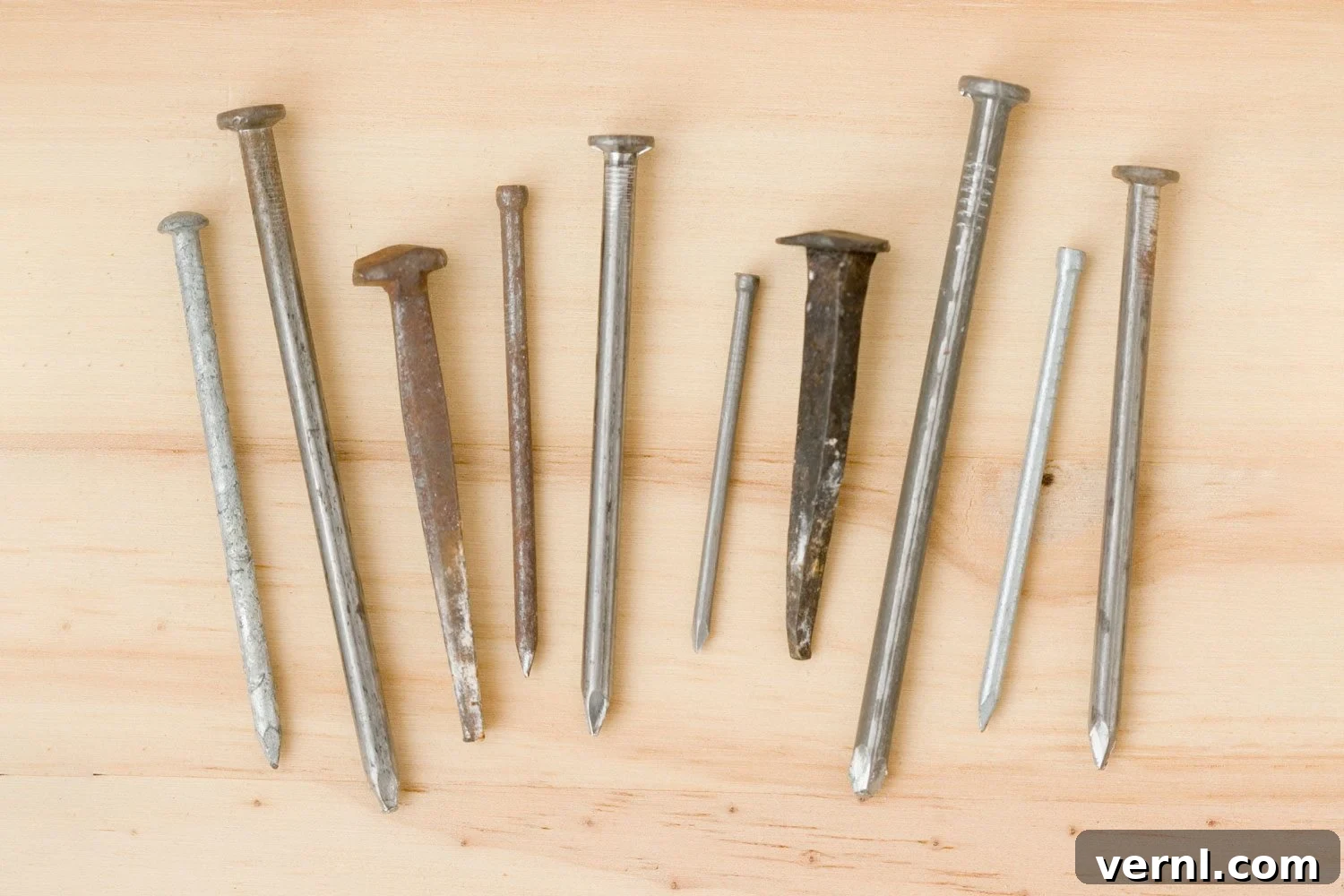
Demystifying Nail Sizes: Unlocking the Secret of the “d” Designation
In the vast world of home improvement, carpentry, and construction, selecting the right fastener is paramount to a project’s success and longevity. Among the myriad choices, nails stand out as fundamental, yet their sizing system often puzzles even experienced DIY enthusiasts. If you’ve ever found yourself staring at a box of nails wondering what “8d” or “16d” truly signifies, you’re not alone. This guide aims to thoroughly unravel the historical intricacies and practical applications behind nail sizing, particularly the enigmatic “d” designation, commonly known as the penny size. We’ll explore its origins, its relationship to actual nail length, and why understanding this system is crucial for achieving secure and professional results in all your fastening endeavors.
The Enduring Mystery of the “d”: A Journey Through History
For centuries, nails have been indispensable tools, evolving from crude hand-forged spikes to precisely engineered fasteners. Historically, nails have been sold using a unique nomenclature: a number followed by the letter “d,” alongside (and often less confusingly) their exact length in inches. The “d” is a shorthand that stands for “penny,” meaning an 8d nail is an 8-penny nail, a 16d is a 16-penny nail, and so on. This system serves as a traditional way to indicate the nail’s length, as you’ll see clearly illustrated in our detailed conversion chart below.
The obvious question that arises is: where did this peculiar sizing system originate, and why does “d” specifically refer to “penny”? The answer takes us back in time, all the way to the era of the Roman Empire. The letter “d” is a direct historical descendant of the Roman coin known as the denarius. This ancient silver coin was widely circulated and, significantly, lent its name to the English penny during medieval times. Thus, the linguistic connection between “d” and “penny” was established millennia ago, long before nails became a staple of construction.
So, how did this ancient monetary term become intertwined with the seemingly unrelated world of nails? The precise link remains somewhat shrouded in the mists of history, with two primary theories prevailing. Both revolve around the period when nails were painstakingly hand-forged, one at a time, a labor-intensive process that made them valuable commodities.
- Theory 1: Cost per Hundred Nails. One popular explanation suggests that the “d” indicated the cost of a hundred nails of a particular size. For example, a hundred 3-1/2 inch nails might have cost 16 pennies in old English currency, leading them to be known as “16-penny nails.” This system provided a simple, albeit indirect, way for buyers and sellers to identify and quantify nails by their length, given that longer, heavier nails naturally cost more to produce.
- Theory 2: Cost per Single Nail. Another school of thought posits that the number and the “d” referred to the cost of a single nail. Under this theory, a single 16d (3-1/2 inch) hand-forged nail would have commanded a price of 16 pennies. While less intuitive for bulk purchasing, this method would also have correlated the nail’s value and, by extension, its size, to a common unit of currency.
While the definitive truth behind these theories might be lost to time, the captivating story provides a fascinating glimpse into the commercial practices of bygone eras. Regardless of which version holds more historical accuracy, the “d” designation stubbornly persists. Even in modern building codes and construction specifications, this archaic term continues to be used, serving as a testament to its deeply embedded place in the lexicon of the building trades. Fortunately, for today’s consumers, retail boxes of nails are typically marked with both the traditional penny size and the more straightforward length in inches, ensuring clarity and ease of selection.
The Practical Side: Why Nail Size Matters for Your Project
Understanding nail sizes goes far beyond historical curiosity; it’s a fundamental aspect of successful and safe construction. The length of a nail directly impacts its holding power, its suitability for various materials, and the structural integrity of your finished work. Choosing the correct nail size ensures that your fasteners adequately penetrate the materials being joined without causing damage or appearing unsightly.
- Structural Integrity: The primary reason to select the right nail length is to ensure a strong, lasting connection. A nail that is too short will not provide sufficient holding power, leading to weak joints that can fail over time. Conversely, a nail that is excessively long might protrude through the second piece of material, creating a safety hazard or an aesthetic issue. For optimal strength, a general rule of thumb is that the nail should penetrate roughly two-thirds of the way into the second (or thicker) material, or be at least 2.5 to 3 times the thickness of the material being fastened.
- Preventing Material Damage: Using a nail that is too long or too thick for the material, especially softer woods or thin boards, can lead to splitting. This not only weakens the joint but also ruins the material itself. The appropriate length ensures effective fastening without causing unnecessary stress or damage.
- Aesthetics and Finish: In projects requiring a clean finish, such as trim work or cabinetry, the length of the nail is crucial for concealment. Finishing nails are often chosen to be just long enough to securely fasten the trim without piercing through to the visible surface, allowing for proper countersinking and puttying.
- Project Specificity: Different types of projects inherently demand specific nail lengths. For instance, framing walls typically requires longer, more robust nails like 10d or 16d common nails to secure heavy lumber. Lighter tasks, such as attaching thin plywood or decorative molding, would call for shorter, thinner nails like 4d or 6d finishing nails.
- Building Codes and Safety: In professional construction, adherence to building codes often dictates minimum fastener sizes and patterns for structural elements. Using nails that meet these specifications is not just about best practice, but about legal compliance and ensuring the safety and stability of the entire structure.
Beyond length, it’s also worth noting that nails come in various diameters (gauges) and head types, each designed for specific applications. Common nails are thicker for structural strength, while finishing nails are thinner with smaller heads for less visible fastening. While this article focuses on the “d” sizing, understanding that nail length is one part of a larger selection process is key to mastering fasteners.
Nail Size Conversion Chart: Your Essential Reference Guide
To help navigate the historical “d” system and its modern length equivalents, a reliable conversion chart is an invaluable asset. This chart clearly correlates the traditional penny size with the actual length of the nail in inches, making it easy to select the correct fastener for your project, whether you’re working with old plans or new materials. The sizes listed below are typical for common nails used in light construction and general carpentry.
Remembering these conversions can be challenging, especially for those new to carpentry or specific nail sizes. That’s why having a physical reference is so useful. You can easily print out this handy reference chart and tape it inside your toolbox, on your workshop wall, or even laminate it for durability. This ensures you always have quick access to vital information, preventing guesswork and costly mistakes during your projects.
Nail Size Conversion Chart
| Nails for Light Construction | |
| Size | Length (in inches) |
| 4d | 1-1/2 |
| 6d | 2 |
| 8d | 2-1/2 |
| 10d | 3 |
| 12d | 3-1/4 |
| 16d | 3-1/2 |
| 20d | 4 |
| 30d | 4-1/2 |
Tips for Mastering Nail Selection and Application
With a clear understanding of the “d” system and nail lengths, you’re well-equipped to make informed decisions. Here are some additional tips to ensure your nailing projects are successful:
- Always Measure Thickness: Before selecting a nail, always measure the combined thickness of the materials you intend to join. This will guide your choice, ensuring adequate penetration without excess length.
- Consider the Material: Softer woods (like pine) are more prone to splitting with larger nails, while hardwoods (like oak) require stronger, often thinner, nails to avoid bending. For very dense materials, pre-drilling a pilot hole can prevent splitting and make driving the nail easier.
- Gauge Matters Too: While length is primary for the “d” system, remember that the nail’s thickness (gauge) also contributes significantly to its strength and resistance to bending. Common nails are thicker and more robust, suitable for structural work, while finishing nails are thinner for less visible applications.
- Keep a Variety on Hand: For any DIY enthusiast or professional, having a well-stocked assortment of common nail sizes (e.g., 4d, 6d, 8d, 16d) is highly recommended. This allows you to quickly adapt to different project requirements without frequent trips to the hardware store.
- Safety First: Always wear appropriate safety gear, including safety glasses, when driving nails. Ensure your striking surface is stable and clear of obstructions.
Conclusion: Embracing the Legacy of the Penny System
The “d” designation, or penny system, for nail sizes is a fascinating relic of history that continues to shape modern construction. From its ancient Roman roots to its enduring presence in today’s building codes, this system, though initially perplexing, is an essential part of the language of carpentry. By understanding its origins and practical applications, you gain valuable insight into the world of fasteners.
Whether you’re a seasoned carpenter or tackling your first DIY project, demystifying nail sizes empowers you to choose the right tools for the job with confidence. Armed with knowledge of the “d” system and a handy conversion chart, you can ensure your projects are not only visually appealing but also structurally sound and built to last. So next time you grab a box of 16d nails, you’ll know you’re not just holding fasteners, but a piece of history essential for building the future.