
The aesthetic appeal of your home’s exterior is largely defined by its individual components working in harmony. Among these, the garage door plays a surprisingly significant role, often occupying a substantial portion of the facade. Choosing the right garage door color is far more than a minor detail; it’s a strategic decision that impacts curb appeal, expresses your personal style, and can even influence your home’s perceived value. While the simple answer to whether your garage door should match your house color is often “yes,” a deeper dive reveals nuances that allow for both seamless integration and striking complementary contrasts.
This comprehensive guide explores the art and science behind selecting the perfect garage door color, considering factors ranging from popular trends and personal preference to architectural styles and practical considerations. We’ll help you navigate the myriad options to ensure your garage door enhances your home’s overall beauty and stands the test of time.
The Undeniable Popularity of White Garage Doors and Other Top Picks
When it comes to garage door colors, white consistently emerges as the frontrunner in popularity. Its enduring appeal is multifaceted, making it a go-to choice for homeowners and designers alike. Sarah Fisher, vice president of marketing and design at H.A. Fisher Homes, eloquently articulates its versatility, stating to Fagan Door that “Regardless of the elevation style, exterior finishes or details, white complements best and creates an overall crisp and uniform appearance that is pleasing to the eye.” White acts as a clean canvas, effortlessly balancing various home designs, from traditional to contemporary, and offering a fresh, timeless look.
Beyond White: Exploring Other Popular Choices
While white holds its reign, other colors have gained significant traction due to their ability to enhance different home aesthetics. Neutral tones like various shades of gray, beige, and taupe are increasingly popular. These colors offer a sophisticated backdrop, providing a softer contrast than stark white while maintaining versatility. Gray, for instance, can range from light, airy silver to deep, dramatic charcoal, offering a modern touch that pairs well with brick, stone, and siding. Beige and taupe provide warmth and earthiness, complementing homes with natural wood elements or warmer exterior palettes.
Black garage doors are another rising trend, especially for modern and industrial-style homes. A bold black door creates a powerful statement, offering a striking contrast against lighter exteriors or seamlessly blending with darker facades for a sleek, uniform look. It conveys a sense of sophistication and strength, providing a dramatic focal point when desired. Ultimately, while white offers unparalleled versatility, the “most popular” color can also depend on current design trends and regional preferences, all striving for harmony with the home’s overall character.
To Feature or To Hide: Defining Your Garage Door’s Role
Your garage door occupies a significant visual footprint on your home’s exterior, often accounting for 30-40% of the front facade. This prominence gives you a unique opportunity to either celebrate it as a design feature or minimize its presence to highlight other architectural elements. The decision hinges on several factors, including the condition of your door, your home’s overall design, and its orientation relative to the street.
Making Your Garage Door a Focal Point
If your garage door faces the street and is in excellent condition – perhaps a stylish carriage house door, a modern glass panel design, or a beautifully maintained traditional model – you might want to feature it. Choosing a color that contrasts with your home’s main exterior color can transform the garage door into an intentional design statement. This could involve a bold accent color that picks up on smaller details of your home, or a rich, deep hue that adds architectural interest. Featuring your garage door draws the eye, suggesting thoughtful design and attention to detail. However, this approach demands that the door itself is aesthetically pleasing and well-maintained, as any flaws will be magnified.
Blending In: Hiding Your Garage Door
Conversely, if your garage door is purely functional, perhaps older, or simply not a feature you wish to emphasize, hiding it might be the best strategy. A fresh coat of paint, even if it’s merely to blend, can significantly improve its appearance. The goal here is to select a color that closely matches your home’s primary exterior color – be it the siding, brick, or stone. By doing so, the garage door recedes into the background, allowing other elements, such as your inviting front entrance, meticulously landscaped garden, or intricate architectural details, to take center stage. This technique is particularly effective if you’ve recently invested in other exterior upgrades and want to direct attention to those improvements. Plus: check out this incredible garage door makeover for inspiration.
Mastering the Art: How to Pick a Garage Door Color with Confidence
Choosing the perfect garage door color requires a methodical approach, moving beyond personal preference to embrace color theory and contextual considerations. The color wheel, a fundamental tool in design, becomes your best ally in this process, helping you understand how different hues interact and complement one another.
Utilizing the Color Wheel: Complementary and Analogous Schemes
Recall those elementary school lessons on the color wheel – they are incredibly pertinent here. For a quick brush-up, complementary colors are those directly opposite each other on the color wheel (e.g., blue and orange, red and green, yellow and purple). When used together, they create a vibrant contrast that can make your garage door stand out dynamically. This approach is ideal if you wish to feature your garage door, providing a bold and energetic statement. For example, a muted green garage door against a terracotta home can create a sophisticated, earthy complement.
Analogous colors, on the other hand, are situated next to each other on the color wheel (e.g., blues and greens, reds and oranges). These color schemes offer a harmonious, serene, and low-contrast look, perfect for a garage door that you want to blend seamlessly with your home’s existing palette. If your home is painted in a soft beige, an analogous choice might be a slightly darker taupe or a very light brown for the garage door, creating visual flow without jarring transitions.
Beyond Theory: Practical Considerations for Color Selection
While color theory provides a strong foundation, practical aspects are equally crucial:
- Permanent Elements: Always consider fixed elements like your roof, brickwork, stone veneers, and existing trim colors. These are usually unchangeable and form the bedrock of your home’s color scheme. Your garage door color should harmonize with these elements, not clash.
- Architectural Style: Different architectural styles often lend themselves to specific color palettes. A Victorian home might embrace bolder, multi-toned schemes, while a Craftsman home might lean towards earthy, muted tones. A modern minimalist home could benefit from sleek grays, blacks, or even natural wood finishes.
- Natural Lighting: Colors can appear vastly different under various lighting conditions. A color swatch seen under bright midday sun will look different at dusk or on an overcast day. Always test paint samples on a large section of your garage door and observe them throughout the day.
- HOA Regulations: If you live in a community with a Homeowners Association (HOA), check their guidelines for exterior paint colors. Many HOAs have approved color palettes to maintain neighborhood uniformity.
- Climate and Environment: Darker colors absorb more heat, which might be a consideration in very hot climates. Conversely, lighter colors reflect heat. Also, consider how well the color will mask dirt and grime from your local environment.
If you need ideas on what to paint your garage door, we’ve got you covered with our garage door painting guide. It’ll take you through several different house colors to find the right color for your garage door.
The Relationship Between Your Garage Door and Front Door: A Clear Distinction
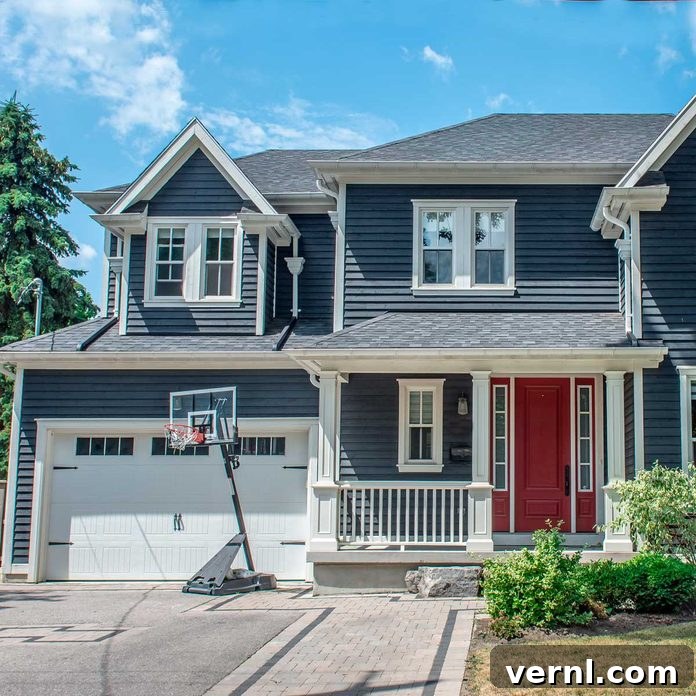
A common question arises: “Should your garage door match your front door?” The unequivocal answer is no, and understanding why this distinction is important is key to achieving a balanced and attractive home exterior. Your front door serves as the primary welcoming point and the focal feature of your home, designed to draw visitors in and make a memorable first impression. Its color should stand out, offering a pop of personality or a sophisticated accent that guides the eye.
Allowing your garage door to match your front door would dilute the impact of the latter. Instead of drawing attention to the main entrance, a matching garage door would compete for visual dominance, creating confusion and detracting from the front door’s intended role as the home’s highlight. The garage door, despite its size, is generally more functional than ornamental in this pairing.
What Your Garage Door Should Complement Instead
Rather than mirroring your front door, your garage door is better off trying to match or complement other architectural elements. Excellent choices for coordination include the shutters, window trim, or even secondary accent colors present in your brickwork or stone. By aligning your garage door color with these less dominant features, you create a cohesive look without overwhelming the facade. This strategy ensures that the front door maintains its status as the star of the show, while the garage door contributes harmoniously to the overall exterior design, creating a polished and thoughtful aesthetic.
The Impact of Garage Door Material and Style on Color Choice
Beyond the paint itself, the material and style of your garage door significantly influence the optimal color choice and the overall visual effect. Different materials inherently present different textures and finishes that can either enhance or restrict color options.
Material Considerations
- Steel Doors: These are highly versatile and can be painted virtually any color. They offer a smooth surface that takes paint well, allowing for crisp, uniform finishes. Many come pre-finished in common colors like white, almond, and brown, but can be repainted.
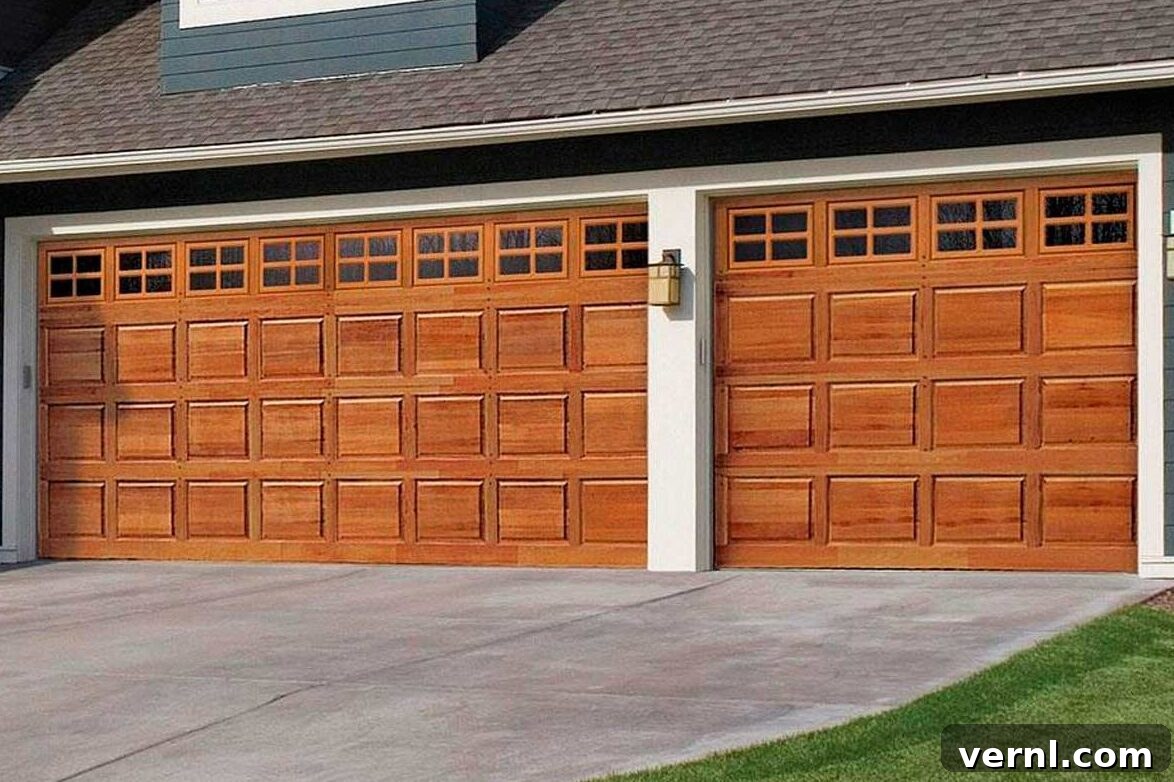
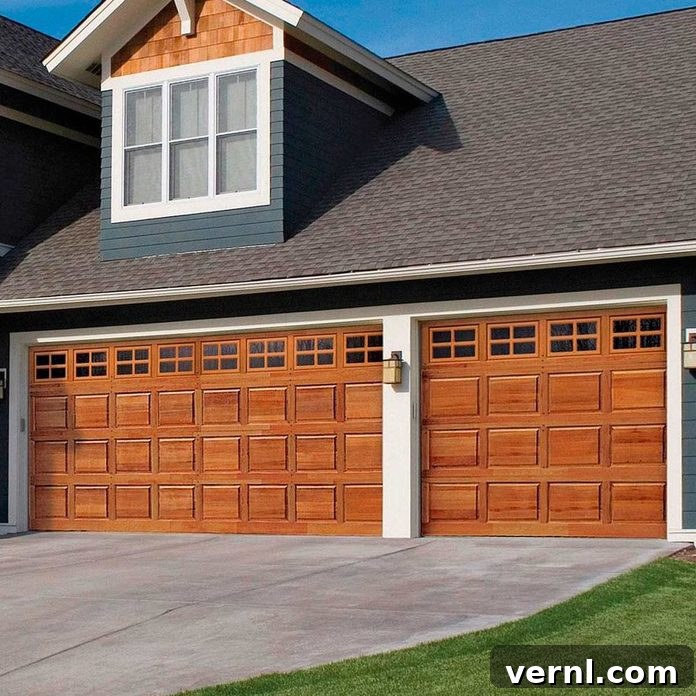
- Wood Doors: Wood doors often boast natural beauty, and many homeowners opt to stain them to highlight the grain rather than paint them solid colors. Stains range from light natural tones to deep mahogany, offering a rustic or classic appeal. If painted, they can provide a more textured look than steel.
- Aluminum and Glass Doors: These modern doors often feature sleek frames that are typically anodized or powder-coated in colors like black, bronze, or silver. The focus here is on the transparency of the glass and the clean lines of the frame, rather than a broad color palette for the panels themselves.
- Fiberglass Doors: Designed to mimic wood, fiberglass doors can be stained or painted. They are durable and low-maintenance, offering the aesthetic of wood without the upkeep.
Style Considerations
The architectural style of your garage door should also inform your color decision. A carriage house style door, with its rustic charm, might look best in earthy tones, deep greens, or classic white. A modern, minimalist door with clean lines might shine in stark black, cool gray, or even a bold primary color if your home’s aesthetic permits. Traditional raised-panel doors are incredibly versatile and can suit almost any color, often blending well with the main house color or trim. Understanding how material and style interplay with color ensures a cohesive and visually appealing result that truly complements your home.
Final Thoughts on Elevating Your Home’s Curb Appeal
Choosing the right garage door color is a pivotal decision that impacts your home’s curb appeal, overall aesthetic, and even its perceived value. By thoughtfully considering factors such as matching or complementing your home’s existing palette, understanding the psychology of featuring versus hiding, and applying basic color theory principles, you can transform a functional necessity into a significant design asset. Remember to test colors in various lights, respect your home’s architectural style, and ensure the chosen hue harmonizes with permanent exterior elements.
A well-chosen garage door color can dramatically elevate your home’s exterior, reflecting attention to detail and enhancing its welcoming presence. Invest the time in this decision, and you’ll be rewarded with a beautiful, cohesive, and enduring look that you’ll appreciate for years to come.