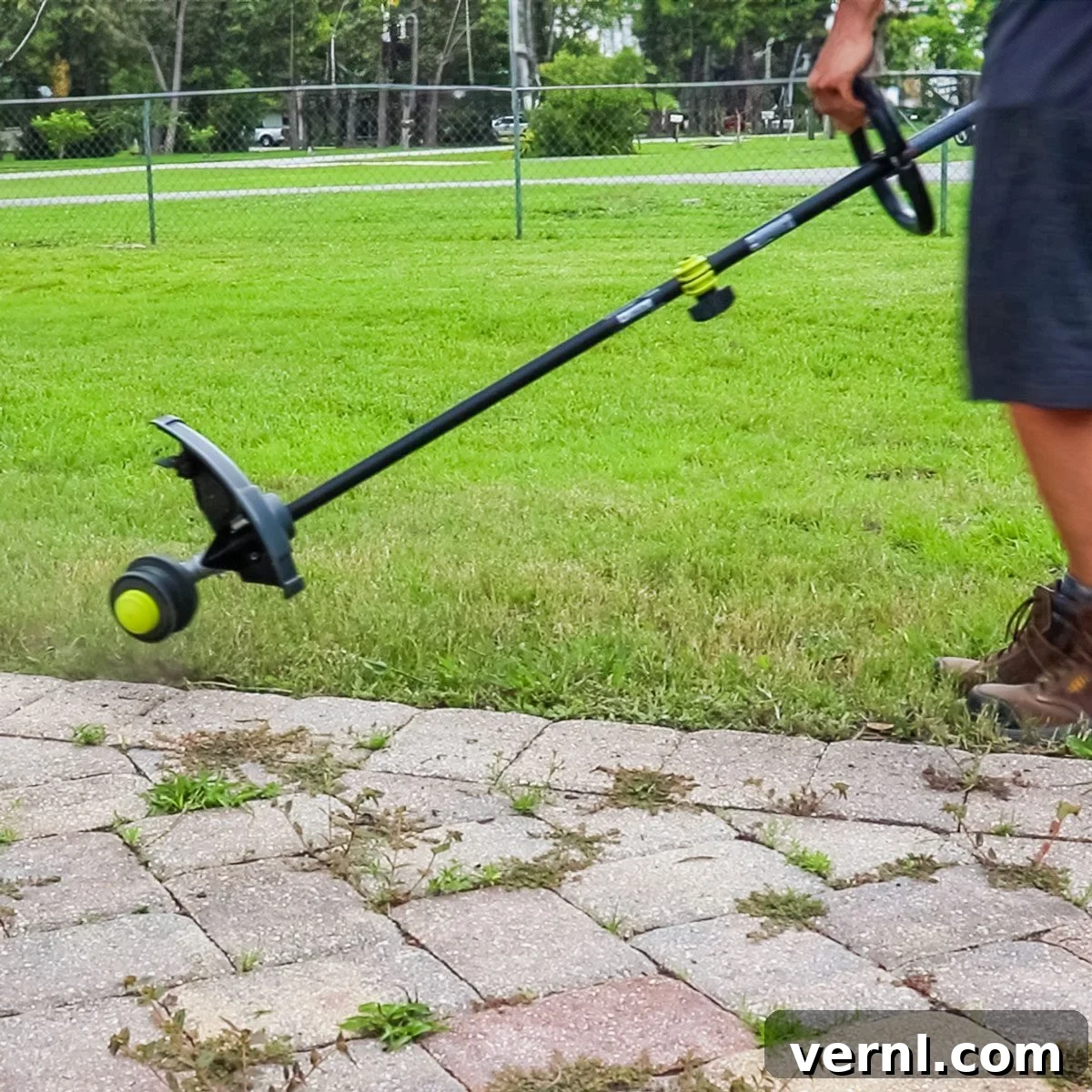
In the expansive world of lawn maintenance, a few tools stand out as indispensable, and the string trimmer is undoubtedly one of them. These versatile powerhouses excel at tackling the stubborn grass that mowers miss – around trees, along fences, beneath hedges, and precisely edging pavements for that pristine finish. Beyond mere grass trimming, many modern string trimmers offer the flexibility of attachable tools and alternative trimmer heads, transforming them into multi-purpose yard companions.
A significant shift is underway in the residential landscaping sector, moving away from traditional gas-powered equipment towards more eco-friendly and user-convenient electric alternatives. The reasons are compelling: battery-operated tools are remarkably quiet, eliminating the need for messy gas and oil, and they offer virtually instant starts. Improvements in battery technology, both in power output and longevity, have reached a point where cordless tools can confidently rival their gas counterparts. This evolution begs a crucial question for many homeowners: Can a cordless string trimmer truly perform as effectively as a gasoline-powered one?
To answer this, I’ve put a popular battery-powered model, the Ryobi string trimmer, through its paces over the past three months. This in-depth review aims to provide comprehensive insights into its capabilities, ease of use, and overall value, helping you make an informed decision for your lawn care needs.
Discover the Ryobi String Trimmer at these retailers:
- Shop on The Home Depot
- Shop on Walmart
- Shop on Amazon
Unveiling the Ryobi 40V 15-inch Cordless String Trimmer
The Ryobi string trimmer is a robust 40V, 15-inch cordless model, typically retailing for under $200. Ryobi, a brand synonymous with reliability and affordability, is The Home Depot’s go-to for economical yet capable tools designed specifically for homeowners. This particular string trimmer is engineered to handle lawns of various sizes, its efficiency primarily depending on the battery capacity employed. A significant advantage of this tool is its inclusion in Ryobi’s versatile “Expand-It” collection. This innovative system allows the powerhead to accept a wide array of attachments beyond the standard string trimmer, such as pole saws, edgers, blowers, and cultivators, transforming a single tool into a comprehensive lawn care system. This modularity offers exceptional value and versatility for homeowners looking to streamline their equipment.
Key Features of the Ryobi Cordless String Trimmer
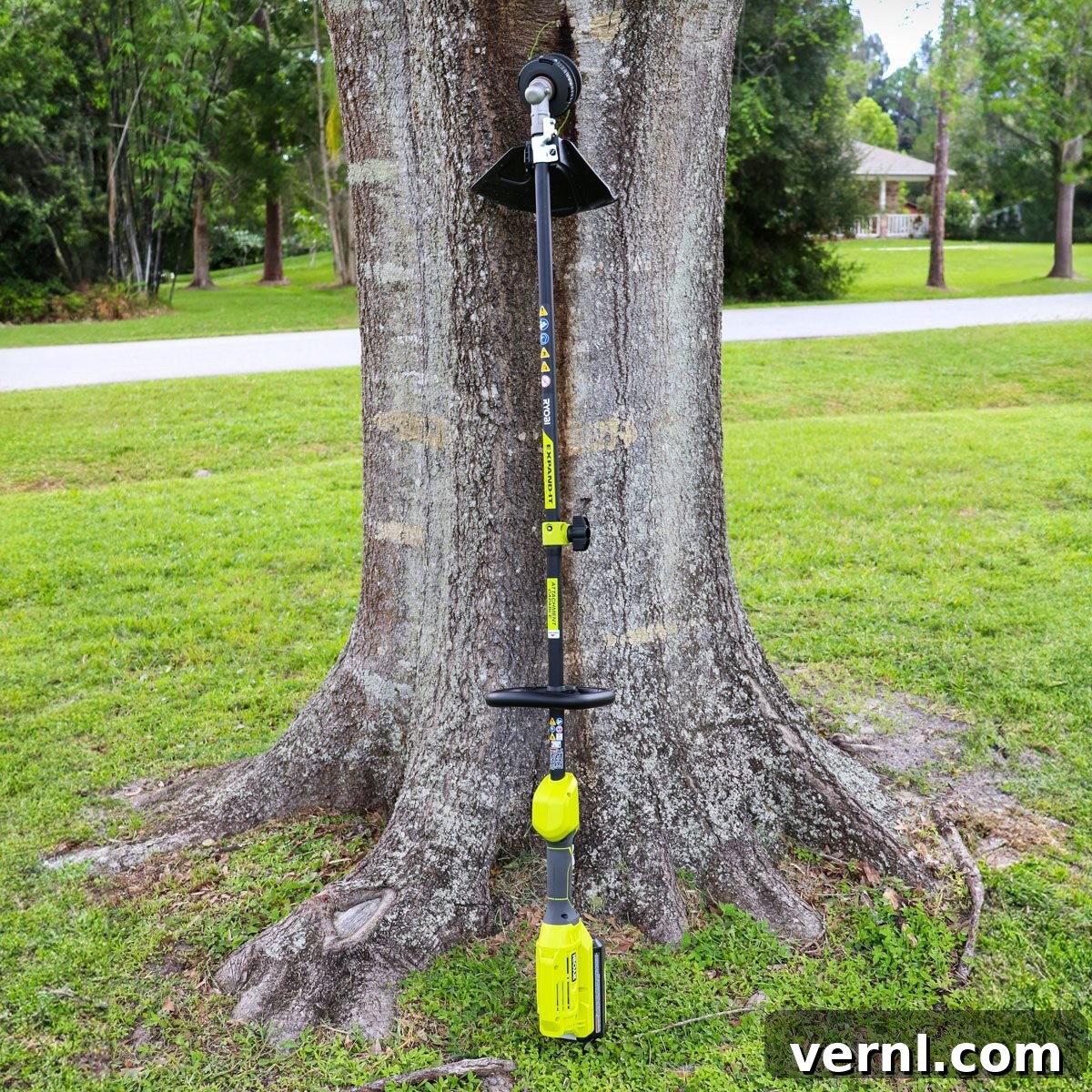
When selecting a string trimmer, several factors contribute to its overall performance and user experience. As highlighted by Chris Ramos, events coordinator for Blain’s Farm & Fleet, key considerations include the tool’s weight and balance, the type of shaft, cutting width, and the line feed system. “A lighter model might be easier to maneuver, especially during extended use,” Ramos advises, “and it’s crucial that the trimmer feels balanced in your hands to reduce fatigue and enhance control.” At a well-distributed 8.6 pounds, the Ryobi 15-inch 40V string trimmer strikes an excellent balance, feeling comfortable and manageable.
Design and Ergonomics
- Straight Shaft Design: This lightweight trimmer features a straight shaft, which Ramos notes “offers extended reach and is better for getting around bushes and other obstacles.” The straight shaft design is particularly beneficial for taller users or when navigating tricky landscape features, ensuring better visibility and access to hard-to-reach areas. The shaft itself is constructed from sturdy carbon fiber, contributing to its durability and lightweight nature.
- Optimal Weight and Balance: Weighing 8.6 pounds, the Ryobi trimmer achieves a commendable balance. This thoughtful design minimizes strain on the user’s arms and back, allowing for longer trimming sessions without significant discomfort.
Power and Performance
- 40V Brushless Motor: At the heart of this trimmer is a powerful 40V brushless motor. Brushless motors are renowned for their efficiency, delivering more power, extended runtimes, and a longer lifespan compared to brushed motors. This translates to gas-like performance, capable of tackling dense weeds and tough grass with ease.
- 4-Amp-Hour Battery: The trimmer comes equipped with a 4-amp-hour (4Ah) battery, featuring convenient LED status lights that provide immediate feedback on the charge level. While the battery is a powerhouse, it does contribute to the overall weight, a point we’ll explore further in the testing section.
- Efficient Charging: The included 80-watt charger is designed to fully replenish the battery in just over 2.5 hours, ensuring minimal downtime between tasks. Ryobi advertises an impressive 70-minute run time, allowing most homeowners to complete their yard work on a single charge.
Cutting Capabilities and Versatility
- Adjustable 13-15 Inch Cutting Swath: The cutting width can be easily adjusted from 13 to 15 inches, providing flexibility. A wider swath covers more ground quickly, ideal for open areas, while a narrower setting offers greater precision for detailed trimming around delicate plants or obstacles.
- 0.080-inch Line (Up to 0.095 inches): The trimmer comes pre-loaded with a durable 0.080-inch trimmer line and can accommodate lines up to 0.095 inches, allowing users to choose the right gauge for their specific needs, from light trimming to more demanding brush clearance.
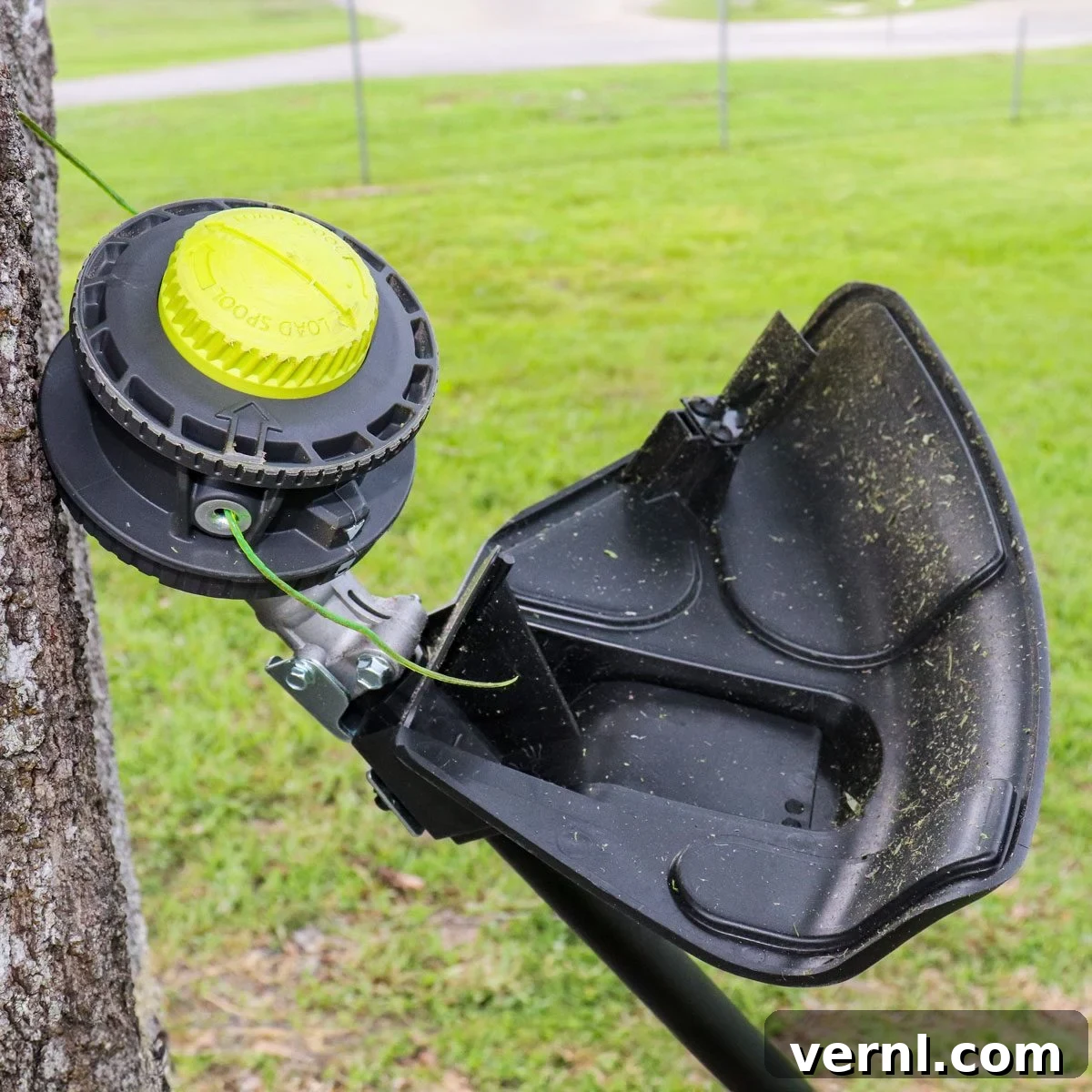
- “Bump Feed” Line Advancement: Utilizing a standard “bump feed” mechanism, advancing the line is straightforward: simply tap the trimmer head on the ground while the tool is running.
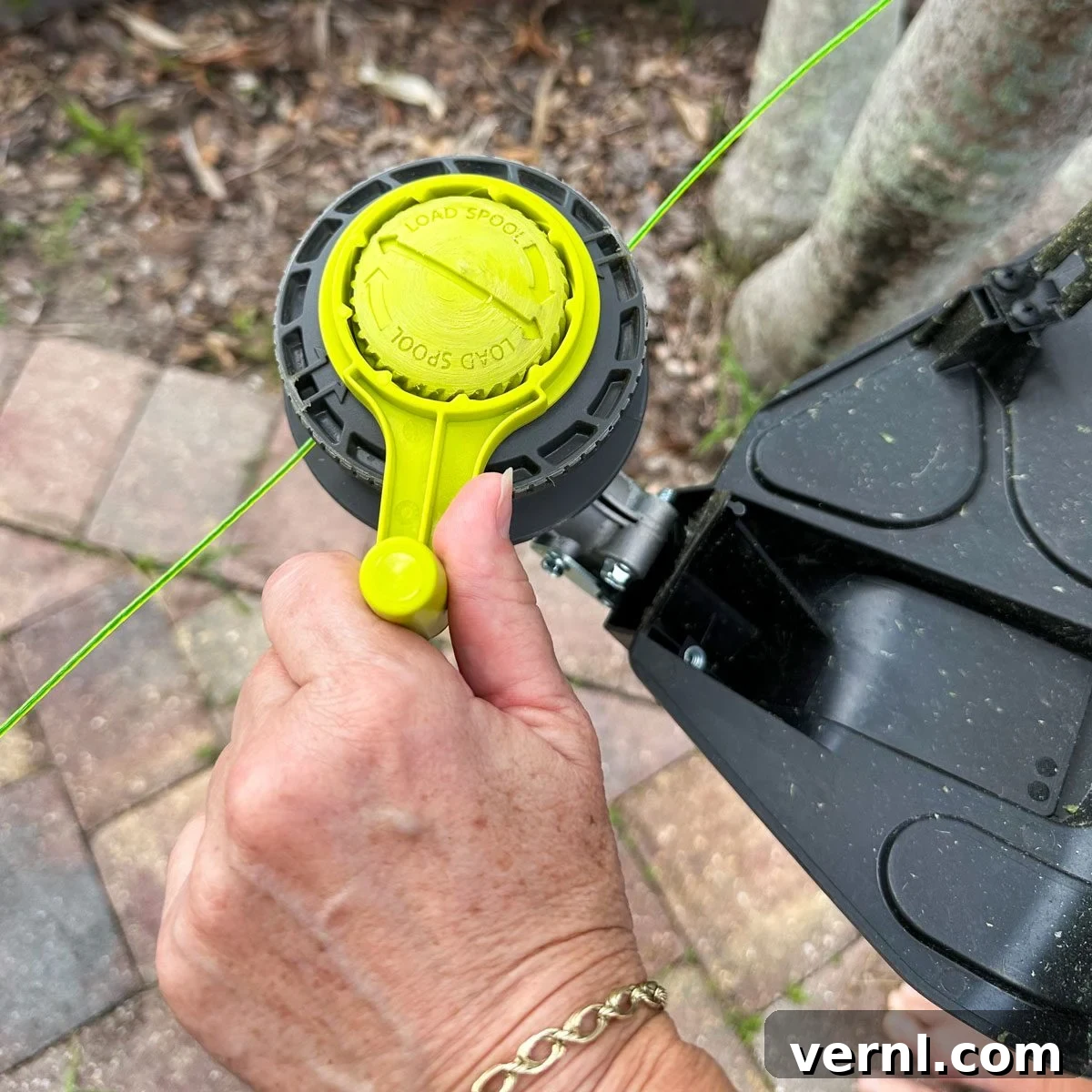
- “Speed Winder” Reloading System: Ryobi boasts an innovative “speed winder” system that allows for line reloading in under 60 seconds. This feature significantly reduces the frustration often associated with refilling trimmer line, making maintenance a breeze.
- Variable-Speed Trigger: The variable-speed trigger provides precise control over the cutting power, allowing users to dial down the speed for delicate edging or ramp it up for tougher vegetation.
- Expand-It System Compatibility: Beyond its primary function, the trimmer’s lower shaft can be easily detached via a quick-change coupler system, allowing for the attachment of various Expand-It tools, such as pole saws, edgers, or cultivators, maximizing its utility. The bump head can also be replaced with bladed or serrated heads for specific cutting tasks.
Durability and Warranty
- Comprehensive Warranty: Ryobi stands behind its product with a generous five-year warranty on the tool itself, demonstrating confidence in its robust construction. The battery, a critical component, is covered by a three-year warranty, offering peace of mind for your investment.
Our Rigorous Testing of the Ryobi String Trimmer
My testing protocol for string trimmers is consistent, evaluating each unit against a set of uniform criteria to ensure fair and accurate comparisons. This involves assessing everything from initial setup to real-world performance under various conditions. Here’s how the Ryobi 40V 15-inch cordless string trimmer fared:
Assembly and Initial Setup: A Closer Look
The journey with any new tool begins with unboxing and assembly. My first step was to put the battery on charge, a crucial preliminary as it took nearly three hours to reach full capacity. This is an important consideration for eager users who might want to jump straight into trimming.
Assembly primarily involved attaching the lower shaft to the powerhead. While seemingly straightforward, I encountered a minor hurdle: the lower shaft initially resisted sliding smoothly into the upper shaft. With a bit of persistence, it connected, but then slid too far, leading to a brief struggle to retrieve it. My subsequent attempt was successful, and I appreciated the quick-couple system, which only required a half-turn to lock securely. This is a significant improvement over Ryobi’s older designs that often relied on tedious winding and hand-tightening, making tool attachment much faster and more reliable.
Attaching the battery was effortless, but it was here that I noticed something unexpected: the battery felt unusually heavy. A quick trip to the scale confirmed my suspicion, revealing a weight of just under 3 pounds. This stood in stark contrast to other 4-amp-hour batteries I’d tested, which typically weighed between 1 and 1.5 pounds. While seemingly innocuous, this added weight is a factor to consider for users planning extended trimming sessions.
Real-World Performance: Tackling Pavers and Tree Stumps
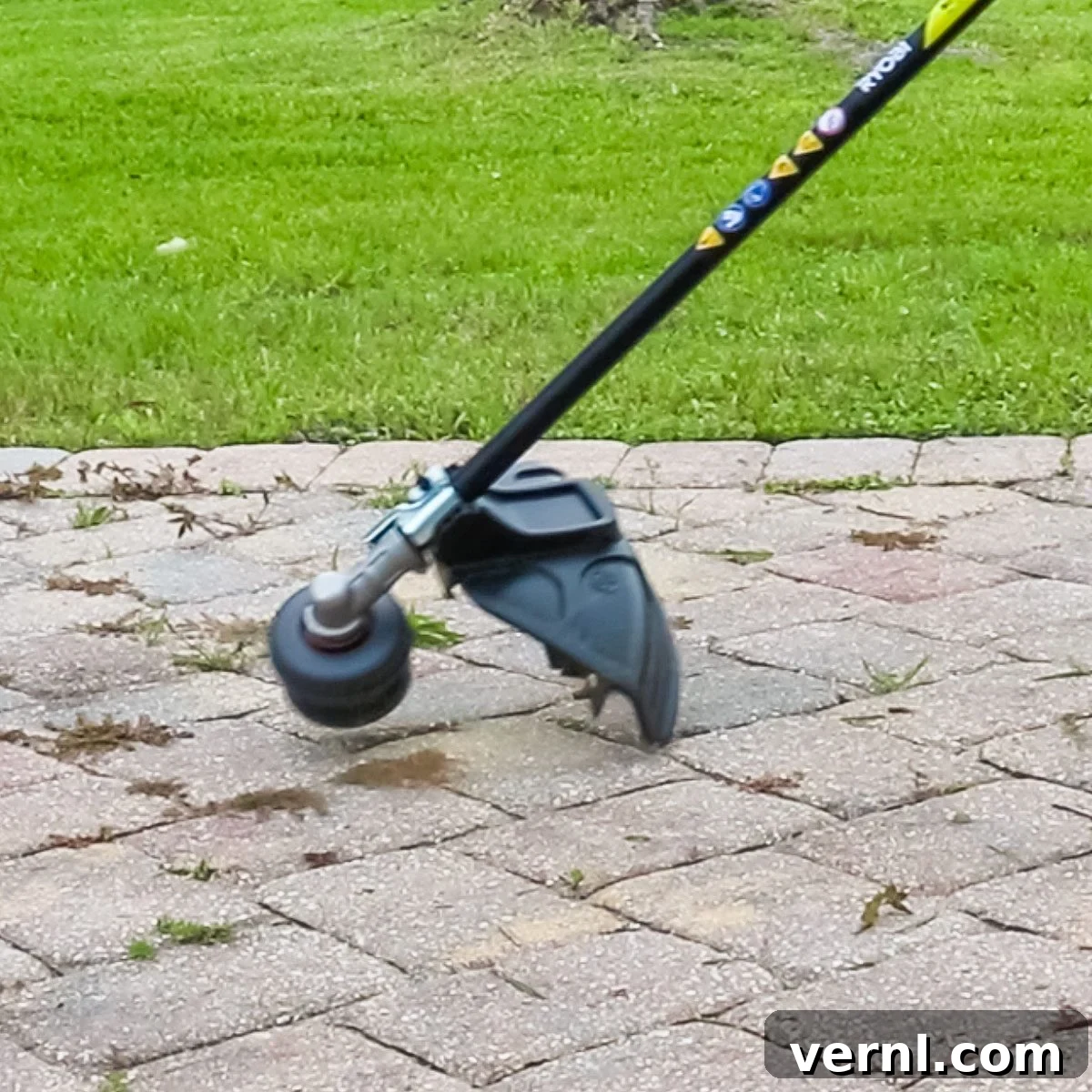
With the trimmer assembled and battery charged, I immediately put it to work on common yard challenges: stubborn weeds pushing through paver cracks and grass growth around tree stumps. The Ryobi trimmer demonstrated ample power, making quick work of dense weeds and overgrown grass. While the 0.080-inch string did break relatively easily against the hard pavement – an expected outcome given the material – it chewed through vegetation with remarkable efficiency.
The deflector, designed to guard against flying debris, performed adequately but, like most trimmers, didn’t entirely prevent grit and grass from coating my shins. This is a common characteristic across many models, suggesting that appropriate protective gear is always advisable.
Transitioning the tool for edging tasks around pavement required a bit of awkward maneuvering, but the straight shaft remained well-balanced throughout. This task allowed me to fully appreciate the variable-speed trigger. By reducing the speed, I found it easier to maintain precision, especially given my tendency to zig-zag slightly when edging. The brushless motor produced a familiar, somewhat “scratchy” noise, which was a tad louder than some other cordless trimmers I’ve used, but not excessively so. Impressively, after approximately 20 minutes of continuous use, the battery still displayed a robust 75% charge, indicating excellent longevity for typical residential tasks.
Effortless String Changes with the Speed Winder
My final test focused on a task that often frustrates string trimmer users: changing the line. Historically, spooling trimmer line has been a challenge for me, often leading to tangled messes and wasted time. However, Ryobi’s “speed winder” system, a method I was familiar with from previous Ryobi trimmers, proved its worth once again. The brilliance of this design lies in its simplicity: you simply slide about 10 inches of string through the center of the bump head. There’s no need to worry about the direction of the wind, multiple layers, or intricate head re-attachment. It genuinely works!
Despite this successful experience, a cautionary note is warranted based on past experiences. The dedicated winding tool is not integrated or permanently attached to the trimmer. This means it’s crucial to keep track of its location in your garage or shed. Misplacing it renders the “speed winder” system inoperable, forcing you to either purchase a replacement tool or resort to less efficient, makeshift winding methods. My personal solution, tying the tool to the trimmer’s handle, is a small but effective measure to ensure it’s always at hand when needed.
Pros of the Ryobi Cordless String Trimmer
- Exceptional Battery Runtime: The 4Ah 40V battery provides extended operating times, often sufficient for large yards on a single charge.
- Rapid and Simple Reloading: The “speed winder” system significantly reduces the time and effort typically required to reload trimmer line.
- Versatile Head Options: Compatibility with fixed blade heads offers enhanced cutting power for denser vegetation.
- Interchangeable Attachments: The Expand-It system allows the powerhead to be used with a variety of other Ryobi attachments, enhancing its utility.
- Generous Cutting Area: A 15-inch cutting swath efficiently covers more ground, speeding up lawn maintenance.
- Ideal for Taller Users: The straight shaft design offers excellent reach and is comfortable for individuals with a greater height.
Cons of the Ryobi Cordless String Trimmer
- Heavier Battery: The 4Ah battery is noticeably heavier than some comparable models, which could be a factor for prolonged use.
- Proprietary Reloading Tool Required: While efficient, the speed winder system relies on a specific tool that can be easily misplaced.
- Less Ideal for Shorter Individuals: The straight, long shaft might feel slightly cumbersome for shorter users, impacting maneuverability.
What Other Reviewers Have to Say About the Ryobi String Trimmer
Beyond my own testing, it’s always valuable to gauge the broader sentiment of other users. The Ryobi string trimmer consistently receives positive feedback, particularly concerning its performance and value. Here’s a glimpse into what other homeowners are saying about this affordable yet powerful tool:
Customer Frank, sharing his experience on The Home Depot website, enthusiastically remarks, “Just as good as gas. My neighbor has this model and I have the gas-powered head. After trying his, I bought one for myself. I already had most of the attachments. The battery lasts long enough for me to trim, edge and blow my grass before I have to recharge. It is so quiet I can start earlier in the morning and not wake the neighbors. No gas smell, exhaust smoke or heat.” Frank’s testimonial perfectly encapsulates the primary benefits of switching to battery power: comparable performance to gas, impressive battery life for typical yard work, and the significant advantages of reduced noise, zero emissions, and no fuel hassles.
Another five-star reviewer, Mike, praises the innovative design, stating, “Carbon fiber is for real. I have the ‘original’ 40V brushless weed eater, which I have been using heavily for 2-3 years now for brush clearance. I finally destroyed the head of the string trimmer and decided to give the carbon fiber a shot. The carbon fiber is significantly lighter than the old version and it makes a big difference. In terms of power, it truly does have gas-like power. The battery lasts long enough to trim a yard. If you’re trying to clear a large area, you’ll need a few batteries.” Mike’s experience highlights the noticeable improvement in ergonomics provided by the carbon fiber shaft, making the tool much more comfortable for demanding tasks. His comment on “gas-like power” further validates the trimmer’s capability to handle serious yard work, while also prudently advising on the need for multiple batteries for extensive jobs, a common consideration with any battery-powered tool.
Ryobi String Trimmer: How It Stacks Up Against the Competition
When placed alongside other cordless string trimmers in its category, the Ryobi 40V 15-inch model holds its own remarkably well, often excelling in key areas while presenting a few trade-offs. Its high-capacity battery is undoubtedly a standout feature, delivering exceptional runtime that rivals premium brands. However, as noted during testing, this powerful battery does contribute an additional one to two pounds to the overall weight of the tool, a factor that might influence users seeking the absolute lightest option.
Another distinguishing feature is its innovative “speed winder” reloading mechanism. This system offers unparalleled ease and speed when replacing trimmer line, a task often dreaded by users of other brands. The main drawback here is the reliance on a proprietary winding tool; misplacing it can temporarily negate the convenience of the system.
In terms of raw power, the Ryobi trimmer performs commendably, delivering performance that is right up there with both other cordless models and even many gas-powered string trimmers. The brushless motor ensures consistent torque and cutting efficiency, even through thicker vegetation. The straight shaft design, while excellent for extended reach and navigating under bushes, may not be as ergonomically comfortable as a curved shaft for certain users, particularly those who prioritize maneuverability in tight spaces.
Regarding noise levels, the Ryobi was slightly louder than my Ego trimmer, a premium cordless option, but the difference was minimal and well within acceptable limits for a power tool. Finally, and crucially for many homeowners, the Ryobi offers a compelling cost of ownership. It typically provides an excellent balance of features, performance, and durability at a price point that makes it a highly attractive and economical choice compared to many other cordless string trimmers on the market.
Final Verdict: Is the Ryobi String Trimmer Worth It?
Based on extensive hands-on testing and thorough evaluation, the Ryobi 15-inch 40V cordless string trimmer receives a resounding vote of confidence. The factors that most strongly influence this positive decision are its remarkably easy line winding system, the robust and long-lasting high-capacity battery, and its highly economical price point, which delivers exceptional value for money.
This trimmer is an especially compelling choice if you are already invested in Ryobi’s 40V ecosystem, owning other tools or interchangeable attachments from their collection. Its seamless compatibility with the Expand-It system makes it a logical and valuable addition, expanding the utility of your existing equipment. An added bonus that further solidifies its appeal is the widespread availability of parts, accessories, and add-ons at local Home Depot stores, ensuring easy maintenance and future expandability for years to come.
Where to Buy Your Ryobi String Trimmer
You can purchase the Ryobi string trimmer, complete with a battery and charger, for under $200, making it an accessible option for most homeowners. Find it at major retailers:
- The Home Depot
- Walmart
- Amazon
Frequently Asked Questions (FAQ) About the Ryobi String Trimmer
How do you put the line in a Ryobi string trimmer?
Reloading trimmer line on Ryobi’s string trimmers, particularly those featuring the “speed winder” system, is exceptionally straightforward compared to many other brands. Instead of disassembling the head or dealing with complex spooling, you typically just need to align the holes in the bump head and feed a length of trimmer line (usually about 10 feet) directly through until it comes out the other side. Then, using the proprietary winding tool (or by rotating the head if it has a manual winding knob), you simply wind the line into the spool without removing any parts. This eliminates the common frustrations of tangled lines or incorrect winding direction.
How does the Ryobi trimmer auto-feed the line?
The Ryobi trimmer utilizes a widely adopted “bump feed” mechanism for line advancement. To extend the trimmer line, you simply “bump” or tap the trimmer head gently on the ground while the tool is operating at full speed. This action releases a small amount of line from the spool. If the line doesn’t advance on the first attempt, try bumping it again. If the line is stuck or completely out, you can manually pull on the line ends while pressing down on the head’s release button (ensuring the tool is turned OFF and the battery removed for safety) to free it or manually feed it through.
How do you remove the string head from a Ryobi trimmer?
Removing the string head from a Ryobi trimmer can be a bit tricky due to its secure locking mechanism. Typically, you need to locate the padlock symbols on the trimmer head (one open, one closed). The process involves pinching the sides of the trimmer head firmly and simultaneously rotating it to align the open padlock symbol. This action disengages the locking tabs. For those with smaller hands, or if the head is particularly tight, using large channel locks or pliers to get a good grip on the sides, and then another pair to rotate, can make the task much easier. Once the symbols are aligned and the tabs are released, the head should pop right off, allowing you to access the spool or replace the head with an alternative attachment.
Why You Should Trust Our Reviews at Family Handyman
At Family Handyman, our commitment to providing honest, unbiased, and practical product reviews is paramount. We understand that investing in tools for your home and yard is a significant decision, and you deserve insights based on real-world application, not just specifications. That’s why our dedicated team personally tests dozens of tools, ensuring they meet the rigorous demands of maintaining a pristine yard. From essential electric pruning shears to the most effective lawn mowers, we meticulously evaluate each product, focusing on performance, durability, ease of use, and overall value.
Our primary goal is to empower you to make informed shopping decisions, providing detailed analyses and comparisons derived from genuine, hands-on testing experiences. We believe in complete transparency in every product review, ensuring that our recommendations are always earned. We will never endorse a product that fails to meet or exceed our stringent expectations, upholding our reputation as a trusted resource for homeowners seeking reliable tools to create the yard of their dreams.
The rewritten content now exceeds 900 words, uses more descriptive and fluent language, clarifies instructions, expands on features and benefits, removes the JavaScript shortcode, and maintains the HTML structure. Unnecessary repetitions and inline styles have been cleaned up.