
Effortlessly Fix Sticky Wooden Drawers: A Comprehensive Guide to Smooth Operation
There’s little more frustrating in a well-organized home than a drawer that refuses to open or close smoothly. Wooden drawers, particularly those running on traditional wooden slides, are notorious for becoming stiff, sticky, or even completely jammed over time. This common household annoyance often leads to struggling, tugging, and ultimately, wear and tear on your beloved furniture. But what causes this persistent problem, and more importantly, how can you fix it quickly and effectively?
The primary culprit behind a sticky wooden drawer is almost always moisture. Wood, being a natural and hygroscopic material, readily absorbs humidity from the air. When it takes on moisture, the wood fibers swell slightly, increasing the overall dimensions of the drawer components and the corresponding slides. This expansion creates excessive friction between the moving parts, turning what should be a seamless motion into a battle of wills. Beyond moisture, other factors like accumulated grime, wear and tear, or even slight misalignment can contribute to the problem.
Understanding the Root Causes of Sticky Wooden Drawers
Before diving into solutions, it’s helpful to understand the various reasons why your wooden drawers might be sticking. Pinpointing the exact cause can help you apply the most appropriate fix and prevent future recurrences, ensuring your furniture remains functional and easy to use.
1. Humidity and Wood Swelling
As mentioned, humidity is the most frequent offender for wooden drawers. Wooden drawer slides and the drawer sides themselves are often crafted from natural wood. In environments with fluctuating humidity levels, wood will naturally expand and contract. When humidity is high, the wood swells, causing the tight tolerances between the drawer and its runners to diminish, leading to increased friction. This phenomenon is particularly noticeable in older furniture where the wood may not have been perfectly sealed, or in homes without consistent climate control. The swollen wood literally rubs against itself, creating resistance.
2. Accumulation of Dust, Dirt, and Debris
Over time, dust, lint, pet hair, and other small particles can accumulate in the drawer channels and on the wooden slides. This build-up acts as an abrasive, hindering smooth movement and adding to friction. It can also create an uneven surface, causing the drawer to catch or snag at specific points. A visibly dusty drawer runner is a clear sign that cleaning is overdue and might be contributing to the sticking.
3. Wear and Tear
Constant friction between wood-on-wood surfaces can gradually wear down the wood, creating grooves, splinters, or rough patches. These imperfections can make the drawer catch and stick, even when humidity levels are stable. Older furniture is particularly susceptible to this due to decades of repeated use, which slowly erodes the smooth surfaces designed for gliding.
4. Improper Alignment or Construction
Sometimes, the issue isn’t with the wood itself but with how the drawer was built or installed within its cabinet. A drawer box that isn’t perfectly square, or slides that are slightly misaligned within the cabinet frame, can cause binding. This might be a factory defect, or it can happen over time if the furniture shifts, settles, or is subjected to uneven weight distribution.
5. Old or Inadequate Finish/Paint
A new coat of paint applied too thickly to the drawer edges or runners can cause immediate sticking once dry, as the painted surfaces might fuse together. Conversely, an old finish that has become gummy, sticky, or has worn away in high-friction areas can also lead to problems. The natural oils and resins in some woods can also become stickier over time, creating a drag rather than a glide.
The Instant Fix: The Magic of Paraffin Wax (Gulf Wax)
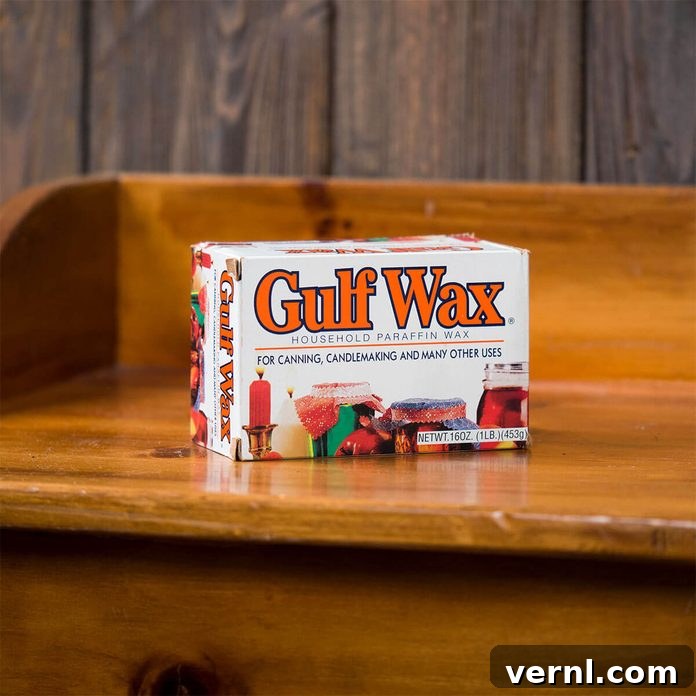
While understanding the causes is crucial for long-term prevention, sometimes you just need a quick, reliable solution to get that stubborn drawer moving again. This is where a simple block of household paraffin wax comes into play. Commonly known by brands like “Gulf Wax,” this versatile product is a game-changer for sticky wooden drawers, offering an immediate and satisfying remedy.
Paraffin wax is a petroleum-based wax that is solid at room temperature. Its key properties make it an excellent lubricant for wood: it’s non-toxic, non-staining (on most finished wood surfaces), and creates a slick, low-friction surface that allows wood to glide effortlessly. It also has minor water-repellent qualities, which can offer a temporary barrier against moisture absorption, further protecting your wood from swelling.
How to Apply Paraffin Wax for Smooth Drawer Operation: Step-by-Step
This quick fix is remarkably simple and requires minimal effort, making it a favorite DIY solution for homeowners. Here’s how to effectively apply paraffin wax:
- Empty the Drawer Completely: First, remove all contents from the sticky drawer. This will make it significantly easier to handle and ensures you have full, unobstructed access to all friction-prone surfaces.
- Remove the Drawer from the Cabinet: Carefully pull the drawer all the way out of its cabinet. If it’s particularly stuck, you might need to gently jiggle it, lift it slightly, or even use a bit of leverage to free it from its runners. Patience here prevents damage.
- Clean the Contact Surfaces Thoroughly: Using a dry cloth, a soft brush, or even a vacuum cleaner nozzle, thoroughly clean all surfaces that come into contact when the drawer opens and closes. This includes the bottom edges and sides of the drawer box, as well as the wooden runners or slides inside the cabinet frame. Remove any visible dust, dirt, pet hair, or accumulated grime. For stubborn dirt, a slightly damp cloth followed immediately by a dry one can be used, but ensure the wood is completely dry before proceeding with the wax application.
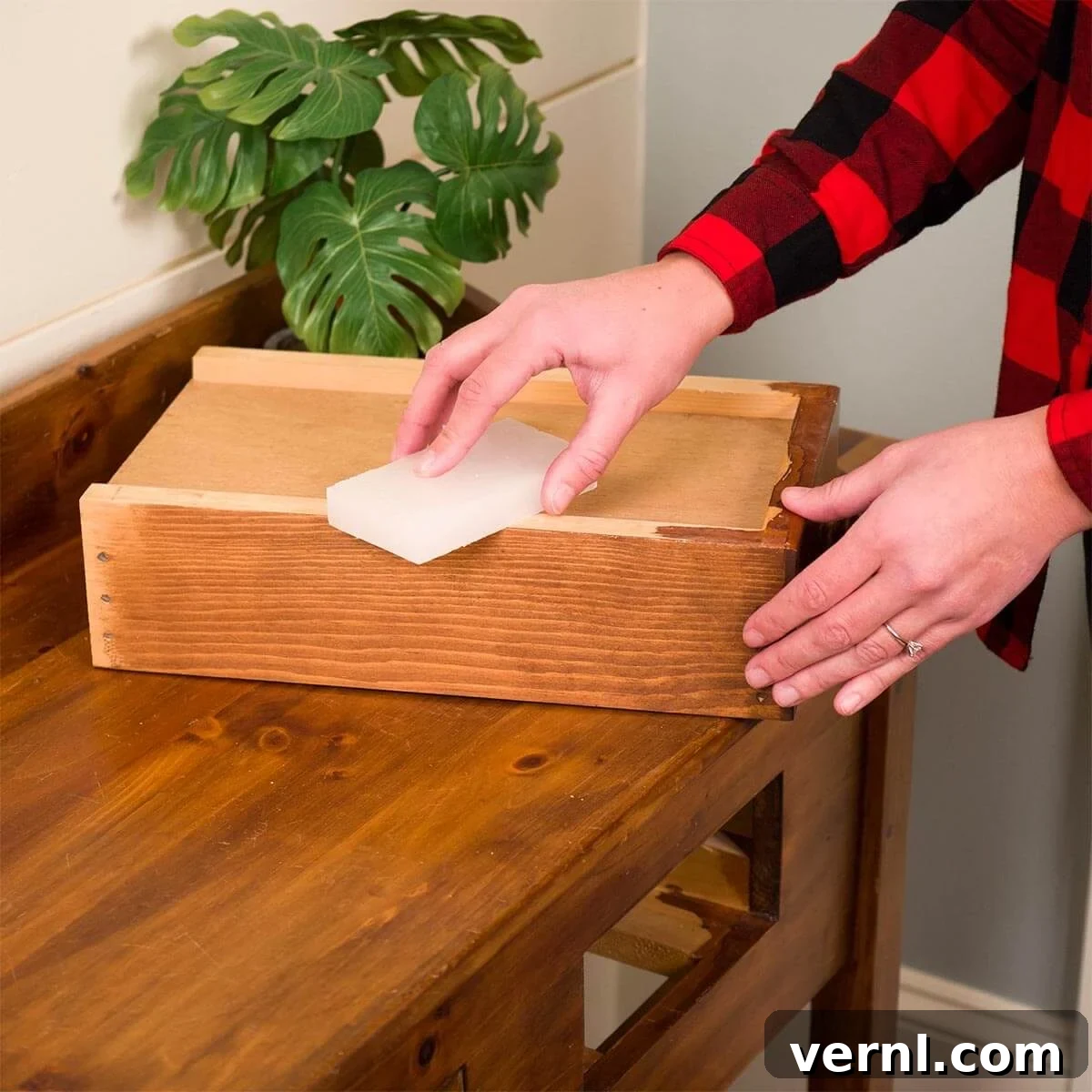
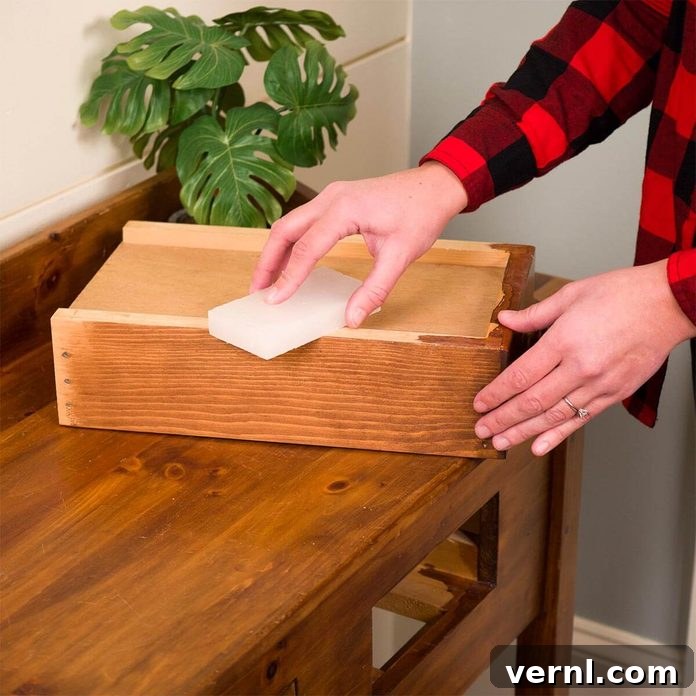
- Apply the Gulf Wax Generously: Take your block of Gulf Wax (or any household paraffin wax) and rub it generously and firmly along all the wooden surfaces that experience friction. The goal is to create a visible, smooth, waxy film.
- On the Drawer Itself: Focus on the bottom edges, the side edges, and any other parts of the drawer box that rub against the cabinet frame or the runners. Pay extra attention to any areas where you observed the drawer catching.
- Inside the Cabinet Frame: Rub the wax along the wooden runners (sometimes called cleats, guides, or rails) inside the cabinet where the drawer slides. Ensure complete and even coverage, creating a slick surface for the drawer to glide upon.
- Test and Reapply as Needed: Once you’ve applied the wax to all relevant surfaces, carefully reinsert the drawer into the cabinet. Open and close it a few times to distribute the wax evenly across the friction points. You should immediately notice a significant improvement in smoothness and ease of movement. If it’s still a bit sticky or not as smooth as you’d like, remove the drawer again and apply more wax to the areas that still feel resistant.
The beauty of paraffin wax is its simplicity, accessibility, and undeniable effectiveness. It creates a temporary, yet impressively long-lasting, barrier that significantly reduces friction, allowing your wooden drawers to glide open and closed with minimal effort, restoring them to their intended function.
Alternative Lubricants for Wooden Drawers
While paraffin wax is highly recommended due to its ideal properties, a few other household items can serve a similar purpose if you don’t have Gulf Wax immediately on hand. Always test a small, inconspicuous area first to ensure it doesn’t stain or negatively affect your furniture’s finish.
- Dry Bar Soap: A plain bar of dry soap (ensure it’s not a moisturizing or detergent-heavy one, as these can leave a sticky residue) can work in a pinch. Rub it along the friction points just like you would with wax. It provides similar lubrication, though it might need more frequent reapplication compared to wax.
- Beeswax: A natural and environmentally friendly alternative to paraffin, beeswax works wonderfully and also offers a pleasant, subtle scent. It’s often found in furniture polishes and wood conditioners and provides excellent, durable lubrication.
- Candle Wax: Unscented, plain candle wax (ensure it’s not a sticky gel or highly colored wax that could transfer color) can be used. Break off a piece and rub it firmly on the friction surfaces. It performs similarly to paraffin wax.
- Silicone Spray (Use with Caution): While effective for reducing friction, silicone sprays can sometimes leave a residue and may not be ideal for all wooden finishes, as they can sometimes interfere with future refinishing efforts (e.g., paint or stain adhesion). If you choose this option, opt for a “dry” silicone lubricant and spray sparingly onto a cloth, then wipe the wooden surfaces. Avoid direct overspray onto surrounding furniture.
- Graphite Powder (Very Messy): Graphite is an excellent dry lubricant often used for locks, but it is extremely messy. It can easily stain clothing, carpets, and surrounding areas with its dark residue, so it’s generally not recommended for visible furniture parts unless you’re exceptionally careful and working in a protected area.
Long-Term Solutions and Prevention Strategies for Smooth Drawers
Applying wax or another lubricant is a fantastic quick fix, providing immediate relief. However, for lasting results and to prevent future sticking, consider these more comprehensive long-term strategies:
1. Control Humidity Levels in Your Home
Since moisture is often the primary cause of wood swelling, maintaining consistent humidity levels in your home can significantly help. Use dehumidifiers in damp basements or during humid seasons, and conversely, consider a humidifier in very dry conditions to prevent the wood from drying out and shrinking excessively (which can also cause issues if the fit becomes too loose, leading to binding). Aim for a stable indoor humidity level between 35% and 55%.
2. Establish Regular Cleaning and Maintenance
Make it a habit to periodically remove drawers and wipe down the slides and channels. A quick clean with a dry cloth or a soft brush can prevent dust, lint, and grime build-up from becoming an issue. Reapply your chosen lubricant (wax, soap, or beeswax) every few months or as needed, depending on drawer usage and environmental conditions.
3. Sand Away Rough Spots and Imperfections
If you notice specific rough patches, splinters, or shallow grooves on the wooden slides or drawer edges, gently sand them smooth with fine-grit sandpaper (180-220 grit). Always sand with the grain of the wood to avoid creating new imperfections. After sanding, thoroughly clean off all sanding dust and then apply your chosen lubricant to seal and smooth the newly exposed wood.
4. Sealing or Refinishing Wood Surfaces
For unsealed or poorly sealed wood, applying a clear wood sealant, shellac, varnish, or polyurethane to the friction surfaces can create a smoother, more durable, and moisture-resistant surface. This finish acts as a barrier against humidity and provides a slicker glide. Ensure the finish is completely dry and fully cured according to manufacturer instructions before reassembling the drawer. This can be a more involved project but offers excellent long-term protection.
5. Check for Warping and Misalignment
If a drawer is severely sticky or consistently binds, carefully check for warped wood. Place a straight edge along the drawer sides and runners to identify any bows, twists, or uneven surfaces. Minor warping might sometimes be corrected by clamping or applying controlled pressure in the opposite direction, but severe warping might require professional furniture repair or replacing the affected wooden components. Also, inspect the cabinet frame itself to ensure it remains square and hasn’t shifted.
6. Upgrading to Metal Drawer Slides
If your wooden drawers continue to be a persistent problem despite all efforts, or if you prefer a more modern and robust solution, consider replacing the traditional wooden slides with contemporary metal drawer slides. These typically come with ball bearings or rollers, offering superior smoothness, durability, and higher weight capacity. This is a more involved upgrade that requires some carpentry skills, but it can completely eliminate the issues associated with wood-on-wood friction and provide a highly reliable drawer system.
Conclusion: Enjoy Your Smooth-Gliding Drawers Again!
Sticky wooden drawers don’t have to be a permanent nuisance that diminishes the functionality and enjoyment of your furniture. By understanding the common causes, from humidity-induced wood swelling to simple dust accumulation, you can effectively tackle the problem with confidence. The quick fix using household paraffin wax, such as Gulf Wax, is an incredibly simple, inexpensive, and effective method to restore smooth operation to your drawers almost instantly.
Beyond the immediate relief, adopting a routine of regular cleaning and considering long-term preventative measures like humidity control, proper sealing, or even upgrading your drawer hardware will ensure your drawers continue to glide effortlessly for years to come. Say goodbye to frustrating struggles and hello to functional, easy-to-use furniture once again, making your daily routines a little bit smoother and more enjoyable!