Unlock Effortless Fires: Your Guide to DIY Wine Cork Fire Starters
There’s something uniquely captivating about a crackling fire – whether it’s the centerpiece of a cozy backyard fire pit gathering, the heart of a wilderness campfire, or simply warming a chilly evening. The challenge, however, often lies in getting that perfect flame started without fuss or harmful chemicals. What if we told you the secret to igniting your next fire effortlessly, sustainably, and economically could be found in your wine rack? Welcome to the ingenious world of DIY wine cork fire starters, a simple yet revolutionary way to kickstart your outdoor adventures.
Repurposing those natural corks from your favorite bottles, combined with a common household item, creates an incredibly effective and eco-friendly fire-starting solution. Forget fumbling with newspaper, flimsy kindling, or expensive store-bought starters. This clever hack not only helps you achieve a robust flame quickly but also gives a second life to materials that might otherwise end up in the landfill. Get ready to transform your outdoor experiences with this convenient, cost-effective, and remarkably efficient approach to fire ignition.
The Magic Behind Wine Cork Fire Starters: Why They Work So Well
The concept behind these DIY fire starters is surprisingly simple yet remarkably effective. Natural wine corks are inherently porous, making them excellent at absorbing liquids. When thoroughly soaked in rubbing alcohol (isopropyl alcohol), they become potent, slow-burning tinder that can provide a sustained flame for an extended period. This crucial sustained burn gives your kindling and larger logs ample time to catch fire, ensuring a successful ignition every time. This method offers several distinct advantages:
- Eco-Friendly Repurposing: You’re giving used natural wine corks a valuable new purpose, diverting waste from landfills and contributing to a more sustainable, conscious lifestyle.
- Economical & Cost-Effective: Instead of repeatedly purchasing specialized fire starters, you’re utilizing materials you might already have on hand, or that are easily and cheaply sourced, saving you money in the long run.
- Exceptional Effectiveness & Consistency: Alcohol-soaked corks burn hotter and significantly longer than most traditional tinder like paper or small twigs, ensuring a reliable and robust start for your fire, even in less-than-ideal conditions.
- Cleaner Burn: Natural corks and rubbing alcohol burn relatively cleanly, without the unpleasant odors, excessive smoke, or chemical residues often associated with some commercial fire starters or petroleum-based products.
- Easy Storage & Portability: Once prepared and properly soaked, these fire starters can be stored indefinitely in an airtight container, ready whenever you need them for a spontaneous backyard bonfire or a planned camping trip. Their compact size makes them easy to transport.
Crafting Your Own Wine Cork Fire Starters: A Detailed Step-by-Step Guide
Making your own batch of wine cork fire starters is an incredibly straightforward process that requires minimal effort and just a few basic, readily available items. Follow these simple instructions to create your own supply of these fire-starting wonders:
What You’ll Need to Gather:
- Natural Wine Corks: This is the most critical ingredient! Ensure they are genuine corks made from the bark of the cork oak tree, not synthetic or plastic stoppers. We will explain the vital distinction shortly.
- Rubbing Alcohol (Isopropyl Alcohol): Standard concentrations of 70% or 91% work perfectly. Higher concentrations tend to burn hotter and evaporate slightly faster, but either is suitable for this purpose.
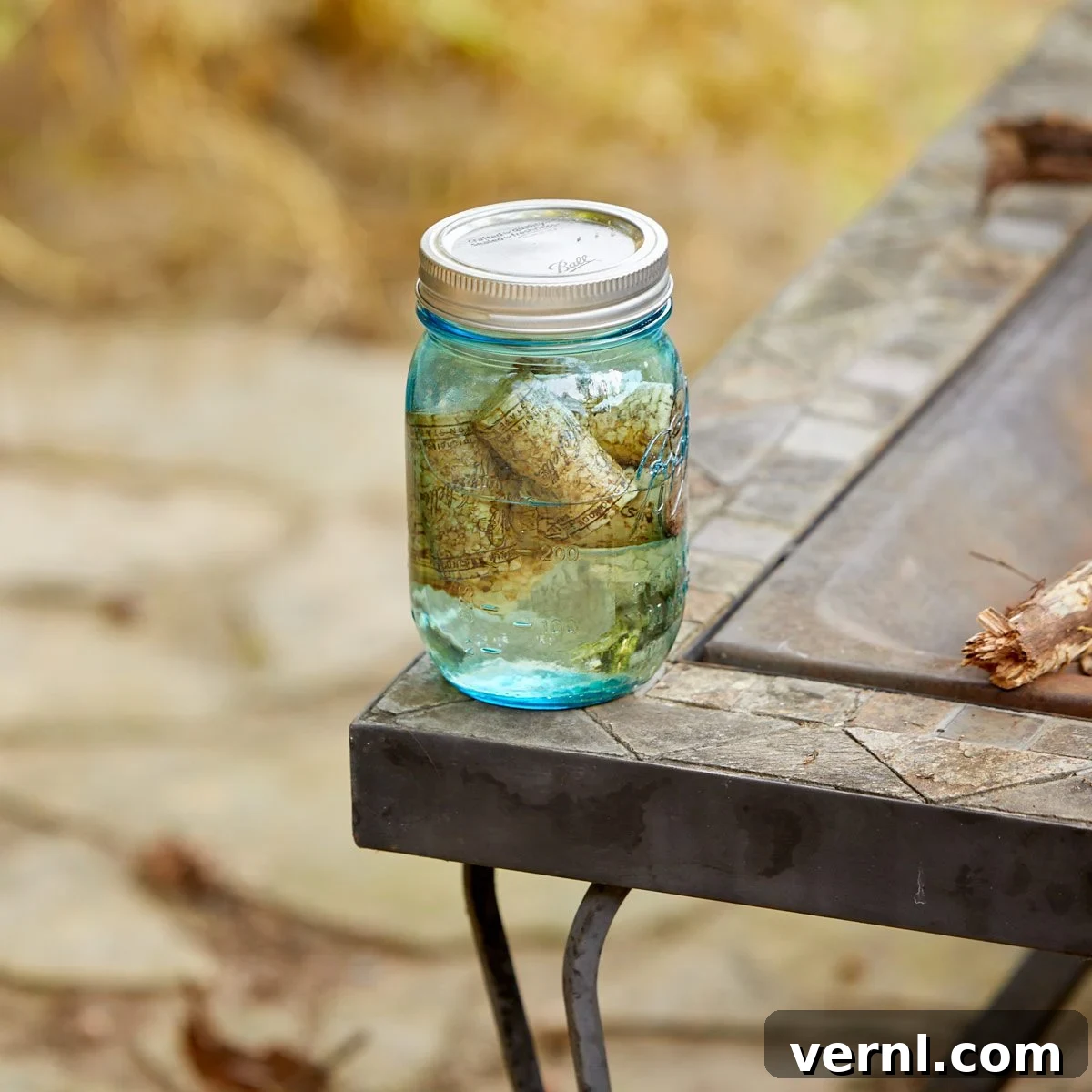
- Mason Jar with a Tight-Fitting Lid: A quart-sized (32 oz) mason jar is an ideal choice, offering ample space for many corks and a secure seal. Any glass jar with a robust, airtight lid will suffice.
The Simple Process:
- Start Collecting Your Corks: Begin by collecting natural wine corks from bottles you’ve enjoyed. Don’t be shy; the more you gather, the more fire starters you’ll have! It’s a great excuse to enjoy a few more bottles of your favorite vintage.
- Fill the Mason Jar: Gently place your collected natural wine corks into the mason jar. Pack them in loosely but efficiently, ensuring there’s still enough space for the rubbing alcohol to completely cover and saturate each cork.
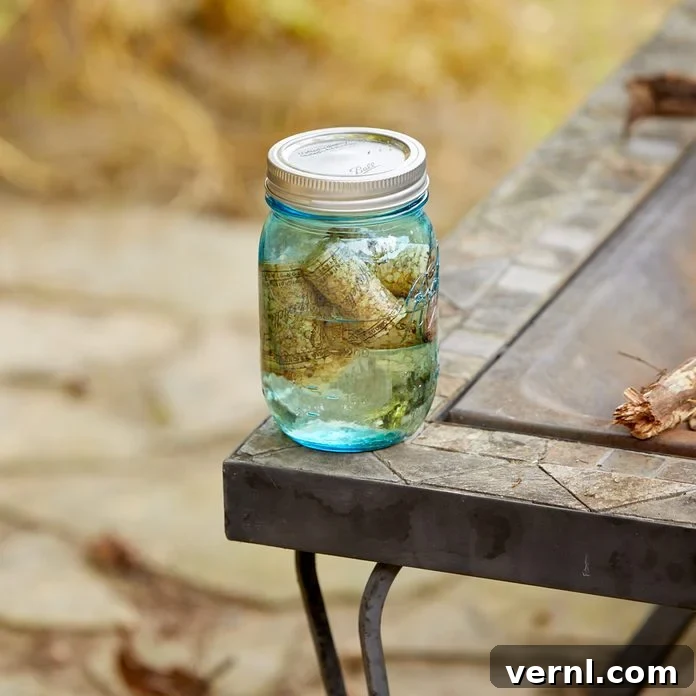
- Submerge with Rubbing Alcohol: Carefully pour rubbing alcohol over the corks until they are entirely submerged. It’s essential that all corks are fully covered, as this ensures even saturation and maximum effectiveness.
- Seal and Begin the Soaking Process: Secure the lid tightly on the mason jar. Now, patience is key. While the corks will begin to absorb the alcohol in as little as two days and become somewhat effective, for optimal performance, a significantly longer soak is highly recommended. For the best results – a hotter, longer, and more potent burn – allow them to soak for at least a full week. This extended soaking period allows the corks to fully saturate to their core, transforming them into truly superior fire starters.
- Proper Storage of Your Prepared Starters: Once soaked to your satisfaction, your wine cork fire starters are ready for use. Keep them stored in the tightly sealed jar in a cool, dry place, safely away from direct heat sources, open flames, or prolonged exposure to direct sunlight until you’re ready to ignite your next fire.
Natural vs. Synthetic Corks: Why the Distinction is Absolutely Crucial
When preparing your DIY wine cork fire starters, the type of cork you use is not just important – it is paramount for both effectiveness and safety. You absolutely must use natural corks. Here’s a clear breakdown of why this distinction matters:
- Natural Corks: These are sustainably harvested from the bark of the cork oak tree. Their unique cellular structure is highly porous, making them exceptionally absorbent. This allows them to soak up the rubbing alcohol effectively and hold it within their structure. When ignited, natural corks burn cleanly, consistently, and for a sufficient duration, providing a sustained flame that is perfect for igniting kindling and subsequently larger logs.
- Synthetic Corks: These are typically manufactured from plastic-based materials, often polymers or elastomers. They are largely non-porous and will not absorb the rubbing alcohol in the same beneficial way natural corks do. Attempting to use synthetic corks as fire starters can be ineffective at best and potentially problematic at worst. They may simply melt into a gooey mess, produce unpleasant and potentially toxic fumes, or fail to ignite properly, leaving you with a non-burning residue and a frustrated attempt to start your fire. Always check the texture and appearance; natural corks often have visible grain, small imperfections, and a slightly irregular, spongy surface, while synthetic corks are usually smooth, uniform, and often feel more rigid or plastic-like.
Safety First: Essential Precautions for Handling Flammable Materials
While making and using wine cork fire starters is a simple and rewarding process, safety should always be your absolute top priority. Remember that you are working with flammable materials, and responsible handling is key to a safe and enjoyable experience.
- Handle Rubbing Alcohol with Extreme Care: Rubbing alcohol is a flammable liquid. Always handle it away from any open flames, sparks, extreme heat sources, or anything that could create ignition. Ensure adequate ventilation when pouring.
- Proper Storage is Non-Negotiable: Always store your sealed jar of wine cork fire starters in a cool, dry, and well-ventilated area. Crucially, ensure it is safely out of reach of children and pets. Never store them near heat sources, heating vents, direct sunlight for extended periods, or where temperatures can become excessively high.
- Ensure Adequate Ventilation: When using the fire starters, ensure you have appropriate and sufficient ventilation, especially if you are starting a fire indoors (e.g., in a fireplace or wood stove) or in a partially enclosed outdoor structure.
- Use Only in Approved Fire Containers: These fire starters are designed for use in designated and safe fire pits, outdoor fireplaces, indoor fireplaces, or established campfire rings. Never use them in improvised or unsafe containers.
- Never Add Alcohol to an Existing Fire: This is a critical safety rule. Do not ever pour rubbing alcohol directly onto an already burning fire, hot embers, or smoldering materials. This can cause a dangerous and uncontrollable flare-up or flashback, leading to serious injury.
- Have Extinguishing Means Nearby: As with any fire, always have a means of extinguishing it readily accessible. This could include a bucket of water, sand, a shovel, or a functional fire extinguisher specifically rated for the type of fire you are building.
Lighting Up: Using Your Wine Cork Fire Starters Effectively
Once your corks are fully saturated and you’re ready to enjoy the warmth and ambiance of a glowing fire, using them is incredibly simple and effective:
- Prepare Your Fire Pit or Fire Area: Before lighting anything, ensure your fire pit, fireplace, or campfire area is clean, clear of any combustible debris, and set up according to safety guidelines for your specific structure.
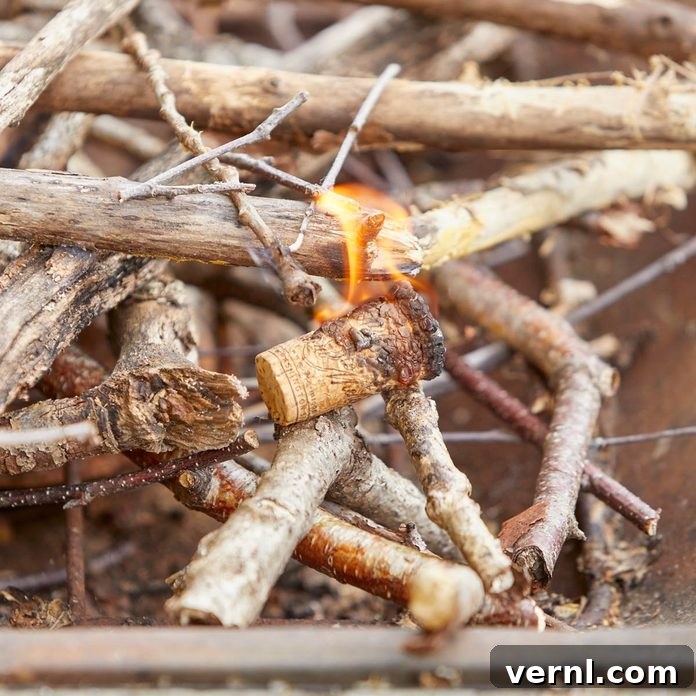
- Strategic Placement: Place one or two soaked corks directly underneath your kindling. Kindling typically consists of small twigs, finely shredded paper, dry leaves, or thin wood shavings. The goal is for the flame from the cork to efficiently ignite these smaller, more flammable materials.
- Build Your Fire Structure: Arrange your kindling around and over the corks in a manner that allows for good airflow. Then, gradually add progressively larger pieces of wood – start with smaller logs or split wood, followed by larger, more substantial pieces. A teepee or log cabin style structure works well for encouraging upward draft.
- Ignite with Caution: Using a long match, a utility lighter, or a fire wand, carefully ignite one of the soaked corks. The alcohol will catch fire readily, burning with a strong, consistent, and sustained flame that will quickly ignite your kindling, leading to a robust and long-lasting fire with minimal effort.
Beyond the Flame: Enhancing Your Outdoor Living with Fire Pits
The journey to a perfect fire often starts with an excellent fire starter, but it truly culminates in the warmth, glow, and inviting ambiance of a well-designed fire pit. Fire pits are far more than just a place to burn wood; they are a quintessential focal point for outdoor living, designed to bring people together, foster conversation, and create unforgettable memories. From intimate conversations under a starlit sky to lively family s’mores nights, a fire pit significantly elevates and enhances any backyard or patio experience, making it a true extension of your indoor living space.
Fire pits come in an astonishing array of shapes, sizes, and styles, meticulously catering to virtually every aesthetic preference, functional requirement, and budget. Whether you envision a rugged, rustic, stone-clad masterpiece that blends seamlessly with nature or a sleek, ultra-modern gas-fueled design that offers instant gratification, there’s undoubtedly a perfect fire pit waiting to transform your outdoor space. They can be portable, offering the flexibility to move the warmth and gathering spot wherever it’s needed most, or permanently built-in, becoming an integral and striking architectural feature of your landscape design. Materials used in their construction range from durable steel, elegant copper, and resilient cast iron to natural stone, poured concrete, and even intricate tile work, each offering unique visual and functional characteristics.
Choosing the right fire pit for your home involves considering several crucial factors, including the available size of your outdoor space, your desired fuel type (traditional wood, clean-burning propane, or convenient natural gas), essential safety features (such as robust spark screens, stable bases, and adequate clearance), and the overall aesthetic that best complements your home’s exterior and your personal style. A thoughtfully chosen and well-placed fire pit can dramatically extend the usability and enjoyment of your patio or garden well into cooler evenings and months, making it a valuable and cherished investment for any homeowner who loves to entertain, relax, or simply enjoy the calming presence of a fire outdoors.
If you’re currently looking for inspiration to create a truly captivating and inviting outdoor gathering spot, exploring various fire pit designs can spark your imagination and help you visualize the perfect addition to your home. From simple, elegant DIY projects that add personal charm to elaborate custom installations that become the envy of your neighborhood, the possibilities are virtually endless. Check out our 37 favorite fire pits for a wealth of ideas and be inspired to design and create a cozy, functional, and aesthetically pleasing gathering spot in your backyard that perfectly complements your home and enhances your lifestyle.
Cultivating a Culture of Outdoor Enjoyment and Sustainable Living
Embracing DIY projects like these effective wine cork fire starters is more than just a practical skill; it’s a significant step in cultivating a richer, more engaging outdoor living experience and embracing sustainable practices. It’s about taking ownership of your environment, finding joy in simple, hands-on creations, and making the absolute most of your home’s exterior spaces. A beautifully lit fire, easily kindled with your homemade starters, sets the perfect stage for everything from quiet contemplation and intimate conversations to vibrant social events and memorable family gatherings. Consider further enhancing your backyard oasis by adding comfortable, weather-resistant seating, tasteful ambient lighting, perhaps even an outdoor kitchen or bar area to complete your vision. The overarching goal is to create a seamless extension of your indoor living space, where comfort, beauty, functionality, and sustainability converge to offer unparalleled enjoyment.
Conclusion: Your Path to Perfect Fires Awaits
Say goodbye to frustrating, smoke-filled fire-starting attempts and hello to the simplicity, efficiency, and eco-friendliness of DIY wine cork fire starters. This ingenious hack not only provides an incredibly effective and reliable way to ignite your fires but also champions sustainability by thoughtfully repurposing materials that would otherwise be discarded as waste. Coupled with the inviting allure and functional benefits of a well-chosen and well-loved fire pit, you are now perfectly equipped to create countless memorable outdoor moments, fostering warmth, laughter, and relaxation year-round.
So, the next time you uncork a delightful bottle of wine, remember that you’re not just enjoying a beverage – you’re thoughtfully collecting the essential building blocks for your next effortless campfire, a cozy backyard bonfire, or a welcoming fire pit gathering. Gather your natural corks, allow them to soak up their fiery potential, and prepare to ignite countless evenings of warmth, joyous laughter, and profound relaxation. Happy fire-starting, and may your outdoor moments always be bright!