Embracing Permeable Pavement: A Sustainable Solution for Modern Landscapes
Imagine your home’s patio or a spacious driveway with an expansive parking area. Observe what transpires during a typical rainfall. This simple observation profoundly illustrates why covering natural landscapes with impervious surfaces has a significant and often destructive impact on our environment.
When rain falls on traditional hardscapes, instead of being absorbed naturally into the earth to nourish the soil and replenish groundwater, it streams away. This runoff often disappears from sight, but its journey frequently leads to swollen waterways, overloaded storm drains, and the accumulation of standing water in low-lying areas. This phenomenon, seemingly minor on a single property, escalates dramatically when considering the vast urban sprawl.
Now, project this scenario across American cities, where countless acres are paved with asphalt and concrete. What becomes of this enormous volume of water? The answer is clear: unchecked stormwater runoff leads to severe erosion and contributes significantly to flooding problems. Regions particularly vulnerable include those along the Gulf of Mexico, the Atlantic seaboard, and various other areas prone to heavy rainfall, where infrastructure struggles to cope with the deluge.
I am a fervent advocate for pavers in designing patios and walkways. While their aesthetic appeal is undeniably superior to monolithic concrete slabs, there’s a far more compelling reason for their preference: their inherent ability to allow water to percolate into the ground beneath. This crucial function dramatically reduces the potential for soil erosion along borders and prevents the formation of stagnant water bodies that become prime breeding grounds for mosquitoes after heavy downpours. Permeable pavers are a step in the right direction, offering a localized solution to a widespread problem.
Permeable pavement operates on a similar principle to individual pavers, but it represents a more sophisticated and engineered approach designed to tackle major urban stormwater management challenges at a larger scale. It’s a critical innovation in sustainable infrastructure, addressing ecological concerns while providing durable, functional surfaces.
Understanding Permeable Pavement: An Ecological Engineering Marvel
At its core, permeable pavement is a specially designed hard surface engineered to absorb rainwater and allow it to filter through its structure, ultimately seeping into the soil below. Unlike conventional impervious surfaces such as traditional asphalt or concrete, which create an impermeable barrier, permeable pavement actively manages stormwater runoff at its source.
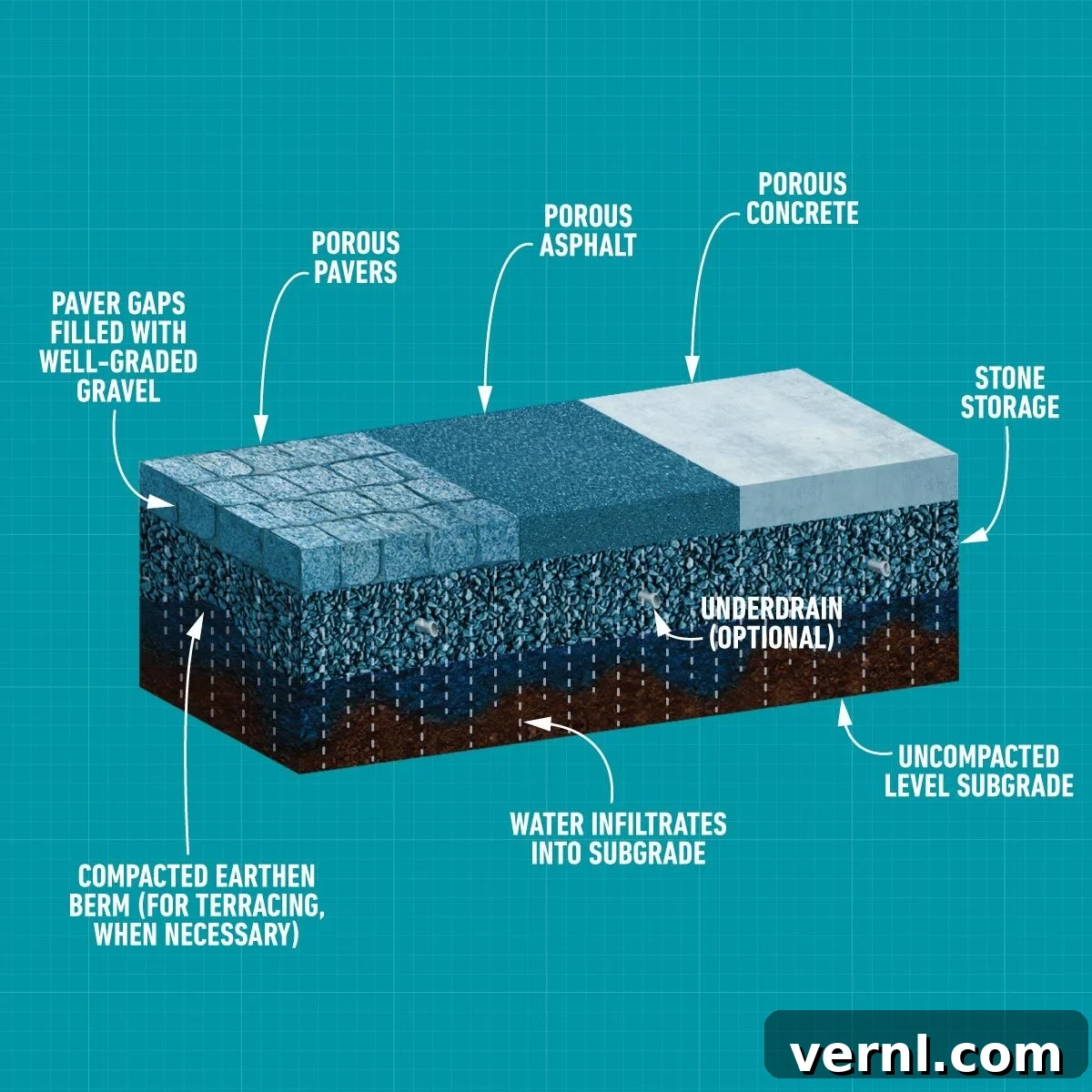
The ingenuity of permeable pavement lies in its layered construction, which effectively transforms the paved area into a functional stormwater management system. It overcomes the common issues associated with compacted earth or traditional turf, which can become muddy and unstable during heavy rain, while also offering superior stability compared to loose sand or gravel. To function as an efficient water reservoir and filtration system, permeable pavement typically comprises two primary layers:
- A Porous Surface Layer: This is the visible top layer, designed with interconnected voids or gaps that allow water to pass directly through it.
- A Thick Bedding Layer of Crushed Rock: Positioned beneath the surface layer, this crucial component acts as a reservoir, holding the absorbed water before it slowly infiltrates the native soil.
While the surface layer is what you see and interact with, the underlayment is the true workhorse that enables permeable pavement to function effectively. This bedding layer, often 12 inches thick or more, is composed of carefully graded crushed rock that creates significant void space to store large volumes of water. It not only absorbs and temporarily holds the water that passes through the surface layer but also facilitates its gradual release into the subsoil. This deep excavation, typically 12 inches or more, is a critical step in the installation process, ensuring the system has adequate storage capacity and proper drainage capabilities. Proper design and installation of this underlayment are paramount for the longevity and performance of the entire permeable pavement system.
The Mechanics of Permeable Pavement: How It Works
When precipitation falls onto a permeable pavement system, the water doesn’t simply run off. Instead, it readily penetrates the porous surface layer. Once past the surface, the water is directed into the robust bed of crushed rock beneath. This underlayment, meticulously engineered with specific aggregate sizes and void spaces, acts as a temporary reservoir, much like a natural aquifer or a large-scale dry well. It effectively captures and holds the stormwater, preventing it from rapidly running off and causing erosion or forming soggy, unsightly depressions nearby.
Within this reservoir layer, the water undergoes a natural filtration process as it slowly percolates through the aggregate. This process can help remove pollutants and suspended solids before the water eventually seeps into the underlying soil. This slow infiltration is key to replenishing groundwater reserves, which are vital for maintaining healthy ecosystems and ensuring a sustainable water supply. The entire system is designed to mimic natural hydrologic cycles, allowing the earth to absorb water at a controlled rate.
The efficiency with which permeable pavement absorbs water is quite remarkable, as clearly demonstrated by various real-world applications and simulations, such as the compelling visual evidence presented in this video. A significant advantage of this immediate absorption is the complete elimination of surface puddles and standing water. This means you never have to worry about unsightly pooling that can attract disease-carrying mosquitoes, nor the hazardous formation of ice sheets in colder winter months, thereby enhancing safety and reducing the need for de-icing salts.
Diverse Applications: Types of Permeable Pavement
While the underlying principle of a robust, water-retaining crushed rock base (typically 12 inches or thicker, composed of 1/2- or 3/4-inch aggregate) remains consistent across most permeable pavement systems, the composition and characteristics of the surface layer can vary significantly. These variations cater to different aesthetic preferences, load-bearing requirements, and environmental conditions. Here are the most common types of permeable pavement surface layers:
Pervious Concrete: A Durable, Porous Solution
Traditional concrete is a dense mixture of sand, stone aggregate, Portland cement, and water. Pervious concrete cleverly modifies this composition by intentionally eliminating or significantly reducing the sand content. This alteration creates a matrix with numerous interconnected voids, allowing water to readily seep between the coarser rock particles. The result is a highly permeable surface that effectively manages stormwater. While pervious concrete is robust and suitable for many applications, it is generally not as strong in compressive strength as conventional concrete due to its porous nature. Therefore, its application must be carefully considered for areas experiencing extremely heavy or concentrated vehicular traffic.
Porous Asphalt: Flexible and Efficient
Porous asphalt is another effective permeable surface option, typically constructed in two courses for optimal performance. The top course consists of an asphalt binder mixed with coarse aggregates, containing little to no fine sand or dust. This specific mix creates a high percentage of void spaces, often around 16%, which facilitates rapid water infiltration. Directly beneath this surface layer lies a two-inch filter layer, usually composed of 1/2-inch crushed stone aggregate. This filter layer serves a dual purpose: it helps to prevent fine sediment from clogging the underlying reservoir and provides additional structural stability to the asphalt layer above. Porous asphalt offers flexibility and is often used for parking lots and low-traffic roadways.
Permeable Interlocking Concrete Pavers (PICP): Aesthetic and Functional
Permeable Interlocking Concrete Pavers (PICP) combine the aesthetic versatility of traditional pavers with the environmental benefits of permeable surfaces. From a visual standpoint, they resemble conventional interlocking pavers. However, PICP units are specifically designed with integral spacer tabs on their sides. These tabs ensure a uniform gap—typically 10 mm or 0.4 inches—between adjacent pavers when they are installed. These gaps are then filled with small, permeable aggregates, creating channels through which water can quickly drain into the underlying stone reservoir. The interlocking nature provides structural integrity, making PICP suitable for driveways, parking areas, and pedestrian walkways where both visual appeal and stormwater management are priorities.
Plastic Paving Systems: Lightweight and Versatile
In addition to these material-based solutions, several innovative plastic paving systems are available on the market. These systems typically consist of interlocking plastic grids or cellular confinement systems that are laid directly onto a prepared base. Once in place, the grids are filled with permeable materials such as sand, gravel, or even topsoil seeded with grass, creating a reinforced, stable, and permeable surface. While these systems are excellently suited for pedestrian pathways, garden paths, and light-duty applications, some more robust versions are engineered to withstand limited vehicular traffic, making them versatile for residential driveways and overflow parking areas.
Comprehensive Benefits of Permeable Pavement
As a leading ecological alternative to conventional impervious surfaces, permeable pavement offers a myriad of advantages, positioning it as a cornerstone of sustainable urban development for parking lots, driveways, patios, and walkways. Its upsides extend beyond simple water management to broad environmental and community benefits:
- Mitigates Flooding Risks: The primary benefit of permeable pavement is its ability to absorb rainfall directly at the source. As long as the volume of falling rain does not exceed the underlying reservoir’s designed capacity, water infiltrates the pavement rather than contributing to surface runoff. This significantly reduces the strain on municipal storm drainage systems and helps prevent flash floods and localized inundation, protecting properties and infrastructure from costly damage.
- Prevents Hazardous Ice Formation: A crucial safety advantage, especially in colder climates, is the elimination of standing water on the pavement surface. Since water penetrates the system, it cannot freeze and form dangerous ice patches. This reduces the need for chemical de-icers like salt, which can have detrimental environmental impacts on soil, vegetation, and local waterways. This also translates to reduced maintenance efforts during winter months.
- Effective Mosquito Control: Stagnant water is a well-known breeding ground for mosquitoes, posing public health concerns. By preventing water from pooling on the surface, permeable pavement effectively eliminates these breeding habitats, contributing to a healthier and more comfortable outdoor environment.
- Replenishes and Protects Groundwater: Instead of rapidly running off and being lost to distant waterways, water absorbed by permeable pavement is slowly filtered as it percolates through the reservoir layers. This natural filtration process helps remove common urban pollutants before the water gradually seeps into the earth, actively replenishing local groundwater tables and improving the overall quality of subterranean water resources.
- Reduces the Urban Heat Island Effect: Conventional dark-colored, impervious surfaces like asphalt and concrete absorb solar radiation, store heat, and then radiate it back into the atmosphere. This phenomenon, known as the urban heat island effect, makes urban areas significantly hotter than surrounding rural landscapes. Permeable pavement, with its porous structure and ability to allow moisture to evaporate from the subsurface, moderates surface temperatures. It allows some of that heat to dissipate into the soil and facilitates evaporative cooling, contributing to a cooler, more comfortable urban microclimate.
- Filters Pollutants and Improves Water Quality: Beyond merely managing water volume, the granular layers within permeable pavement systems act as natural filters. They can trap and remove sediment, heavy metals, oil, grease, and other common pollutants found in stormwater runoff before they reach natural water bodies, thereby improving the overall quality of runoff and protecting aquatic ecosystems.
- Supports Local Ecosystems: By mimicking natural hydrological processes, permeable pavement allows water to infiltrate, supporting subsurface moisture levels. This can benefit nearby vegetation, reduce the need for irrigation, and contribute to the health of urban trees and green spaces.
- Aesthetic Versatility: Especially with permeable interlocking concrete pavers, homeowners and designers have a wide range of colors, shapes, and patterns to choose from, offering significant design flexibility to complement any architectural style or landscape theme, combining beauty with functionality.
Acknowledging the Disadvantages of Permeable Pavement
While permeable pavement offers compelling environmental advantages, it is not a universally perfect solution and comes with its own set of considerations and potential drawbacks. Understanding these limitations is crucial for informed decision-making:
- Structural Limitations for Heavy Traffic: Due to their porous composition, materials like pervious concrete and porous asphalt inherently possess less compressive strength and structural integrity compared to their conventional, dense counterparts. This makes them susceptible to crumbling or degradation under extremely heavy and constant vehicular traffic. Consequently, they are generally unsuitable for applications requiring high load-bearing capacities, such as busy thoroughfares, major highways, airport runways, or industrial zones with heavy truck traffic.
- Higher Upfront Installation Costs: The installation of permeable pavement is typically more complex and labor-intensive than conventional paving. It requires significant excavation to depths of 12 inches or more to create the necessary base reservoir, followed by the precise placement of multiple layers of specialized crushed rock and the permeable surface material. This intricate process and the specialized materials often result in higher initial installation costs compared to traditional asphalt or concrete surfaces. However, it’s important to consider potential long-term savings from reduced stormwater fees and avoided flood damage.
- Ongoing Maintenance Requirements: Like any engineered drainage system, a permeable pavement system requires periodic maintenance to ensure its continued effectiveness. The porous surface and void spaces within the aggregate layers can become clogged over time by fine sediment, leaves, debris, and other particulates. Regular maintenance, such as vacuuming (using specialized street sweepers or powerful wet vacuums) or power washing, is necessary to clear these pores and maintain permeability. Neglecting maintenance can lead to reduced infiltration rates and compromise the system’s performance.
- Site Suitability and Slope Restrictions: Permeable pavement systems are designed to allow water to infiltrate vertically into the ground. Therefore, they perform optimally on relatively flat or gently sloping terrains. If installed on a steep slope, water will tend to run along the surface rather than infiltrate, negating the primary benefit and potentially causing erosion at the base of the slope. Careful site assessment and grading are essential to ensure the system functions as intended.
- Subsurface Soil Conditions: The effectiveness of permeable pavement is also dependent on the underlying soil’s infiltration rate. If the native soil beneath the stone reservoir is highly impermeable (e.g., heavy clay), the rate at which water can drain from the reservoir into the ground will be slow, potentially overwhelming the system during prolonged heavy rains. Geotechnical surveys are often necessary to assess soil conditions and ensure adequate drainage.
- Contamination Risk: While permeable pavements filter many pollutants, certain highly soluble contaminants or very fine particles might still pass through. Additionally, if the system is located in an area with high concentrations of hazardous materials, there’s a risk that these could directly contaminate groundwater if they infiltrate the system.
The Pivotal Role of Permeable Pavement in Preventing Flood Damage
Urban landscapes, by their very nature, feature extensive impervious surfaces. Statistics reveal that pavement alone can occupy as much as 40% of the land surface in some metropolitan areas. This vast expanse of non-absorbent material fundamentally alters natural water cycles. When rain falls on traditional pavement, the water has nowhere to go but to run off horizontally. This rapid surface runoff channels into storm drains and municipal sewer systems, which are often overwhelmed during intense rainfall events. This surge of water carries with it a cocktail of pollutants—oil, grease, heavy metals, litter, and other urban contaminants—introducing them directly into treatment plants or, worse, into natural waterways, slowly contaminating precious water supplies.
Moreover, the sheer volume and velocity of this excessive runoff are primary contributors to severe erosion problems, particularly along riverbanks and unpaved areas, and significantly exacerbate flood damage. The strain on aging urban infrastructure, including pipes, culverts, and bridges, becomes immense, leading to costly repairs and potential system failures.
This is precisely where permeable pavement emerges as a transformative solution. By absorbing rainwater directly into its structure and allowing it to infiltrate the ground slowly, permeable pavement drastically reduces the volume and velocity of surface runoff. This localized management of stormwater significantly alleviates the burden on municipal drainage systems, minimizes the introduction of pollutants into the aquatic environment, and most importantly, plays a critical role in mitigating the risks of erosion and widespread flood damage. It transforms paved areas from contributors to environmental problems into active participants in sustainable water management, safeguarding both property and ecological health.