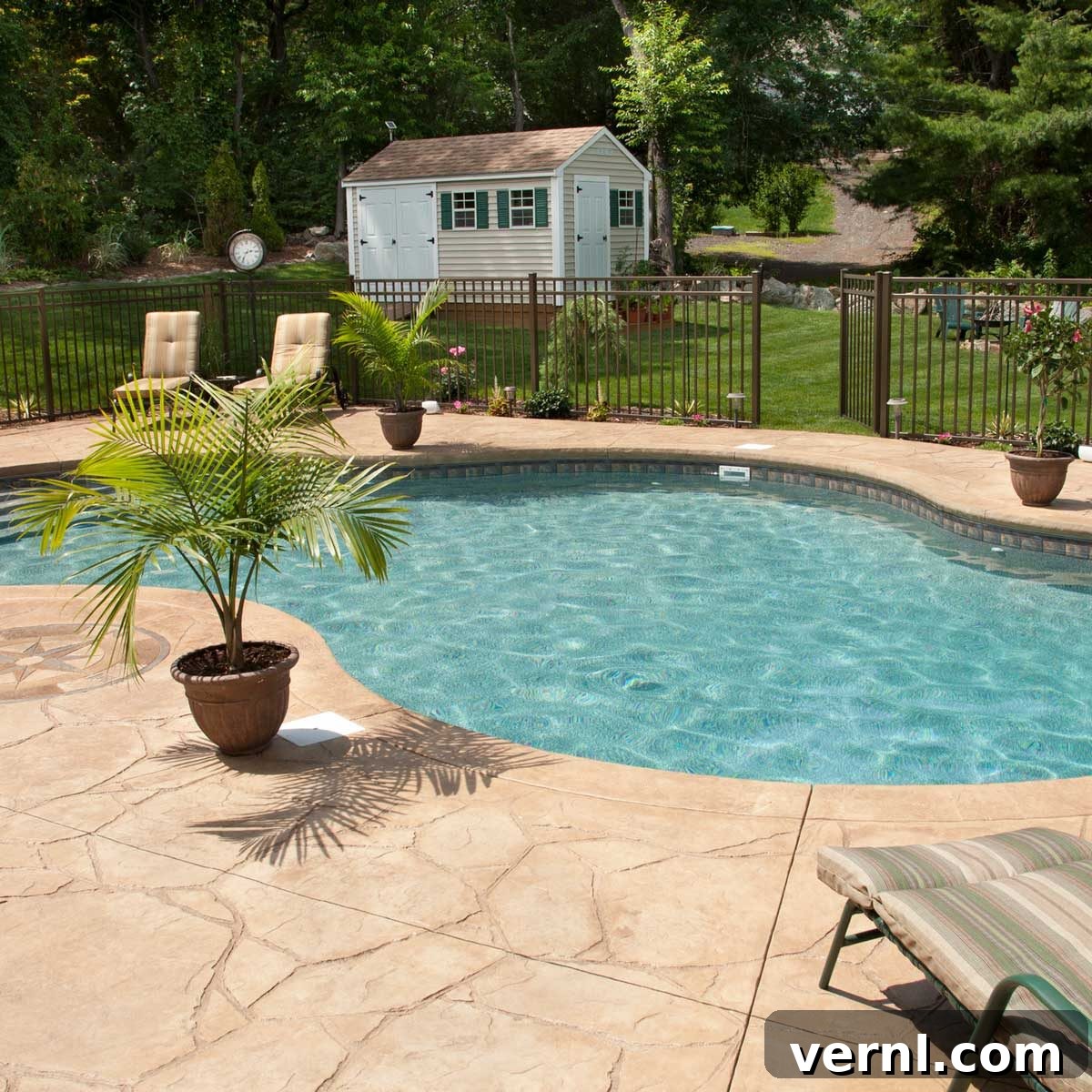
Is a sparkling backyard oasis the final touch your dream home needs? A private swimming pool offers endless hours of relaxation, recreation, and entertainment, transforming your outdoor space into a personal retreat. However, embarking on a pool building project involves numerous considerations beyond just selecting a shape. From understanding the different types of pools to budgeting, ensuring safety, and planning for ongoing maintenance, careful planning is key to realizing your aquatic dream. This comprehensive guide will walk you through the essential factors to consider before diving into your pool construction journey.
Above-Ground vs. In-Ground Pools: Choosing Your Aquatic Retreat
One of the first and most significant decisions homeowners face is whether to install an above-ground or an in-ground swimming pool. Each option presents a distinct set of advantages and disadvantages regarding cost, aesthetics, durability, and customization. Understanding these differences is crucial for making an informed choice that aligns with your budget, lifestyle, and long-term vision for your home.
Above-Ground Pool Pros: Accessibility and Affordability
-
Lower Financial Commitment: Above-ground pools are considerably more budget-friendly than their in-ground counterparts. The primary reason for this is the significantly reduced excavation and construction work required. You won’t need to undertake extensive digging or structural landscaping, which dramatically cuts down on labor and material costs. This makes them an attractive option for homeowners seeking to enjoy the benefits of a pool without a substantial upfront investment.
-
Cost-Effectiveness: Typically, the total cost for an above-ground pool, including installation, can be less than half the price of an in-ground pool. This affordability extends not only to the initial purchase and setup but often to permits and professional installation, making swimming accessible to a broader range of budgets.
-
Easier and Faster Installation: Without the need for major excavation, above-ground pools can often be installed in a matter of days or weeks, as opposed to the months often required for in-ground pools. This means you can start enjoying your new pool much sooner.
-
Portability and Flexibility: In some cases, above-ground pools can be disassembled and moved, which is a valuable feature for renters or those who might relocate in the future. They can also be a good temporary solution for homeowners unsure about committing to a permanent in-ground structure.
Above-Ground Pool Cons: Limitations and Lifespan
-
Shorter Lifespan: While modern above-ground pools are more durable than ever, they generally do not last as long as well-maintained in-ground pools. Their materials are often less robust, and they are more exposed to the elements, leading to a typical lifespan of 7-15 years, compared to decades for in-ground options.
-
Limited Customization: Above-ground pools offer fewer options for shape, depth, and integrated features. Most come in standard round or oval shapes, and while decking can enhance their appearance, they rarely achieve the seamless, custom aesthetic of an in-ground pool. Depth is also generally shallower, limiting certain aquatic activities.
-
Aesthetic Integration: For some homeowners, the appearance of an above-ground pool can be less desirable, as it sits on top of the ground rather than blending seamlessly into the landscape. This can sometimes detract from the overall aesthetic of a meticulously designed backyard.
-
Potential for Lower Property Value Impact: While any pool can be an amenity, above-ground pools are less likely to significantly increase property value compared to a high-quality in-ground installation, and in some markets, they may even be seen as a temporary fixture.
In-Ground Pool Pros: Durability, Design, and Value
-
Extensive Shape and Depth Options: In-ground pools offer unparalleled design flexibility. You can choose from an almost limitless array of shapes, sizes, and depths, allowing you to create a truly unique aquatic feature that perfectly complements your home’s architecture and your personal style. Custom features like tanning ledges, built-in spas, waterfalls, and rockeries are easily integrated.
-
Exceptional Longevity: With proper construction and routine maintenance, an in-ground pool can last for decades, providing a long-term investment in your property and lifestyle. The robust materials and structural integrity are designed for enduring performance.
-
Enhanced Aesthetics and Property Value: An in-ground pool seamlessly integrates into your landscape, creating a cohesive and luxurious backyard environment. This aesthetic appeal significantly enhances your outdoor living space and typically adds considerable value to your home, often providing a strong return on investment.
-
Durability and Stability: Built directly into the ground, these pools are incredibly stable and durable, designed to withstand various weather conditions and heavy use over many years.
In-Ground Pool Cons: Investment and Complexity
-
Significant Financial Investment: In-ground pools represent a substantial upfront cost. The extensive excavation, specialized construction, permits, and landscaping involved drive up the price considerably. This is a long-term investment that requires careful financial planning.
-
Complex and Disruptive Installation: The installation process for an in-ground pool is lengthy and can be disruptive to your yard. It involves heavy machinery, significant excavation, and multiple construction phases, which can take several weeks to months to complete.
-
Permanence: Once installed, an in-ground pool is a permanent fixture. If you decide you no longer want it, removal is extremely difficult, costly, and will require significant landscaping to restore your yard.
-
Higher Ongoing Maintenance Costs: While individual maintenance tasks might not always be more expensive, the sheer size and complexity of in-ground pools often lead to higher overall operational and repair costs over their lifespan, including energy for pumps and heaters, and chemical usage.
Understanding Pool Costs: What Will Your Dream Pool Really Cost?
After deciding on the type of pool, the inevitable next question is, “How much does a swimming pool cost?” The answer, as you might expect, is highly variable. Several factors contribute to the final price tag, including the type of in-ground pool, size, features, geographical location, and local labor rates. While above-ground pools offer a more predictable and lower cost, in-ground pool prices vary widely due to the diversity in construction methods and materials.
Industry estimates, such as those from River Pools in Virginia, suggest above-ground pools typically range from $4,000 to $12,000. This range accounts for variations in size, material quality, and whether professional installation and basic decking are included. For in-ground pools, the cost spectrum is much broader, often falling between $30,000 and $70,000, and sometimes significantly more for highly customized luxury designs. This extensive price variance is primarily attributed to the three main types of in-ground pools, each with its own cost structure and unique benefits:
-
Vinyl Liner Pools: These pools generally boast the lowest up-front installation cost among in-ground options, making them an attractive entry point for many homeowners. They are constructed with a steel, polymer, or concrete wall structure, over which a custom-fit vinyl liner is installed. While the initial investment is lower, the vinyl liner is a wearable component that will need to be replaced every five to nine years, depending on quality, chemical exposure, and usage. This recurring cost should be factored into the long-term budget. Vinyl liners offer excellent design flexibility in terms of shape and size, though they are susceptible to tears from sharp objects.
-
Concrete Pools (Gunite/Shotcrete): Known for their superior durability and unparalleled design flexibility, concrete pools are typically more expensive than vinyl liner pools. They are custom-built on-site by spraying a concrete mixture (gunite or shotcrete) over a steel rebar framework, allowing for virtually any shape, size, or depth imaginable. This customization extends to features like tanning ledges, beach entries, and integrated spas. Concrete pools are incredibly robust and can last for many decades, but they do require more significant maintenance, including acid washes and resurfacing every 10 to 15 years to prevent algae growth and maintain a smooth finish. The construction process is also the most time-consuming.
-
Fiberglass Pools: Fiberglass pools often have a higher installation cost compared to vinyl liners, sometimes comparable to the lower end of concrete pools, but they shine in terms of requiring the least maintenance. These pools are prefabricated as a single shell in a factory and then transported and lowered into an excavated hole. Their smooth, non-porous gel coat surface is highly resistant to algae growth, significantly reducing cleaning time and chemical usage. Installation is also remarkably fast, often completed in just a few days. While fiberglass pools offer fewer customization options in terms of shape and size compared to concrete, their durability, ease of maintenance, and quick installation make them a popular choice for many modern homeowners.
Beyond the fundamental pool type, a multitude of factors can influence the final price. Standard in-ground pool shapes, such as the classic rectangular and kidney designs, often come at a more predictable cost. However, do not let these traditional options limit your imagination. Companies like Texas-based Foley Pools highlight freeform pools as one of the 10 most popular pool shapes, underscoring the growing demand for personalized designs. If your yard has an unusual layout, or if you envision a truly unique water feature that reflects your personal aesthetic, a custom design is entirely feasible. Vinyl liner and concrete pools offer the most extensive customizable shapes, allowing your vision to come to life.
Other significant cost contributors include your chosen sanitation system. While the majority of pools are sanitized with chlorine, which is generally the most economical option, you can also opt for a saltwater system (which generates chlorine from salt) or a more environmentally friendly natural pool (using biological filtration). Additionally, the overall size, specific shape, extensive landscaping around the pool, the type of decking, lighting, heating systems, water features (like waterfalls or jets), and automated cleaning systems all add to the final installation cost. Don’t forget to factor in local permits and excavation costs, which can vary widely depending on your property’s soil conditions and accessibility.
Prioritizing Safety and Security Features for Your Pool
Owning a swimming pool brings immense enjoyment, but it also carries significant safety responsibilities. Drowning is a leading cause of accidental death for young children, making robust safety and security features non-negotiable for any pool owner. By proactively implementing recommended guidelines and adhering to local regulations, you can significantly minimize risks and create a safer environment for everyone. Always begin by discussing compliance with local and national codes and regulations with your pool contractor. Ensure they use high-quality, current materials, such as anti-entrapment drain covers, to prevent serious accidents.
At a minimum, consistently follow the U.S. Consumer Product Safety Commission (CPSC) safety barrier guidelines, as these provide a foundational layer of protection. It’s also critical to be aware that many locales have specific and often stricter fence requirements, so always check with your local municipality for any additional mandates. The CPSC’s Pool Safely initiative provides an invaluable resource for homeowners, offering practical advice and a simple summer safety checklist that outlines key recommendations from their comprehensive e-book:
-
Secure Enclosure with a Four-Foot Fence: The CPSC strongly recommends enclosing the entire pool area with a fence that is at least four feet high. For an even greater margin of safety, their e-book suggests a five-foot fence. Crucially, the fence should be designed without foot holds or handholds that children could use to climb over it. Any openings in the fence, whether between pickets or under the fence, must be narrow enough to prevent a small child from crawling through. Consider innovative pool fence ideas that combine aesthetics with robust safety features.
-
Install Self-Closing and Self-Latching Gate Hardware: All gates leading to the pool area must be equipped with hardware that is both self-closing and self-latching. The latch mechanism should be located high enough to be out of reach of young children. It’s imperative that the gate cannot be propped open, cannot be blown open by wind, and must swing away from the pool area. This design ensures that if the gate is not completely shut, a child’s push against it will close it further, rather than opening it. All pool gates should remain locked whenever the pool is not in use, adding an extra layer of security.
-
Door Alarms for House Access: If your house forms part of the pool barrier, meaning a door from your home leads directly into the pool area, it is essential to install alarms on these doors. These alarms should emit an audible warning whenever the door is opened, alerting adults to potential unauthorized access by children.
-
Utilize a Power Safety Cover: Investing in a sturdy, well-maintained power safety cover is one of the most effective safety measures. When deployed, it creates a robust physical barrier over the pool, preventing accidental falls into the water. Beyond safety, a power cover offers the added benefits of keeping leaves and debris out of the pool, reducing chemical usage by minimizing evaporation, and helping to retain heat, leading to a cleaner and more energy-efficient pool.
-
Secure Above-Ground Pool Access: For above-ground pools, in addition to a self-latching enclosure and a cover, it is vital to remove or securely lock and store all stairs and ladders when the pool is not in use. This prevents unsupervised access by children and pets, effectively disabling access to the pool when no adult supervision is present.
Beyond these physical barriers, active supervision is paramount. Never leave children unattended near a pool, and consider enrolling family members in CPR and first-aid courses. Clear pool rules, emergency equipment like life preservers and shepherd’s hooks, and alarms that detect water disturbance can further enhance pool safety.
Essential Maintenance Equipment and Routine for Your Pool
Once you’ve meticulously planned your pool style and implemented robust safety barriers, the journey continues with understanding and managing its ongoing care. A poorly maintained pool not only detracts from its aesthetic appeal but can also lead to costly repairs and significantly diminish your property’s value when the time comes to sell. Consistent and proper maintenance is crucial for protecting your investment, ensuring water quality, and maximizing the enjoyment of your aquatic haven. To effectively care for your pool, a few essential accessories are indispensable:
-
Net Skimmer: This basic yet vital tool is used daily to remove leaves, insects, and other floating debris from the pool’s surface, preventing them from sinking and clogging filters or decomposing in the water.
-
Pool Brush: Regularly brushing the walls, floor, and steps of your pool helps to dislodge dirt, grime, and algae buildup, especially important for concrete pools with their porous surfaces.
-
Pool Vacuum: Whether a manual vacuum that attaches to your filtration system, a robotic cleaner, or a pressure-side cleaner, a pool vacuum is essential for removing debris and dirt that settles on the pool floor, keeping the water sparkling clean.
-
Water Testing Kit: This is arguably the most critical piece of equipment. A reliable kit allows you to regularly test your pool water’s chemical levels, including pH, alkalinity, calcium hardness, and sanitizer levels. Accurate testing is the foundation for maintaining balanced and safe water chemistry.
-
Sanitizers: These chemicals are vital for killing bacteria, viruses, and algae. Common options include:
- Chlorine Tablets, Liquid, or Granular Chlorine: The most widely used sanitizers, effective in keeping pool water safe and clear.
- Chlorine Generator Salt: For saltwater pools, this salt is converted into natural chlorine by a salt chlorinator cell, offering a gentler swimming experience.
- Pool Shock: A concentrated dose of chlorine or non-chlorine oxidizer used periodically to eliminate contaminants, algae blooms, and restore water clarity, especially after heavy use or adverse weather.
-
Balancers: These chemicals adjust various parameters of your pool water to ensure proper balance, which is crucial for swimmer comfort, equipment longevity, and sanitizer effectiveness. Key balancers include:
- Stabilizer (Cyanuric Acid): Protects chlorine from degradation by UV rays, prolonging its effectiveness.
- pH Increaser or pH Decreaser: Adjusts the pH level to the ideal range (7.4-7.6) for swimmer comfort and optimal chlorine function.
- Alkalinity Increaser: Helps stabilize pH levels and prevents rapid fluctuations.
- Calcium Hardness Increaser: Prevents corrosion of pool surfaces and equipment in soft water, or scaling in hard water.
Your pool manufacturer or builder should provide detailed guidelines on how to care for your specific pool type and a recommended schedule for routine maintenance. For instance, concrete pools typically demand more frequent cleaning and a higher volume of chemicals due to their porous surface, which can harbor algae. Fiberglass pools, with their smooth gel coats, are less prone to algae and thus require less scrubbing and fewer chemicals.
For those new to pool ownership, resources like an online crash course in pool chemistry can be incredibly helpful in understanding the fundamentals. Swim University’s pool care cheat sheet offers another convenient, at-a-glance reference for daily and weekly tasks. However, it’s important to recognize that pool chemistry is a complex field, with entire professional certifications dedicated to its mastery. While such professional certifications are not necessary for private homeowners, the intricacies of maintaining perfect water balance and troubleshooting issues can be daunting.
Many homeowners prefer to hire a professional pool service for certain tasks, particularly for the seasonal opening of the pool in spring and its proper winterization. Professionals have the expertise and specialized equipment to handle these complex procedures efficiently, saving you time and ensuring your pool remains in tip-top shape year-round. They can also provide valuable guidance, perform deeper cleanings, and address any equipment issues, allowing you to simply relax and enjoy your beautiful backyard oasis.