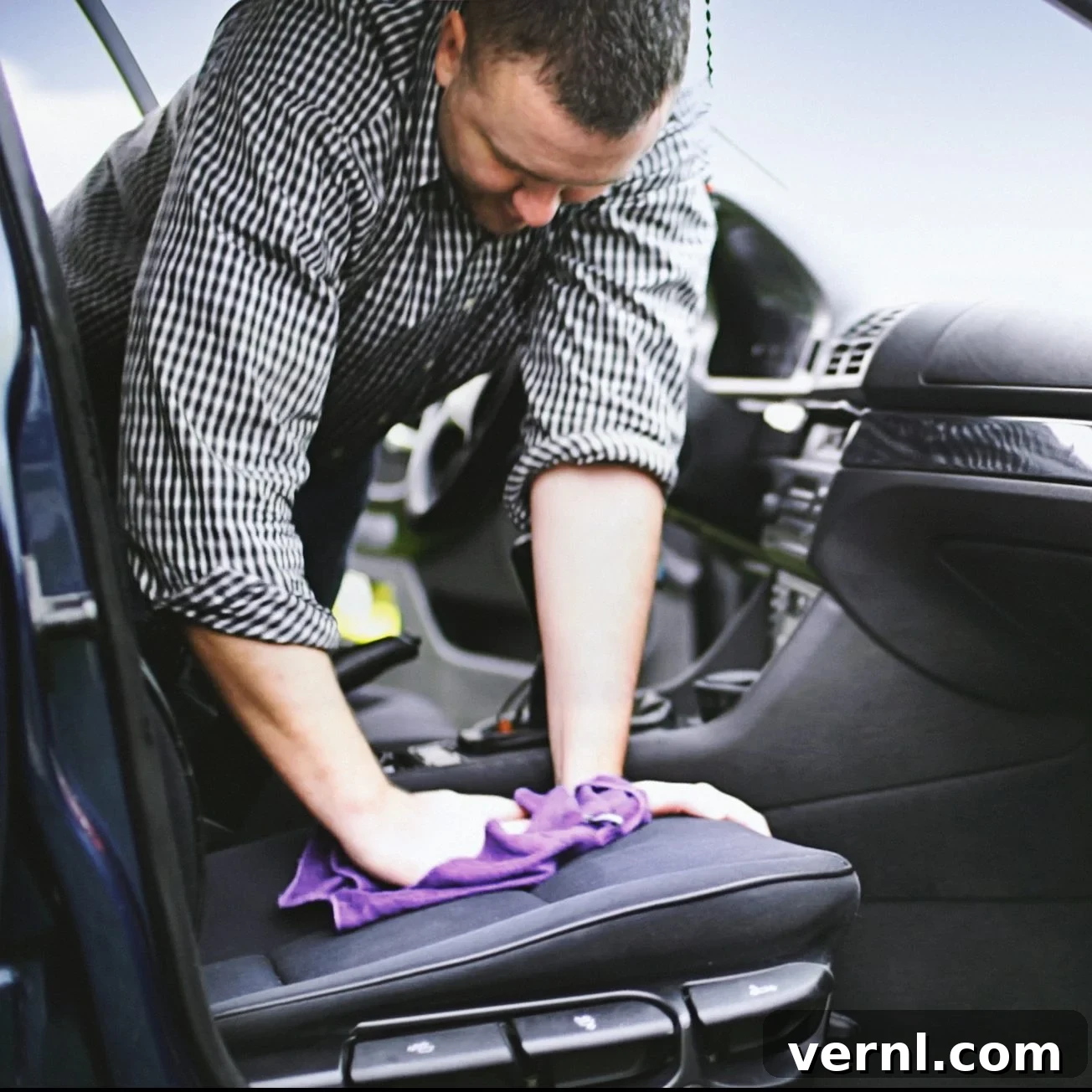
It’s a scenario all too familiar to car owners: you wake up to an unexpected downpour, only to realize you left your car windows slightly ajar overnight. Or perhaps, in a momentary lapse, you didn’t fully roll them up during a quick trip through the car wash. The result? Those tell-tale, unsightly water stains marring your otherwise pristine car seats. Whether your vehicle boasts luxurious leather or durable cloth upholstery, water, surprisingly, can leave stubborn marks that resemble an amateur watercolor painting on your car’s interior. But don’t despair; this common automotive mishap is often entirely reversible with the right approach and a touch of patience.
The good news is that these frustrating water stains don’t have to be permanent fixtures on your vehicle’s interior. With a few basic household ingredients, readily available cleaning tools, and a systematic approach, you can restore your car seats to their former glory. This comprehensive guide, informed by expert advice, will walk you through the most effective methods to get water stains out of car seats, ensuring a clean, fresh, and inviting interior for every journey. From quick-acting strategies to specialized treatments for different upholstery types, we’ll cover everything you need to know to tackle these common stains confidently and efficiently.
How to Get Water Stains Out of Your Car Seats: A Step-by-Step Guide to Restoring Your Interior
Tackling water stains on your car seats might seem daunting, but with a clear plan and the right tools, you can achieve professional-grade results right in your driveway. Follow these expert-recommended steps to effectively eliminate those unwanted marks and revitalize your car’s interior.
Gather the Proper Tools and Essential Supplies for Effective Stain Removal
Before you begin the cleaning process, ensure you have all the necessary tools and ingredients at hand. Having everything organized will streamline your efforts and help you achieve the best possible outcome. While the exact items may vary slightly depending on your upholstery type and the severity of the stain, this comprehensive list covers the most common requirements:
- Powerful Vacuum Cleaner: A good car vacuum or a shop-vac with appropriate attachments is crucial for removing loose dirt and debris, which can otherwise complicate the cleaning process.
- Clean Water: You’ll need fresh, clean water for diluting cleaners and rinsing. Distilled water is often preferred to avoid mineral deposits, especially if you have hard tap water.
- White Vinegar: An excellent natural cleaner, white vinegar is acidic, making it highly effective at breaking down mineral deposits and many types of stains without harming most fabrics.
- High-Quality Microfiber Cleaning Cloths: These cloths are essential for their superior absorbency and non-abrasive nature. They lift dirt and moisture efficiently without scratching surfaces or leaving lint behind. Have several on hand for blotting, applying solutions, and drying.
- Soft Upholstery Brush: For tougher stains on fabric seats, a soft-bristled upholstery brush can help agitate the cleaner into the fibers. Ensure it’s gentle enough not to damage the material.
- Specialized Cleaners: Depending on your car’s upholstery, you’ll need specific products:
- Leather Cleaner and Conditioner: For leather or pleather seats, a dedicated leather cleaner is vital. Follow up with a conditioner to moisturize and protect the material, preventing drying and cracking.
- Fabric Rug Shampoo or Upholstery Cleaner: For cloth seats, a reputable fabric-safe rug shampoo or upholstery foam cleaner is ideal. Look for products designed for automotive use or general home upholstery.
- Spray Bottle (Optional): Useful for pre-mixing cleaning solutions and applying them evenly.
Move Quickly: The Golden Rule for Tackling Car Seat Stains
“Just like with any other stains, the faster you act, the better off you are,” emphasizes Kristiana Laugen, a home expert at Handy. This principle is particularly true for water stains on car seats. The longer moisture sits, especially if it contains minerals or has absorbed dirt from the upholstery, the more deeply it can penetrate the fibers or pores of leather, making it increasingly challenging to remove. Prompt action can significantly reduce the effort required and improve your chances of complete stain removal.
Before you even think about applying a cleaning solution, it’s crucial to understand and apply the fundamental technique of stain removal: blot, don’t rub. If you aggressively rub the affected area, you risk pushing the stain even deeper into the upholstery fibers. This not only makes the stain more stubborn but can also damage the fabric, leading to fraying or spreading the stained area. Instead, gently press a clean, dry microfiber cloth onto the wet area to absorb as much moisture as possible. Repeat this blotting motion with fresh sections of the cloth until no more moisture transfers. This action lifts the stain from the surface rather than grinding it in, setting the stage for more effective cleaning.
Vacuum Up Debris: The Essential First Step in Car Seat Cleaning
Experts universally agree: the very first step in effectively treating water stains on car seats is a thorough vacuuming of the entire affected area and surrounding upholstery. This seemingly simple action is critically important. Using a powerful car vacuum cleaner with appropriate attachments, meticulously remove any loose dirt, crumbs, dust, grit, or other particulate matter that has accumulated on or within the seat.
“Sometimes these crumbs or dirt can end up making the stain worse once they get wet,” Laugen cautions, “so it’s better to play it safe and remove them before you start the deep-cleaning process.” Imagine turning a dry stain into a muddy smear once water is introduced – that’s precisely what you want to avoid. By clearing away all surface debris, you prevent these particles from dissolving into the cleaning solution and creating new, even more prominent stains. This preparatory step ensures that your cleaning efforts are focused solely on the water stain itself, making subsequent steps far more effective and preventing unintended complications.
Evaluate Your Cleaners: Choosing the Right Product for Your Upholstery
Selecting the appropriate cleaning agent is paramount to successfully removing water stains without damaging your car’s interior. Richard Reina, a maintenance expert at CarID, advises starting with the mildest products first. This “least intense first” approach minimizes the risk of discoloration, damage, or residue. If a gentle solution doesn’t work, you can gradually escalate to stronger, specialized cleaners.
However, for any stain, Reina strongly advises against harsh solvents. Products like acetone, kerosene, and alcohol-based cleaners are far too aggressive for most car upholstery. While they might appear to be powerful stain removers, they can severely dry out leather, leading to cracking and fading, or strip the dyes from fabric, causing irreversible discoloration and damage. Always read product labels carefully and ensure they are safe for your specific upholstery type. When in doubt, perform a patch test on an inconspicuous area, like under the seat or a hidden seam, to observe any adverse reactions before applying the cleaner to the visible stain.
Pre-Treat Darker Stains: Targeted Solutions for Fabric Upholstery
For more noticeable or stubborn water stains on fabric car seats, a targeted pre-treatment can significantly enhance the effectiveness of the main cleaning process. Kristiana Laugen suggests a gentle initial step: “especially for darker stains, gently rub a teaspoon or so of white vinegar into the stain with a clean microfiber cloth.” The mild acidity of white vinegar is excellent for breaking down mineral deposits often left behind by water and helps to lift embedded dirt. Allow the vinegar to sit on the stain for about five minutes, giving it time to work its magic, before gently blotting away any excess liquid with a fresh microfiber cloth.
Another popular and effective pre-treatment for fabric car seats involves a simple homemade solution. Many recommend mixing one gallon of warm water with one cup of white vinegar and adding a small dab of mild dish soap. The dish soap acts as a gentle surfactant, helping to lift and suspend dirt particles, while the vinegar continues its work on the minerals. Apply this solution sparingly to the stained area with a clean microfiber cloth, allowing it to penetrate for a few minutes before blotting. It is crucial to note: Both these vinegar and dish soap pre-treatments are specifically formulated and recommended for fabric upholstery. They should NOT be used on leather or pleather seats, as the acidity and detergents can dry out and potentially damage these delicate materials.
Shampoo the Upholstery: Deep Cleaning for Lasting Results
Once pre-treatment is complete, or if the stains are minor, the next crucial step is to shampoo the upholstery. The approach here varies significantly depending on whether you have leather or fabric seats.
Expert Solutions for Leather and Pleather Car Seats
Melissa Homer, chief cleaning officer at MaidPro, is a strong advocate for specific products when it comes to leather care. “The answer to any mistake you make on leather or pleather car seats is always the Lexol line!” she states emphatically. “I have tested so many leather cleaners and conditioners, and Lexol is my favorite by a mile. It’s fast, easy, and corrects a world of sin.”
Her recommended process for leather is straightforward and effective: “Just spray and wipe clean with the cleaner with a microfiber towel, which will remove grime and water marks. Wipe off the excess, let it dry a bit, and follow up with the conditioner. Rub it in and let it soak in for a few minutes, like hair conditioner, and then wipe off the excess with your microfiber towel and POOF—good as new!” This two-step process is vital. The cleaner gently lifts embedded dirt, oils, and water residue without stripping the leather’s natural oils. Following up with a high-quality conditioner replenishes moisture, restores suppleness, and helps protect the leather from future drying, cracking, and even new stains, leaving your seats feeling soft and looking luxurious.
Revitalizing Fabric Car Seats with Specialized Cleaners
For fabric upholstery, Homer’s top recommendation is Woolite Upholstery & Carpet Foam. Her preference for a foam-based detergent is strategic: “It’s a foam-based detergent, which helps you use less product and not accidentally push a ton of soap deep into the seat padding,” she explains. This is a critical point; oversaturating fabric seats with liquid cleaners can lead to prolonged drying times, mildew growth, and potentially new water rings. Foam cleaners expand on the surface, encapsulating dirt and making it easier to lift away without drenching the underlying padding. Homer also trusts the historically gentle formulation of Woolite to be color-safe and nondamaging to various fabric types, minimizing the risk of fading or weakening the material.
To use, spray the foam evenly over the stained area. Allow it to sit for the recommended time (check product instructions), which typically allows the foam to break down the stain. Then, using a clean, damp microfiber cloth, gently blot the area to lift the foam and the lifted dirt. Continue blotting with different sections of the cloth until the stain is gone and no more residue is transferring. For particularly stubborn stains on sturdy fabric, Richard Reina suggests that “gently using an upholstery brush to get any stubborn stains out of crevices is fine.” The brush can help agitate the foam into the fibers, dislodging deeper dirt. However, his advice comes with a crucial caveat: “Just don’t overdo it.” Excessive scrubbing can damage the fabric weave, so use light pressure and circular motions.
Prep and Protect: Safeguarding Your Car Seats Against Future Stains
Once you’ve successfully removed those unsightly water stains and your car seats are clean and dry, the final, yet equally important, step is to prepare and protect them. This proactive measure can significantly reduce the likelihood of future stains and make any subsequent cleaning much easier.
As Reina points out, “Like cleaners, there are a slew of waterproofing and fabric guard sprays available.” These products create an invisible barrier on the surface of your upholstery, repelling liquids and preventing them from soaking deep into the fibers or leather. For fabric seats, look for fabric protectors specifically designed for automotive or heavy-use upholstery. For leather, specialized leather protectants and conditioners offer similar resistance to spills while also nourishing the material.
However, caution is key: “Just be sure to check that it’s appropriate for the materials in your car.” Not all protectors are suitable for all types of upholstery. Always read the product label carefully to confirm compatibility. Furthermore, before applying any protectant or conditioner to a large, visible area, it’s absolutely essential to “test the product in a small out-of-sight spot first.” This could be a hidden seam, the underside of a seat, or a small area that’s not typically exposed. Observe the tested area for any discoloration, stiffening, or other adverse reactions before proceeding with full application. This small step can save you from potential regret.
For leather upholstery, don’t forget to condition the leather regularly, not just after a deep clean. Leather conditioners moisturize the material, keeping it supple and preventing it from drying out, cracking, and becoming more susceptible to staining. Conditioning also offers a layer of protection against UV rays and general wear and tear, maintaining the leather’s luxurious look and feel for longer.
Frequently Asked Questions About Car Seat Water Stains
What if the water stain doesn’t come out after following these methods?
If, despite your diligent efforts with the methods outlined above, the water stains on your car seats persist, it may be time to consider professional assistance. Stubborn or deeply set stains might require more advanced techniques and equipment. Calling a specialized car steam cleaning service or a professional car detailing company can be a highly effective solution. These professionals often have industrial-grade extractors, specific pH-balanced cleaners, and expertise to tackle even the most entrenched upholstery issues, ensuring your seats are thoroughly cleaned and restored without damage.
How can I prevent future water stains on my car seats?
Prevention is always better than cure, especially when it comes to keeping your car’s interior pristine. One of the most effective preventative measures is to apply a fabric protector or a specialized leather conditioner regularly. These products create a protective barrier that repels water and other liquids, making spills easier to blot away before they can set into a stain. Additionally, developing a simple habit can save you a lot of hassle: always double-check that all your car windows are completely closed every time you leave your vehicle, no matter how brief your absence, to protect against unexpected rain or car wash mishaps.
How long does it typically take for car seats to dry after cleaning?
The drying time for car seats after cleaning can vary significantly depending on several factors, including the type of upholstery (fabric generally takes longer than leather), the amount of cleaning solution used, humidity levels, and ambient temperature. For fabric seats, it can take anywhere from a few hours to a full 24 hours to dry completely, especially if you’ve used a liquid shampoo. Using foam cleaners or extraction methods can reduce this time. For leather seats, which are typically wiped clean and conditioned, drying usually takes less time, often within an hour or two. To expedite drying, ensure good ventilation by opening car doors and windows, or even using a fan if possible.
Can I use a household carpet cleaner on my car seats?
While some household carpet cleaners might seem similar to upholstery cleaners, it’s generally advisable to use products specifically formulated for automotive interiors or dedicated upholstery cleaners. Household carpet cleaners can sometimes be too harsh for delicate car seat fabrics or contain chemicals that might cause discoloration, leave behind sticky residues, or even damage the material over time. Always check the product label for suitability on car upholstery and, as with any new cleaner, perform a patch test on an inconspicuous area first to ensure it won’t cause adverse effects.
About the Experts
Melissa Homer is the chief cleaning officer at MaidPro, a leading residential cleaning company known for its comprehensive and high-quality services. Kristiana Laugen is a home expert at Handy, an online marketplace for connecting people with trusted household services. Richard Reina is a maintenance expert at CarID, an online retailer of automotive parts and accessories, offering deep insights into vehicle care and maintenance.