
The recent global health crisis profoundly underscored the critical importance of clean air, a realization many homeowners had embraced long before any lockdowns. Our homes, often perceived as safe havens, can unfortunately harbor a myriad of invisible threats that compromise indoor air quality.
Indoor air is frequently teeming with contaminants, ranging from microscopic mold spores and harmful bacteria to various other pathogens. Beyond these biological invaders, many residences may also contend with airborne irritants like fine dust particles from old lead paint and pervasive pet dander, all silently circulating and impacting our health.
In this fight against indoor air pollution, HEPA (High Efficiency Particulate Air) filtration stands out as a highly effective and crucial defense. For decades, it has been the gold standard for controlling allergens that trigger uncomfortable symptoms such as sneezing, persistent coughing, and watery eyes. But its applications and benefits extend far beyond allergy relief, making it an indispensable technology for maintaining a truly healthy living environment.
The genesis of HEPA filtration traces back to the 1940s, when it was initially developed to safeguard workers in highly sensitive nuclear facilities. Its exceptional efficiency quickly led to its adoption in hospitals in the 1960s, where sterile environments are paramount. From there, HEPA technology gradually made its way into homes and commercial buildings, becoming a cornerstone of modern air purification. Today, you’ll find HEPA technology integrated into a wide range of devices, including portable air purifiers, advanced vacuum cleaners, and even some central air conditioning systems, all working to deliver significantly cleaner air.
Traditional non-HEPA vacuums, like those once commonly used in demanding tasks such as drywall work, are adept at picking up larger debris. However, their design often allows smaller, more dangerous particles to be blown back into the air, effectively recirculating the very contaminants you’re trying to remove. When dealing with hazardous substances like lead paint dust, mold spores, or asbestos fibers, this recirculation is far more perilous than simply leaving them undisturbed. Recognizing this critical hazard, the Environmental Protection Agency (EPA) established the Renovation, Repair and Painting (RRP) rule, explicitly mandating the use of true HEPA vacuums for cleanup operations following renovation work, especially in homes built before 1978 where lead-based paint is a concern. This rule underscores the profound importance of proper filtration to protect both workers and occupants from harmful airborne particles.
What Does HEPA Stand For? Decoding the Standard
HEPA is an acronym for High Efficiency Particulate Air. The EPA defines a true HEPA filter as one capable of removing a remarkable 99.7% of airborne particles that have a diameter of 0.3 micrometers, also known as microns. To put this into perspective, 0.3 micrometers is equivalent to 300 nanometers – a size significantly smaller than the wavelength of visible light. This specific particle size (0.3 microns) is often referred to as the “Most Penetrating Particle Size” (MPPS) because particles of this dimension are the most challenging for filters to capture, making the 99.7% efficiency at this level a true testament to HEPA technology’s superior performance.
Understanding the distinction between HEPA filters and other common air filters, such as those found in central air systems, is crucial. Central air system filters typically carry a Minimum Efficiency Reporting Value (MERV) rating, which ranges from one to 16. The higher the MERV rating, the more efficient the filter is at capturing airborne particles. While a MERV 13 filter might be suitable for many residential applications and even some commercial settings, a true HEPA filter, constructed from finely woven materials like fiberglass, polypropylene, or borosilicate glass fibers, offers a level of efficiency far superior to even the highest MERV-rated filters. In essence, a HEPA filter transcends the MERV scale, providing an unparalleled barrier against microscopic pollutants.
HEPA filters don’t simply block particles; they employ a sophisticated combination of three primary mechanisms to capture even the most minute airborne contaminants:
- Impaction: This mechanism targets larger, heavier particles. As these particles travel through the filter’s dense network of fibers, their inertia prevents them from navigating around the fibers with the air stream. Instead, they collide directly with the filter fibers and become trapped.
- Interception: Smaller particles, which might be able to follow the air stream somewhat, still come into contact with the filter fibers. As the air flows through the intricate web of fibers, these smaller particles eventually graze and stick to one of the fibers due to adhesive forces.
- Diffusion: This is the most effective mechanism for capturing the absolute smallest particles, those below 0.1 microns. These tiny particles move erratically within the air stream due to Brownian motion (collisions with gas molecules). This chaotic movement increases their likelihood of colliding with and adhering to the filter fibers, even if they would otherwise pass through with the airflow.
Together, these three mechanisms ensure that a true HEPA filter provides comprehensive protection against a vast spectrum of airborne pollutants.
What Defines a True HEPA Vacuum? The Importance of a Sealed System
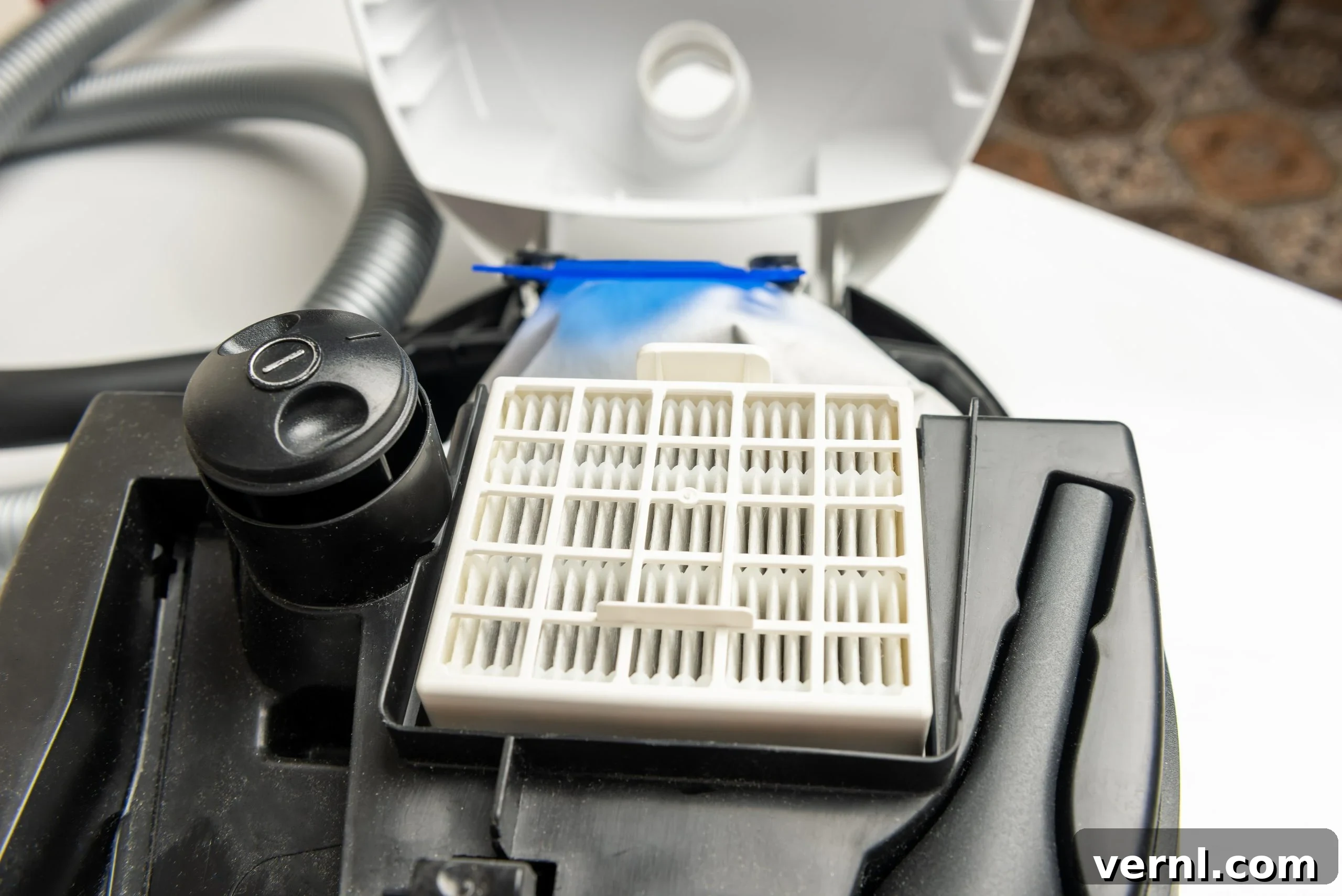
Simply put, a HEPA vacuum is a specialized cleaning appliance meticulously engineered to not only accept a true HEPA filter but also to operate as a completely sealed system. This sealing is paramount, ensuring that all the air entering the vacuum is forced to pass exclusively through the HEPA filter before being exhausted back into the room. This design is what sets a true HEPA vacuum apart from conventional models.
In a properly designed HEPA vacuum, the critical HEPA filter is securely mounted within an airtight casing. This casing, along with sealed connections throughout the entire vacuum body, prevents any air from bypassing the filter. Crucially, not just the filter compartment, but also the dirt collection bag or chamber, and even the motor exhaust, are sealed to prevent any leakage of unfiltered air. Without these meticulous sealing features, a HEPA filter, no matter how efficient, would only catch a fraction of the finest particles. The particles that manage to escape through unsealed gaps and openings would be recirculated directly back into the room, defeating the entire purpose of HEPA filtration and potentially exacerbating indoor air pollution.
It’s important to exercise caution when considering upgrading a non-HEPA vacuum cleaner by simply installing a HEPA filter. Many such filters are available on the market and are sometimes marketed as part of “HEPA-style” vacuum cleaners. While installing such a filter might not void your product warranty, it’s highly unlikely to transform a standard vacuum into a true HEPA system. The absence of a fully sealed body means air will invariably leak around the filter or through other parts of the machine, allowing harmful particles to escape. Moreover, if you are a professional working in a commercial setting, particularly one involving lead-safe renovation, using a modified non-HEPA vacuum even with a HEPA filter could lead to significant fines and penalties, as it directly violates strict EPA regulations like the RRP rule designed to protect public health.
HEPA-Type Filters vs. True HEPA Filters: A Crucial Distinction
The marketing landscape can sometimes be confusing, and the presence of a “HEPA” label on a vacuum cleaner or air purifier doesn’t automatically guarantee it contains a true HEPA filter. Many products are sold with “HEPA-type,” “HEPA-like,” or “99% HEPA” filters. While these filters may superficially resemble true HEPA filters in appearance, they typically capture a significantly smaller percentage of particles, especially those critical 0.3-micron particles that true HEPA filters are designed to target.
A true HEPA filter has undergone rigorous, independent testing to confirm its ability to filter out 99.7% of particles at the 0.3-micron size. This testing often involves third-party laboratories to ensure unbiased results. To verify authenticity, look for specific documentation. Genuine HEPA filters will typically have their test results printed directly on the filter label, often accompanied by a unique serial number or certification mark. Always check for these indicators to ensure you are purchasing a filter that meets the official HEPA standard and provides the filtration efficiency you expect and need for genuine indoor air quality improvement.
Is a HEPA Vacuum Right for You? Weighing the Benefits Against Considerations
As one might anticipate, the superior filtration capability of a true HEPA filter means it will inevitably clog more readily than a non-HEPA filter, necessitating more frequent replacement. This factor often leads homeowners to question whether the investment and maintenance of a HEPA vacuum are truly necessary for their specific situation. The answer, as with many home improvement decisions, isn’t always a straightforward “yes.”
For an average home with no occupants particularly sensitive to allergens, or without specific health concerns related to indoor air quality, a well-maintained non-HEPA vacuum might adequately address general cleaning needs with considerably less fuss and expense. However, a HEPA vacuum offers distinct and significant advantages in several key circumstances, making it an indispensable tool for protecting health and enhancing home environments:
- Managing Severe Allergies or Asthma: If someone in your household suffers from severe allergies, asthma, or other respiratory sensitivities, a HEPA vacuum is a game-changer. It effectively traps common triggers like dust mites, pet dander, pollen, and mold spores, preventing them from being recirculated. For optimal allergen control, you’ll likely also benefit from keeping one or more HEPA air purifiers running continuously throughout the home.
- Residing in an Older Home with Lead Paint: If you live in a house built before 1978, there’s a significant probability of lead paint on walls, woodwork, or other surfaces. Disturbing these surfaces, even through routine cleaning, can release hazardous lead micro-particles into the air. A HEPA vacuum is the absolute best insurance against inhaling these dangerous particles, which can have serious neurological and developmental impacts, especially on children.
- Addressing a Mold Problem: Mold is a pervasive issue that can flourish invisibly within carpeting, on drapes, behind walls, and on upholstered furniture. Vacuuming with a non-HEPA vacuum in a mold-affected area can actually exacerbate the problem by aerosolizing and spreading microscopic mold spores throughout your home, potentially leading to increased respiratory issues, skin irritation, and other health concerns. A HEPA vacuum securely captures these spores, preventing their dissemination.
- Undertaking Renovation or Construction Work: Whether you’re a DIY enthusiast or a professional contractor, any renovation or construction activity generates a substantial amount of fine dust. Following the stringent directive in the EPA’s RRP rule, using a HEPA vacuum for all cleanup activities after disturbing activities is not just a recommendation but a legal requirement for certain projects. This ensures that hazardous dust, including lead dust and other fine particulate matter, is safely contained.
- Homes with Pets: Even without severe allergies, homes with pets accumulate significant amounts of pet dander, which can become airborne and settle on surfaces. A HEPA vacuum is far more effective at capturing this fine dander, contributing to a fresher and cleaner home environment.
- Areas with High Pollen Counts: If you live in a region prone to high pollen counts, especially during certain seasons, a HEPA vacuum can help minimize the amount of outdoor allergens tracked into and circulating within your home.
- General Desire for Superior Cleanliness: For those who simply desire the highest possible standard of cleanliness and indoor air quality, a HEPA vacuum offers peace of mind, knowing that even the most invisible pollutants are being effectively removed.
Maintaining Your HEPA Vacuum for Optimal Performance
To ensure your HEPA vacuum continues to perform at its peak efficiency, proper maintenance is essential. The HEPA filter itself cannot be washed or cleaned to fully restore its filtration capabilities; once it starts to get clogged, its effectiveness diminishes. Therefore, regular replacement of the HEPA filter according to the manufacturer’s recommendations is crucial. Filter lifespan can vary widely depending on usage and the level of contaminants in your home, but generally ranges from 6 months to 2 years. Always consult your vacuum’s manual for specific instructions. Additionally, regularly emptying the dustbin or replacing vacuum bags, cleaning pre-filters (if applicable), and checking hoses and attachments for blockages will contribute to sustained suction power and filter longevity.
Beyond Vacuums: The Broad Impact of HEPA Technology
The reliability and effectiveness of HEPA technology extend far beyond vacuum cleaners. You’ll find HEPA filters at the heart of many dedicated air purifiers, providing continuous whole-room air cleaning. They are also integrated into advanced HVAC systems, enhancing the air quality throughout an entire building. Even in personal protective equipment, such as certain respirator masks, the underlying principles of high-efficiency particulate filtration are employed to safeguard against airborne threats. This widespread adoption across various applications underscores the universal trust placed in HEPA technology as a benchmark for superior air purification.
Best HEPA Vacuums: Top Picks for a Healthier Home
Many reputable manufacturers, including industry leaders like Hoover, Bissell, Miele, and Dyson, produce a wide array of high-quality HEPA vacuums. Regardless of your specific cleaning needs or budget, you’ll find a suitable option in the market. Here are three highly-regarded choices to consider:
Best Upright HEPA Vacuum
The Hoover Hushtone is a robust, professional-grade bagged vacuum designed to tackle even the most demanding heavy-duty cleaning tasks with quiet efficiency and exceptional filtration.
Best Compact Cordless HEPA Vacuum
Dyson’s V11 Torque Drive offers unparalleled versatility with its array of attachments, making it ideal for cleaning floors, delicate drapes, and upholstery. Its compact design allows for convenient wall-mounted storage, perfect for any cleaning closet. While it comes with a higher price tag, its performance and convenience often justify the investment, making it a favorite for superior home cleaning.
Best Wet/Dry HEPA Vacuum
For more versatile and heavy-duty cleaning challenges, such as post-drywall project cleanup or thoroughly vacuuming a kitchen floor, the affordable yet powerful Vacmaster Pro is an excellent choice, engineered to handle both wet and dry debris with effective HEPA filtration.
Conclusion: Investing in Your Health with HEPA Filtration
In an era where indoor air quality is increasingly recognized as a critical component of overall health and well-being, the role of HEPA filtration cannot be overstated. From its origins in nuclear facilities to its indispensable presence in hospitals and now in our homes, HEPA technology consistently delivers superior performance in removing microscopic pollutants. Understanding the distinction between true HEPA and “HEPA-type” filters, recognizing the importance of a sealed vacuum system, and identifying when a HEPA vacuum is genuinely beneficial are all crucial steps toward creating a healthier, cleaner living environment. By making informed choices about your cleaning equipment, you’re not just investing in a cleaner home, but proactively safeguarding the respiratory health and general well-being of everyone under your roof.