
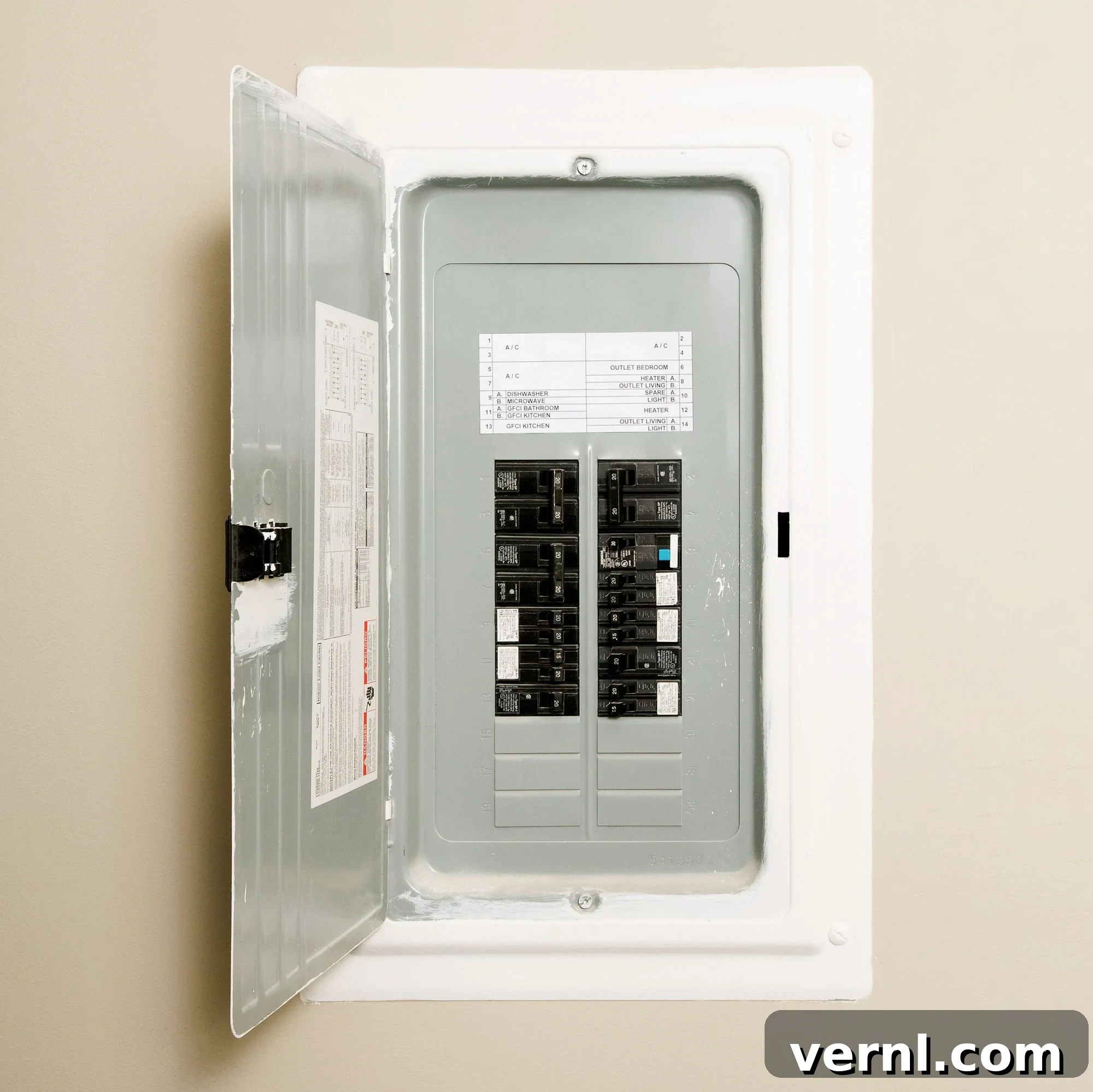
In many older homes, original electrical panels of just 60 amps are still in use. This antiquated capacity is often insufficient to comfortably accommodate the significant power demands of modern households. From a growing array of energy-intensive appliances to the rising prevalence of electric vehicles (EVs), today’s homes require a robust and reliable electrical service to function efficiently and safely.
“We recommend a 200-amp minimum service size for all homes,” states Ben Kolo, owner of Mr. Electric of Central Iowa. He further highlights the increasing demands of contemporary living, noting, “EV [electric vehicle] car charging demands alone will require 100 amps when a residence is trying to charge multiple vehicles at once.” This expert advice underscores the necessity for homeowners to assess their current electrical infrastructure.
If you reside in an older home, or if you frequently experience flickering lights, tripped breakers, or an electricity supply that consistently struggles to keep pace with demand, it’s a strong indicator that you may need to upgrade your electrical panel. This crucial home improvement project not only enhances daily convenience but also significantly improves safety and prepares your home for future electrical needs.
Understanding the Investment: What Does It Cost to Replace an Electrical Panel?
The average cost to replace an electrical panel hovers around $1,275. However, this figure is a general estimate. The actual price you’ll pay is influenced by several critical factors, including your current panel’s amperage, the type of panel required for replacement, any additional upgrades or modifications, and the extent of new wiring needed throughout your home. On average, homeowners can anticipate spending between $750 and $2,000 for a standard upgrade from a 100-amp to a 200-amp service. It’s important to note that this cost typically covers the panel replacement itself but often excludes the expense of running new wiring for additional circuits or comprehensive home rewiring.
Why Professional Installation is Non-Negotiable
Replacing an electrical panel is unequivocally a job for licensed and experienced professionals. This is not a task for the enthusiastic DIYer, given the inherent dangers and complexities involved. Professional electricians possess the expertise, tools, and safety protocols to handle the entire process meticulously. Their responsibilities typically span from safely disconnecting and removing the old panel to installing the new one, ensuring all connections are secure, and verifying that the entire system operates correctly and safely.
While some homeowners might consider undertaking minor preparatory work or finishing touches, such as installing new drywall around the panel, most electricians prefer to manage all aspects of the job. This approach minimizes risks and ensures compliance with strict electrical codes. Attempting to cut corners or perform the work yourself, aside from the severe danger of electrocution or fire, can easily lead to significant building code or national electric code violations, which can have costly repercussions and impact home insurance.
Adam Nelson, a licensed electrician and owner of Young Cardinal Electric in Tampa, FL, strongly emphasizes the critical importance of working with qualified professionals. “No matter the situation,” he advises, “you should always collaborate with a qualified, licensed, and insured contractor to complete any electrical work in your home.” This ensures not only the safety of your property and family but also the longevity and reliability of your electrical system.
Key Factors Influencing Electrical Panel Upgrade Costs
A multitude of variables can significantly impact the total cost of your electrical panel replacement or upgrade. Understanding these factors can help homeowners anticipate expenses and make informed decisions.
Mark McShane, a certified electrical engineer and tutor at the Skills Training Group, identifies the primary cost influencers as the size of the new panel, labor rates, material costs, and the overall complexity of the project. He explains, “The size of the panel will influence how much space is needed to accommodate it, as well as how many circuits can be wired into it,” directly correlating to material and labor requirements.
Amperage: Matching Power to Your Home’s Needs
The amperage rating of your new electrical panel is a primary cost driver and a crucial decision based on your home’s power demands:
- 100-Amp Panels: A smaller home with minimal high-demand modern appliances, particularly without central air conditioning or an EV charger, might still adequately function with a 100-amp electrical panel. The replacement cost for this size typically ranges between $500 and $1,500. This is often suitable for very compact homes or apartments.
- 150-Amp Panels: For most average family homes today, a 150-amp service is considered the bare minimum to comfortably accommodate light-to-moderate electrical demands. This includes standard appliances, lighting, and electronics without significant power-hungry additions. Upgrading to a 150-amp panel can cost up to $1,750.
- 200-Amp Panels: This is the recommended standard for most modern homes and is crucial for future-proofing your electrical system. A 200-amp service provides ample power for central air conditioning, multiple major kitchen appliances, modern laundry equipment, and the foundational support for future additions like solar panels or home automation systems. Costs for a 200-amp upgrade typically fall within the $750 to $2,000 range, making it a wise investment for long-term needs.
- 400-Amp Panels: This robust setup, usually consisting of two 200-amp panels (often with one functioning as a subpanel), caters to very large homes with extensive electrical demands. This might include multiple high-efficiency HVAC systems, several electric vehicle charging stations, workshops with heavy machinery, or a separate guest house. While most homes don’t require this level of service, it’s a strong option for households with substantial power consumption. Expect to pay between $1,500 and $4,000 for a 400-amp service.
Labor: The Expertise Behind the Upgrade
The labor component is a significant portion of the total cost. Replacing or upgrading an electrical panel typically takes a professional electrician between four and eight hours, excluding any extensive additional wiring or outlet installations. Most electricians charge an hourly rate ranging from $50 to $150. Consequently, labor costs alone can easily exceed $1,000. The exact hourly rate you’ll pay depends on various factors, including the typical labor costs in your specific geographic area, the electrician’s experience and licensing, and the overall complexity of the job, such as difficult access or the need for extensive code upgrades.
Accessibility of the Panel: An Unseen Cost Factor
The location and accessibility of your current electrical panel play a role in labor efficiency and, by extension, cost. An easily accessible panel, located in an unfinished basement or garage, allows electricians to perform the work more quickly and efficiently, potentially lowering labor costs. Conversely, a panel situated in a cramped crawl space, behind a finished wall, or in another hard-to-reach area might require additional time, effort, and potentially demolition/repair work, thereby increasing the overall expense.
Relocation of the Panel: When a Move is Necessary
In some scenarios, relocating the electrical panel becomes necessary, adding an average cost of $1,500 to $2,500 to the project. While not always essential, homeowners might choose to move a panel for improved practicality, accessibility, or to comply with updated building codes. Ben Kolo shares a common example: “We recently had a customer with a circuit breaker in the bathroom, which is not allowed.” In such cases, extensive re-routing of individual circuits can be avoided by strategically relocating the main panel. He explains, “Instead of re-routing 20 individual circuits to a new location, the new panel was installed directly outside, and the existing wires were routed into the new panel.” Kolo also notes a regional trend: “Many Southern states, as a rule, have the circuit breaker panel outside right next to the meter equipment,” citing convenience and safety for utility access.
Saving Money with a Subpanel: Targeted Expansion
If your existing main electrical panel is in good working condition but you simply need more amperage for a specific area or additional electrical circuits, adding a subpanel can be a more economical solution than a full main panel upgrade. This strategy is particularly smart for areas like mother-in-law suites, garage conversions, basement remodels, workshops requiring dedicated power, or new swimming pool installations. These applications often require a concentrated burst of additional power without overhauling the entire home’s service.
“It is often more economical to install a subpanel instead of replacing the main panel if you need to add additional circuits,” Mark McShane reiterates. He clarifies its function: “A subpanel typically contains a breaker box that powers one or more circuits within the home. This is usually used if you need to add new appliances or any other electrical items that require more current than what is available in the main panel.”
Here are the average total project costs for subpanel installations, varying by amperage:
- For 100 amps: $400 to $1,000
- For 125 amps: $500 to $1,250
- For 150 amps: $600 to $1,750
Additional Upgrades and “Extras”
Beyond the panel itself, several other upgrades often accompany an electrical service improvement, each adding to the total cost:
- Rewiring Your House: If your home’s existing wiring is outdated (e.g., aluminum wiring, knob-and-tube) or damaged, rewiring sections or the entire house will significantly increase costs. While the new wire itself is relatively inexpensive, the labor involved in running new circuits through walls can quickly accumulate.
- Adding New Outlets or Light Switches: While the walls are open or an electrician is already on-site, it can be cost-effective to add new outlets, install additional light switches, or upgrade existing ones to modern standards (e.g., smart switches).
- Whole-House Surge Protection: Protecting your valuable electronics and appliances from power surges is a smart investment. Many homeowners opt to have their electrician install whole-house surge protection during a panel upgrade. This proactive measure can safeguard sensitive equipment throughout your home. While standalone installation for whole-house surge protection can cost up to $700 for parts and labor, bundling it with a panel upgrade often reduces the overall price, with most people paying around $300 for the combined service.
- Safety Devices (AFCI/GFCI): Upgrading your panel often presents an opportunity to install modern safety devices like Arc Fault Circuit Interrupters (AFCIs) and Ground Fault Circuit Interrupters (GFCIs) in appropriate locations (bedrooms, kitchens, bathrooms, outdoors) to comply with current codes and enhance protection against electrical fires and shocks.
- Permits and Inspections: Almost all electrical panel upgrades require local permits and subsequent inspections. These costs are mandatory for safety and code compliance and should always be factored into your budget.
Unlocking Savings: Electrical Panel Upgrade Tax Incentives
The good news for homeowners is that there are significant tax credits and rebates available to encourage home energy efficiency and the transition to electric technologies. Often, upgrading your electrical panel is a foundational step required to accommodate these energy-efficient improvements, making it eligible for incentives.
Under federal programs, specifically those introduced by the Inflation Reduction Act, you can claim a rebate of up to $600 for an electrical panel upgrade, provided it meets specific energy efficiency criteria. Furthermore, to support accessibility and affordability, low-income households may qualify for even more substantial assistance, receiving up to $4,000 for electrical panel installation. Additionally, broader electrical wiring upgrades can also be incentivized, with up to $2,500 available for electrical wiring improvements. These incentives significantly reduce the financial burden of essential electrical upgrades, making it an opportune time to invest in your home’s infrastructure.
The Undeniable Benefits of an Electrical Panel Upgrade
Beyond meeting modern power demands, upgrading your electrical panel brings a multitude of advantages that enhance your home’s value, safety, and functionality:
- Enhanced Safety: An outdated or undersized panel is a fire hazard. Upgrading ensures your system can safely handle your electrical load, reducing the risk of overheating wires, tripped breakers, and electrical fires. Modern panels also incorporate advanced safety features like AFCI and GFCI protection.
- Improved Performance and Reliability: Say goodbye to flickering lights, frequently tripped breakers, and appliances struggling to run. A new panel provides consistent, reliable power throughout your home, allowing all your devices and systems to operate optimally.
- Increased Home Value: A modernized electrical system is a significant selling point. It signals to potential buyers that the home is well-maintained and ready for contemporary living, potentially increasing your property’s market value.
- Preparation for Future Technologies: As electric vehicles become mainstream, smart home technologies proliferate, and solar power integration becomes more common, a robust electrical panel is essential. An upgrade ensures your home is ready for the innovations of tomorrow.
- Code Compliance: Older panels may not meet current electrical codes, which are regularly updated for safety. An upgrade brings your home’s electrical system up to the latest standards, ensuring peace of mind and compliance.
- Capacity for Expansion: Whether you plan to add a new room, finish a basement, or install a hot tub, a larger panel provides the necessary capacity for future electrical additions without straining your existing system.
Making the Smart Decision for Your Home
An electrical panel upgrade is more than just a home repair; it’s an investment in the safety, efficiency, and future readiness of your property. While the initial cost may seem substantial, the long-term benefits in terms of safety, performance, and potential energy savings, especially when factoring in available tax incentives, make it a wise and often necessary decision for homeowners of older properties or those with expanding electrical needs. Always prioritize working with a qualified, licensed, and insured electrician to ensure the job is done correctly, safely, and in full compliance with all local and national electrical codes.