
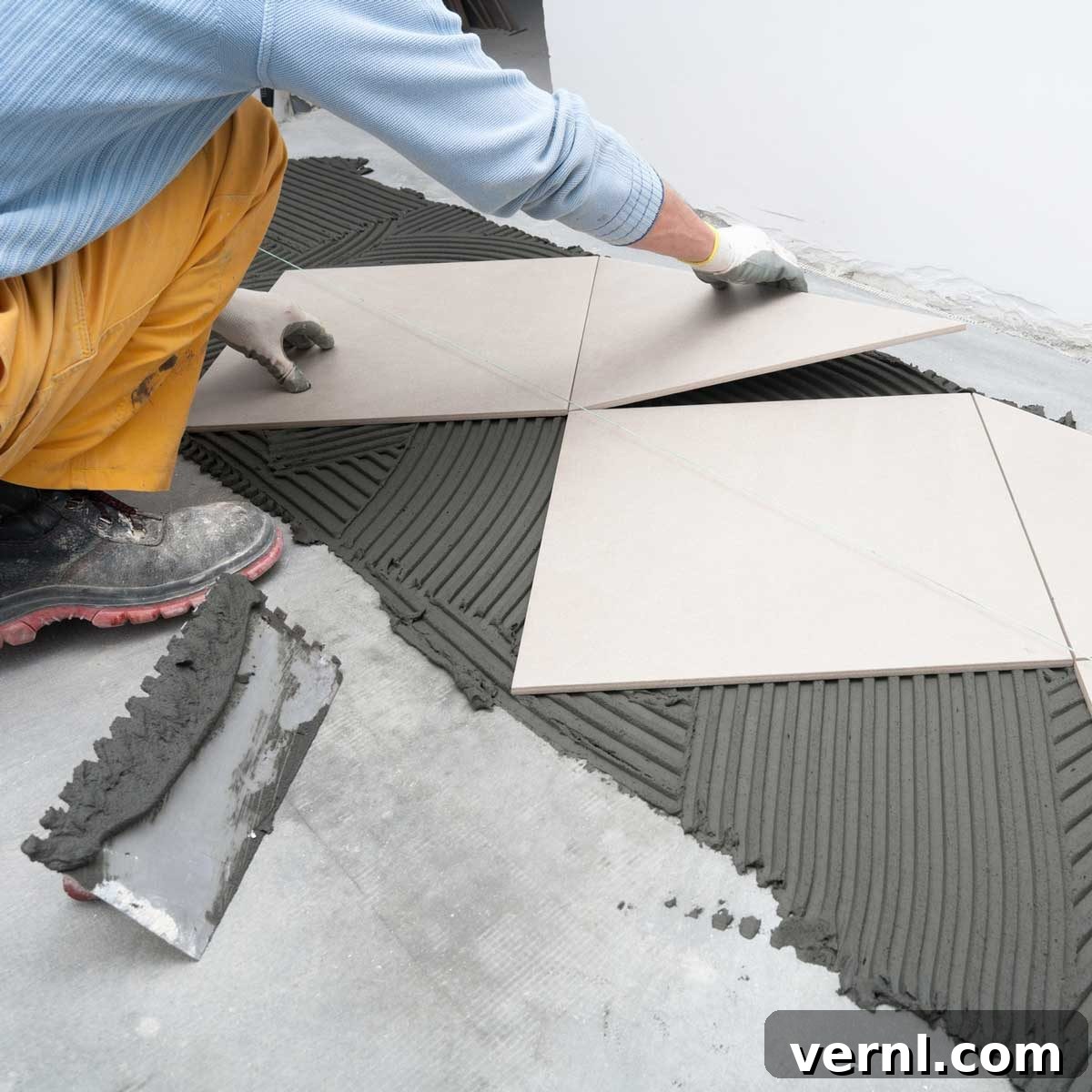
Laying tile as a trade may be physically demanding, but it offers a highly satisfying and rewarding career path for individuals looking to build a skilled profession. According to Laurent “Frenchy” Billaud, whose prominent company operates throughout the vibrant greater Los Angeles area, the demand for qualified tile flooring installers is consistently high. Billaud, an industry veteran with over two decades of experience, highlights plentiful work opportunities and the potential for substantial earnings as compelling reasons to consider a career in tile installation. This skilled trade combines artistry, precision, and practical expertise, making it an attractive option for those who enjoy working with their hands and transforming spaces.
The Foundations of a Tile Installation Career: Getting Started
Embarking on a career in tile flooring installation means contributing to the beauty and functionality of homes and commercial spaces. Beyond just floors, tile setters enhance walls, backsplashes, and showers with durable and aesthetically pleasing finishes. Mastering this craft, which requires a blend of technical skill and artistic vision, takes time and dedication to perfect.
For aspiring tile setters, the most effective way to gain a genuine feel for the trade is to start as a tradesperson’s helper. This entry-level position offers invaluable on-the-job experience and a direct insight into the daily operations of a professional tile installation project.
Essential Duties and Early Learning as a Tile Helper
Helpers play a crucial role on any tile job site, performing a variety of foundational tasks that are essential for the smooth execution of a project. Their responsibilities typically include significant physical labor such as lifting and carrying heavy boxes of tile, bags of setting materials, and buckets of water. A primary duty involves mixing thinset, a specialized type of mortar critical for securely adhering tiles to various surfaces. This seemingly simple task requires precision to achieve the correct consistency, which is vital for a successful installation.
Beyond the physical demands, working as a helper provides an unparalleled opportunity to observe and learn from experienced professionals. From understanding proper surface preparation techniques to observing the intricate art of tile layout and cutting, helpers are exposed to every facet of the trade. With consistent effort, a keen aptitude, and a strong desire to learn, helpers can quickly advance beyond basic support duties, gradually taking on more complex tasks and responsibilities.
Billaud notes that helpers typically start at minimum wage or slightly above. This compensation structure often serves as a significant motivator for most helpers to pursue more formal and structured career-path training. The foundational experience gained as a helper is indispensable, providing a practical context for any subsequent formal education or apprenticeship.
Understanding the Physical Demands of Tile Setting
It’s important for prospective tile installers to be aware of the physical nature of the work. Tile floor installers spend considerable time in ergonomically challenging positions, often bent over or on their knees for extended periods. This requires good physical stamina, core strength, and flexibility. Shaping tile through precise cutting and grinding operations constitutes a significant portion of a tile setter’s time, demanding both strength and fine motor skills. As Billaud candidly states, “Physically, it is probably one of the most demanding trades.” However, with proper body mechanics, quality tools, and a focus on safety, these demands can be managed effectively throughout a long and successful career.
Formal Training and Certification: Elevating Your Tile Installation Career
While the physical aspects are undeniable, the tile installation trade also requires significant intellectual and technical skills. To build a lasting and prosperous career, formal training and certification are highly recommended.
Initial Requirements for Entry into the Trade
To begin a career in tile floor installation, several fundamental requirements are generally expected. These typically include possessing a high school diploma or a GED, reliable transportation to various job sites, and the physical strength necessary to safely carry heavy boxes of tile and buckets of thinset. Beyond these practical prerequisites, a strong desire to work hard, a meticulous attention to detail, and an eagerness to learn the intricate nuances of the trade are absolutely vital for success.
Billaud emphasizes the importance of professionalism, especially as a business owner. He explains the challenge of solely relying on informal, on-the-job instruction for complex tasks, stating, “You want to remain professional as a business owner, so there’s only so much you can show a guy and then have them do it without making any mistakes. That’s where the big problem is, and it’s a shame there is no trade school for that.” This highlights a gap often filled by structured programs.
Apprenticeships and Industry Certifications: The Gold Standard
While some individuals may attempt to learn the trade and work with only on-the-job experience and no formal certification, those who choose this path often remain limited in terms of career advancement, earning potential, and independence. To truly excel and become a recognized expert in the field, Billaud strongly recommends participating in an apprenticeship program or enrolling in the basic training courses provided by reputable organizations such as the Ceramic Tile Education Foundation (CTEF).
Apprenticeship programs offer a comprehensive and structured pathway to becoming a highly skilled tile installer. Although not all states mandate apprenticeships, these programs provide a widely recognized, well-rounded education that covers all critical aspects of the trade. A typical apprenticeship program spans approximately four years, during which apprentices benefit from a blend of hands-on experience and theoretical knowledge.
Participants in these programs typically log about 2,000 hours on the job site each year, gaining practical experience under the guidance of seasoned professionals. This practical work is complemented by approximately 150 hours per year of classroom or online training, which covers essential topics such as tile types, advanced layout techniques, waterproofing systems, safety protocols, and industry best practices. Apprentices are also compensated for their work, earning a sliding percentage of the negotiated journey-worker wage, which increases progressively with their time and experience in the program.
A significant advantage of many apprenticeship programs is their partnership between contractors and unions. This collaborative structure often means that the costs associated with training are split between these entities, significantly reducing the financial burden on the apprentice. Consequently, apprentices typically only need to cover the cost of some basic materials and tools, making formal training more accessible and affordable.
Upon successful completion of an apprenticeship, an individual becomes qualified as a journey-worker, empowered to work independently without direct supervision. With additional experience and a continued commitment to excellence, journey-workers can further enhance their professional standing by becoming certified in installation through programs like the CTEF’s Certified Tile Installer (CTI) program. Obtaining such certifications demonstrates a high level of proficiency and adherence to industry standards, opening doors to more lucrative projects and greater client trust. For those with entrepreneurial ambitions, gaining sufficient experience and formal qualifications can lead to obtaining the necessary licenses to launch and manage their own tile installation business, offering unlimited potential for growth and independence.
A Day in the Life: Skills, Precision, and the Art of Tile Setting
Beyond the training, what does a tile installer’s daily work truly entail? It’s a dynamic blend of physical labor, meticulous planning, and artistic execution. A tile setter’s day can involve a variety of tasks, each demanding specific skills and attention to detail.
The Multifaceted Role of a Tile Installer
The work begins long before the first tile is laid. Surface preparation is paramount, ensuring the substrate is clean, level, and structurally sound. This might involve applying self-leveling compounds, installing backer board, or meticulously cleaning and priming surfaces. Improper preparation can lead to costly failures, so precision here is non-negotiable.
Next comes the critical stage of layout. A skilled tile installer doesn’t just start laying tiles; they meticulously plan the layout to ensure symmetry, minimize cuts, and achieve the most aesthetically pleasing result. This often involves finding the center point of a room or wall and dry-laying tiles to visualize the pattern and make adjustments. Mathematical aptitude and spatial reasoning are key at this stage.
Cutting tiles is another core skill. Different types of tiles and project requirements call for various tools, including wet saws for clean, precise cuts, tile nippers for intricate shapes, and grinders for shaping edges. Safety is paramount during cutting, requiring proper personal protective equipment and adherence to operational guidelines.
Applying thinset evenly and consistently is crucial for strong adhesion and a level surface. The choice of trowel notch size depends on the tile size and type. Then comes the careful placement of each tile, using spacers to ensure uniform grout lines and regularly checking for levelness with a spirit level. This process demands patience and a steady hand.
Once the tiles are set and the thinset has cured, the grouting process begins. This involves mixing and applying grout, ensuring it fills all joints completely, and then meticulously cleaning off excess grout to reveal the final aesthetic. Finally, applying sealants and caulk protects the installation from moisture and enhances its longevity, particularly in wet areas like bathrooms and kitchens.
Mastering Various Tile Types and Specialized Tools
The tile industry constantly evolves, introducing new materials and installation techniques. A professional tile installer must be proficient in working with a wide array of tile types, each presenting its unique characteristics and installation challenges. These include common ceramic and porcelain tiles, which are durable and versatile, as well as natural stone tiles like marble, granite, and travertine, which require specialized cutting and sealing due to their porosity. Glass, mosaic, and large-format tiles also demand specific handling and setting techniques.
The toolkit of a modern tile installer is extensive and specialized. It includes various trowels, levels of different lengths, tile cutters (manual and wet saws), grinders, mixers for thinset and grout, knee pads for comfort, and a host of measuring and layout tools. Investing in quality tools and knowing how to use them effectively and safely is a hallmark of a professional.
Furthermore, specialized knowledge in waterproofing systems for showers, steam rooms, and outdoor applications is increasingly important. Proper waterproofing prevents moisture damage and ensures the longevity of the tiled surface, protecting the client’s investment and the installer’s reputation.
Earning Potential and Career Growth in Tile Installation
One of the most attractive aspects of a career in tile installation is the strong earning potential and diverse pathways for career advancement. Unlike some trades that might see fluctuating demand, skilled tile setters are consistently sought after.
Understanding Tile Installer Wages
According to the latest data from the U.S. Bureau of Labor Statistics (BLS), the median annual wage for tile setters is approximately $43,000. However, this figure can vary significantly based on several factors, including an installer’s level of experience, geographic location, whether they are unionized or not, and any particular niche specializations they hold (e.g., custom mosaic work, large commercial projects). Entry-level positions or those focused on less complex tasks, such as finishers who apply and clean up grout, and apply sealants and caulk, tend to earn slightly less than fully qualified setters.
Specific examples further illustrate the earning potential. Laurent Billaud mentions that he might pay a dependable, experienced tile setter working for his company around $25 per hour. For union workers in high-cost-of-living areas such as the New York/New Jersey metropolitan area, hourly wages can be substantially higher, currently reaching approximately $60 per hour, often accompanied by comprehensive benefits packages.
Pathways to Entrepreneurship and Unlimited Earning Potential
The tile installation trade offers an exceptional opportunity for entrepreneurship. Once an installer has gained substantial experience, built a strong reputation, and perhaps obtained relevant certifications and licenses, they can choose to establish and operate their own tile installation business. For business owners, the earning potential is limited primarily by their ambition, their ability to consistently attract and secure work, and their proficiency in managing a business effectively. This includes everything from marketing and client relations to project estimation, scheduling, and financial management.
A successful independent tile contractor can command higher project rates, manage multiple crews, and scale their business to meet growing demand. This path provides not only financial independence but also the satisfaction of building something of their own, creating jobs, and having full control over their professional destiny. The demand for quality home improvement and construction services ensures a steady stream of work for skilled and reputable tile contractors.
Why Choose Tile Installation as a Career? Benefits and Future Prospects
Considering all aspects, a career in tile installation stands out as an excellent choice for many individuals. It offers a unique blend of benefits that make it both personally and professionally rewarding.
Creative Satisfaction and Tangible Results
One of the most compelling reasons to become a tile installer is the immense creative satisfaction derived from the work. Each project offers the opportunity to transform a space, turning raw materials into a beautiful, functional, and lasting surface. Installers see the direct results of their skill and effort, creating tangible improvements that clients cherish. This sense of accomplishment, from the initial layout to the final grout cleaning, is deeply rewarding.
High Demand and Job Security
The construction and home improvement industries consistently require skilled tradespeople, and tile installers are no exception. With continuous building, remodeling, and renovation projects, the demand for qualified tile setters remains strong and stable. This provides excellent job security and consistent work opportunities, making it a reliable career choice even in varying economic climates. People will always need durable and attractive surfaces in their homes and businesses.
Good Income Potential and Financial Independence
As discussed, tile installation offers competitive wages, with significant earning potential for experienced, certified, and unionized professionals, as well as for successful business owners. The ability to earn a good income provides financial stability and the means to achieve personal and family goals, fostering genuine financial independence.
Opportunity for Entrepreneurship and Growth
For those with an entrepreneurial spirit, the tile trade offers a clear path to business ownership. Starting as a helper, progressing through an apprenticeship, becoming a journey-worker, and eventually launching one’s own company is a well-trodden and achievable path. This allows individuals to not only maximize their earning potential but also to build a legacy, employ others, and have a direct impact on their local community and economy.
A Blend of Artistry and Technical Skill
Tile installation is more than just manual labor; it’s a craft that blends artistic vision with precise technical skills. It requires an eye for design, an understanding of color and pattern, coupled with meticulous execution and problem-solving abilities. This combination appeals to individuals who seek a career that challenges both their physical and mental capabilities.
Long-Term Stability and Professional Respect
As a skilled trade, tile installation commands respect. Professionals who master this craft are valued for their expertise and the quality of their work. Furthermore, the skills learned are transferable and evergreen, ensuring long-term career stability and adaptability to various construction demands. The investment in training and certification pays dividends throughout an installer’s entire professional life.
In conclusion, while the trade of tile installation presents its physical demands, it offers a robust, satisfying, and financially rewarding career path. With ample work, excellent earning potential, and the opportunity for personal and professional growth, it’s a highly recommended profession for individuals who are dedicated, detail-oriented, and eager to master a valuable skill that consistently enhances the spaces we live and work in.