
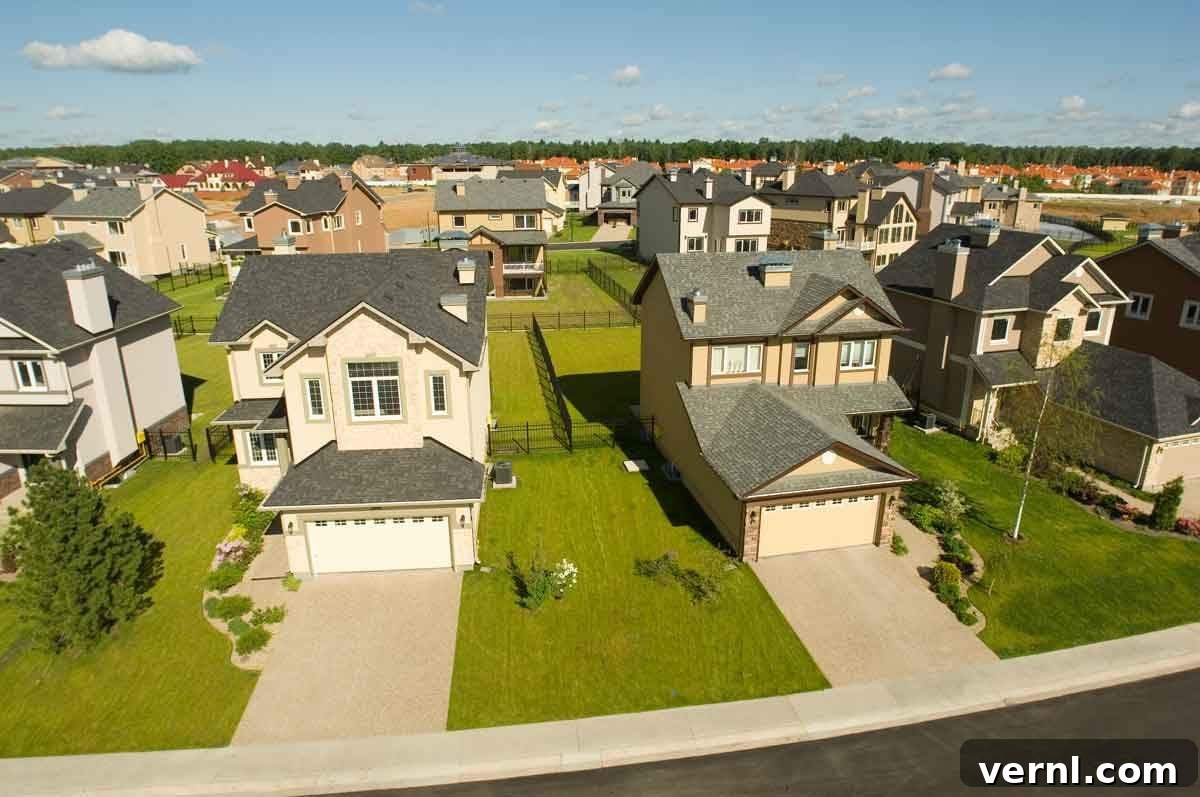
From the rudimentary dirt tracks of early American settlements to the sophisticated brick pavers gracing historical estates like Thomas Jefferson’s Monticello, homeowners throughout history have meticulously weighed the balance between initial investment and aesthetic appeal when selecting driveway materials. In the contemporary landscape, a remarkable array of innovative materials and design techniques offers an unprecedented spectrum of choices, meticulously tailored to accommodate virtually every budget and driveway design preference. A driveway is more than just a path for your vehicle; it’s a critical component of your home’s curb appeal, functionality, and overall property value. As you explore these options, you might also consider enhancing your entrance with stylish driveway gate ideas.
Choosing the perfect driveway material involves a comprehensive evaluation of several key factors: the upfront installation cost, expected lifespan, required maintenance, suitability for local climate conditions, and environmental impact. This detailed guide explores seven of the most popular driveway solutions available today, meticulously dissecting their advantages and disadvantages to help you make an informed decision that harmonizes with your lifestyle, budget, and long-term vision for your property.
Asphalt Driveway (AKA Blacktop)
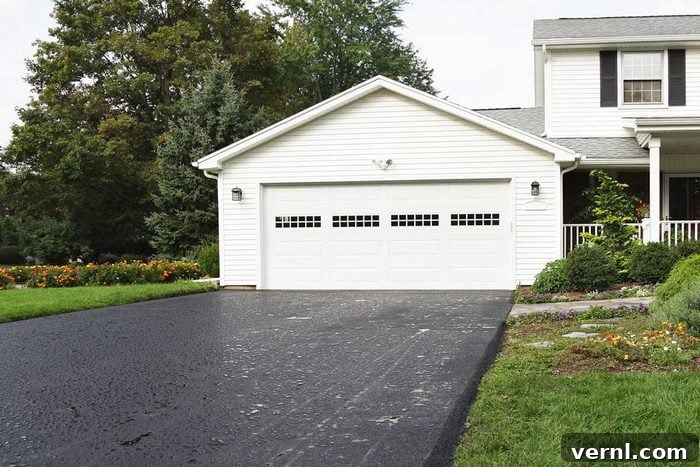
Asphalt pavement, often referred to as blacktop, stands as one of the most ubiquitous materials for driveways across the United States. A perennial favorite among residential property owners and large-scale developers alike, an asphalt driveway is celebrated for its affordability and rapid installation process. It presents an excellent choice for covering expansive areas, providing a remarkably smooth, consistent, and uniform appearance that can significantly enhance a property’s functional aesthetics. Its dark, sleek finish offers a classic look that blends well with many architectural styles, making it a practical and widely adopted solution for various home types.
Pros
- Cost-Effectiveness: Asphalt driveways are distinguished by their relatively low initial installation costs, typically ranging from $5 to $12 per square foot, including labor and materials. This makes them one of the most budget-friendly options, especially for larger driveways where material volume can significantly impact overall expenses.
- Ease of Repair: Minor damage, such as small cracks or potholes, is remarkably easy to patch and repair without leaving conspicuous marks. Asphalt patching kits are readily available for DIY enthusiasts, allowing for seamless blending with the existing surface, thus maintaining the driveway’s aesthetic integrity and prolonging its life.
- Quick Installation: Asphalt can be installed relatively quickly compared to concrete or pavers, often allowing for vehicle traffic within a few days. This minimizes disruption to daily routines, a significant advantage for busy households.
- Flexibility: Asphalt is a flexible material, meaning it can tolerate minor ground movement and temperature fluctuations better than rigid materials like concrete, which can reduce the likelihood of extensive cracking.
Cons
- Shorter Lifespan: Compared to many other driveway materials on this list, asphalt driveways have a comparatively shorter lifespan, typically lasting between 20 to 25 years. This may necessitate more frequent replacement or extensive resurfacing over a long period.
- Climate Sensitivity: Blacktop’s dark coloration efficiently absorbs heat, leading to extremely high surface temperatures (especially uncomfortable for bare feet). In very hot climates, it can soften, becoming tacky and susceptible to tire marks or indentations from heavy vehicles. Conversely, in extremely cold conditions, it can become brittle and more prone to cracking.
- Maintenance Requirements: While small repairs are easy, regular maintenance such as crack sealing and routine sealcoating (every 2-5 years) is essential to protect the surface from UV rays, water penetration, and oxidation, which can add to the long-term cost and effort.
- Sustainability Concerns: Asphalt is a petroleum-based product, which raises environmental concerns regarding its sourcing and manufacturing process. Although significant advancements have been made in asphalt recycling technologies, making it one of the most recycled materials globally, its overall environmental footprint is still considered higher than some natural or permeable options.
Concrete Driveway
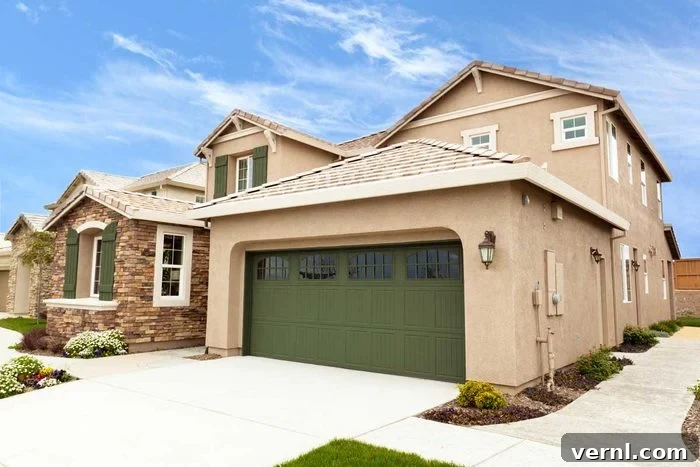
Concrete stands as the other paramount choice for driveway material, a testament to its enduring strength and versatility. Renowned for its robustness, concrete is an exceptionally durable material capable of withstanding severe weather conditions, heavy traffic, and the test of time, making it an excellent selection for virtually any climate. Its clean, bright appearance offers a distinct aesthetic advantage, providing a solid and stately foundation for any home. From a traditional grey slab to more decorative finishes, concrete offers a sense of permanence and strength that appeals to a broad range of homeowners seeking a long-lasting and reliable driveway solution.
Pros
- Exceptional Longevity: Concrete driveways boast an impressive lifespan, often extending up to 40 years or more with proper installation and minimal maintenance. This makes it an incredibly cost-effective option over the long term, reducing the need for frequent replacements.
- Low Routine Maintenance: Beyond occasional cleaning and sealing every few years (especially in harsh climates), concrete requires relatively little regular upkeep. It is not prone to softening in heat or fading from UV exposure like asphalt, simplifying its long-term care.
- Climate Adaptability: Concrete is inherently suitable for a wide array of environments, performing well in both hot, sunny climates and cold, snowy regions. Its light color helps reflect heat, keeping the surface cooler than asphalt. In snowy conditions, care should be taken when applying certain types of ice melt, as some chemicals can damage the surface over time.
- Versatility in Design: While traditionally plain, concrete can be stained, colored, or even stamped to mimic other materials, offering significant aesthetic flexibility without the higher cost of natural stone or pavers.
- Cost-Effectiveness (Mid-Range): Installation costs typically fall between $5 and $8 per square foot, positioning concrete as a mid-range option that delivers excellent value given its durability and low maintenance needs.
Cons
- Susceptibility to Cracking: Despite its strength, all concrete will eventually crack. These cracks can arise from ground movement, heavy loads, improper sub-base preparation, or freeze-thaw cycles. While control joints are cut to guide where cracks appear, they are an inevitable part of concrete’s life.
- Difficult Repairs: When significant damage or extensive cracking occurs, repairs can be challenging and often difficult to seamlessly blend with the existing slab. Patches can be noticeable, affecting the uniform appearance of the driveway. Full slab replacement may be required for severe damage.
- Environmental Impact: While not a petroleum product like asphalt, concrete production carries a significant environmental cost. The manufacturing of cement, a key ingredient, is energy-intensive and a major contributor to global carbon dioxide emissions. It is recognized as a material with a substantial ecological footprint.
- Installation Time: Concrete installation requires careful preparation and curing time. The full strength of the concrete isn’t achieved for several weeks, meaning vehicles cannot typically use the driveway immediately after pouring.
Brick or Paver Driveway
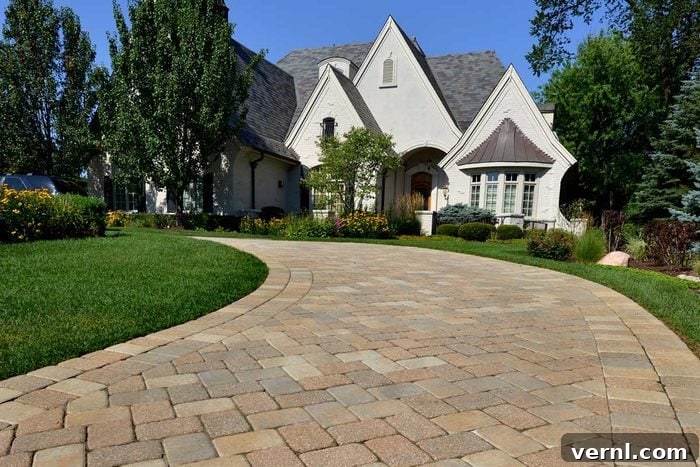
Driveways constructed from individual bricks or interlocking pavers represent a premium option, offering a sophisticated blend of exceptional durability, profound aesthetic appeal, and remarkable ease of customization. This category encompasses various materials, primarily clay bricks, concrete pavers, and natural stone pavers. While traditional clay bricks tend to have a slightly shorter lifespan than their concrete or stone counterparts, all three types share the distinct advantage of being individually removable and replaceable if damaged. This modularity not only simplifies repairs but also allows for intricate designs and patterns that can transform a functional driveway into a captivating architectural feature. Before committing, it’s wise to understand the potential driveway replacement cost, although pavers often offer reparability that can defer full replacement.
Pros
- DIY Friendly Potential: Among all the driveway options discussed, installing a paver driveway is often considered the most DIY-friendly, especially for those with a knack for hands-on projects. While still a significant undertaking requiring meticulous preparation of the base, it generally does not demand heavy, specialized equipment common with asphalt or concrete, making it accessible for homeowners willing to invest time and effort.
- Exceptional Flexibility and Movement Tolerance: Unlike rigid concrete slabs, the segmented nature of pavers allows the driveway to better withstand and adapt to minor earth movement, settling, and freeze-thaw cycles. This inherent flexibility significantly reduces the risk of large, unsightly cracks that plague monolithic surfaces.
- Superior Longevity: Paver driveways boast impressive lifespans. Clay bricks can be expected to last up to 50 years, while high-quality concrete or natural stone pavers can endure for up to 75 years or even longer, often outlasting the home itself. This makes them a truly long-term investment.
- Unrivaled Pattern and Design Variety: Bricks and pavers are available in an extensive palette of colors, shapes, textures, and sizes. This vast selection enables homeowners to create countless patterns, from classic herringbone to modern geometric designs, offering unparalleled opportunities for personalization and enhancing curb appeal.
- Enhanced Sustainability: Clay bricks and natural stone pavers generally have a reduced environmental impact, particularly when sourced locally. Their modular design also means that individual units can be salvaged and reused, contributing to material longevity and waste reduction. Permeable paver options further enhance sustainability by managing stormwater runoff.
- Easy Repairability: If a section becomes damaged or uneven, individual pavers can be easily lifted, leveled, or replaced without disturbing the entire driveway, offering a distinct advantage over concrete or asphalt repairs.
Cons
- Potential for Unevenness and Shifting: The same inherent flexibility that allows pavers to adapt to ground movement can also be a drawback. Individual pavers may sink, heave, or shift over time, particularly if the base preparation was inadequate or if they experience heavy, concentrated loads. Regular adjustments or re-leveling might be necessary to maintain a smooth surface (though a superior initial installation significantly mitigates this problem).
- High Installation Cost: Paver driveways represent a significant investment. There’s a wide range of prices, with individual pavers costing anywhere from $2 to $15 each. When factoring in the extensive base preparation (which is crucial for longevity), specialized labor, and installation, the final price can range from $8 to $30 per square foot installed. The ultimate cost is heavily dependent on the chosen material, design complexity, and installation quality.
- Weed Growth: Weeds can occasionally sprout in the sand-filled joints between pavers, requiring periodic weeding or treatment to maintain a pristine appearance.
Stamped Concrete Driveway
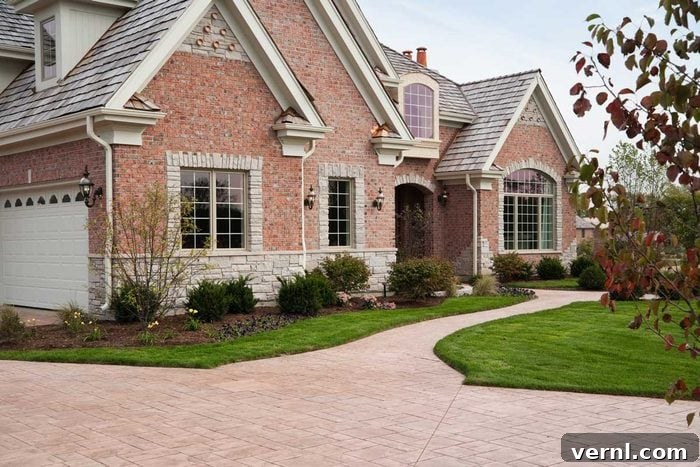
Stamped concrete driveways offer an ingenious solution for achieving the upscale aesthetic of natural stone, brick, or individual pavers without the premium cost. This is accomplished through a specialized process where freshly poured concrete is imprinted with patterns using rubber stamps before it fully cures. Subsequently, the surface is often stained or colored to further enhance the illusion of natural materials, creating a highly customized and visually appealing finish. Providing impressive durability, stamped concrete positions itself as a cost-effective alternative, typically falling in price somewhere between a standard grey concrete slab and a labor-intensive, full paver driveway installation.
Pros
- Cost-Effective Alternative: At an installed cost typically ranging from $10 to $12 per square foot, stamped concrete offers a significantly more affordable route to achieve the luxurious look of natural stone, genuine brick, or intricate concrete pavers. It provides high-end aesthetics at a mid-range price point.
- Exceptional Appearance and Design Flexibility: Stamped concrete boasts an almost limitless array of styles, patterns, and appearances. It can realistically mimic flagstone, cobblestone, wood planks, or custom designs, and a wide variety of colors and staining techniques can be applied, allowing for unparalleled customization to match any home’s architectural style or landscape design.
- Robust Durability: A properly installed stamped concrete driveway should last approximately as long as a regular concrete driveway, offering excellent structural integrity and resistance to heavy loads. The decorative stamping and staining, however, might begin to fade or show wear before the structural concrete itself, especially in high-traffic areas or if not adequately sealed and maintained.
- Climate Versatility: Like traditional concrete, stamped concrete is a highly versatile material that performs exceptionally well in a wide range of climates, from hot and sunny to cold and snowy. Its solid surface is not prone to shifting like individual pavers and maintains its integrity through freeze-thaw cycles when properly reinforced and sealed.
- Lower Maintenance (Compared to Pavers): While periodic sealing is required to protect the decorative finish, stamped concrete eliminates the need for weeding between individual units or re-leveling shifted pavers, generally simplifying long-term maintenance compared to traditional paver installations.
Cons
- Vulnerability to Cracks: As with all concrete surfaces, stamped concrete is susceptible to cracking eventually. While control joints are incorporated to manage where these cracks occur, they are an unavoidable characteristic of concrete and can sometimes disrupt the decorative pattern, making them more noticeable than on a plain slab.
- Challenging and Noticeable Repairs: Repairing damaged stamped concrete can be incredibly difficult to blend seamlessly. Matching the exact pattern, color, and texture of the original stamp and stain on a patched section is a highly specialized skill, and even experienced professionals may struggle to make repairs invisible. This means that any significant damage can lead to a visible imperfection.
- Not DIY Friendly: The installation of stamped concrete is a complex process that demands considerable skill and experience, not just with pouring and finishing concrete but also with the precise timing and technique of stamping and staining. Since the entire driveway is typically poured and stamped at once, even minor errors can be permanently etched into the surface, leading to noticeable flaws and costly rectification.
- Similar Sustainability Issues to Traditional Concrete: Stamped concrete shares the same environmental concerns as traditional concrete, primarily related to the high energy consumption and carbon emissions associated with cement production, its core component.
- Slippery Surface: Depending on the pattern and sealing product used, stamped concrete can sometimes be slippery when wet or icy, requiring careful consideration of surface texture and anti-slip additives during installation.
Gravel Driveway
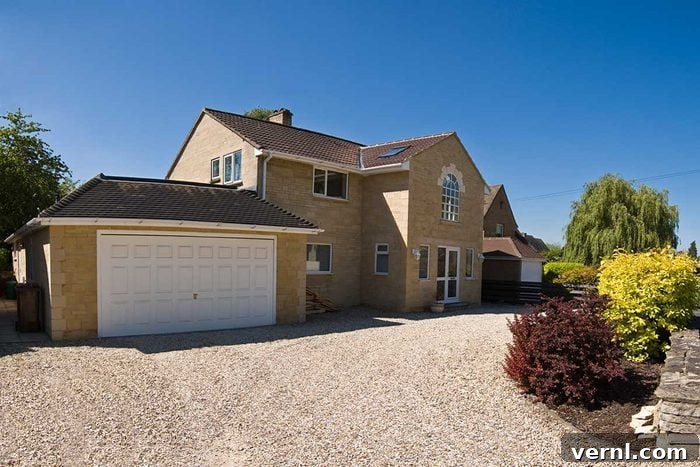
Gravel driveways, while often perceived as simple and rustic, possess a unique charm and practicality that make them a popular choice, particularly for longer driveways or those seeking a natural, understated aesthetic. They can range from a purely functional, no-frills path to an integral component of a complex and meticulously designed entryway, enhancing the overall landscape. Although a good choice for warmer climates due to their permeability and lack of heat absorption, the individual gravel stones themselves are incredibly durable and are likely to outlive your home. However, the inherent nature of loose gravel means it will inevitably migrate over time, spreading onto lawns and streets, necessitating occasional replenishment and periodic leveling to maintain its pristine appearance and functionality.
Pros
- Unbeatable Affordability: At an installed cost typically ranging from $1 to $3 per square foot, gravel is by far the most economical driveway option on this list. This makes it an attractive choice for homeowners on a tight budget or those with very long driveways where material costs can quickly escalate.
- Extensive Material Options: Gravel is not a monolithic material; it encompasses a vast range of types, colors, sizes, and textures. From crushed limestone and granite to pea gravel or river rock, homeowners can select a gravel that perfectly complements their home’s exterior and landscaping, offering more aesthetic flexibility than often assumed.
- Exceptional Sustainability and Permeability: Gravel is a naturally occurring material, making it an inherently sustainable choice. Its loose composition provides excellent water permeability, allowing rainwater and snowmelt to drain directly into the ground below. This helps replenish groundwater, reduces stormwater runoff into drainage systems, and mitigates erosion, offering environmental benefits similar to far more expensive permeable paver options, but at a fraction of the cost.
- DIY Friendly Potential: For smaller driveways, gravel installation can be relatively DIY-friendly. As long as you can arrange for the delivery of the base material and top layer of gravel, spreading and leveling it is a manageable task for homeowners. However, for larger driveways, the savings might be less than anticipated, as professionals use heavy equipment that makes short work of what would otherwise be a laborious process.
- No Cracking or Potholes: Unlike rigid surfaces, gravel doesn’t crack or develop potholes in the traditional sense, as it’s a flexible, dynamic surface.
Cons
- Ongoing Maintenance Demands: Gravel driveways require regular maintenance to combat rut formation and depressions that inevitably develop from vehicle traffic and natural settling. If your driveway is sloped, the loose gravel will migrate downhill and inevitably spread out onto lawns and public streets, requiring frequent raking, leveling, and periodic replenishment of lost material.
- Poor Climate Suitability for Snow: Gravel driveways are notoriously difficult to keep clear of snow. Snowplows can easily scrape up and disperse the gravel, making effective clearing challenging without removing significant material. They are best suited for regions with minimal or no snowfall.
- Dust and Debris Generation: Driving on gravel inherently generates dust and fine debris, particularly during dry periods. This dust can settle on your vehicles, home exterior, and surrounding landscaping, necessitating more frequent cleaning and potentially impacting air quality.
- Uneven Surface: The loose, shifting nature of gravel creates an uneven surface that can be challenging for walking, especially for individuals with mobility issues, high heels, or bicycles. It’s also not ideal for basketball or other activities requiring a flat surface.
- Weed Growth: Weeds can easily establish themselves in a gravel base if a proper weed barrier isn’t installed and maintained, requiring ongoing weeding efforts.
Permeable Paver Driveway
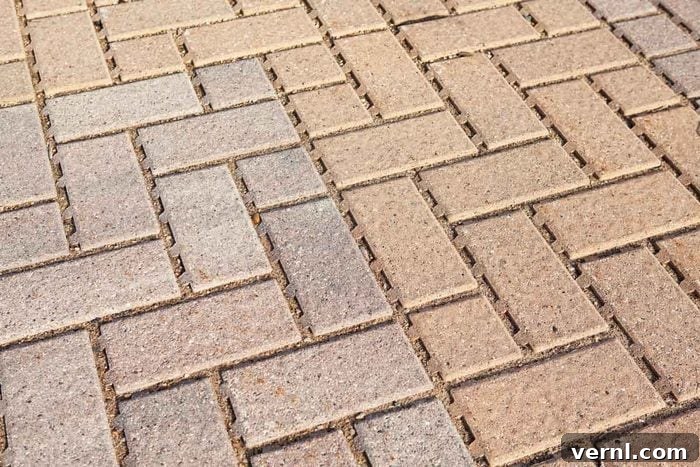
Permeable pavers represent a sophisticated and increasingly popular technology within the paving industry, designed to address contemporary environmental concerns and enhance practical functionality. These engineered pavers feature specialized holes or wider gaps that intentionally allow rainwater and snow melt to filter directly through to the ground below, rather than running off into storm drains. This innovative design offers a multitude of environmentally beneficial side effects, alongside tangible practical advantages for homeowners. While permeable concrete and asphalt with tiny pores also exist to allow water penetration, this section will focus specifically on the growing popularity and benefits of permeable paver systems.
Pros
- Exceptional Water Permeability and Stormwater Management: The primary advantage of permeable pavers is their ability to allow water to percolate through the surface. This dramatically reduces surface puddling, the risk of hydroplaning, and minimizes the freeze-thaw cracking and spalling often seen in traditional impervious surfaces. More importantly, it significantly lessens the burden on municipal storm drain systems and helps prevent localized flooding.
- Enhanced Sustainability (Heat Island Effect Reduction): Permeable surfaces, by allowing water to absorb and evaporate, retain significantly less heat than conventional dark asphalt or dense concrete. This helps to mitigate the urban “heat island effect,” where paved areas contribute to higher ambient temperatures directly around your home. A cooler driveway benefits the environment and can potentially lead to lower cooling bills during hot summer months.
- Environmental Sustainability (Reduced Runoff and Groundwater Recharge): By directing stormwater into the ground, permeable pavers help to filter pollutants naturally, prevent erosion, and reduce the volume of untreated runoff entering rivers and lakes. This also contributes to recharging local groundwater supplies, making it an eco-conscious choice that benefits the broader ecosystem and may even reduce the need for excessive lawn watering.
- Durability and Longevity: High-quality permeable pavers are engineered to be extremely durable, capable of withstanding heavy vehicle traffic while maintaining their structural integrity over many decades, similar to traditional pavers.
- Aesthetic Appeal: Permeable pavers come in a variety of styles, colors, and patterns, offering excellent design flexibility to complement any architectural style, from contemporary to rustic.
Cons
- Soil Dependency and Site Preparation: The effectiveness of a permeable paver system is heavily dependent on the underlying soil conditions. If you have dense clay soil with poor drainage, the water penetrating the pavers may simply pool on top of the impermeable subsoil. This necessitates additional, complex, and costly excavation and installation of specialized drainage layers or systems to effectively direct water away.
- Higher Initial Cost: Permeable pavements are a premium option, typically running anywhere from $20 to $40 per square foot installed. This higher cost is attributed to the specialized materials, the extensive and precise sub-base preparation required (multiple layers of aggregate and filter fabric), and the skilled labor involved. Just like traditional pavers, the final price depends on material selection, pattern complexity, and site-specific conditions.
- Specific Maintenance Requirements: The porous surface, designed to allow water filtration, can become clogged over time with sediment, leaves, and debris, diminishing its permeability. To maintain optimal functionality, plan on annual pressure washing or vacuuming (using specialized equipment) to clear out the small void spaces and ensure proper drainage.
- Snow Accumulation and De-icing Challenges: The very reason permeable surfaces don’t hold heat (their ability to drain water quickly) also means that they are more likely to accumulate snow and ice on the surface. While the melted water will drain away rapidly, preventing re-icing, the initial snow removal can be similar to a traditional driveway. However, some types of de-icing salts can affect the system’s long-term functionality by introducing fine particles that can clog the voids.
- Professional Installation Critical: Due to the complex engineering of the base layers, professional installation is almost always recommended to ensure proper function and longevity.
Turf Driveway
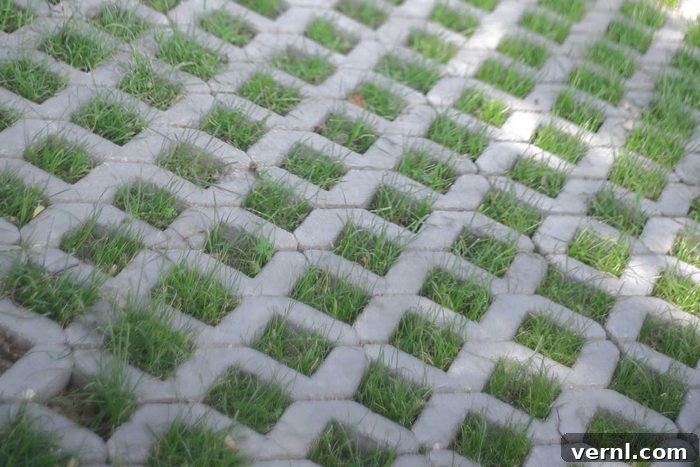
Another compelling and relatively recent innovation in driveway technology is the turf driveway. This ingenious solution employs permeable pavers with specially engineered, broader openings that are designed to permit grass or various low-growing ground cover plants to grow and flourish directly within the paving structure. The result is a unique aesthetic that can appear as a harmonious blend of solid pavers and lush turf, or, in some designs, almost like a normal lawn, but with the critical underlying reinforcement to prevent the unsightly ruts, compaction, and divots typically caused by parking vehicles directly on grass. This innovative approach creates a subtly reinforced yet visibly green surface, seamlessly integrating functional pathways with natural landscapes.
Turf driveways are particularly well-suited to warm climates where the green grass can thrive consistently and heavy snowfall is not a significant concern. They offer an eye-catching, environmentally conscious, and innovative driveway technology that stands out for its beauty and ecological benefits.
Pros
- Unparalleled Beauty and Natural Aesthetic: The most significant selling point of turf driveways is their stunning, streamlined, and profoundly natural appearance. They effectively merge a functional driveway with the surrounding landscape, creating a softer, greener, and more inviting entryway that significantly boosts curb appeal and provides a distinctive visual statement.
- Enhanced Sustainability and Cooling Effect: Building on the principles of other permeable surfaces, turf drives are even cooler due to the natural cooling properties of actively growing vegetation. The grass absorbs sunlight and releases moisture through transpiration, contributing to a lower ambient temperature directly around the home and significantly mitigating the urban heat island effect more effectively than bare pavers or concrete. They also provide excellent stormwater management.
- Reduced Impervious Surface: For properties with strict impervious surface regulations, turf driveways offer a practical solution to maintain green space while providing vehicle access.
Cons
- Substantial Initial Cost: Turf driveways represent a significant investment, with installed costs typically ranging from $10 to $30 per square foot. The final price is largely determined by the specific type and quality of the permeable paver grid selected, as well as the complexity of the sub-base preparation and the choice of planting material.
- Ongoing Maintenance Requirements (Horticultural): These driveways are, in essence, an extension of your lawn. This means they require continuous horticultural maintenance, including regular watering, mowing (if using turf grass), fertilizing, and persistent weeding to keep the grass healthy and the driveway looking pristine. Neglecting these tasks can lead to a patchy, unattractive, or dead lawn within the pavers.
- Reduced Lifespan Compared to Hard Pavers: While the pavers themselves are durable, the broader openings designed to accommodate plant growth can subject the paver material to more wear and tear, and the constant stress from vehicles directly on the edges of the cells can lead to faster degradation. The longevity of the entire system depends heavily on the paver type and maintenance, but an estimate of 10 to 15 years for most residential turf driveways is a realistic expectation before significant revitalization or replacement might be needed.
- Uneven Footing and Accessibility Concerns: The grass/block surface, while aesthetically pleasing, creates an uneven footing. This can be challenging for individuals using wheelchairs, strollers, or those wearing high heels, making it less accessible and potentially less comfortable than a perfectly flat, hard surface.
- Climate Dependency and Snow Challenges: Turf driveways are best suited for climates where grass can thrive year-round or for extended periods. In regions with heavy snowfall, shoveling snow from a turf driveway can feel akin to shoveling a lawn. Snowplows can easily damage the grass and potentially dislodge the pavers, making winter maintenance a significant challenge and potentially damaging to the delicate ecosystem within the driveway.
- Drainage Requirements: Similar to other permeable systems, proper drainage of the sub-base is critical to prevent waterlogging and ensure the health of the grass.