
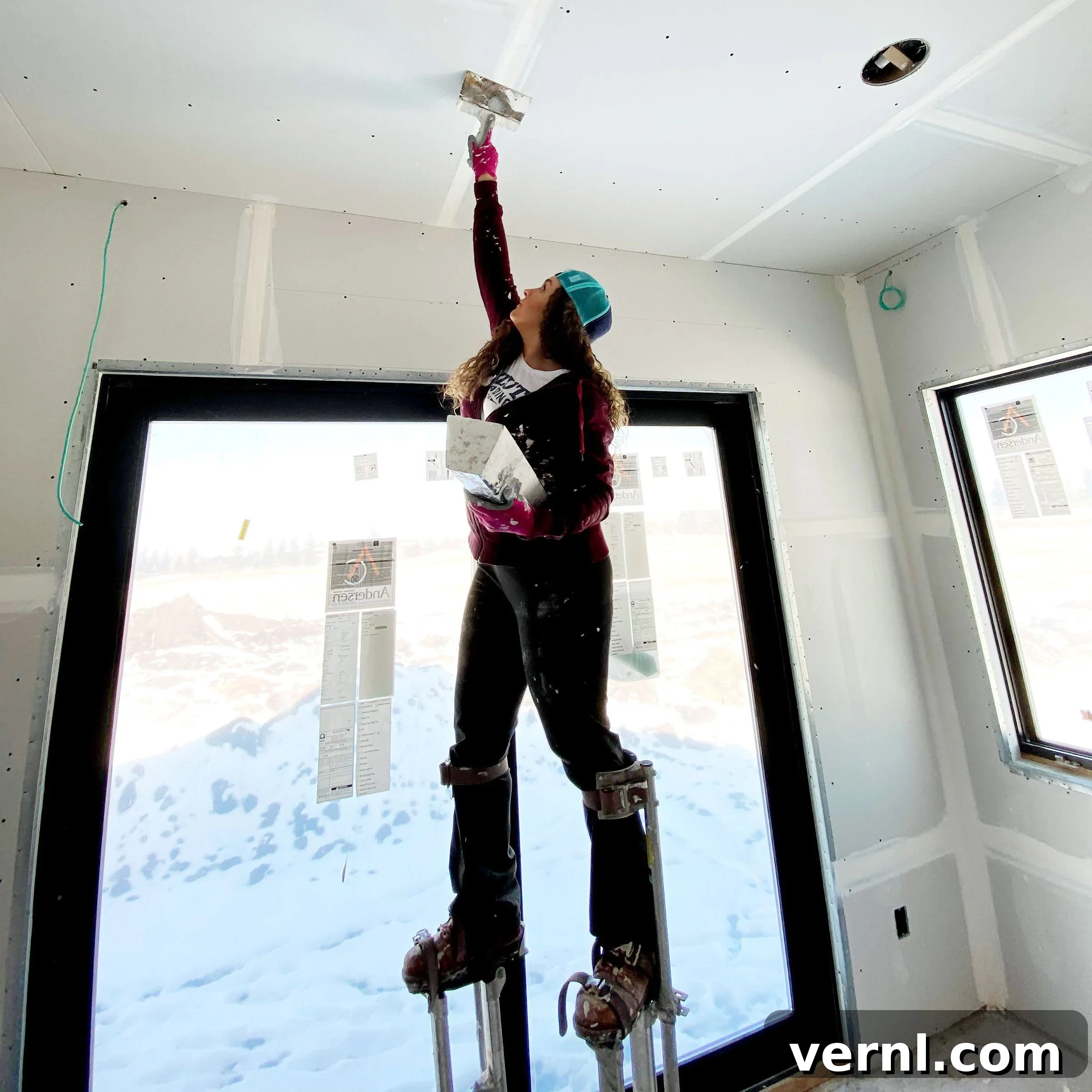
A Day in the Life of a Drywall Pro: Insights from Lydia “Drywall Shorty” Crowder
Welcome to our illuminating “A Day in the Life of a Pro” series, where we peel back the curtain on the incredible world of skilled trades. Our mission is to introduce you to dedicated tradespeople, offering a unique glimpse into their journey, the challenges they’ve overcome, and the profound satisfaction of their daily work. This series celebrates the backbone of our communities, showcasing the talent, perseverance, and passion that drive these essential professions. We believe in highlighting the diverse pathways to success and inspiring future generations to consider a rewarding career in the trades. Do you know an exceptional tradesperson whose story deserves to be told? We’d love to hear from you! Email us here and help us shine a light on more unsung heroes.
Today, we have the distinct pleasure of featuring Lydia Crowder, widely known in the industry as “Drywall Shorty.” As the co-owner of Trinity Drywall, Lydia brings two decades of unparalleled experience and expertise to the drywall finishing trade. Her journey is a testament to dedication, continuous learning, and mastering a craft that truly transforms spaces. You can also follow her inspiring work and daily insights on Instagram at @DrywallShorty. The moniker “Shorty” affectionately refers to her stature; at 5-foot-1, she’s living proof that skill and determination tower over physical height in any profession.
From Uncertainty to Craftswoman: Lydia’s Path to Drywall Mastery
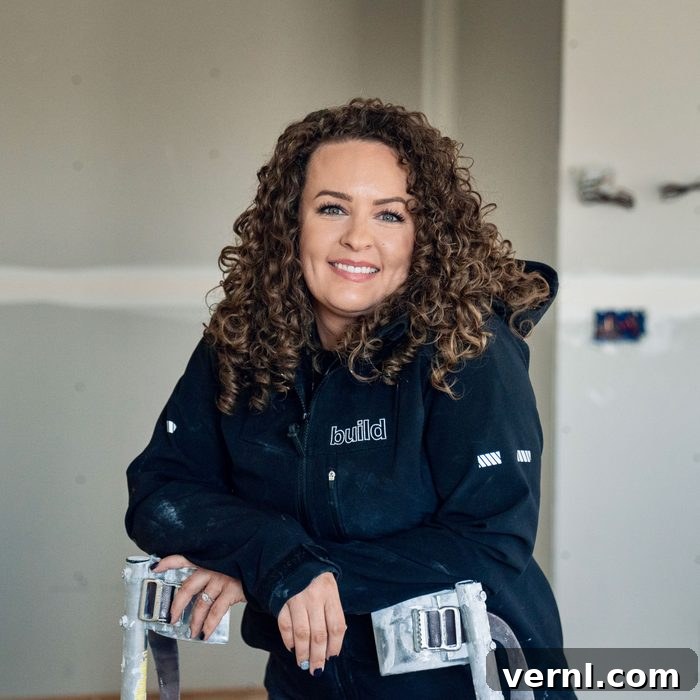
Lydia Crowder’s career trajectory into drywall finishing wasn’t a pre-determined course; rather, it was a discovery of passion born from an unexpected turn. “I graduated high school and went to college for a semester, immediately flunked out and was working a boring job,” she candidly recalls. This common experience of post-high school uncertainty often leads individuals to explore alternative paths, and for Lydia, that path serendipitously led to the trades.
Her father, a seasoned professional in the drywall finishing business, extended an offer that would change her life: a job. While not a lifelong dream, Lydia had occasionally lent a hand to her father during her younger years and found a surprising enjoyment in the work. It was this faint spark of interest, combined with a desire for meaningful employment, that prompted her to accept his offer. “I fell in love with the trade,” she states, reflecting on the profound connection she forged with the craft. This initial step, driven by practicality, blossomed into a lifelong passion, proving that sometimes the most fulfilling careers are found where we least expect them.
The early days of her career were also shaped by a supportive and inclusive environment. Working alongside her roommate and cousin for her father’s business, Lydia found herself welcomed as an equal member of the crew. This camaraderie was invaluable. Rather than being relegated to menial tasks without guidance, her colleagues freely shared their hard-earned tips and techniques. This collaborative spirit fostered a sense of belonging and empowered her to learn rapidly, solidifying her commitment to the trade. The encouragement and shared knowledge from her peers were instrumental in transforming a job into a true calling, demonstrating the power of a positive work culture in professional development.
The Foundational Pillars: Mastering Drywall from the Ground Up
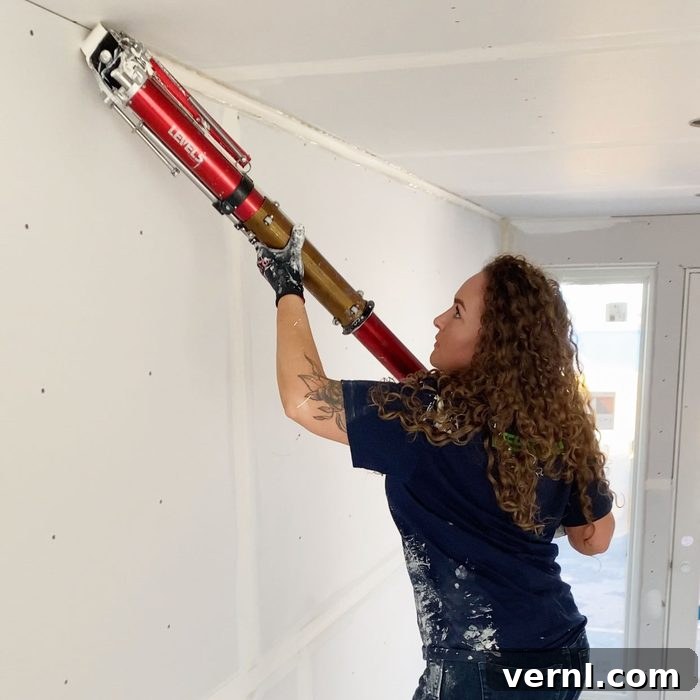
Every master craftsman will tell you that true expertise is built on a solid foundation of fundamentals. Lydia Crowder’s journey in drywall finishing began precisely there – with the essential, often overlooked, basics. “It was a lot of menial task work — spotting screws over and over, scraping and sweeping floors, taping small areas like closets and small spots,” she recounts. These initial tasks, though seemingly insignificant, are the bedrock upon which advanced skills are built. They instill discipline, attention to detail, and a deep understanding of the materials and processes involved in achieving a flawless finish.
Lydia emphasizes that this deliberate progression was crucial for her development. “I had to work my way up and really show I wanted to work in the trade.” This period wasn’t just about learning techniques; it was about proving dedication and commitment. It’s a common sentiment among aspiring tradespeople to yearn for the “bigger” and more glamorous aspects of the job — “running tools, coating large areas, and using the bigger tools.” However, Lydia stresses the absolute necessity of mastering the groundwork first. “If you really want to understand drywall finishing and how to get the best possible finish, you have to start at the bottom and slowly add the pieces.” This phased approach ensures that each new skill is properly integrated into a comprehensive understanding, preventing the pitfalls of superficial learning.
The allure of instant gratification can be strong, but in a precise trade like drywall, patience is paramount. “We all want to jump in head first, but that’s when you have failures and get frustrated because your skill level isn’t where it needs to be yet,” she explains. True proficiency comes from repetitive practice, allowing the body and mind to synchronize. “You really have to put in the time to get your hand and body movements down to be successful.” This invaluable insight highlights that mastery isn’t just theoretical; it’s deeply physical and requires muscle memory developed through diligent effort.
Now, two decades into her career, Lydia stands as a testament to this philosophy. She confidently co-owns her own successful finishing business with her husband, having transformed those early struggles into profound expertise. “I can walk onto any job and know I have the knowledge and skill set to complete any job,” she asserts. This hard-won confidence is a direct result of her commitment to learning every aspect of the trade from the ground up.
For those embarking on their own journey in the trades, Lydia offers timeless advice: never cease to be a student. She strongly encourages newcomers to “ask for help or advice” and emphasizes the importance of continuous inquiry, regardless of accumulated experience. “You never want to think you know it all,” she wisely states, adding a crucial caveat: “Especially in this trade!” The world of construction and finishing is ever-evolving, with new materials, techniques, and challenges constantly emerging, making humility and a thirst for knowledge indispensable virtues for sustained success.
Navigating the Peaks and Valleys: The Rewarding Journey of a Drywall Professional
When asked to delve deeper into the intricacies of her career, Lydia Crowder passionately articulated the profound highs and inevitable lows that define her journey in the trades. Foremost among the rewards is the immense self-confidence she has cultivated. Every day presents an opportunity for growth, a challenge to surpass yesterday’s achievements. This continuous striving for improvement has enabled her to master tasks and overcome obstacles that once seemed insurmountable, fostering an unshakeable belief in her capabilities.
“The trades give people an opportunity to build themselves up,” she profoundly states. This isn’t merely about constructing physical structures; it’s about personal construction, the architectural design of one’s own self-worth and independence. “You make it as great as you want to and have the satisfaction of knowing you built this. No one can take that away from you and it’s incredibly empowering!” This intrinsic sense of accomplishment, the tangible evidence of one’s labor, is a powerful motivator and a unique benefit of working with one’s hands.
However, Lydia is also realistic about the demands of drywall work. It is undeniably a challenging and physically taxing profession, especially for those new to the trade. The meticulous nature of finishing requires a high degree of precision, often involving repetitive movements that demand significant physical endurance and take considerable time to perfect. It’s not a job where instant proficiency is possible; rather, it’s a craft that demands patience and persistent effort.
“It will be hard, you will be sweaty, exhausted, sore, tired and want to quit,” Crowder candidly warns aspiring tradespeople. These physical and mental hurdles are part and parcel of the learning curve. Yet, she offers a beacon of hope and encouragement: “But you build up the strength over time. Give yourself some grace and before you know it, those hard tasks will be much easier.” This message underscores the importance of resilience, self-compassion, and the understanding that physical capabilities, like skills, improve with consistent application.
Despite these inherent challenges, Lydia’s love for her job shines through. She describes drywall as “a trade that keeps you on your toes and one that you can constantly be learning in.” The dynamic nature of the work, the variety of projects, and the continuous evolution of techniques ensure that stagnation is rarely an issue. Her passion is further ignited by working on projects that transcend mere functionality, embracing architectural designs that feel more like art. This fusion of utility and aesthetic appeal infuses her work with a deeper sense of purpose and creativity.
“It’s that passion that makes this trade so wonderful,” she concludes. “There’s nothing quite like coming back to a job and seeing what you’ve accomplished.” This sentiment encapsulates the profound satisfaction derived from seeing a project through, from rough framing to a smooth, flawless finish – a tangible legacy of hard work and artistic skill.
Behind the Trowel: A Glimpse into a Drywall Pro’s Workday
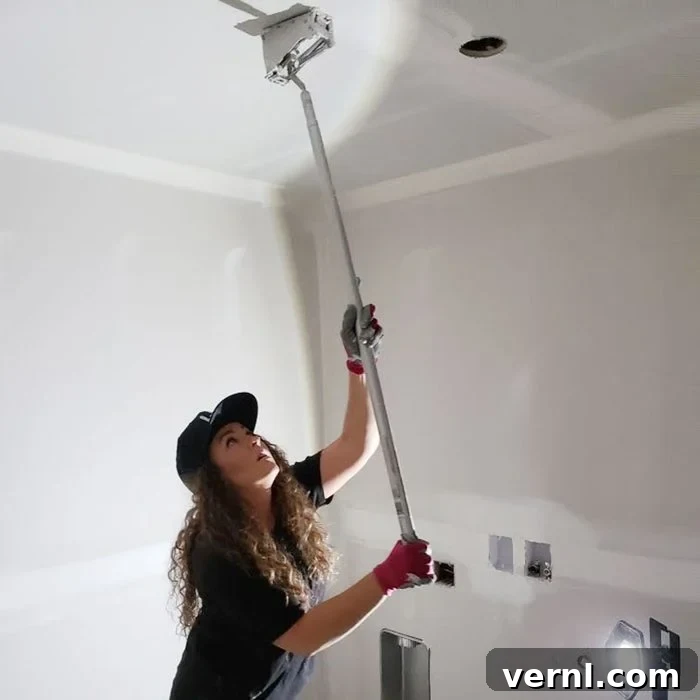
For Lydia Crowder and her team at Trinity Drywall, no two days are ever truly identical, a characteristic that she finds both engaging and challenging. The daily routine is dictated by the specific stage of each project, with different phases demanding unique approaches and skill sets. Her crew primarily specializes in new residential construction, stepping in once the initial drywall boards have been expertly hung. Their primary objective then begins: to transform raw boards into perfectly smooth, paint-ready surfaces.
A typical strategy for the Trinity Drywall crew is to aim for “one coat per day.” This methodical approach ensures quality and consistency across all projects. Consequently, the average new residential drywall finishing job typically spans four to five days, though this can vary depending on factors like weather conditions, which affect drying times, or other unforeseen complications that often arise in construction environments. This requires careful planning, efficient execution, and constant communication within the team.
When reflecting on the various aspects of her work, Lydia readily identifies her favorite and least favorite parts of the drywall finishing process. “My favorite day is our first day on the job,” she shares with enthusiasm. “That’s the day we typically apply all our drywall tape on the project.” This initial stage, often involving automatic taper tools and precise hand taping, is a dynamic and fast-paced period. It allows for a significant amount of work to be accomplished, providing an immediate sense of progress and accomplishment. “It’s a fast-paced day and you can challenge yourself with how much you can get done,” she explains, highlighting the thrill of productivity and skill application.
Conversely, her least favorite task is one that many in the trade would agree with: “Sanding days are my least favorite! It’s a very important part of the job, but it’s as much fun as it sounds.” While essential for achieving that impeccable, smooth finish, sanding is labor-intensive, dusty, and often monotonous. It demands meticulous attention to detail and endurance, confirming that even for a seasoned pro, some tasks are simply less enjoyable than others, despite their critical importance.
For individuals aspiring to enter the dynamic world of drywall finishing, Crowder offers invaluable, practical advice drawn from her two decades of experience. First and foremost, she stresses the importance of an open mind and a willingness to learn: “Be a sponge! Drywall finishing is a bit of an art, and everyone has a little different way that they finish. Every crew can have different ways and you need to be open to other methods.” This highlights that there isn’t a single, rigid “right” way to do everything; rather, it’s about understanding various techniques and adapting them to achieve the best results.
This flexibility is paramount. Lydia notes that working with individuals who are unwilling to adapt their techniques to align with the rest of the crew can be a significant challenge. Furthermore, every job site presents its own unique set of considerations, from architectural complexities to environmental factors. Therefore, “Flexibility and adaptability are key to being successful in this industry.” The ability to pivot, problem-solve, and integrate new ideas is what separates good tradespeople from truly exceptional ones.
Finally, Crowder reiterates that the learning journey in the trades is perpetual. “Don’t become so stuck in your ways that you miss out on the opportunity to learn,” she cautions. She also emphasizes humility and a team-first attitude: “Also don’t think that you’re above any task. One thing about construction is there are things that have to get done regardless of your skill level. Be a team player!” In construction, every role, no matter how seemingly small, contributes to the larger success of the project, and a collaborative spirit is indispensable for efficient and harmonious operations.
Lessons from Twenty Years: Five Pillars of Success in the Trades
Drawing from her rich tapestry of twenty years in the drywall finishing industry, Lydia “Drywall Shorty” Crowder has distilled a wealth of wisdom into five fundamental principles. These aren’t just rules for drywall, but profound life lessons applicable to any challenging endeavor, especially in the demanding world of skilled trades:
- Embrace Experimentation and Lifelong Learning: “Try new things! Never think you know everything. That’s when you stop learning.” Lydia firmly believes that intellectual curiosity is the fuel for growth. The construction industry is constantly evolving with new materials, tools, and techniques. Resting on past laurels stifles innovation and limits potential. By continuously experimenting with different approaches and remaining open to new information, tradespeople can refine their skills, increase efficiency, and stay ahead of the curve. This mindset transforms every challenge into a learning opportunity, ensuring a dynamic and fulfilling career.
- Cultivate Self-Belief and Challenge Your Limits: “Believe in yourself. Push yourself to do things that challenge you. Worst case, you try again!” The trades demand resilience and mental fortitude. There will be tasks that seem daunting, tools that feel awkward, and deadlines that loom large. Lydia’s advice is to trust in your own capacity for growth. Stepping outside your comfort zone, even if it means initially struggling, is the only way to expand your skill set and build confidence. The “worst case” scenario isn’t failure, but a chance to refine your approach and try again, stronger and wiser.
- Confront Failure as a Stepping Stone: “Don’t be afraid to fail. We all have failures, it’s how we deal with them that’s important. Learn from them and don’t let them hold you back.” Failure is an inevitable part of any learning process, particularly in a hands-on trade where precision is key. A misplaced cut, an uneven coat, or a missed detail can be disheartening. However, Lydia teaches that these moments are not endpoints but critical data points. Analyzing what went wrong, understanding the cause, and implementing corrective measures transforms setbacks into valuable lessons, preventing repetition and fostering true mastery.
- Prioritize Physical and Mental Well-being: “Take care of yourself. The trades can be really hard on you physically. Make sure you’re taking time to rest and recuperate.” This is a profoundly practical and often overlooked piece of advice. The physical demands of drywall finishing – lifting heavy sheets, repetitive motions, working in various postures – take a toll on the body. Neglecting self-care can lead to burnout, injury, and a shortened career. Lydia advocates for proactive measures: proper stretching, ergonomic techniques, balanced nutrition, adequate rest, and mental breaks. A healthy tradesperson is a productive and sustainable tradesperson.
- Forge Your Own Path, Unswayed by Others’ Judgments: “Don’t let other people’s opinions keep you down. Your work speaks for itself, so do your best. Know what matters is what you can accomplish, not others’ opinions. At the end of the day, it’s your work. Be proud of it!” In any field, and especially in male-dominated trades, individuals may face skepticism or unsolicited criticism. Lydia’s powerful message is to internalize your worth and let the quality of your craftsmanship be your loudest advocate. Focus on honing your skills, delivering exceptional results, and deriving satisfaction from your own achievements. The pride in a job well done, executed with integrity and skill, is a personal triumph that no external negativity can diminish.