For many years, the aspiration of becoming a proficient DIYer remained largely out of reach. The significant obstacles of acquiring an extensive collection of specialized tools and finding adequate, dedicated workspace seemed insurmountable. The daunting prospect of investing a substantial sum in equipment, only to potentially botch projects and then face the added expense of hiring professionals to rectify my mistakes, consistently fostered a lack of confidence in my budding skills and perpetuated a cycle of hesitation.
However, a fortunate career opportunity ultimately granted me unparalleled access to an unlimited array of tools and a sprawling workspace. This breakthrough finally allowed me to immerse myself in the gratifying, and often challenging, world of do-it-yourself projects. This personal revelation underscored a crucial insight: the right environment and readily available resources are truly transformative for any aspiring maker, hobbyist, or innovator.
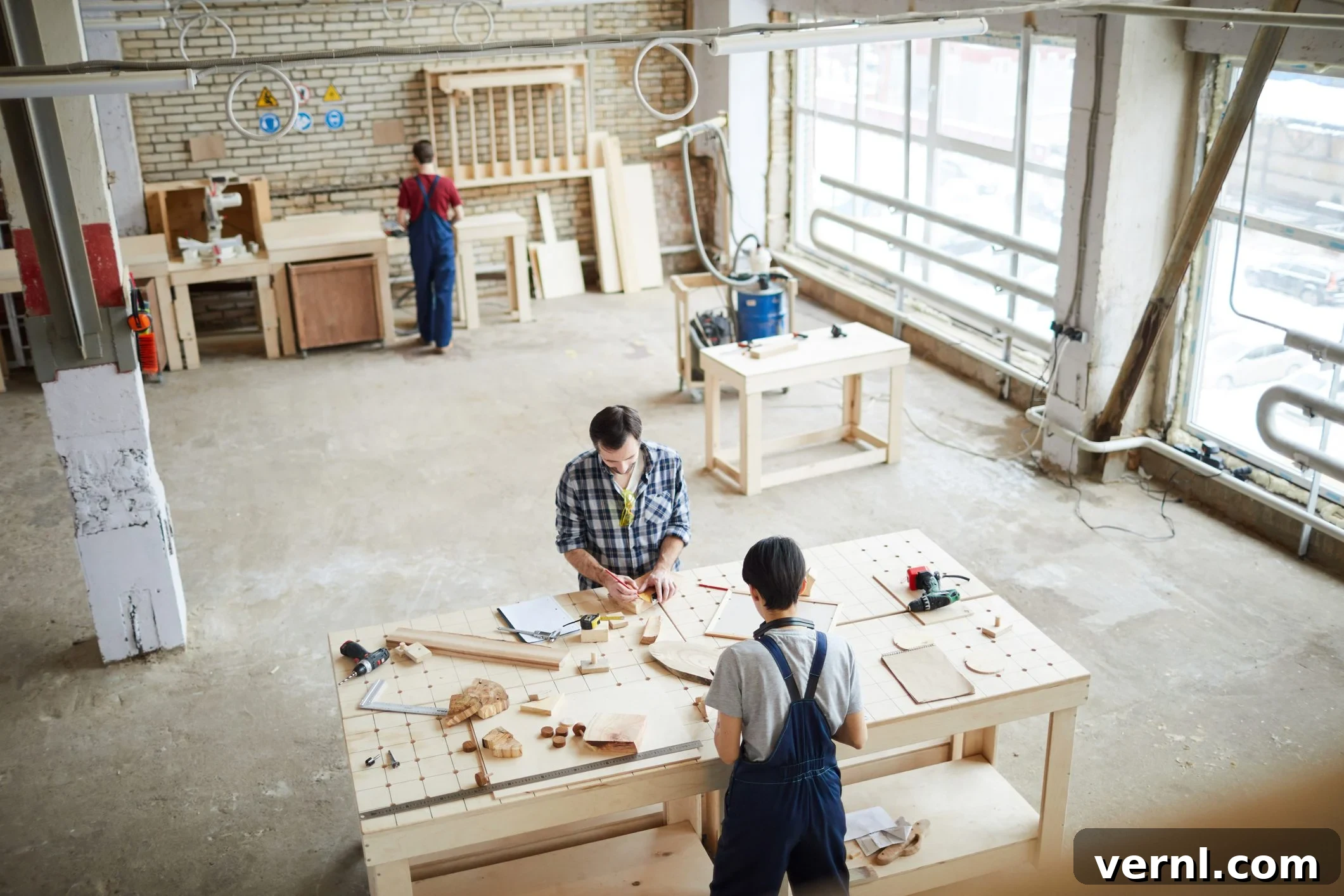
Today, aspiring DIYers, creative hobbyists, and burgeoning entrepreneurs are incredibly fortunate. The global landscape is witnessing an exhilarating surge in the establishment of shared makerspaces. These innovative hubs are rapidly becoming indispensable community resources. But what exactly is a shared makerspace? In its essence, it’s a collaborative community workshop where members pool resources, sharing not only a vast array of tools and dedicated workspace but also invaluable knowledge and expertise. Imagine wanting to build a custom dining table but lacking the specialized machinery or the necessary woodworking skills; a makerspace provides the guidance, the sophisticated equipment, and a supportive community to help you bring your vision to life, from initial concept to a beautifully completed project.
What Essential Resources and Opportunities Do Makerspaces Offer?
“Our operational model shares many similarities with a modern fitness gym, particularly in how we facilitate access to high-value equipment and flexible workspace,” explains Chris Smith, the visionary owner of Minnesota Makerspace, located in Brainerd, Minnesota. This analogy effectively highlights the core value proposition: democratizing access to professional-grade resources that would otherwise be prohibitively expensive or impractical for individuals to own.
Smith further elaborates on the significant financial benefits: “If individuals lack the physical space at home for a workshop, or the considerable investment of $30,000 to $40,000 required for a sophisticated CNC (computer numerical control) machine and a comprehensive suite of other essential workshop tools, makerspaces offer an incredibly viable alternative. For a modest monthly membership fee, they gain the ability to utilize state-of-the-art tools and equipment. It’s truly a low-cost, low-risk pathway to innovation and creation.” This model effectively removes the substantial upfront capital investment barrier, making advanced manufacturing and crafting accessible to a much broader audience.
The diversity within the makerspace movement is truly remarkable. According to Makerspaces.com, these creative sanctuaries cater to an extensive range of interests and user profiles, including casual hobbyists, dedicated students, visionary inventors, and aspiring entrepreneurs. While the fundamental concept revolves around shared tools and workspace, the specific focus and offerings of individual makerspaces can vary widely. Common areas of specialization include extensive woodworking shops, advanced metal fabrication facilities, cutting-edge 3D printing labs, precision laser cutting services, screen printing studios, electronics and robotics prototyping zones, and even dedicated sewing and textile arts areas. Ultimately, makerspaces evolve to encompass whatever creative pursuits and technological interests their members collectively share and demand, fostering a dynamic and adaptable environment for innovation.
The core principle of communal tool and workspace sharing underpins all makerspaces, regardless of their specific niche or geographic location. Chris Smith observes a significant growth trend in the United States, with makerspaces expanding at an impressive rate of approximately 60% per year. This rapid expansion signifies a growing recognition of their profound value in fostering innovation, accelerating skill development, and strengthening community engagement. Smith himself, driven by this compelling vision, secured a $50,000 loan to establish his woodworking-focused makerspace, emphasizing the critical need for accessible specialized facilities within local communities.
While the specific equipment and programming may differ, all well-established makerspaces typically offer a foundational set of services and benefits designed to empower their members:
Flexible Membership Options
Makerspaces understand that members have diverse needs, varying project timelines, and different levels of commitment. Consequently, they offer a range of flexible membership plans, typically including daily passes for short-term projects, monthly subscriptions for regular users, and annual commitments for dedicated makers. This flexibility allows individuals to choose the option that best fits their project schedules and budget. Prior to gaining full access to specialized equipment, members are usually required to complete an orientation session and undergo specific training for various tools. This essential step ensures not only the safety of all members but also promotes responsible use of the shared resources and helps build confidence in operating complex machinery efficiently.
Extensive Tool and Equipment Inventory
One of the primary draws and most significant advantages of a makerspace is access to professional-grade tools and machinery that would be impractical or financially impossible for most individuals to own personally. At Minnesota Makerspace, for instance, members have at their disposal an impressive array of specialized equipment, facilitating a vast range of projects from intricate crafts to large-scale fabrications:
- Drum Sander: Essential for achieving perfectly smooth, uniform surfaces on large wooden pieces, ensuring a high-quality finish.
- Advanced 3D Printers: Enabling rapid prototyping, the creation of intricate custom components, and artistic models directly from digital designs.
- CNC Machine (Computer Numerical Control): A highly precise, automated tool for cutting, carving, and machining materials with unparalleled accuracy, invaluable for complex and repeatable designs.
- Drill Press: Provides stable and accurate drilling for precise, consistent holes, far superior to handheld drills for many applications, especially in woodworking and metalworking.
- Table Saw: A cornerstone of any woodworking shop, crucial for making accurate rip cuts and crosscuts on sheet goods and solid lumber.
- Comprehensive Basic Hand Tools: A full complement of chisels, planes, measuring devices, clamps, wrenches, and other essential tools for detailed work, assembly, and fine adjustments.
- Miter Saw: Perfect for precise angular cuts, essential for framing, trim work, and creating clean joints.
- Panel Saw: Designed for safely and accurately cutting large sheets of material like plywood or MDF, which are often too cumbersome for a standard table saw.
- Jointers and Planers: Used in woodworking to flatten and square lumber, preparing it for high-quality joinery and ensuring precise dimensions for projects.
- Scroll Saws: Ideal for intricate curvilinear cuts and detailed design work in thinner materials, perfect for decorative pieces and custom inlays.
- Various Sanders: Including orbital, belt, disc, and detail sanders, ensuring a perfect finish for every project surface, from rough stock removal to fine polishing.
- Wood Lathe: For turning wood to create round or cylindrical forms, such as bowls, spindles, custom furniture legs, and other unique decorative items.
This extensive list is merely a snapshot; many makerspaces also feature highly specialized equipment such as laser cutters for engraving and cutting various materials, plasma cutters for metal fabrication, welding equipment for strong metal bonds, textile machinery for sewing and fashion design, electronics workbenches with soldering stations, and much more, adapting their offerings to the diverse needs and interests of their local communities.
Invaluable Know-How, Skill Development, and Community Support
Beyond the impressive arsenal of tools, one of the most significant assets of makerspaces like Minnesota Makerspace is the rich ecosystem of learning and collaboration they cultivate. They proactively offer a multi-faceted approach to education and support:
- Complimentary Educational Resources: Often available through online training videos, comprehensive safety guides, and detailed manuals on their websites, providing foundational knowledge and procedural protocols for safe and effective use of various machines.
- Discounted Materials and Specialized Classes: Members frequently benefit from reduced rates on raw materials sourced through makerspace partnerships, as well as access to expert-led classes and workshops. These programs cover a wide range of techniques, from advanced woodworking and metalworking to 3D design, electronics, coding, and textile arts, allowing members to continually expand their skill sets.
- Peer-to-Peer Knowledge Sharing and Mentorship: The communal nature of makerspaces fosters an environment where members readily share their expertise, offer practical advice, troubleshoot problems, and collaborate on challenging projects. This informal mentorship network is an invaluable resource for beginners and seasoned makers alike, accelerating learning and fostering innovative solutions.
- Opportunities for Community Engagement: Many makerspaces actively participate in or initiate community-based projects, allowing members to apply their skills for the greater good, build impressive portfolios, and connect with local initiatives. This could involve creating public art, building tools for local non-profits, or contributing to educational programs.
- Entrepreneurial Launchpad: As Chris Smith eloquently articulates, “We provide a space where individuals can arrive with a mere idea and depart with a fully realized, completed project.” He adds, “It can even serve as a pivotal stepping stone for aspiring entrepreneurs to test prototypes, refine products, and launch their own businesses without the prohibitive overheads of setting up a private workshop or investing heavily in equipment.” Makerspaces reduce the initial financial burden for small businesses and innovators significantly.
The truly distinguishing feature of makerspaces, Smith emphasizes, is their vibrant communal spirit. “We actively cultivate a friendly, welcoming, and open atmosphere—a place where the adage ‘there are no bad questions’ truly applies,” he states. “Our overarching mission is to foster an environment where people can work together, learn new skills, collaborate on exciting ventures, and generously share their knowledge and experiences.” This emphasis on collective growth, mutual support, and open communication transforms a simple workshop into a dynamic hub of creativity and innovation, benefiting every member.
Understanding Makerspace Membership Fees and Value Proposition
The cost of joining a makerspace can vary considerably, influenced by several factors such as geographical location (urban vs. rural), the comprehensiveness of the facilities, the range of specialized equipment offered, and the extent of included classes or mentorship programs. Typically, membership fees are structured to provide flexibility, catering to different levels of engagement and project requirements.
Chris Smith suggests that a general ballpark figure for a typical monthly membership usually falls within the range of $25 to $100. At Minnesota Makerspace, his most sought-after plan is priced at $100 per month, reflecting the extensive access, diverse tools, and supportive resources provided. For those with shorter-term needs or who wish to test the waters before committing, he also offers a convenient daily fee of $25 and a two-day option for $50. This tiered pricing model ensures that makerspaces remain accessible to a wide demographic, from casual weekend hobbyists to dedicated project creators and part-time entrepreneurs.
When considering a makerspace membership, it’s crucial to weigh the monthly fee against the immense value gained. For a mere fraction of the cost of purchasing and maintaining even a single specialized tool like a CNC machine or a high-end laser cutter, members gain access to an entire workshop filled with advanced machinery, comprehensive safety equipment, and a supportive community of fellow makers. This represents an incredible return on investment for anyone serious about making, prototyping, learning new trades, or pursuing creative passions without the prohibitive upfront costs and ongoing maintenance burdens of a private workshop.
How to Discover a Makerspace Near You
The burgeoning makerspace movement means that finding a facility within your geographical reach is becoming increasingly straightforward. A fantastic starting point for your search is the Makerspace Directory, an invaluable global resource that catalogues locations across the world. This directory is continuously updated and provides a broad overview of available options, allowing you to filter by region, specialties, or specific equipment.
Beyond specialized directories, Chris Smith advises that the most effective and often quickest method for locating a nearby makerspace is a simple online search. By entering relevant terms like “makerspace near me,” “community workshop [your city],” “shared tools [your region],” or “DIY workshop [your state],” you’re likely to uncover several options in your vicinity. Following this practical advice, I personally discovered three distinct makerspaces within the vibrant Minneapolis/St. Paul metropolitan area, each offering unique features and membership structures, illustrating the diversity you might encounter:
- Twin Cities Makers: This prominent makerspace distinguishes itself by offering members 24/7 access to its comprehensive workshop, a significant advantage for those with irregular schedules or late-night creative impulses. They also provide essential foundational classes such as laser cutter basics and CNC orientation, crucial for safe and effective equipment utilization. A recurring monthly membership is currently priced at $65, though they are in the process of implementing a new membership system, indicating potential updates to their offerings and structure.
- Mpls Make: Boasting an expansive 8,500-square-foot workshop with an impressive 20-foot ceiling, this facility is fully equipped with a full-scale dust collection system, ensuring a clean and safe working environment. Mpls Make stands out with its specialized sawmill and a dedicated metal shop, catering to a broad spectrum of fabrication needs. Their curriculum includes engaging classes in welding, crafting unique cutting boards, designing custom coffee tables, and even traditional Scandinavian knife making. Membership here starts at $230 per month, reflecting the extensive facilities, specialized equipment, and potentially a higher level of included resources.
- White Bear Makerspace: This community hub not only offers a variety of engaging classes but also provides a unique opportunity for members to showcase and sell their creations at local craft fairs and markets. Furthermore, members can take on commissioned projects and even produce specialized wedding products, opening clear avenues for entrepreneurial endeavors and income generation. Membership begins at $387 for a three-month period, with an additional flexible five-day option available for $125, ideal for focused project sprints or intensive workshops.
A comparison of these Minneapolis-St. Paul membership prices with those in other regions across the country reveals a diverse pricing landscape, highlighting how local market conditions, facility offerings, and community models influence costs:
- 757 Makerspace in Norfolk, Virginia, offers membership at $175 per month, providing access to a wide range of tools and a vibrant community in the Mid-Atlantic.
- Area 515 Des Moines (Iowa) Makerspace provides a more budget-friendly option with a $40 monthly membership fee, demonstrating accessibility in a different regional market.
- Eugene (Oregon) Makerspace offers one of the most accessible entry points, with memberships starting at just $35 per month, making it highly attractive for students and those on tighter budgets.
These diverse examples illustrate that while prices vary, the core value proposition – unparalleled access to professional tools, invaluable knowledge, and a supportive community – remains consistently high across the board. Aspiring makers should research local options thoroughly, considering their specific needs, budget, the types of projects they envision undertaking, and the overall community culture of each makerspace.
The Transformative Power of Makerspaces: Beyond the Tools
Makerspaces are far more than just shared workshops; they are dynamic catalysts for personal growth, robust community development, and economic innovation. They address critical needs for individuals and society alike, fostering a new era of creation and collaboration:
- Fostering Creativity and Innovation: By significantly lowering the barrier to entry for complex tools and advanced techniques, makerspaces empower individuals to experiment freely, prototype rapidly, and bring novel ideas to fruition. This environment actively fuels a culture of innovation, allowing members to push boundaries without fear of excessive financial risk.
- Skill Development and Lifelong Learning: They provide invaluable opportunities for comprehensive skill acquisition, ranging from traditional crafts like woodworking, metalworking, and sewing to cutting-edge technologies like robotics, 3D printing, laser cutting, and electronics. This continuous learning environment is crucial for personal enrichment and career advancement in today’s rapidly evolving technological landscape.
- Building Stronger Communities: Makerspaces naturally foster unparalleled collaboration, peer-to-peer mentorship, and meaningful social interaction. They become vibrant hubs where people from diverse backgrounds, skill levels, and professions connect over shared interests, leading to stronger community bonds and collaborative ventures.
- Environmental Responsibility and Sustainability: By promoting shared access to tools and equipment, makerspaces significantly reduce the need for individual ownership of expensive machinery. This model of resource sharing inherently decreases consumption, minimizes waste, and encourages a more sustainable approach to making and crafting, aligning with broader ecological goals.
- Empowering Entrepreneurs and Small Businesses: For startups, independent designers, and small businesses, makerspaces offer an affordable and flexible alternative to costly equipment purchases and long-term facility leases. This critical support enables entrepreneurs to develop prototypes, produce small batches of products, and validate business ideas with significantly reduced overheads, accelerating their path to market.
- Educational Enhancement and Workforce Development: Many makerspaces actively partner with local schools, colleges, and universities, providing students with invaluable hands-on learning experiences that complement theoretical knowledge. This bridges the gap between academia and practical application, helping to develop a skilled workforce ready for the challenges of modern industries.
In conclusion, whether you are a hesitant DIYer finally ready to embark on a project, a seasoned crafter looking for new challenges and advanced tools, a student eager to learn practical skills, or an entrepreneur ready to innovate and launch a new venture, makerspaces offer an unparalleled opportunity. They represent a fundamental shift in how we access resources, develop new skills, and connect meaningfully with our communities. Embrace the maker movement and discover the immense potential and vibrant community waiting for you within these shared creative havens. Your next great project, groundbreaking invention, or fulfilling skill acquisition could be just a membership away.