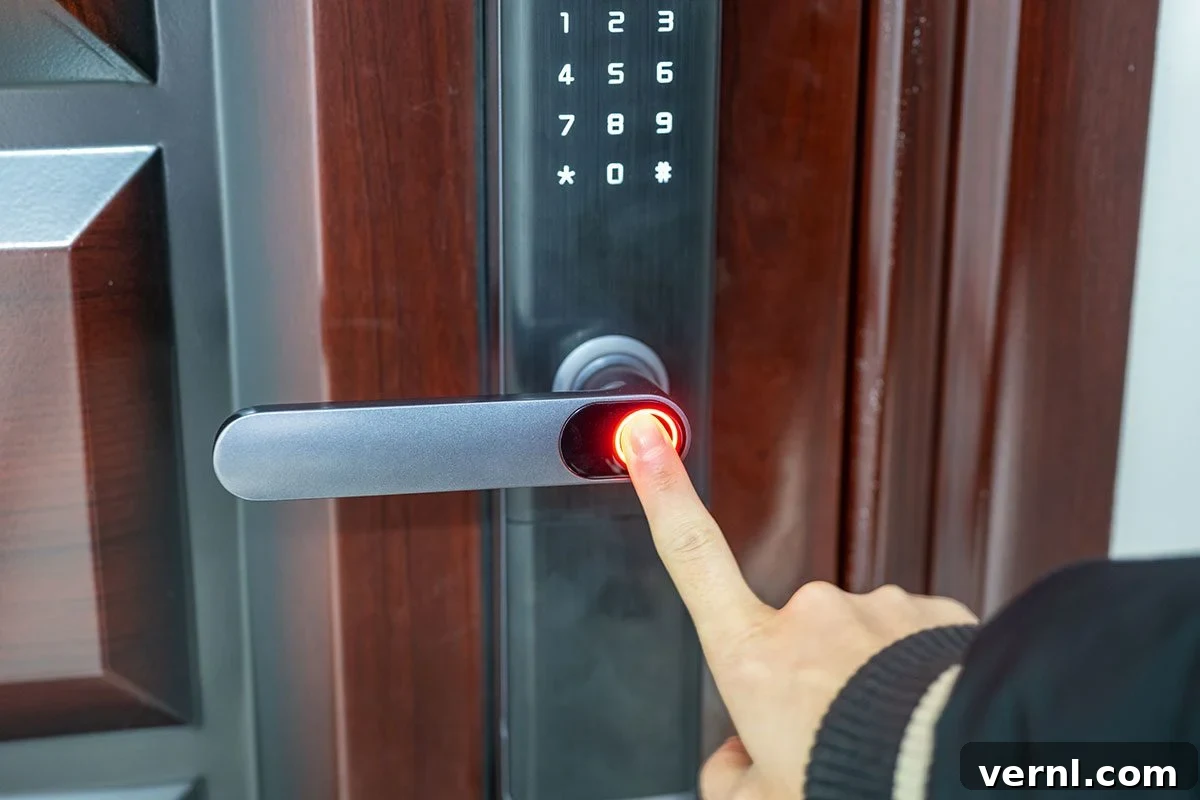
Troubleshooting a Broken Smart Lock: Your Essential Guide to Re-entry
In our increasingly connected world, smart technology has become an indispensable part of daily life. From smart homes to smartphones, the goal is always enhanced convenience, security, and efficiency. Smart locks, in particular, offer unparalleled peace of mind, allowing homeowners to monitor and control their entryways remotely, grant temporary access, and eliminate the need for physical keys. However, even the most advanced technology can encounter glitches. When your smart lock malfunctions, it can transform a seamless experience into a frustrating lockout situation. Don’t panic! This comprehensive guide provides expert tips and step-by-step troubleshooting solutions to get you back inside your home without resorting to drastic measures or expensive replacements.
Understanding Smart Locks: Beyond the Basics
At their core, smart locks represent a significant evolution of traditional door hardware. As Tiffany Mayo, director of hardware product management at Yale and August Home, explains, “At their core, they use a motorized mechanism to lock and unlock the door, activated by a command from your phone, a keypad or a biometric sensor.” This means that while they offer cutting-edge features, smart locks are fundamentally still mechanical locks that can be opened even if their electronic components face issues.
Modern smart locks come in various forms, each offering unique connectivity options and access methods. Some utilize Bluetooth for local control, allowing you to unlock your door as you approach, while others integrate with your home’s Wi-Fi network for remote access from anywhere in the world. Many also feature keypads for code entry, biometric scanners for fingerprint recognition, or even voice control through virtual assistants. Understanding these underlying mechanisms is crucial for effective troubleshooting when things go awry.
The Durability and Security of Smart Locks
A common concern for prospective smart lock owners is their durability compared to traditional locks. The good news is that smart locks are designed to be robust. “Most smart locks are built on solid mechanical foundations and meet all tough security standards,” Mayo affirms. However, just like any product, durability can vary significantly across brands and price points, making informed selection vital.
To ensure you’re investing in a durable and secure smart lock, it’s essential to look for products evaluated by industry standards organizations. Tim Eskew, director of residential electronic products at Schlage, highlights the importance of the Builders Hardware Manufacturing Association (BHMA). “The Builders Hardware Manufacturing Association (BHMA) sets national standards regarding the security level, durability and finish quality of door hardware products,” Eskew explains. Locks are graded on a comprehensive good (C), better (B), best (A) system across three key categories:
- Security: Measures the lock’s resistance to forced entry, picking, and drilling.
- Durability: Assesses the lock’s ability to maintain smooth operation over an extended period, simulating a lifetime of use and accounting for environmental factors like seasonal door changes due to humidity or settling. Eskew advises, “Look for an ‘A’ rating on durability” to ensure long-term reliability.
- Finish Quality: Evaluates the lock’s aesthetic resilience, testing its ability to withstand elements such as salt, ultraviolet rays, humidity, and everyday scratches. An “A” rating in this category indicates superior resistance to wear and tear, crucial for maintaining the lock’s appearance and integrity over time.
For the ultimate peace of mind, a lock with an AAA rating across all three categories signifies top-tier performance in security, durability, and finish quality. Investing in a high-rated smart lock not only enhances your home’s security but also reduces the likelihood of encountering common malfunctions, ensuring a smoother, more reliable user experience.
My Smart Lock Is Broken: How Do I Get In?
Finding yourself locked out due to a malfunctioning smart lock can be incredibly frustrating, whether you’re juggling groceries or dealing with impatient Airbnb guests. The good news, as Eskew reassures us, is that “Homeowners don’t need to worry about getting locked out.” Most smart locks are designed with multiple layers of access and fail-safes. Before you consider drastic measures, try these expert-backed troubleshooting steps. One of them is bound to work!
1. Utilize the Keypad Entry
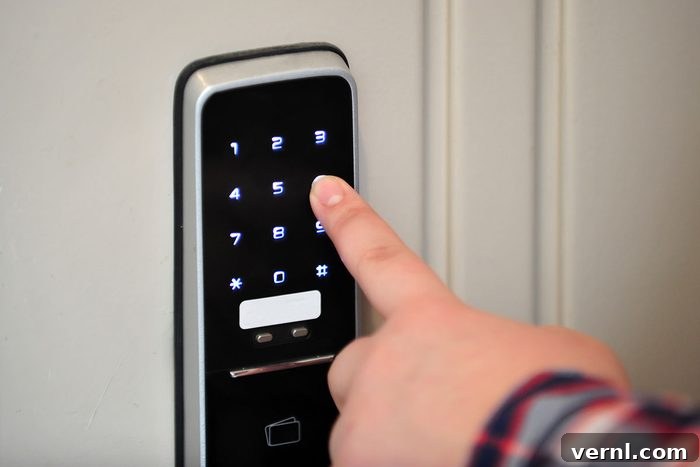
Even if your smart lock seems unresponsive to app commands or other wireless signals, a direct keypad entry is often the simplest and most reliable solution. Provided the lock still has battery power, “If a smart lock has a touchscreen or keypad, the homeowner can enter their access code to unlock the door,” Eskew states. Ensure you’re entering the correct code and that the keypad isn’t physically damaged or frozen. If the keypad lights up but doesn’t respond to touch, try pressing firmly or wiping the surface clean.
2. Replace the Batteries
This is by far the most common cause of smart lock malfunctions. Unlike traditional locks, smart locks rely solely on battery power for their electronic functions. If your smart lock is dead, sluggish, or not responding to your app, voice commands, or fingerprint, the first and most critical step is to replace the batteries. Smart locks typically use AA or AAA batteries, and their lifespan can range from six months to a year, depending on usage frequency and environmental conditions. Once fresh batteries are installed, most smart locks will power back up without requiring any reset of codes or connectivity settings, seamlessly restoring functionality.
Experts emphasize that proactive battery management is key. “If you live in an area with frequent electrical storms or extreme weather and often experience power outages, I highly recommend checking your lock’s battery level often,” Eskew advises. Many smart lock apps provide battery level indicators, and some locks feature visual or auditory alerts on the device itself. Aim to change the batteries “when the charge gets down to 15% to 20%, so you’ll have peace of mind when you need it most.” Cold weather can also significantly impact battery performance, so consider more frequent checks during winter months.
3. Toggle Bluetooth Connectivity
If your smart lock primarily connects to your smartphone via Bluetooth, a simple toggle of your phone’s Bluetooth setting can often resolve connectivity issues. Much like cycling airplane mode can help boost a cell phone signal, turning Bluetooth off and then on again can refresh the connection between your phone and the lock. Ensure your phone is within close proximity to the lock, as Bluetooth has a limited range. Mayo notes that “Bluetooth is great for local control with minimal battery drain,” making it an efficient choice for daily interactions.
4. Reset Your Wi-Fi Router
For smart locks that rely on Wi-Fi for remote access and smart home integration, connectivity problems can often stem from your home network. If you’re locked out and suspect a Wi-Fi issue, try resetting your internet router. This simple action can resolve various network glitches, including IP address conflicts or temporary network outages that prevent your lock from communicating with its server or your app. After resetting the router, wait a few minutes for it to fully restart before attempting to connect to your smart lock again. Also, ensure your lock is within an optimal range of your Wi-Fi signal.
5. Reinstall the Smart Lock App
Sometimes, the problem isn’t with the lock or your network, but with the controlling app on your smartphone. Software glitches, corrupted caches, or outdated app versions can all lead to unresponsiveness. If you’re pressing buttons on your phone without any reaction from the lock, try deleting the smart lock app entirely and then reinstalling it from your device’s app store. Before doing so, make sure you remember your login credentials or have access to your email for password resets. A fresh installation can often clear up underlying software conflicts and restore proper communication.
6. Use a 9-Volt Battery for Emergency Power
What if your keypad is completely dead, even after trying to replace the internal batteries? Many smart locks, particularly those with a keypad, include an ingenious emergency power option. “If the batteries die, you can use a 9 V battery for temporary power,” Mayo reveals. This is a standard 9-volt battery, commonly found in devices like smoke alarms. Look for two small, round, or rectangular metallic contacts on the front or bottom of your smart lock’s exterior housing. Hold the terminals of the 9-volt battery firmly against these emergency contacts. This will temporarily supply enough power to activate the keypad, allowing you to enter your access code and unlock the door. It’s a lifesaver when all else fails!
7. Restart Your Smartphone
Don’t underestimate the power of a simple phone restart. Often, the issue isn’t with the smart lock itself but with your controlling device. Your smartphone might be experiencing a temporary software glitch, memory overload, or a dropped connection that a quick power cycle can resolve. Turning your phone off and then on again can refresh its operating system, re-establish wireless connections, and return settings to a previous working state. Of course, as Mayo reminds us, “if a phone is dead or there is no connectivity, you can still use your code on the keypad to unlock,” highlighting the importance of multiple access methods.
8. Reset the Smart Lock
If the lock itself isn’t physically damaged and none of the above steps have worked, a full reset of the smart lock might be necessary. “If the lock itself isn’t damaged, users can also reset it and update the codes, and regain control through the app,” Mayo advises. There are usually two types of resets: a soft reset (often performed through the app or by removing and reinserting batteries) and a hard reset (a factory reset that typically involves a physical button on the lock and specific steps outlined in the manufacturer’s manual). A hard reset will erase all custom settings, including user codes and pairings, reverting the lock to its default factory state. This should be a last resort and, if an app-based reset isn’t possible, Mayo recommends reaching out to the company directly for detailed troubleshooting guidance.
9. Revert to a Traditional Key
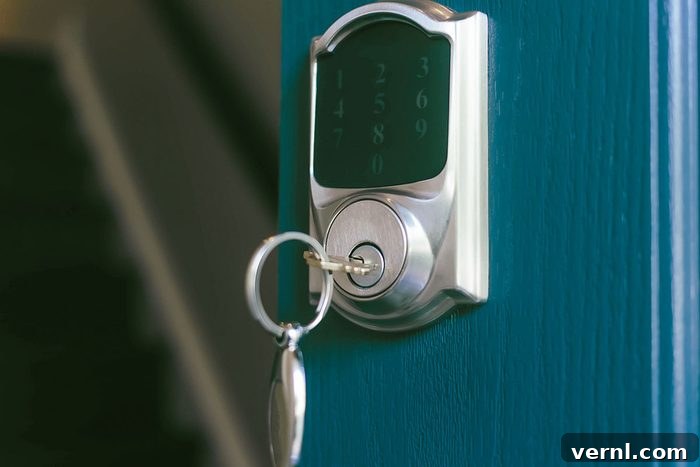
In many cases, the most straightforward solution is often the most overlooked. “Many smart locks also include a traditional keyhole as another entry option,” Mayo confirms. This mechanical override is the ultimate failsafe. When all electronic methods fail, a physical key provides guaranteed access. This highlights the importance of always keeping a spare traditional key in a secure, accessible location outside your home (e.g., with a trusted neighbor, in a hidden key box). Once you’re inside, you can then focus on diagnosing and repairing your smart lock without the urgency of being locked out.
Preventative Maintenance for Smart Locks
To minimize the chances of your smart lock breaking down, proactive maintenance is key:
- Regular Battery Checks: As discussed, this is paramount. Monitor battery levels via the app or on the lock itself and replace batteries proactively.
- Firmware Updates: Keep your smart lock’s firmware updated. Manufacturers frequently release updates to improve performance, fix bugs, and enhance security.
- Keep it Clean: Periodically wipe down keypads and biometric sensors to ensure clear operation. Avoid harsh chemicals that could damage the finish or electronics.
- Check Door Alignment: Ensure your door and strike plate are properly aligned. A misaligned door can put undue stress on the lock’s motor, leading to premature wear.
- Lubrication (for mechanical parts): If your lock has mechanical components, a light application of a graphite-based lubricant (avoid oil-based sprays) can ensure smooth operation, especially in extreme temperatures.
When to Call a Professional Locksmith
While most issues can be resolved with the steps above, there are times when professional help is needed:
- Physical Damage: If the lock is physically broken, cracked, or has visible internal damage.
- Persistent Mechanical Failure: If the deadbolt mechanism is jammed or won’t retract even with manual key use.
- Security Concerns: If you suspect the lock’s security has been compromised or it’s acting erratically even after a factory reset.
- Installation Issues: If the lock was recently installed and never worked correctly.
A professional locksmith can diagnose complex mechanical or electrical issues and provide appropriate repairs or replacements while maintaining the security of your home.
FAQ: Smart Lock Durability and Protection
How do you protect a smart lock in extreme weather?
High-quality smart locks are engineered to endure various environmental conditions. Locks with a high “A” rating for durability and finish quality from BHMA have been rigorously tested to withstand exposure to salt spray, UV radiation, humidity, and extreme temperatures. While the exterior components are built tough, the internal electronics, motor, and batteries, located on the indoor side of the lock, are more vulnerable. “The indoor part of the lock, which contains the electronics, motor and batteries, must be protected inside of the home,” Eskew advises. This means avoiding spills, direct moisture, or aggressive cleaners on the interior unit. For best results, always follow the manufacturer’s specific installation guidelines regarding safe temperature ranges and exposure limits.
How long do smart lock batteries typically last?
The average battery life for a smart lock is generally between six months to one year. This can vary based on factors such as the type of batteries used, frequency of use, the connectivity method (Wi-Fi drains more battery than Bluetooth), and ambient temperature. Monitoring battery life through the accompanying smartphone app and proactively replacing them when they reach 15-20% charge is highly recommended to avoid unexpected lockouts.
Are smart locks susceptible to hacking?
While no technology is entirely immune to threats, reputable smart lock manufacturers prioritize security. They employ strong encryption protocols, multi-factor authentication, and regular firmware updates to protect against unauthorized access. Choosing a well-known brand, using strong, unique passwords, and keeping your Wi-Fi network secure significantly reduces the risk of hacking. Many smart locks also retain a mechanical key override, offering a secure fallback even if electronic systems are compromised.
About the Experts
- Tiffany Mayo is the director of hardware product management at Yale and August Home. With more than 15 years of experience in product management, Mayo spearheaded the launch of the Yale Assure Lock 2 platform, working with cross-functional teams of engineers and others to drive critical product enhancements ahead of release.
- Tim Eskew is the director of residential electronic products at Schlage, where he is an expert in embedded electronics and low-power wireless technologies. A graduate of Purdue University with a degree in electrical technology, Eskew plays a critical role in Schlage product design and launch.
Sources:
- Tim Eskew, director of residential electronic products at Schlage; email interview, May 9, 2025
- Tiffany Mayo, director of hardware product management at Yale and August Home; email interview, May 9, 2025
- Schlage: “FAQs”
- Secure Home: “Choose Your Ratings Combination”
- Yale: “Smart Door Locks”