Raking fall leaves is an annual autumn ritual for many homeowners, often perceived as a daunting and incredibly time-consuming chore. The vibrant hues of changing foliage eventually give way to a blanket of fallen leaves that, while picturesque, quickly become a demanding task to manage. Even investing in the best leaf rakes on the market often proves to be only a partial solution, as traditional rakes can only gather a limited quantity of leaves at once. Worse yet, their tines frequently skewer leaves, slowing down the process and adding to the frustration.
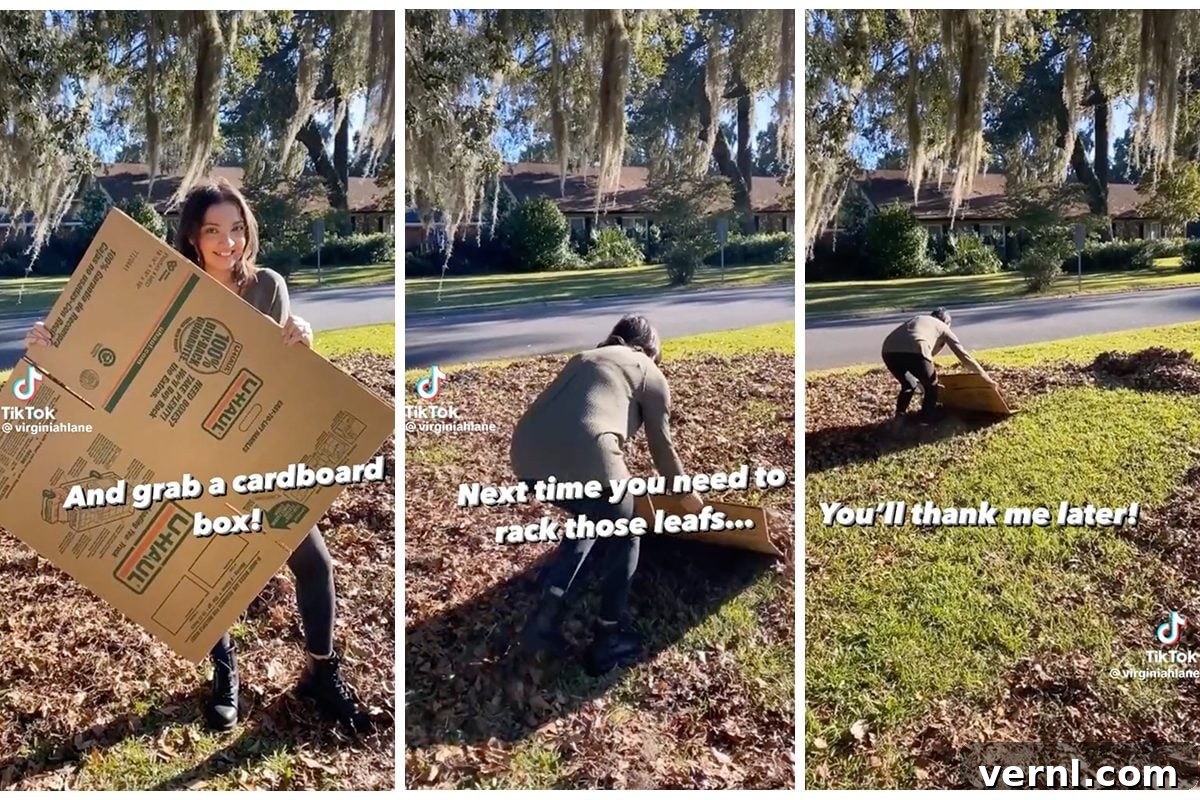
This autumn, the internet has buzzed with an unconventional, yet surprisingly effective, solution presented by TikToker Virginia H. Lane (@virginiahlane). Her ingenious method involves an everyday item that most households readily have on hand: a cardboard box. Seriously, a simple cardboard box could revolutionize your approach to leaf removal. This article delves into how this viral hack works, evaluates its real-world effectiveness, and explores other practical alternatives for efficient and sustainable leaf management.
The Seasonal Challenge of Fall Leaves: More Than Just a Chore
As summer fades into autumn, the landscape transforms, adorning trees with a breathtaking palette of reds, oranges, and golds. However, this beauty comes with a responsibility: managing the inevitable cascade of fallen leaves. For many homeowners, this translates into countless hours spent in the yard, raking, bagging, and hauling away what often feels like an endless supply of foliage. The sheer volume of leaves can be overwhelming, impacting not only the aesthetic appeal of a lawn but also its health if left untended. A thick layer of leaves can smother grass, preventing sunlight and air from reaching the turf, potentially leading to fungal diseases and weakened lawns over winter.
Beyond the impact on your lawn, the physical toll of traditional raking is significant. Repetitive bending, pulling, and lifting can strain muscles, leading to back pain, shoulder aches, and general exhaustion. This annual chore often feels less like a pleasant outdoor activity and more like a grueling workout, prompting many to seek out quicker, less physically demanding solutions. It’s this universal struggle that makes innovative approaches, like Lane’s cardboard box hack, so appealing to homeowners looking to reclaim their weekends and reduce the strain of gathering fallen leaves.
Unveiling the Viral Cardboard Box Leaf Raking Hack
The premise of Virginia H. Lane’s TikTok hack is disarmingly simple, yet its potential for efficiency has garnered widespread attention. In her viral video, Lane demonstrates how to repurpose a common cardboard box into an effective leaf-gathering tool. The core idea capitalizes on the wide, flat surface of the cardboard, offering a broad sweep that contrasts sharply with the individual tines of a traditional rake.
Step-by-Step Guide to Using a Cardboard Box for Leaf Removal
Implementing this hack is straightforward and requires minimal preparation. Here’s how you can replicate Lane’s method:
1. **Select the Right Box:** Opt for a medium to large-sized cardboard box. The larger the box, the wider your sweep, but ensure it’s manageable for you to handle. Sturdier cardboard is preferable, especially if you anticipate heavier leaf piles or slightly damp conditions.
2. **Prepare the Box:** For ease of use, you might want to remove or fold back any top flaps that could get in your way. The key is to create a clean, straight edge that can effectively scoop and push leaves.
3. **The 45-Degree Angle Technique:** Hold one edge of the cardboard box firmly, positioning it at approximately a 45-degree angle to the ground. This angle is crucial as it allows the box to glide over the lawn while simultaneously pushing and collecting leaves without digging into the turf.
4. **Execute the Sweeps:** With the box held at the correct angle, run it along your lawn in deliberate, broad sweeps. The wide edge of the cardboard acts like a giant snow shovel or dustpan, scooping up significant quantities of leaves in each pass.
5. **Collect and Dispose:** Once you’ve accumulated a pile of leaves on top of or in front of your cardboard, simply lift or slide them into a leaf bag, compost pile, or designated collection area. Repeat the process until your lawn is clear.
This method significantly reduces the number of passes required compared to a standard rake, potentially cutting down your total yard work time.
Why a Cardboard Box? The Science Behind Its Simplicity
The effectiveness of the cardboard box hack stems from several practical advantages:
* **Superior Surface Area:** Unlike rake tines that often pierce and drag leaves, the broad, flat edge of a cardboard box provides a much larger surface area to push and gather leaves. This means fewer leaves escape, and larger volumes are moved with each sweep.
* **Reduced Snagging:** Rake tines can easily get caught on small sticks, uneven turf, or even embedded roots, interrupting your flow. A smooth cardboard edge is less prone to snagging, allowing for a more continuous and fluid motion.
* **Cost-Effectiveness and Accessibility:** Cardboard boxes are incredibly cheap, often free, and widely available. This makes the hack an excellent budget-friendly alternative to specialized leaf-gathering tools.
* **Eco-Friendly Repurposing:** Using a cardboard box for leaf removal gives it a second life before recycling, aligning with sustainable living practices.
@virginiahlane #momhack #momhacks #momlife #momshelpingmoms #beachvacation #howto #lifehack #lifehacks #iwastodayyearsold #iwastodayyearsoldwhenifoundthisout #gardeningtips #yardwork #gardeninghacks #lawncare #lawnmaintenance #landscaping #landscapingdesign #landscapingideas #momsoftiktok #fyp #foryoupage ♬ Pretty Boy Swag – Soulja Boy
Evaluating the Cardboard Box Hack: A Deep Dive into Effectiveness and Concerns
So, does this viral hack truly live up to the hype? The short answer is yes, in certain contexts. Lane confidently promises viewers that the hack will help them “clear [their] yard in seconds,” and the visual evidence from her video certainly supports this claim, showing remarkably quick leaf collection.
The Immediate Appeal and Apparent Success
The cardboard box hack appears to be incredibly efficient, especially for light to moderate leaf coverage on relatively flat, dry lawns. Its wide sweep allows for rapid clearing of surface leaves, making it an attractive option for a quick tidy-up. For those seeking an immediate solution without investing in specialized equipment, the instant gratification of seeing large quantities of leaves moved swiftly can be very satisfying. It’s a testament to simple ingenuity, offering a fresh perspective on a tiresome chore.
Potential Drawbacks and Ergonomic Considerations
Despite its initial appeal, many viewers and gardening enthusiasts have raised valid concerns regarding the long-term practicality and physical impact of using a cardboard box for raking your yard.
* **Back Strain and Physical Discomfort:** A common sentiment echoed in the comments is the potential for significant back pain. One commenter poignantly noted, “[m]y back hurt just watching” the video. The technique, while effective, often requires continuous bending or stooping to maintain the 45-degree angle close to the ground. This awkward posture, combined with repetitive sweeping motions, can place considerable strain on the lower back, shoulders, and arms, particularly when dealing with larger areas or heavy leaf accumulation. It’s a more ground-level activity than traditional raking, which, while still strenuous, often allows for a more upright posture.
* **Age and Physical Stamina:** Another commenter pointed out that the hack might work best for “anyone under the age of 35.” This highlights a crucial limitation: the method demands a certain level of physical agility and stamina. For older individuals, those with pre-existing back conditions, or anyone less physically active, the cardboard box hack could exacerbate discomfort rather than alleviate it.
* **Limitations on Terrain and Conditions:** The effectiveness of the cardboard box significantly diminishes on uneven ground, gravel paths, or wet leaves. Wet leaves are heavy and tend to stick, making them difficult for cardboard to push. Furthermore, prolonged contact with dampness will quickly weaken and disintegrate the cardboard, rendering the hack impractical in adverse conditions.
* **Durability:** Cardboard, by its nature, is not designed for heavy-duty outdoor use. It will wear down, tear, and become ineffective relatively quickly, especially when encountering sticks, stones, or wet patches. This means you’d likely need a constant supply of new boxes for continuous leaf management throughout the fall season.
The Environmental Debate: Leaves as Lawn Gold
Beyond ergonomic concerns, a significant point of discussion centered on the ecological implications of completely removing leaves from the lawn. Several commenters, reflecting a growing trend in sustainable lawn care, noted that entirely removing leaves instead of mulching them and creating natural organic matter deprives the lawn of effective—and free—nutrients.
Fallen leaves are a natural source of vital nutrients for your lawn and soil. When finely chopped (mulched) and left on the grass, they decompose, returning carbon, nitrogen, and other essential minerals to the soil. This process mimics nature’s own fertilization cycle, improving soil structure, promoting beneficial microbial activity, and enhancing the overall health and resilience of your turf. Mulching leaves can reduce the need for chemical fertilizers and contribute to a more robust, healthier lawn over time. By removing all leaves, you are essentially stripping your lawn of its natural, regenerative food source.
It’s important to understand the things you *shouldn’t* do with your fallen leaves, and often, that includes indiscriminately removing every single one.
Rethinking Leaf Management: Beyond Traditional Raking
In an ideal world, the answer to “How should I rake the leaves off my lawn?” is often “you really shouldn’t remove the leaves at all!” As one enlightened commenter wisely stated, “mowing [the yard] is better.” This practice, known as mulching leaves, “mulches up” the leaves into fine particles and “makes fertilizer for your lawn.” Many other commenters and lawn care experts concur with this environmentally friendly and beneficial approach.
The Case for Not Raking: Embrace the Mulch
Mulching leaves is arguably the most beneficial and sustainable way to manage fall foliage for most homeowners. It’s not about leaving thick piles of leaves to smother your grass, but rather breaking them down into small pieces that can decompose quickly and enrich your soil.
* **How to Mulch Leaves:** Use a standard lawnmower, preferably one with a mulching blade or setting. Simply run your mower over the fallen leaves. For best results, ensure the leaves are dry and not too thick. You might need to make several passes over very dense leaf cover. The goal is to chop the leaves into dime-sized or smaller pieces that fall between the blades of grass and are no longer visibly distinct.
* **Benefits for Lawn Health:** Mulched leaves act as a natural, slow-release fertilizer, providing essential nutrients that strengthen grass roots and promote vigorous growth. They also improve soil structure, increasing its water retention capacity and aeration. This can lead to a healthier, greener, and more disease-resistant lawn without the need for synthetic chemicals.
* **Environmental Impact:** By mulching, you reduce the volume of yard waste sent to landfills, lowering your carbon footprint. It also supports local ecosystems by fostering beneficial soil microbes and insects.
When Removal is Necessary: Smart Alternatives to the Rake
While mulching is often the preferred method, there are instances where removing leaves is unavoidable, such as in gardens, flowerbeds, or areas where thick layers of leaves could genuinely harm plants or create slip hazards. If you really can’t stand leaves in your yard and want to avoid back pain from strenuous activities like traditional raking or the cardboard hack, you can always use other leaf-removing tools.
* **Leaf Blowers:** These power tools are excellent for quickly moving large volumes of dry leaves into manageable piles.
* **Pros:** Highly efficient, reduces physical strain, can reach into tight spaces, various power sources (gas, electric, battery).
* **Cons:** Can be noisy, may kick up dust and debris, gas models produce emissions, electric models require cords or battery charging.
* **Leaf Vacuums/Shredders:** Many leaf blowers come with a vacuum attachment that not only collects leaves but also shreds them, significantly reducing their volume.
* **Pros:** Collects and mulches in one step, ideal for preparing leaves for composting, reduces bag count.
* **Cons:** Can be slower than a pure blower, heavier, may clog with wet leaves or large debris.
* **Leaf Sweepers:** Similar in concept to a push mower, leaf sweepers use rotating brushes to gather leaves into a hopper.
* **Pros:** Manual versions are quiet and eco-friendly, powered versions are very efficient for large, flat lawns, collect leaves neatly.
* **Cons:** Less effective on wet leaves or very uneven terrain, requires pushing.
* **Tarps or Leaf Bags:** For collecting already piled leaves, large tarps are incredibly useful for dragging vast quantities to a disposal site. Dedicated leaf bags (often reusable and stand upright) also simplify collection.
* **Leaf Scoops:** These large, hand-held scoops resemble giant claw hands and are designed to pick up substantial amounts of leaves from piles, making bagging quicker and more efficient than using hands or a small shovel.
* **Snow Shovels or Garden Forks:** Repurposing existing tools can be a practical solution. A wide snow shovel can be surprisingly effective for scooping up large piles of leaves, especially on paved surfaces or when dealing with wet, compacted leaves. A garden fork can also be used to aerate and move leaves.
Making the Best Choice for Your Lawn and Lifestyle
Choosing the right leaf management strategy depends on a combination of factors: the size of your yard, the volume of leaves you typically get, your physical abilities, environmental goals, and your budget. For many, a balanced approach is best – mulching lighter leaf covers with a mower to nourish the lawn, and then using alternative tools like a blower, vacuum, or even the cardboard box hack for areas requiring complete removal or heavier accumulation.
Consider the timing, too: it’s often more effective to tackle leaves in several smaller sessions throughout the autumn rather than waiting for one massive cleanup, which can be overwhelming. Ultimately, the goal is to keep your lawn healthy, your property tidy, and your back comfortable.
The cardboard box hack, while certainly viral and an interesting DIY solution, is best viewed as a quirky novelty rather than a universal replacement for more established leaf management techniques. It may offer a quick fix for light leaf coverage on flat, dry surfaces for those without physical limitations, but its long-term viability and ergonomic drawbacks make it less ideal for extensive or recurring use. Embracing sustainable practices like mulching or investing in appropriate tools tailored to your specific needs will generally yield more effective, healthier, and less strenuous results for your autumn leaf management.