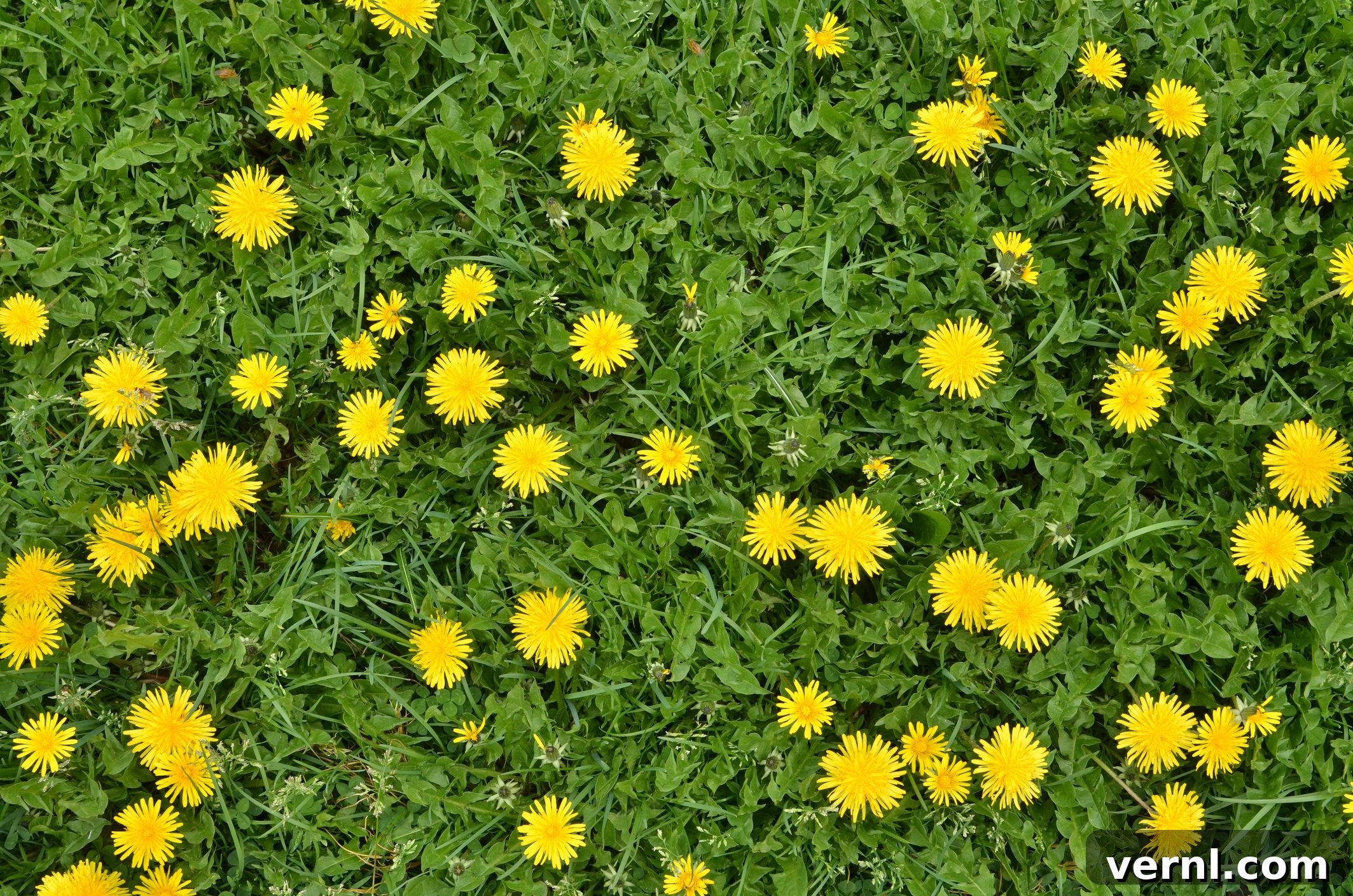
The humble dandelion, with its cheerful yellow blossoms and distinctive jagged leaves, holds a fascinating duality in the human perception of landscapes. Once admired and cultivated as an ornamental flower, its unique foliage, reminiscent of a lion’s tooth (from the French “dent de lion”), inspired its whimsical name. Today, however, these resilient plants often find themselves at the center of a homeowner’s lawn care dilemma. While some enthusiasts champion their ecological benefits and culinary uses, others view them as persistent invaders, eager to eradicate every last one. If your goal is a pristine, weed-free lawn, understanding the dandelion and employing effective removal strategies is key to reclaiming your turf.
What Is a Dandelion?
More than just a common weed, the dandelion (specifically, Taraxacum officinale) is a wild broadleaf perennial herb belonging to the Asteraceae family, which also includes sunflowers and daisies. This remarkably adaptable plant thrives in a vast range of climates and soil conditions, making it a ubiquitous presence across all 50 U.S. states, southern Canada, and over 60 other countries worldwide. Its lifecycle begins with a low-growing rosette of leaves that emerge from a central taproot. In early spring, when soil temperatures consistently rise above 50°F, dandelions produce bright, solitary yellow flower heads. These vibrant flowers eventually transform into the familiar spherical, puffy seed heads, often referred to as “puffballs.” Each tiny seed within these heads is equipped with a feathery parachute (pappus) designed for efficient wind dispersal, allowing dandelions to spread rapidly and colonize new areas with remarkable ease. This efficient reproduction, combined with its robust perennial nature, contributes to its reputation as a formidable adversary in the quest for a perfect lawn.
Are Dandelions a Weed?
Defining a “weed” often comes down to context and intent, and dandelions perfectly illustrate this nuanced perspective. Adam Thoms, Ph.D., associate professor of commercial turfgrass in the Department of Horticulture and the Turfgrass Extension Specialist for Iowa State University, highlights this point: “A plant growing out of place is considered a weed, and that is the classification if you are trying to grow a stand of turfgrass or in a landscape where you are intending to have landscape plants, like in a foundation planting.” From this horticultural viewpoint, any plant that competes with desired vegetation for resources like water, nutrients, and sunlight, or detracts from an aesthetic ideal, can be classified as a weed. Therefore, if your vision for your yard is a uniform carpet of turfgrass, dandelions are unequivocally weeds. However, Thoms adds, “If your goal is just to have a green lawn, then it is probably not a weed.” For those who prioritize a green space over a monoculture, or perhaps appreciate the natural appearance and ecological contributions of dandelions, their presence might not be considered undesirable at all. The designation ultimately rests on the individual homeowner’s objectives and their definition of an ideal lawn.
Are Dandelions Good for Lawns?
Despite their reputation as tenacious weeds, dandelions possess several characteristics that can actually be beneficial to the soil and ecosystem. One of their most significant contributions comes from their impressively robust taproot system. This single, thick root can extend up to three feet deep into the soil, acting as a natural aerator. As the taproot pushes through compacted soil, it creates channels that significantly improve drainage and allow for deeper penetration of water and essential nutrients. This deep reach also enables dandelions to draw up minerals and nutrients from lower soil profiles, making them more accessible to shallower-rooted plants once the dandelion leaves decompose. Furthermore, on bare or disturbed soil, the presence of dandelions can help reduce erosion by providing initial ground cover. However, when comparing erosion control, Dr. Thoms notes a crucial distinction: “As far as preventing erosion, I think a stand of turfgrass is better, as it is a fibrous root system, which has many roots in the top 6 to 12 inches of soil, as opposed to a single tap root like the dandelion.” While dandelions offer some localized benefits, a dense, healthy lawn with its extensive network of fibrous roots generally provides superior, widespread erosion prevention.
Are Dandelions Useful?
Beyond their role in the lawn ecosystem, dandelions are remarkably useful, boasting a rich history of culinary and medicinal applications across various cultures. According to Mount Sinai, these humble plants are nutritional powerhouses, packed with essential vitamins such as A, B, C, and D, along with vital minerals like iron, potassium, and zinc. Every part of the dandelion, from root to flower, can be utilized. The tender young leaves are a popular addition to fresh salads, providing a slightly bitter, peppery flavor, or can be steamed and served like spinach. The bright yellow flowers are commonly used to make dandelion wine, jellies, or even fried fritters. The roots, after being dried and roasted, can be ground into a powder that serves as a caffeine-free coffee substitute or a tonic tea, often found in health food stores and appreciated for its purported liver-supportive properties. However, it’s crucial to exercise caution. Dandelions can cause allergic reactions in some individuals, particularly those sensitive to plants in the Asteraceae family. They may also interact negatively with certain medications, such as diuretics or blood thinners. Always consult with your doctor or a qualified healthcare professional before ingesting dandelions, especially if you have underlying health conditions or are taking prescription drugs. Furthermore, never consume dandelions that have been treated with chemical fertilizers, herbicides, or pesticides, as these substances can be harmful if ingested. Harvesting dandelions from untouched, clean environments is always recommended.
When Do Dandelions Grow in Lawns?
Dandelions are true harbingers of spring, often among the very first flowers to emerge and brighten the landscape as soon as soil temperatures consistently rise above 50°F. Their early appearance makes them highly visible after winter’s dormancy. While spring marks their most prolific flowering period, these resilient plants can produce flowers and seed heads throughout much of the year, especially in temperate climates, whenever conditions are favorable. Their adaptability means you might spot a dandelion bloom in late summer or even early fall. However, as winter approaches and temperatures drop significantly, the above-ground portion of the dandelion plant goes dormant, seemingly disappearing from view. Yet, beneath the surface, the deep, sturdy taproot remains alive and well, storing energy. This allows the plant to survive harsh winter conditions and, come the following spring, vigorously produce new shoots and flowers from the established root system. This perennial nature and year-round reproductive capability, whether through seeds or root survival, make dandelions a persistent presence in many lawns and gardens.
Are Dandelions Important to Pollinators?
Dandelions play a significant role as an early and readily available food source for bees and other vital pollinators, especially during early spring when other flowering plants are scarce. Their abundant nectar and pollen provide crucial sustenance for awakening insect populations, helping them to build their colonies and sustain themselves. Consequently, eradicating too many of these nectar-rich flowers from your yard can indeed have a negative impact on local pollinator populations and the broader ecosystem. However, the exact quality of dandelion pollen and nectar is a topic of ongoing research. Dr. Thoms points out, “There is differing research out on how good of a source of pollen/nectar dandelions really are. Some reports say that pollinators go to dandelions because it is convenient, and if other plants were present, they would actually be a better source of pollen for the pollinators.” This suggests that while dandelions are essential for early season survival, a diverse range of flowering plants offers more comprehensive nutritional benefits for pollinators throughout the growing season. To support pollinators more effectively, Thoms suggests, “I would suggest planting an area in the yard where you have a pollinator garden with native plants that offer longer bloom times and more high-quality pollen for the pollinators in your area.” This approach encourages biodiversity and provides a consistent, high-quality food source for beneficial insects, allowing for a more balanced coexistence in your landscape.
What Are the Best Ways to Get Rid of Dandelions?
When dandelions become an unwanted presence in your lawn, whether due to their sheer numbers or their encroachment into desired areas, a range of control methods can be employed. The most effective approach often involves a combination of strategies, tailored to the size of the infestation and your personal preferences for chemical or organic solutions. Here are your primary options for managing and eliminating dandelions:
1. Pull Dandelions by Hand
Manual removal is an excellent, chemical-free option for small infestations or when you have just a few scattered dandelions. The key to successful hand-pulling is timing and technique. This method is most effective after a soaking rain or deep irrigation, as the moist soil significantly loosens its grip on the dandelion’s deep taproot, making it much easier to dislodge the entire plant. Attempting to pull dandelions from dry, compacted soil often results in the taproot breaking, leaving a portion behind, which will inevitably allow the plant to regenerate. Older, more mature dandelions tend to have deeper, more established roots and can be particularly challenging to remove completely by hand. For this reason, it is always best to pull dandelions when they are young and their root systems are less extensive. Additionally, aim to pull them while they are still flowering but before they have produced their characteristic puffy seed heads. This prevents accidental seed dispersal, which could worsen your dandelion problem. Specialized tools like a dandelion fork or a pointed trowel can greatly assist in this task. A dandelion fork is designed to leverage the root out of the ground with minimal disturbance, usually leaving a small hole that will self-fill. A trowel, while effective, might create a larger void, which should be filled with a bit of topsoil to encourage surrounding grass to fill the gap and prevent future weed germination in the bare spot.
2. Remove Dandelions with a Weed Puller
For those with larger dandelion infestations or who wish to avoid stooping and kneeling, specialized stand-up weed pullers offer an ergonomic and efficient solution. These innovative tools are designed to extract dandelions, taproot and all, with minimal effort. Similar to hand-pulling, these tools work best when the soil is damp, ensuring the taproot slides out easily without breaking. To use, position the serrated claws or prongs of the weed puller directly over the center of the dandelion’s head. Step down onto the foot platform to drive the tool deep into the ground, ensuring the claws surround the taproot. Then, pull back or twist the handle, depending on the tool’s design, allowing the claws to grasp firmly around the plant and its entire taproot. With a gentle pull, the dandelion is extracted from the ground. Most dandelion pullers are designed to leave a relatively small, neat hole, eliminating the need to refill with soil. This method is highly effective for complete removal, greatly reducing the chances of regrowth from remaining root fragments.
3. Trim or Mow Regularly
While regular trimming or mowing won’t completely eradicate dandelions, it serves as a valuable management strategy when integrated with other weed control methods. The primary objective behind frequent mowing is to prevent dandelions from flowering and, crucially, from setting seed. By consistently decapitating the flower heads before they mature into puffballs, you significantly reduce the production and dispersal of new dandelion seeds. This directly curbs the expansion of the dandelion population in your lawn. Although some resilient dandelion plants may adapt by forming flowers and seed heads closer to the ground in an attempt to compensate for the mowing, the overall number of viable seeds produced will still be considerably lower. Furthermore, frequent cutting stresses the dandelion plant. Like any plant, dandelions require their leaves to photosynthesize and produce energy. Repeated removal of their foliage forces them to expend stored energy from their taproot to regrow, weakening them over time and reducing their competitive strength against healthy turfgrass. Maintaining a slightly higher mowing height (e.g., 2.5-3 inches) for your lawn can also help. Taller grass shades the soil, making it less hospitable for dandelion seed germination and establishing a denser turf that naturally crowds out weeds.
4. Apply Chemical Herbicide
For extensive dandelion infestations that manual and mechanical methods can’t effectively address, chemical control through herbicides may be the most efficient option. These products are specifically formulated as selective broadleaf herbicides, meaning they are designed to target and kill broadleaf weeds like dandelions without harming turfgrass. “You can get great control of dandelions with an application of a common turfgrass herbicide,” states Dr. Thoms. Common active ingredients often include a mixture of two or three herbicides such as 2,4-D, Dicamba, MCPP (Mecoprop), and Triclopyr, which work synergistically to maximize effectiveness. These systemic herbicides are absorbed by the dandelion’s leaves and then translocated throughout the plant, reaching the taproot for a complete kill. Timing is critical for optimal results. In most areas, fall is considered the best time to apply broadleaf herbicides. Dr. Thoms explains why: “In the fall, cooler weather tells a plant to move food production from the leaves to the growth point or roots for storage to feed the plant during the winter. This means that any herbicide you can slip into the leaves during this time will also move to the roots so you will get a better kill.” Spring applications can also be effective, but fall treatment typically yields more thorough eradication. It is paramount to read the product label carefully before application to ensure it is compatible with your specific type of grass and to understand all safety precautions. These products contain toxic chemicals that can be harmful to humans, pets, and non-target plants if misused. Apply herbicides only on a calm day when the wind speed is below 5 MPH to prevent drift onto desirable plants or into water sources. Always wear appropriate personal protective equipment as directed by the manufacturer.
5. Apply Organic Herbicide
For those seeking a more environmentally friendly approach to weed control, organic herbicides offer an alternative to synthetic chemicals. However, it’s important to understand their limitations and how they differ from conventional products. Most organic herbicides are non-selective, meaning they will damage or kill any plant they come into contact with, including desirable turfgrass or garden plants. For this reason, precise spot-spraying is crucial. Application should be performed on a calm day to prevent drift, and you may consider using a piece of corrugated cardboard or a spray shield to protect surrounding vegetation. Common active ingredients in organic herbicides include acetic acid (a more concentrated form of vinegar), citric acid, clove oil, lemongrass oil, d-limonene (citrus oil), and ammonium nonanoate. Unlike systemic chemical herbicides, most organic herbicides are contact killers. They work by breaking down the plant’s cell walls, causing the leaves and stems to wither and die rapidly. However, they generally do not translocate to the deep taproot, which means the dandelion can often regrow from the root. Consequently, multiple applications may be necessary to deplete the root’s energy reserves and achieve complete eradication. Once the above-ground portion of the weed has withered from the organic herbicide, it’s advisable to loosen the soil around it and manually pull the plant to remove the weakened taproot, thereby increasing the chances of preventing its return. A note for some organic gardeners: boiling water can also be an effective organic weed killer. While useful, this method is best suited for weeds growing in cracks in sidewalks, driveways, or patios, as it will also kill surrounding grass or desirable plants if applied to a lawn area.
How to Keep Dandelions from Returning
Preventing dandelions from returning is a continuous process that involves both eliminating existing plants and adopting proactive lawn care strategies. Dandelions are perennials, meaning that if the entire root system isn’t completely removed or killed, the same plants will likely resurrect themselves year after year. Furthermore, new dandelions will inevitably appear from the countless seeds dispersed by those iconic puffballs. To break this cycle and establish long-term control, implement the following practices:
- Promote a Dense, Healthy Lawn: A thick, vigorous stand of turfgrass is your best defense against dandelions and most other weeds. Healthy grass crowds out weed seedlings by competing for light, water, and nutrients, making it difficult for dandelions to establish themselves. This involves proper fertilization routines tailored to your grass type, adequate and deep watering (rather than frequent, shallow watering), and mowing at the correct height (typically 2.5-3 inches or higher) to encourage deep root growth and shade the soil, deterring seed germination.
- Control Seed Production: Consistent mowing before dandelions go to seed is vital. By regularly cutting off flower heads, you prevent them from forming the fluffy seed heads that spread thousands of new plants. This significantly reduces the influx of new dandelion seeds into your lawn.
- Thorough Mechanical Removal: When you hand-pull or use a weed puller, ensure you extract the entire taproot. Any root fragments left behind can regenerate, leading to persistent regrowth.
- Utilize Pre-Emergent Herbicides: For weed seeds already in the ground, a pre-emergent herbicide can be highly effective. Corn gluten meal is a popular chemical-free organic pre-emergent option. It works by inhibiting the root development of germinating seeds. Apply corn gluten in early spring before dandelion seeds (and other weed seeds) germinate. However, be aware that corn gluten will prevent *all* seeds from germinating, including grass seed. Therefore, do not use it if you plan on overseeding or planting new grass in the same area. Conventional pre-emergents are also available, but consult product labels carefully.
- Address Soil Compaction: Dandelions thrive in compacted soils where grass struggles. Regular aeration can improve soil structure, allowing grass roots to grow deeper and making the environment less favorable for dandelions.
- Mulch Garden Beds: In landscaped areas, apply a thick layer of mulch (2-4 inches) to suppress dandelion growth and germination. Mulch blocks sunlight, inhibiting seed sprouting and making it easier to pull any dandelions that do emerge.
By adopting an integrated approach that combines cultural practices, mechanical removal, and strategic use of herbicides (whether organic or chemical), you can significantly reduce dandelion populations and maintain a healthier, more beautiful lawn.
About The Expert
Adam Thoms, Ph.D., is an associate professor of commercial turfgrass in the Department of Horticulture and the Turfgrass Extension Specialist for Iowa State University. He has been at Iowa State since 2016, conducting research trials on new cultivars and products for the turfgrass industry, testing new maintenance processes and investigating how to manage turfgrass more sustainably. He also teaches as part of the Iowa State Turfgrass Program. Dr. Thoms has M.S. and Ph.D. degrees from the University of Tennessee.