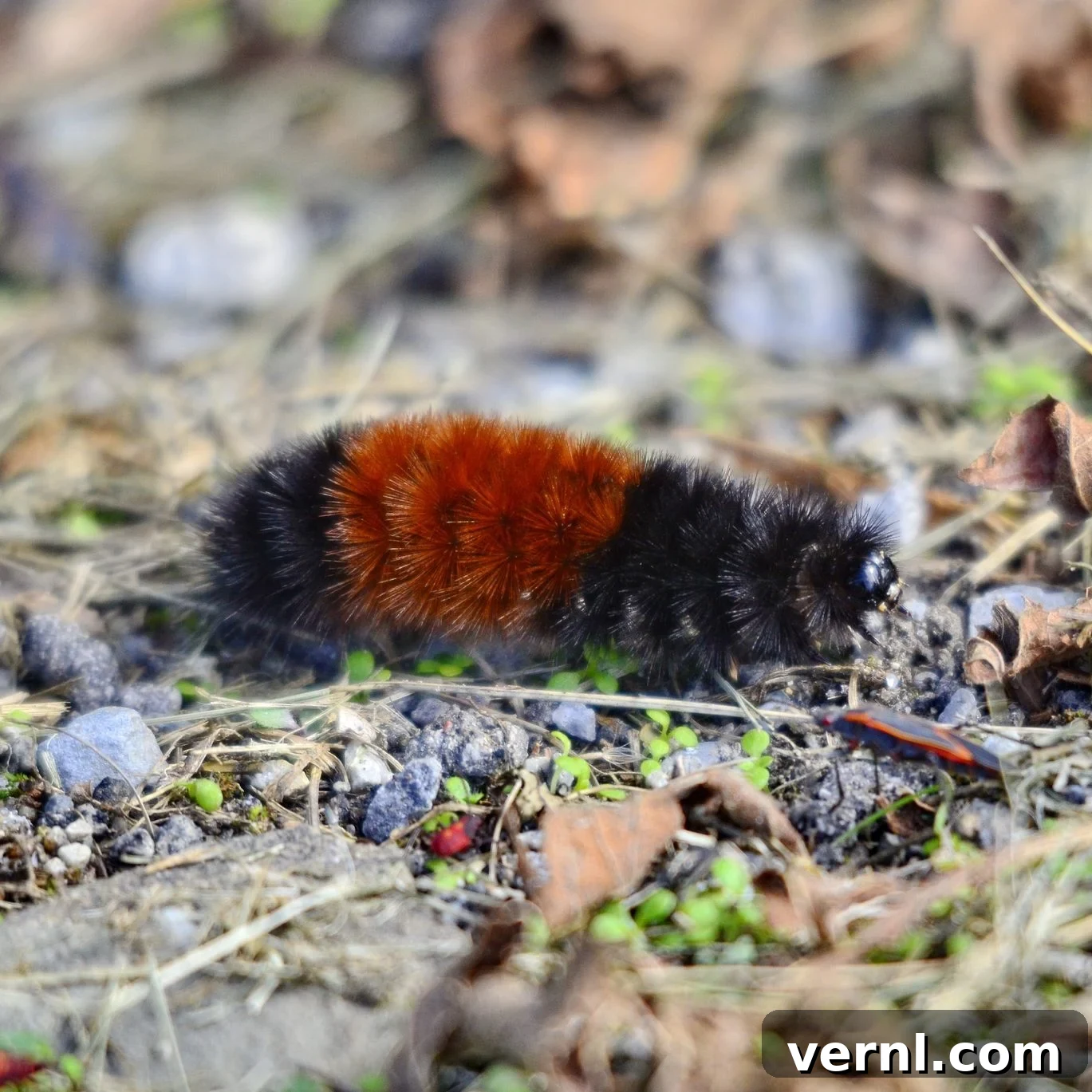
When the crisp air of autumn descends, bringing with it the promise of winter, many fascinating creatures prepare for the colder months. Among the most recognizable and endearing of these are the fuzzy black-and-rust caterpillars, commonly known as woolly bears. These charming invertebrates often capture our attention as they mosey about yards, gardens, and even workshops, diligently seeking a sheltered spot to begin their remarkable hibernation. Their survival strategy is nothing short of extraordinary: no matter how biting the winter cold becomes, these resilient woolly bear caterpillars possess a unique biological defense. They don’t die when they freeze; instead, they produce glycerol, a powerful natural antifreeze that protects their cells from ice crystal formation. This incredible adaptation allows them to endure sub-zero temperatures, only to thaw and awaken with the arrival of spring. One particularly hardy species, the Arctic woolly worm, exemplifies this resilience, capable of surviving staggering lows down to -90°F (-67°C).
Unlike many caterpillars that complete their metamorphosis into moths within a mere few weeks, some woolly bear species embark on a much longer journey. The Arctic woolly, for instance, can spend an astonishing 14 years in its larval stage, repeatedly freezing and thawing across multiple winters before finally pupating. Other species display equally impressive survival tactics, such as self-medicating to combat parasitic infections. These fascinating behaviors, coupled with their innocuous nature, have elevated woolly bear caterpillars to the status of beloved insect ambassadors. Their widespread appeal is evident in the numerous celebrations held in their honor across North America. The Woolly Bear Festival in Vermilion, Ohio, stands out as one of the largest one-day festivals in the state, drawing thousands of visitors each year. Similar jubilant events take place in various locations, including North Carolina, Kentucky, Pennsylvania, New York, and Ontario, cementing the woolly bear’s place in popular culture and folklore.
Unveiling the Woolly Bear Caterpillar: Identity and Anatomy
Known by a variety of affectionate monikers such as fuzzy bears, woolly worms, or banded woollys, depending on the region, these fascinating creatures are widespread across much of North America. Scientifically, they belong to the genus Pyrrharctia, with the most commonly recognized species being Pyrrharctia isabella, famously known as the Isabella tiger moth caterpillar. “There are many species of woolly bears,” explains Jaret Daniels, a distinguished lepidopterist specializing in butterflies and moths at the University of Florida. “But the banded woolly bear is probably the most well-known and recognizable.” This particular species is characterized by its distinctive appearance: a vibrant rusty-red or brown band sandwiched between two broader black bands, though the exact proportions can vary.
Their appearance and defensive posture have earned them another charming nickname: hedgehog caterpillars. When threatened or disturbed, these bristly creatures instinctively curl into a tight ball, causing their stiff, pointed hairs—known as setae—to protrude outward. These setae serve as a formidable deterrent against potential predators like birds and small mammals, making the caterpillar less palatable or difficult to handle. It’s a common misconception that these dense hairs keep woolly bears warm during the winter. Surprisingly, the opposite is true. While they do offer some insulation, their primary role in extreme cold is to facilitate the freezing process. The setae help to slow down the rate of cooling and provide nucleation sites for ice formation outside the caterpillar’s vital tissues. This controlled freezing, coupled with the internal production of glycerol, is crucial for their survival, allowing them to enter a state of suspended animation known as cryopreservation until warmer temperatures return. This intricate biological mechanism highlights the incredible evolutionary adaptations of these seemingly simple insects.
The Diverse Diet of Woolly Bear Caterpillars
Woolly bear caterpillars are renowned for their adaptable and unpicky eating habits, a trait that contributes significantly to their widespread distribution. This dietary flexibility means they can thrive in virtually any environment where plants grow, from dense forests to open fields and suburban gardens. Their menu is extensive and varied, encompassing a wide array of common herbs, weeds, and native plants. Favorites include the delicate leaves of asters, the ubiquitous dandelions, nutrient-rich clovers, lambsquarters, stinging nettles, and vibrant violets.
Beyond wild vegetation, these opportunistic feeders are not above sampling the bounty of a home garden. They might be found grazing on leafy greens such as cabbage and spinach, or even ascending trees to feast on the leaves of maple, elm, and birch. This broad dietary spectrum ensures that woolly bears can find sufficient sustenance before entering their prolonged hibernation phase, allowing them to accumulate the necessary energy reserves to survive months of freezing temperatures. Their role as generalist herbivores also makes them an important component of many ecosystems, contributing to nutrient cycling and serving as a food source for various other creatures in the food web. Their ability to adapt their diet based on availability is a key factor in their ecological success.
Are Woolly Bear Caterpillars Dangerous? Dispelling Bite Myths
A common concern among those encountering woolly bear caterpillars is whether they pose any danger, particularly if picked up. The reassuring answer is a resounding no: these charming insects are unequivocally harmless to humans. Unlike some other caterpillar species that possess venomous spines or irritating hairs, woolly bear caterpillars lack any mechanism for biting or stinging. Their bristles, while protective against predators, do not inject venom or cause significant skin irritation in most individuals. In extremely rare instances, a person with an acute allergy to insect hairs might experience a mild skin reaction upon prolonged contact, but such cases are exceptionally uncommon and typically non-severe.
Indeed, their gentle nature makes them a favorite among children and curious adults alike. When handled, a woolly bear caterpillar’s most common defense mechanism is to “play dead.” It will typically curl into a tight, fuzzy ball, feigning lifelessness, a behavior designed to deter predators that prefer live prey. This fascinating reflex, coupled with their endearing appearance, makes the woolly bear caterpillar as cute and captivating in your hand as it is traversing the ground. Interacting with them is generally safe and offers a wonderful opportunity to observe one of nature’s most iconic and benign insect ambassadors up close.
The Woolly Bear Weather Prediction Myth: Fact vs. Folklore
One of the most enduring and widely circulated pieces of folklore in North America revolves around the woolly bear caterpillar’s supposed ability to predict the severity of the coming winter. According to this popular tradition, the width of the rusty-colored band on a woolly’s back foretells the winter’s harshness. A narrow rust band is said to signify a particularly severe winter, while a wider band purportedly heralds a mild season. Another variation of the tale suggests that the woollier or denser the caterpillar’s coat, the colder the winter will be. These enchanting myths have captivated generations, offering a quaint and naturalistic method for anticipating the weather.
The origins of these predictions can be traced back to colonial America, where communities often relied on natural signs for guidance. However, the myth truly soared into popular culture in 1948 when Dr. C.H. Curran, a curator at the American Museum of Natural History, conducted an informal study. He measured the rusty bands of 15 woolly bears in upstate New York and publicly suggested that their predictions held true. While his observations garnered significant attention and fueled the widespread belief, his study, with its small sample size and lack of controlled variables, was far from scientifically rigorous.
The broader scientific consensus unequivocally debunks these charming prognostications. As Dr. Daniels points out, “The caterpillar’s coloring is not a predictor of future conditions, but simply the result of a combination of things, including age.” The primary factors influencing the width of the woolly bear’s rusty band are its age and the environmental conditions it experienced during its growth. Woolly bear caterpillars undergo several molts as they mature. A longer, more favorable growing season with ample food and mild temperatures allows the caterpillar to grow larger and develop more black segments, thus making the central rusty band appear narrower. Conversely, a shorter or harsher growing season might result in a smaller caterpillar with a wider rusty band. Therefore, the band’s width merely reflects the conditions of the past summer and the caterpillar’s current stage of development, not the future winter weather. Furthermore, band size and coloration can vary significantly between different species of woolly bears, adding another layer of complexity that undermines the simplistic predictive model. Ultimately, scientific evidence places woolly bear winter predictions on par with the accuracy of other folkloric forecasts, like Punxsutawney Phil’s annual Groundhog Day pronouncement. While charming, these traditions serve more as cultural touchstones than reliable meteorological indicators.
The Metamorphosis: From Woolly Bear to Isabella Tiger Moth
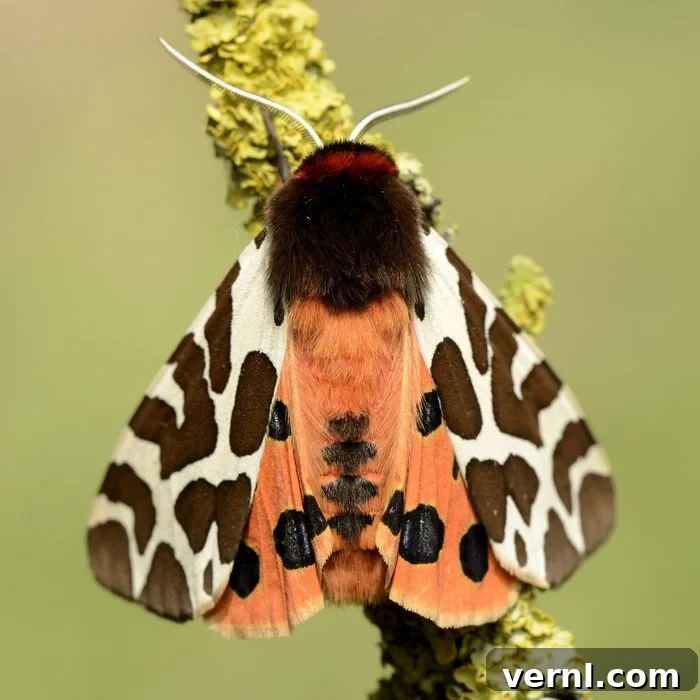
The journey of the woolly bear caterpillar culminates in a breathtaking transformation: its metamorphosis into an Isabella tiger moth. As the spring thaw begins, gradually melting the snow and ice, and the first tender plants emerge, the woolly bear caterpillars awaken from their frozen slumber. They embark on a crucial feeding period, consuming as much vegetation as possible for a few days to gather the energy required for their next life stage. Following this sustenance phase, each caterpillar meticulously crafts a protective cocoon, often incorporating its own bristly hairs into the silken structure.
Within this cocoon, a remarkable process known as pupation takes place. Over a matter of weeks, the caterpillar undergoes a complete transformation, reorganizing its body into its adult form. From this chrysalis emerges the beautiful Isabella tiger moth, scientifically identified as Pyrrharctia isabella. This nocturnal moth is characterized by its yellowish body, often adorned with small black markings on the top of its abdomen. It possesses a fuzzy head and a modest two-inch wingspan, making it a delicate yet striking presence in the night.
The adult Isabella tiger moth’s life is remarkably brief but vital. After emerging, its primary objective is to mate and lay eggs, ensuring the continuation of its species. This crucial reproductive phase typically lasts only a few days before the moth completes its life cycle and dies. Approximately two weeks later, the newly laid eggs hatch, giving rise to another generation of tiny woolly bear caterpillars, which immediately begin their own journeys of feeding and growth. This entire cycle, from egg to adult moth and back to egg, typically occurs twice a year, once in the spring and again in the fall. We most commonly observe woolly caterpillars in the autumn because this is when they are actively out and about, diligently searching for the perfect sheltered location to hibernate and endure the upcoming winter, ready to repeat their incredible lifecycle when spring arrives again.
The Conservation Status of Woolly Bear Caterpillars
In an era where many insect populations face alarming declines, it’s natural to wonder about the conservation status of such a common and beloved creature as the woolly bear caterpillar. Fortunately, the news regarding woolly bears is generally positive. Dr. Daniels states that he is not aware of any specific research indicating that woolly caterpillar populations are currently in steep decline. This resilience can likely be attributed to their broad diet, their remarkable cold hardiness, and their ability to adapt to various habitats, including human-modified landscapes.
However, this doesn’t mean woolly bears are immune to broader ecological pressures. Dr. Daniels wisely cautions that environmental changes, the widespread use of pesticides, and pervasive habitat loss affect woolly bears just as they do countless other insect species. While their current populations may be stable, these overarching threats represent significant challenges to insect biodiversity globally. Climate change can alter seasonal cues, potentially disrupting their life cycles. Habitat fragmentation due to urbanization and agriculture can reduce available food sources and hibernation sites. Pesticides, especially broad-spectrum insecticides, can inadvertently harm non-target insects like woolly bears, impacting their survival and reproductive success. Monitoring these factors is crucial for ensuring the long-term health of woolly bear populations and the ecosystems they inhabit.
Simple Steps to Support Woolly Bear Caterpillars
Encountering a woolly bear caterpillar in your daily life often brings a sense of joy and connection to nature. If you come across one in a precarious situation, such as on a busy sidewalk or in a parking lot, a small act of kindness can make a significant difference. Gently moving the caterpillar to a safer, more natural spot – perhaps a nearby garden bed, a patch of grass, or beneath a shrub – can protect it from being stepped on or run over. Use a leaf or stick to guide it, or gently scoop it up.
Beyond this immediate intervention, Dr. Daniels emphasizes that the best way to help woolly bears is to respect their wild nature. “Keep them wild,” he advises. “Observe them in the wild and then let them do their thing.” Resisting the urge to bring them indoors as pets allows them to complete their natural life cycle, which is intricately tied to outdoor environmental cues.
Furthermore, broader efforts to support moth and butterfly populations in general also benefit woolly bears. These include:
- Reducing light pollution: Many moths are nocturnal and are disoriented by artificial lights, which can interfere with their foraging, mating, and navigation. Turning off unnecessary outdoor lights or using downward-facing, motion-sensor lighting can help.
- Avoiding pesticides: Opting for natural pest control methods and minimizing or eliminating the use of chemical pesticides in your garden and yard is crucial. These chemicals can harm caterpillars and moths directly or indirectly by contaminating their food sources.
- Planting native plants: Creating a diverse habitat with native plants provides essential food sources for caterpillars and nectar for adult moths. Native plants are adapted to local conditions and support the entire life cycle of native insects, offering both sustenance and shelter.
By taking these simple, conscious steps, we can ensure that these charming and resilient creatures continue to thrive, bringing their unique magic and ecological benefits to our natural world for generations to come. The woolly bear caterpillar, with its humble appearance and extraordinary survival story, reminds us of the intricate wonders of the insect kingdom and our shared responsibility to protect it.