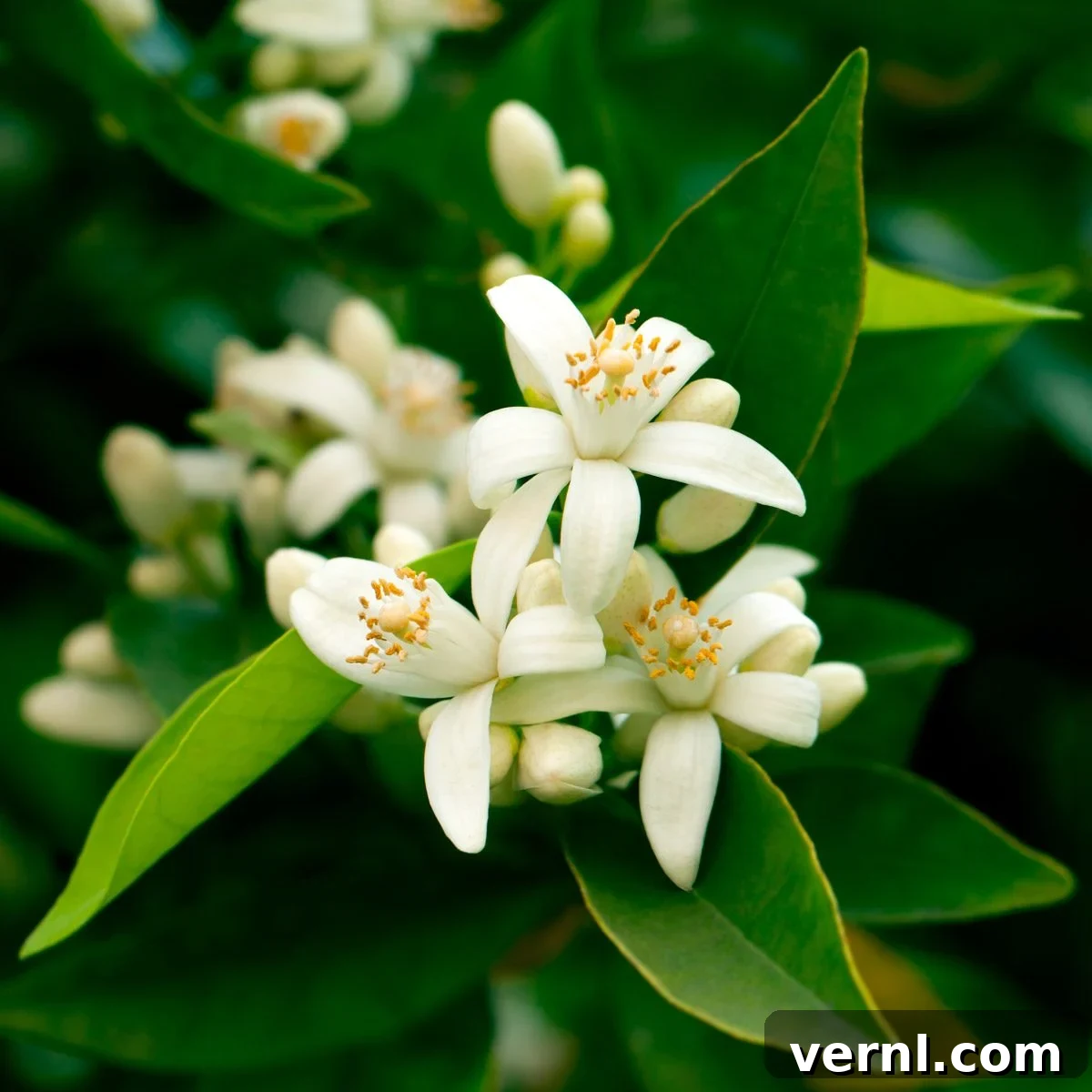
The delicate and intensely fragrant white blossoms of the citrus sinensis, commonly known as the orange blossom, hold a special place in the hearts of many, particularly as the official state flower of Florida. These exquisite flowers not only fill the air with their captivating perfume during their bloom season but also play a crucial ecological role, drawing in essential pollinators like bees. This natural interaction enhances the biodiversity of your garden and significantly contributes to the health and productivity of your orange trees.
Beyond their enchanting beauty and intoxicating aroma, orange trees are incredibly rewarding for their bountiful fruit. These versatile fruits can be enjoyed fresh, squeezed into refreshing juices, or incorporated into a variety of culinary dishes. Thriving in conditions of full sun and well-drained soil, orange trees are surprisingly resilient. With diligent care and the right environmental conditions, these magnificent trees can flourish and produce fruit for many decades, offering a continuous harvest and a touch of tropical elegance to any landscape.
Unveiling the Florida State Flower: The Orange Blossom
The orange blossom, scientifically known as Citrus sinensis, is the pristine white flower of the sweet orange tree. Originating from the subtropical regions of Southeast Asia, these plants are best suited for tropical and subtropical climates characterized by warm to hot summers and mild winters. In the United States, the Department of Agriculture (USDA) places them within hardiness zones 9 through 11, indicating their preference for warmer environments where frost is minimal.
Historically, orange blossoms have been revered as a powerful symbol of purity, innocence, and fertility. Their presence in literature and art is well-documented, reflecting their deep cultural significance. A notable historical instance includes Queen Victoria, who famously adorned her wedding day ensemble with orange blossoms, further cementing their association with marital bliss and new beginnings. This tradition, stemming from ancient customs, highlights the enduring appeal and symbolic weight of these simple yet profound flowers.
According to horticultural experts, the Florida state flower typically blooms in clusters each spring, transforming the tree into a fragrant spectacle. These blossoms are the precursors to the delicious oranges that will ripen and be ready for harvest the following fall or winter. This cyclical process not only provides aesthetic pleasure but also promises a tangible reward in the form of succulent fruit.
Further insights into the orange blossom reveal fascinating characteristics:
- Foliage: The leaves of the orange tree are distinctly shiny, elongated (oblong), and can grow up to 4 inches in length, providing a lush, green backdrop to the white flowers.
- Thorns: It’s worth noting that orange tree twigs can sometimes be thorny, a protective feature of many citrus varieties.
- Growth Habit: The orange tree itself is a compact evergreen, typically reaching heights of 20 to 30 feet. It develops a rounded, symmetrical crown that can spread approximately 20 feet wide, offering ample shade and a structured silhouette.
- Commercial Uses: The essential oil extracted from orange blossoms, known as neroli oil, is highly prized in various industries. It is a popular ingredient in perfumes, aromatherapy products, and even certain commercial cleaning solutions, valued for its refreshing and uplifting scent.
A Comprehensive Guide to Growing Your Own Orange Tree
Cultivating an orange tree offers a dual reward: providing refreshing shade and a steady supply of delicious, edible fruit. The optimal time for planting an orange tree is generally in early to mid-spring, allowing the young tree ample time to establish its root system before the intense heat of summer or the chill of winter.
“Orange trees are surprisingly manageable to grow, provided you reside in a warm climate,” explains Angela Judd, a certified master gardener, author of How to Grow Your Own Food, and founder of Growing in the Garden. “They exhibit excellent hardiness in USDA zones 9 to 11, where they can truly thrive.”
Judd further advises, “These trees demand a bit more attention during their initial year or two as they become established. In intensely hot climates, such as my home state of Arizona, they might even require supplemental shade to protect them from scorching sun. Once mature, however, established plants demonstrate a greater tolerance for both heat and cold extremes.”
Selecting the Ideal Planting Site
Choosing the right location is paramount for the long-term health and productivity of your orange tree. Select an area that receives at least 6-8 hours of direct sunlight daily. Good drainage is equally critical; orange trees detest “wet feet.” To test your soil’s drainage, dig a small hole, fill it with water, and observe how quickly it drains. If the water stands for more than a few hours, consider amending the soil with organic matter like compost or creating a raised bed to improve drainage. Protection from strong winds can also be beneficial, especially for young trees.
The Planting Process
Once you’ve selected your spot, dig a hole that is at least twice the diameter of the tree’s root ball, but only as deep as the root ball itself. The goal is to ensure the top of the root ball sits approximately 1 inch above the surrounding topsoil after planting. This slightly elevated position is crucial, as the tree will naturally settle over time. As horticultural experts caution, “If you plant the root ball at an even level with the surrounding soil, the tree eventually sinks down into the ground. Fungus becomes a major issue as moist soil touches the trunk directly above the root ball. Planting the orange tree with consideration of the root ball’s position prevents disease issues in the future.” This technique prevents moisture from accumulating around the trunk, a common cause of fungal diseases.
Gently remove the tree from its container, being careful not to damage the roots. Loosen any circling roots at the bottom of the root ball. Place the tree in the center of the hole, ensuring the root flare (where the trunk broadens at the base) is visible above the soil line. Backfill the hole with the excavated soil, gently tamping it down to remove air pockets. Avoid adding fertilizer directly into the planting hole, as it can burn the delicate root system of the newly planted tree and potentially be fatal. Water thoroughly immediately after planting to help settle the soil around the roots.
Consistent Watering and Fertilization
Consistent watering is vital for orange trees, especially during their establishment phase and dry periods. Ensure that moisture penetrates deeply into the root system, encouraging the development of strong, deep roots. The frequency of watering will depend on your climate, soil type, and the tree’s age, but generally, young trees need more frequent watering than mature ones. Always check the soil moisture a few inches down before watering again; allow the top few inches of soil to dry out between waterings to prevent root rot.
Fertilization is also crucial for robust growth and abundant fruit production. During its active growing season (typically spring and summer), feed your orange tree with a fertilizer specifically formulated for citrus trees. These fertilizers usually contain a balanced blend of nitrogen, phosphorus, and potassium, along with essential micronutrients like iron, zinc, and manganese. Follow the manufacturer’s instructions for application rates and frequency, as over-fertilization can be detrimental.
Pruning for Health and Productivity
Pruning is an important practice for maintaining the health, shape, and productivity of your orange tree. The best time to prune is typically after the last harvest but before new growth begins in spring. Remove any dead, diseased, or damaged branches. You should also prune to improve air circulation within the canopy, which helps prevent fungal issues, and to manage the tree’s size and shape. For fruit production, aim to open up the canopy to allow sunlight to reach ripening fruit, but avoid excessive pruning that could reduce your yield.
Managing Pests and Diseases
While orange trees are relatively hardy, they can be susceptible to certain pests and diseases. As noted, aphids are a common nuisance, often found on new growth, alongside mites, scales, and whiteflies. Regularly inspect your tree for signs of infestation. For minor issues, a strong spray of water can dislodge pests, or you can use insecticidal soap. For more persistent problems, consult with a local nursery or agricultural extension office for advice on appropriate organic or chemical treatments. Maintaining a healthy tree through proper care is the best defense against most problems.
Frequently Asked Questions About Orange Trees
How long does it take an orange tree to bear fruit?
The time it takes for an orange tree to produce fruit largely depends on how it was started. “If you begin with a grafted tree, you can typically anticipate fruit within two to three years,” explains Angela Judd. “However, trees grown from seed can take considerably longer—often 10 years or even more—to bear fruit, and there’s no guarantee that the fruit quality will be identical to that of the parent tree. Grafted trees offer quicker gratification and predictable fruit characteristics.”
When do orange trees flower and produce fruit?
Orange trees generally flower in early spring, commonly during March or April in warmer climates, painting the tree with their fragrant white blossoms. Following this crucial flowering stage, the tree typically bears fruit approximately seven to ten months later. The exact timing of fruit ripening can vary depending on the specific orange variety and local climatic conditions.
What are common problems or pests affecting orange trees?
Orange trees, like many plants, can encounter various pests and problems. Aphids are among the most prevalent pests, often congregating on tender new growth. Other common invaders include mites, scale insects, and whiteflies, all of which can weaken the tree by feeding on its sap. Additionally, environmental stresses such as improper watering, nutrient deficiencies, or extreme temperatures can lead to various issues. Regular inspection and prompt action are key to keeping your tree healthy.
How much sun do orange trees need?
Orange trees are sun-loving plants that thrive in full sun. They require a minimum of 6 to 8 hours of direct sunlight per day to produce abundant flowers and fruit. Insufficient sunlight can lead to sparse foliage, reduced flowering, and poor fruit development.
What’s the best soil for orange trees?
The ideal soil for orange trees is well-draining, slightly acidic to neutral (pH 6.0-7.0), and rich in organic matter. Sandy loam soils are often preferred as they offer good drainage while retaining essential moisture and nutrients. Heavy clay soils should be amended with compost and other organic materials to improve drainage and aeration, which are crucial for healthy root development.
Can I grow an orange tree in a pot?
Yes, orange trees, especially dwarf varieties, can be successfully grown in large pots or containers, making them an excellent choice for patios or smaller gardens, or for those living in colder climates where trees can be moved indoors during winter. Choose a pot with excellent drainage holes and use a high-quality potting mix formulated for citrus or general container plants. Ensure the container is large enough to accommodate the root system as the tree grows.
About the Expert
- Angela Judd is a highly regarded certified master gardener, the insightful author of How to Grow Your Own Food, and the visionary founder of Growing in the Garden, a popular resource for aspiring and experienced gardeners alike.
Sources
- The Florida Department of State
- Week&