
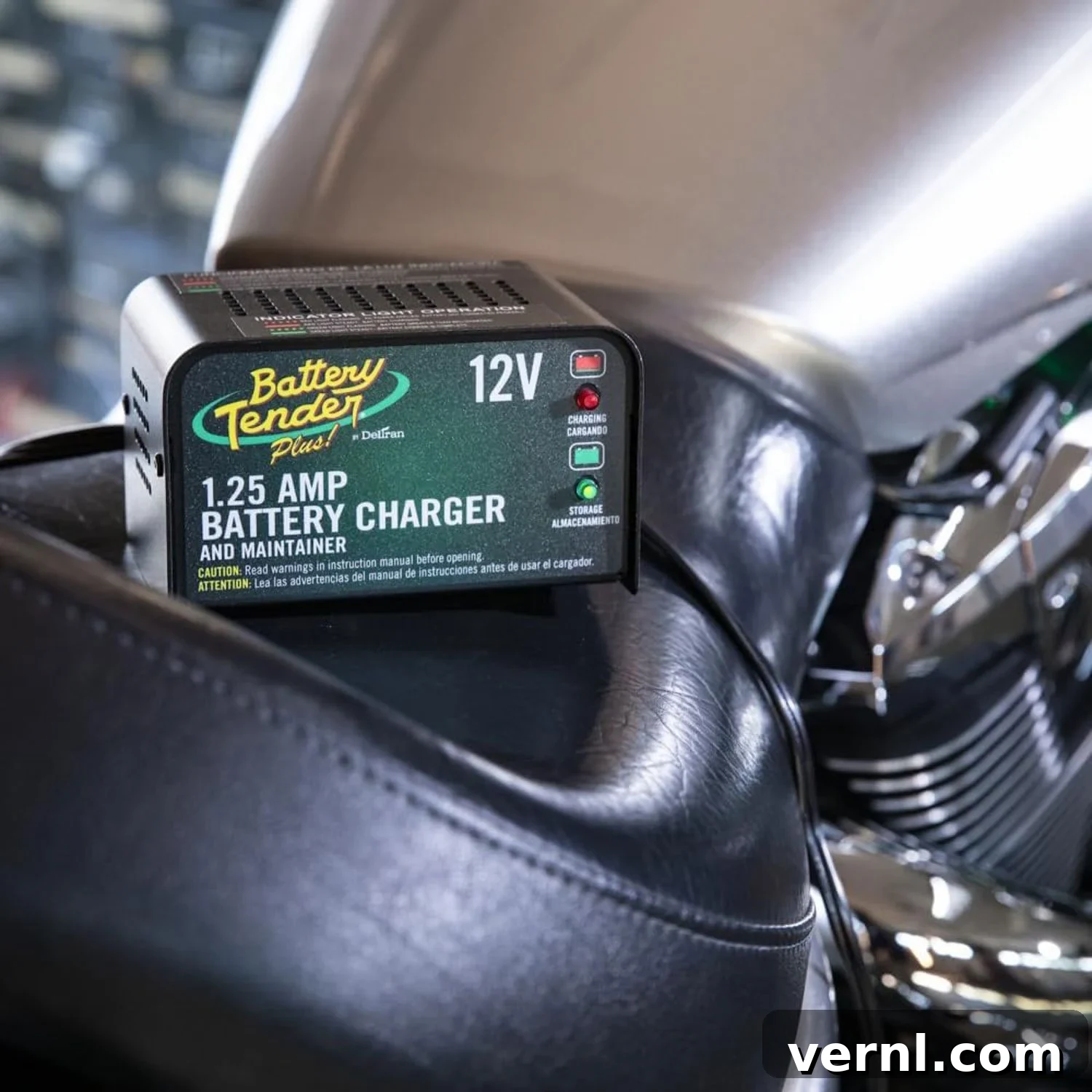
Trickle Charger vs. Battery Maintainer: Keep Your Batteries Ready for Action
There are few things more universally frustrating than a dead battery. Whether it’s your car refusing to start on a freezing morning, your generator failing during a critical power outage, or your seasonal vehicle sitting idle, a lifeless battery can derail your plans and cause significant inconvenience. I recall the sheer disruption when my 8,500-watt generator battery died in the midst of an ice storm, plunging us into a week-long power outage. With my wife working from home, a reliable generator wasn’t a luxury; it was a necessity. Even with a full-size 12-volt car battery charger and a portable jump starter on hand, I was forced to use the pull cord to get that beast running. My immediate purchase after replacing the battery? A battery maintainer, a true game-changer.
Equally vexing was the period my SUV suffered from a slow electrical drain, commonly known as a “parasitic draw,” which would kill the battery every five days or so if the vehicle wasn’t driven. I resorted to keeping a trickle charger connected until I eventually pinpointed the culprit: a loose ignition switch that was inadvertently keeping the vehicle’s systems active. These personal experiences highlight a crucial truth: proactive battery care isn’t just about convenience; it’s about reliability and peace of mind.
While both trickle chargers and battery maintainers are designed to keep your batteries ready to start your vehicle or power your equipment, they operate with different features and serve distinct purposes. Understanding these differences is key to choosing the right tool for your specific needs and ensuring your batteries perform when you need them most. Let’s delve into what you need to know.
Understanding Battery Basics: Why Batteries Die
Before diving into the tools, it’s essential to understand why batteries lose charge and fail over time. Most automotive and power equipment batteries are lead-acid batteries, which rely on a chemical reaction to store and release electrical energy. This process involves lead plates and an electrolyte solution. When a battery discharges, lead sulfate crystals form on the plates. During charging, these crystals are converted back. However, several factors can impede this cycle:
- Self-Discharge: All batteries naturally lose charge over time, even when not in use. This rate varies depending on battery type, age, and temperature.
- Parasitic Draw: Modern vehicles and equipment often have numerous electronic components that continuously draw a small amount of power, even when the ignition is off. Things like alarm systems, onboard computers, radio presets, and GPS units contribute to this “phantom” drain.
- Temperature Extremes: Cold weather significantly reduces a battery’s capacity and makes it harder for the engine to crank. Hot weather, paradoxically, can accelerate internal chemical reactions, leading to faster degradation.
- Deep Discharge: Allowing a battery to discharge completely or repeatedly can cause irreversible damage (sulfation) to the lead plates, significantly shortening its lifespan.
- Age: Batteries have a finite number of charge/discharge cycles. Over time, internal components wear out, and their ability to hold a charge diminishes.
Preventing these issues through proper charging and maintenance is crucial for extending battery life and ensuring reliability.
What Is a Trickle Charger?
A trickle charger is a fundamental type of battery charging device, typically available in six or 12-volt configurations, designed to slowly recharge a weak or dead battery. These units generally operate at a low amperage, usually ranging from two to ten amps. Their primary function is to provide a constant, low-level electrical current to a battery over an extended period, gradually restoring its charge.
How Trickle Chargers Work and Their Limitations
The simplicity of a standard trickle charger is both its strength and its weakness. It continuously supplies current without much “intelligence” regarding the battery’s state of charge. This means that once the battery reaches full charge, a traditional trickle charger will continue to push current into it. If left unattended for too long, this continuous charging can lead to overcharging, which is detrimental to battery health. Overcharging can cause:
- Electrolyte Boiling: In flooded lead-acid batteries, overcharging can cause the water in the electrolyte to boil off, leading to dangerously low fluid levels.
- Plate Damage: Excessive heat and gassing can corrode and warp the internal lead plates.
- Sulfation Acceleration: While designed to remove sulfation, chronic overcharging can ironically exacerbate certain types of plate degradation.
- Shortened Battery Life: All these factors contribute to a significant reduction in the battery’s overall lifespan and capacity.
Modern Improvements: The “Float Mode” Advantage
Recognizing the risks of overcharging, many modern trickle chargers now incorporate an automatic self-regulating “float” mode. This crucial feature allows the charger to automatically reduce or stop charging once the battery reaches a full charge, then monitor its voltage and only apply a small maintenance charge if it detects a drop. This intelligent regulation prevents the damaging effects of overcharging, making these units much safer for unattended use over shorter durations. When purchasing a trickle charger, it is highly recommended to choose one with this “float” mode functionality. You might also consider a solar-powered option for specific applications like camping or remote charging where a power outlet isn’t readily available.
When To Use a Trickle Charger
Trickle chargers are best suited for short-term use, primarily for situations where a weak battery needs to be brought back to a full charge or maintained overnight. Consider these common scenarios:
- Infrequently Used Vehicles: If you have a vehicle that may sit unused for a week or so, a trickle charger can keep its battery topped up. Modern vehicles, with their array of always-on devices like computers and control modules, inherently have a minor parasitic draw, which can gradually drain a 12-volt battery. A trickle charger helps counteract this.
- Cold Weather Performance: Frigid nights are notorious for sapping the life and voltage out of older batteries. Connecting a trickle charger can maintain a full charge, ensuring the battery has maximum cranking power when you need it most. Keeping older batteries fully charged can extend their life by preventing deep discharge cycles.
- Overcoming Minor Parasitic Draws: For vehicles or equipment with a known, but not critical, parasitic draw that you haven’t yet had time to diagnose and fix, a trickle charger can help keep the battery alive between uses.
- Seasonal Equipment Wake-Up: If you don’t use a dedicated battery maintainer for your seasonal devices—like boats, RVs, or motorcycles—a trickle charger can be used about a week before you plan to use them. This provides a slow, gentle recharge and refresh, preparing the battery for service after a period of dormancy.
I’ve personally used trickle chargers not only on my SUV but also on 12-volt lead-acid car batteries and deep-cycle golf cart batteries. They are versatile and can also be safely used on 12-volt lithium-ion, absorbent glass mat (AGM), and gel-cell batteries, provided the charger specifies compatibility with these battery types. However, it’s crucial to remember that trickle chargers are designed for charging, not for jump-starting a completely dead battery; for that, you’ll need a jump starter.
What Is a Battery Maintainer?
While a 12-volt battery maintainer works on the same principle of keeping a battery charged, it is significantly different from a standard trickle charger due to its advanced intelligence and multi-stage charging process. Typically, a battery maintainer outputs a very low amperage, usually one amp or less, specifically to maintain a battery’s charge, not to rapidly recharge a depleted one. It’s important to note that a battery maintainer is generally not designed to bring a deeply dead or severely depleted battery back to life; its strength lies in long-term preservation.
The “Smart” Advantage: Multi-Stage Charging
The key differentiator for a battery maintainer is its “smart” charging capability. It doesn’t just push a constant current; it actively monitors the battery’s condition and adjusts its power output accordingly. Most modern battery maintainers employ a multi-stage charging process, often including:
- Desulfation: If the battery has been partially discharged and sulfation has occurred, the maintainer may apply a high-frequency pulse charge to break down the sulfate crystals on the plates.
- Bulk Charge: This stage delivers the maximum current the charger can safely provide to bring the battery up to about 80% of its capacity.
- Absorption Charge: As the battery approaches full charge, the current decreases while the voltage remains constant to safely top off the battery without overcharging.
- Float Mode: Once fully charged, the maintainer switches to a float charge, maintaining a constant, lower voltage to prevent self-discharge and keep the battery at 100% without overcharging.
- Maintenance Mode (or Pulse Maintenance): The maintainer will periodically check the battery’s voltage and only reapply a charge if it senses a drop, ensuring the battery remains in optimal condition indefinitely.
This sophisticated process prevents overcharging by automatically turning itself off or reducing current when the battery reaches full charge. Then, crucially, it turns back on when it senses a drop in voltage, ensuring the battery is always at peak performance. Unlike a standard trickle charger, a smart battery maintainer can stay connected to a battery indefinitely without any danger of overcharging or damaging the battery, making it the ideal choice for long-term storage.
When To Use a Battery Maintainer
Battery maintainers truly excel in long-term applications where a healthy battery needs to be kept fully charged and ready for action. They are the ideal solution for:
- Seasonal Equipment Storage: This is arguably their most common and beneficial application. Vehicles and equipment such as boats, personal watercraft, lawn tractors, motorcycles, dirt bikes, ATVs, off-road UTVs, and RVs often sit unused for months. A battery maintainer will prevent their batteries from self-discharging and ensure they are ready to go the moment spring arrives or you decide to hit the road.
- Classic or Custom Cars: For enthusiasts with classic or custom cars that may only be driven a few times a year, a battery maintainer is indispensable. It protects your investment by keeping the battery in prime condition, avoiding the hassle of unexpected failures.
- Emergency Power Readiness: For devices like standby generators, a battery maintainer ensures that the starting battery is always at full capacity, guaranteeing the generator fires up instantly during a power outage.
- Infrequently Used Daily Drivers: Even a regular car that sees infrequent use, perhaps only on weekends or for short commutes, can benefit from a maintainer to counteract parasitic draws and extend battery life.
- Vehicles with Persistent Parasitic Draws: If your vehicle has a parasitic draw that is difficult or expensive to diagnose and fix immediately, a battery maintainer can effectively overcome this drain, keeping the battery alive until a permanent solution is found.
It’s important to remember that a battery maintainer won’t fully charge a completely discharged battery, nor will it reliably keep a battery charged if the vehicle has a severe parasitic draw that exceeds the maintainer’s low output. Its strength lies in preserving an already healthy or recently fully charged battery. Once a battery is serviced and fully charged, battery maintainers work effectively on the same battery types as trickle chargers, with some important distinctions. While many are compatible with lead-acid, AGM, and gel-cell batteries, always ensure the maintainer is specifically designed for 12-volt lithium-ion batteries, as these have different charging requirements and much lower discharge rates. According to NOCO technical support, you can even use a compatible battery maintainer on an EV’s 12-volt battery; just be sure to choose one specifically designed for EV compatibility.
Choosing the Right Tool: Trickle Charger vs. Battery Maintainer
Making the correct choice between a trickle charger and a battery maintainer boils down to your specific needs and the condition of your battery:
Opt for a Trickle Charger if:
- You need to recharge a moderately depleted battery (not completely dead) that has lost some of its charge.
- You plan to monitor the charging process or use a model with an automatic “float” mode for short-term, unattended charging.
- Your primary use is occasional top-ups for a vehicle that sits for a week or two at a time.
- You are looking for a more economical solution for basic battery charging.
Choose a Battery Maintainer if:
- You need to keep a healthy, fully charged battery at its peak performance for extended periods (weeks, months, or even years).
- You store seasonal vehicles or equipment (boats, RVs, motorcycles, classic cars) during off-seasons.
- You want a “set it and forget it” solution that you can leave connected indefinitely without fear of overcharging.
- You prioritize maximum battery life extension through intelligent, multi-stage charging.
- Your vehicle has a consistent, small parasitic draw that you want to counteract proactively.
In essence, if you need to recharge a somewhat low battery and can monitor it, a trickle charger (especially with float mode) might suffice. If you need to preserve a healthy battery for the long haul, a smart battery maintainer is the superior, more secure choice.
Essential Battery Care and Safety Tips
Regardless of whether you use a trickle charger or a battery maintainer, following proper battery care and safety guidelines is paramount:
- Read the Manual: Always consult the manufacturer’s instructions for both your battery and your charging device.
- Clean Terminals: Ensure battery terminals are clean and corrosion-free for optimal conductivity. Use a wire brush and a baking soda/water paste to clean any corrosion.
- Check Fluid Levels: For flooded lead-acid batteries, regularly check the electrolyte levels and top up with distilled water if necessary (after charging, not before). AGM and gel batteries are sealed and do not require fluid checks.
- Proper Connection: Always connect the positive (+) charger clamp to the positive (+) battery terminal first, then the negative (-) charger clamp to a grounded, unpainted metal part of the vehicle frame (away from the battery and fuel lines) or the negative (-) battery terminal if instructed by the charger manufacturer. Disconnect in reverse order.
- Ventilation: Charge batteries in a well-ventilated area to dissipate any hydrogen gas produced, which is highly flammable.
- Avoid Sparks: Never smoke or allow open flames or sparks near a battery during charging.
- Inspect Cables: Regularly check charger cables for frays or damage and replace if necessary.
- Consider an Insulator: Learning how to insulate your car battery can help protect it from extreme temperatures, further extending its life.
Also, don’t forget to check out these car battery maintenance tips for more general advice on prolonging your battery’s lifespan.
Conclusion: Invest in Battery Longevity
In conclusion, understanding the distinct roles of trickle chargers and battery maintainers is crucial for effective battery care. While a trickle charger can be a useful tool for bringing a slightly depleted battery back to full charge over a short period, the intelligent, multi-stage charging capabilities of a battery maintainer make it the superior choice for long-term storage and proactive battery health management. By investing in the right tool and adhering to proper maintenance practices, you can significantly extend the life of your batteries, prevent inconvenient breakdowns, and ensure your vehicles and equipment are always ready for action. Don’t let a dead battery ruin your day again; empower yourself with the knowledge and tools to keep your power sources reliable and robust.