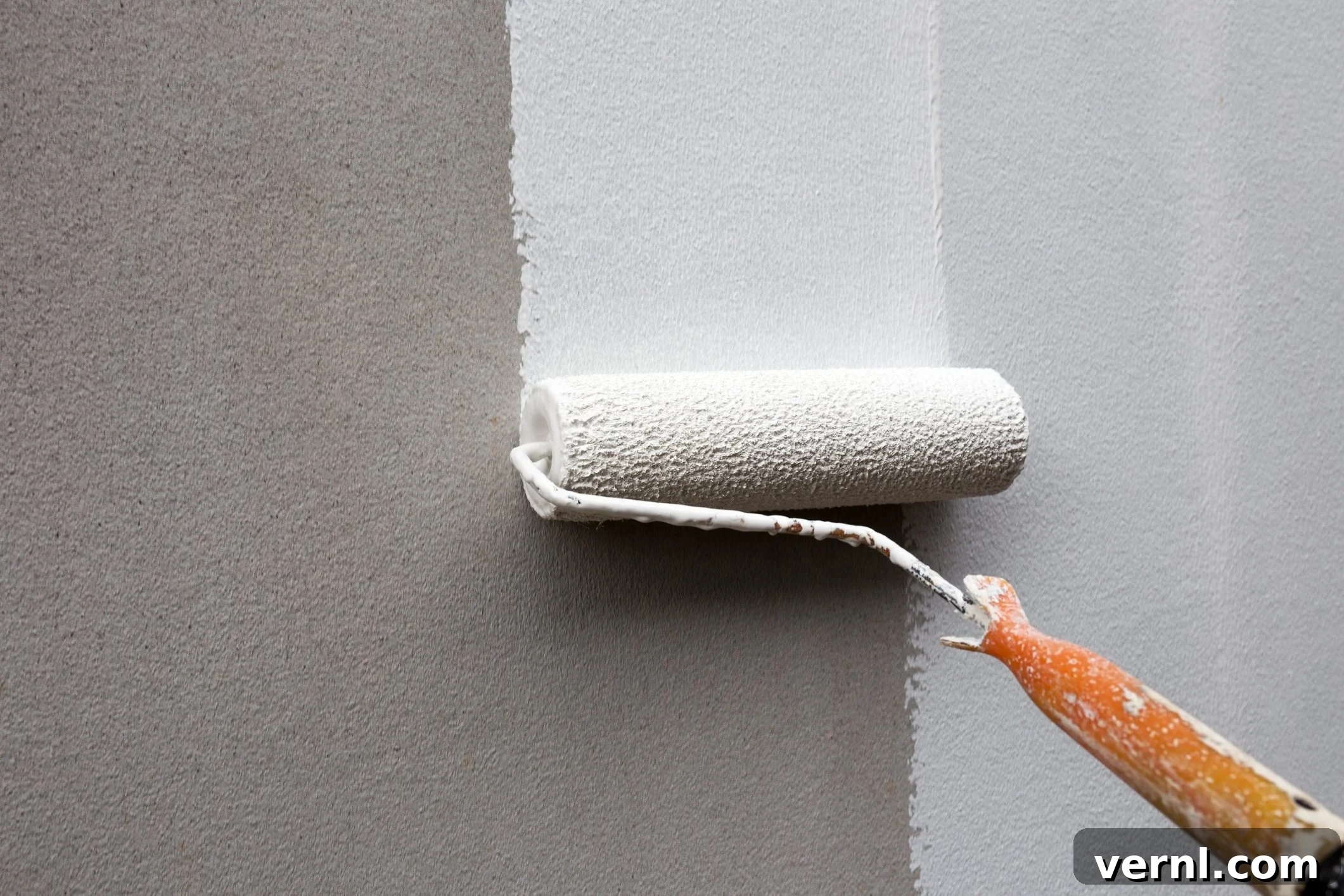
Moving into a new rental home or apartment often comes with the excitement of a fresh start, a blank canvas upon which to build your personal sanctuary. However, for many tenants, this initial enthusiasm can quickly be dampened by the reality of a less-than-perfect interior. My family and I recently experienced this firsthand. Upon moving into our new rental, we had reasonably high hopes for a pristine paint job on the walls. Unfortunately, what we found was far from ideal.
Throughout the house, bare spots, splotchy areas, and uneven application suggested a hurried, careless approach by the previous painters. It appeared as though the paint had been slapped on without much thought or precision, leaving behind a noticeably substandard finish. To compound the issue, every wall was coated in a rather basic off-white color – undeniably drab and lacking any personality. This lackluster aesthetic certainly didn’t align with our vision for a welcoming and personalized living space.
Ideally, if the decision were entirely ours, we would have immediately embarked on a repainting project to address both the quality issues and the bland color palette. However, the reality of renting introduces a layer of complexity. Our lease agreement explicitly states that we cannot make any alterations or changes to the property without obtaining prior written approval from our landlords. Without their green light, we could be stuck enduring a less-than-desirable paint job for the entire duration of our tenancy, which is a frustrating prospect for anyone hoping to truly feel at home.
Securing Permission to Paint Your Rental Home or Apartment
It’s highly probable that if you are a tenant in any type of rental unit, your lease agreement contains similar clauses regarding property modifications. According to Stacy Brown, director of technical training for Real Property Management, an organization with franchises across North America, “Many [rental contracts] do not allow [tenants] to make any alterations to the property without prior written permission.” This makes understanding and navigating your lease agreement the critical first step before you even consider picking up a paintbrush.
With this crucial point in mind, if you’re dreaming of painting your apartment or rental home, your initial action should always be a thorough review of your lease. Pay close attention to sections detailing alterations, modifications, or property changes. If the language even subtly hints that changes are prohibited, or if it requires permission, do not proceed without a direct conversation with your landlord. Initiating this dialogue early and transparently is key to a smooth process.
Should your landlord approve your painting project, congratulations! However, the conversation doesn’t end there. It is absolutely imperative that you obtain this approval in writing. Brown strongly emphasizes this, stating, “If you don’t have it in writing, [the conversation] didn’t happen.” This written documentation—whether an email, a signed addendum to your lease, or a formal letter—serves as irrefutable proof of consent, protecting you from potential disputes or penalties when your tenancy concludes. This documentation should clearly outline what colors can be used, which rooms can be painted, and who is responsible for the cost.
For those still in the process of searching for a rental, Brown offers valuable advice: address the paint issue before you even sign a lease. This proactive approach can save you considerable hassle and disappointment later on. By discussing your desire to paint during lease negotiations, you’ll know upfront whether the landlord is open to the idea. This also prevents you from committing to a home with a color palette that you genuinely dislike or that clashes with your personal style. Furthermore, you might be pleasantly surprised: a landlord might even agree to bring in professional painters to refresh the property before you move in, especially if you can effectively point out specific areas where the existing paint job is clearly substandard or in dire need of an update.
Selecting the Best Paint Colors for Rental Homes or Apartments
Once you’ve received that coveted landlord approval, does that mean you have carte blanche to unleash your wildest color fantasies? Not necessarily, advises Ariana Lovato, owner of Honeycomb Home Design in Arroyo Grande, California. “I would avoid harsh colors,” she cautions. While personal expression is wonderful, a rental property requires a more strategic approach to color selection, prioritizing market appeal and ease of maintenance.
Instead of vibrant, bold hues, Lovato recommends gravitating towards neutral tones. Colors like Accessible Beige from Sherwin-Williams or Behr’s 2023 color of the year, Blank Canvas, are excellent choices. These sophisticated neutrals are not only versatile, easily complementing various decor styles, but they also contribute to a bright and open feel. If your primary goal is to simply improve the quality of a shoddy paint job rather than making a dramatic color statement, these neutral shades are highly effective. They brighten spaces, mask imperfections, and create a clean backdrop.
If you do desire a bit more personality than a standard neutral, that’s perfectly acceptable, but Brown urges tenants to exercise caution and steer clear of super dark or extremely vivid colors, such as deep plum purple or bright Pepto pink. The rationale behind this advice is practical: while you might adore a bold statement color, these intense shades require significant effort and multiple coats to cover up later. This often translates to higher costs for the landlord upon your departure, as they will need to invest more time, paint, and labor to revert the walls to a more universally appealing neutral. Such costs could easily be deducted from your security deposit, turning your creative expression into an expensive mistake.
Why Neutrals Are Best for Rentals
- Universal Appeal: Neutrals appeal to a wider range of people, which is beneficial for landlords aiming to attract future tenants.
- Versatility: They serve as a perfect backdrop for any decor style, allowing you to personalize with furniture, textiles, and art.
- Illumination: Lighter neutrals reflect light, making rooms feel larger, brighter, and more inviting, especially in smaller rental units.
- Easy to Touch Up: Minor scuffs or damage are often easier to blend into neutral walls without a noticeable difference.
- Less Commitment: You can experiment with bold accents in your furnishings without the long-term commitment or reversal cost of dramatic wall colors.
Understanding Who Bears the Cost of Painting a Rental
The financial aspect is often a major concern for tenants considering painting. Does merely inquiring about painting automatically obligate you to cover the costs of paint, supplies, and labor? “That depends,” says Brown. “Most landlords will assume that the renter wants them to pay for it.” However, the division of responsibility for painting costs isn’t always straightforward and often hinges on the reason for the painting.
If your desire for fresh paint stems from the property’s condition—for instance, if the existing paint is peeling, excessively scuffed, or applied poorly—it should ideally fall under the landlord’s responsibility as part of general property maintenance. A landlord has a vested interest in maintaining their property in good condition to attract and retain tenants. However, if your motivation is purely aesthetic, driven by a wish for a different color or a more personalized look, the landlord might be less inclined to pay.
In situations where a landlord initially declines to fund a tenant-requested paint job, Brown suggests that a tenant might successfully persuade them by offering to at least contribute to the cost. This could involve covering the cost of the paint itself, offering to do the labor, or splitting the overall expense. Any such agreement on cost-sharing should, of course, be meticulously documented in writing, detailing who pays for what, to prevent misunderstandings later on. This negotiation can be a win-win: the tenant gets their desired aesthetic, and the landlord benefits from an updated, well-maintained property without bearing the full financial burden.
Consequences of Painting Without Landlord Permission
For tenants who might be tempted to circumvent the rules and paint without securing prior approval from their landlord, Brown issues a clear warning: expect consequences. Disregarding your lease agreement by making unauthorized alterations can lead to a range of undesirable outcomes, some of which can have significant financial and reputational repercussions.
- Forfeiture of Your Security Deposit: This is one of the most common and immediate consequences. Landlords are typically within their rights to withhold part or all of your security deposit to cover the costs associated with repainting the property to its original state or to a neutral color, especially if you chose a color that is difficult to cover.
- Receiving a Bill for Repainting Costs: Beyond your security deposit, you could be billed directly for the full expense of repainting. This is particularly likely if you transformed the walls from subtle and muted tones to bright and gaudy colors, requiring extra coats of primer and paint to reverse. These costs often include not just materials but also professional labor rates.
- An Unfavorable Landlord Reference: A landlord’s reference can be crucial when applying for future rental properties. Unauthorized painting can lead to a negative reference, making it significantly harder for you to secure another rental home or apartment in the future. Landlords often contact previous landlords to inquire about tenant behavior and property upkeep.
- Legal Action: In more serious instances, your landlord may decide to take legal action. This could involve pursuing you in small claims court to recover any costs associated with your unauthorized paint job that exceed your security deposit, along with potential court fees. This adds stress, financial strain, and a legal record that could impact your future.
The risks far outweigh any temporary satisfaction gained from painting without permission. Always prioritize clear communication and written consent to avoid these costly and stressful situations.
Addressing a Substandard Paint Job in Your Rental Unit
What if your intention isn’t to change the color entirely, but merely to rectify existing flaws like repairing paint drips, covering scuffs, or touching up other imperfections in the current paint job? Even in these seemingly minor scenarios, Brown strongly advises discussing the issue with your landlord. There are several compelling reasons for this approach.
Firstly, attempting to paint over flaws yourself with what you believe to be the correct paint can often lead to unsatisfactory results. Matching existing paint color is notoriously challenging. Factors like the age of the original paint, its exact shade, and the sheen (matte, eggshell, satin, etc.) all contribute to the difficulty. As Brown points out, “Touch-up paint never looks good” if it doesn’t perfectly match the surrounding surface, often resulting in noticeable patches that can look worse than the original flaw. Different application methods (brush vs. roller) can also alter the texture and appearance.
Secondly, by informing your landlord of the problem, you open the door for them to address it professionally. Many landlords are willing to bring in professional painters to fix issues that affect the property’s condition and appearance, as it’s part of their responsibility to maintain the unit. This ensures a high-quality repair that seamlessly blends with the existing paint, avoiding unsightly touch-up spots and saving you the time and effort.
Should your landlord, for any reason, be unwilling to address the poor paint job, it’s crucial to document the existing condition thoroughly. Take detailed photos and videos of all flaws before you take any action. If you decide to undertake minor repairs yourself (and only if your lease permits, or with explicit landlord consent), meticulously document your work, including before-and-after photos. This way, you’ll have concrete evidence that your efforts improved the property’s condition, which will be invaluable if the landlord later attempts to penalize you for “alterations” or claim damages when you move out.
Ingenious Wall Painting Alternatives for Rental Properties
“Renters can do things that are not permanent that will make it feel more like home to them,” Brown wisely suggests. Personalizing your living space doesn’t have to involve permanent changes or the risk of losing your security deposit. There’s a plethora of creative, renter-friendly solutions that allow you to infuse your personality into your home without a single drop of paint. Hanging colorful and/or stylish curtains, especially full-length ones, is one remarkably straightforward and impactful option. Curtains add softness, texture, and a pop of color, dramatically transforming the feel of a room while also offering privacy and light control.
Beyond curtains, a world of temporary decor awaits your exploration:
- Self-Adhesive Wall Decals: These versatile, easy-to-apply, and easy-to-remove stickers come in an incredible array of designs, from intricate patterns and inspiring quotes to realistic murals and whimsical graphics. They offer a fantastic way to add visual interest and thematic elements without damaging the walls. You can find high-quality wall decals that mimic the look of wallpaper or hand-painted art.
- Interesting Wall Hangings or Tapestries: Elevate your walls with unique pieces of art, macrame hangings, woven textiles, or tapestries. These elements introduce texture, color, and cultural flair. They can serve as focal points in a room and even help dampen sound. Explore options like this beautiful artificial eucalyptus wall hanging or browse for larger tapestries to cover significant wall space.
- Curated Gallery Walls: A well-arranged gallery wall allows you to display a collection of your favorite photos, artwork, mirrors, or decorative objects. It’s a highly personal way to add visual depth and storytelling to your space, creating a dynamic focal point without altering the wall’s surface. Just ensure you use appropriate hangers that minimize wall damage, such as small picture hooks or removable adhesive strips.
Another increasingly popular and highly effective option for dramatic transformation is removable wallpaper, also known as peel-and-stick wallpaper. “This is the best way to transform a space… and they are so easy to use and remove,” Lovato enthuses. These innovative wallpapers offer the aesthetic impact of traditional wallpaper without the mess, commitment, or damage upon removal. They come in an endless variety of patterns, textures, and colors, allowing for complete room makeovers or the creation of striking accent walls.
Livette’s Wallpaper is Lovato’s personal favorite, known for its quality and diverse designs. Beyond specialized brands, peel-and-stick options are widely available at major retailers like Lowe’s, Amazon, Wayfair, and Target. However, it’s essential to understand that while these products are designed for easy removal, proper and careful installation is paramount. Failure to prepare the wall surface correctly, apply the paper smoothly, or remove it gently can still result in damage to the underlying paint or drywall. If such damage occurs, you may still find yourself forfeiting your security deposit, undermining the very purpose of choosing a temporary solution. Always follow manufacturer instructions diligently for both application and removal to protect your walls and your wallet.