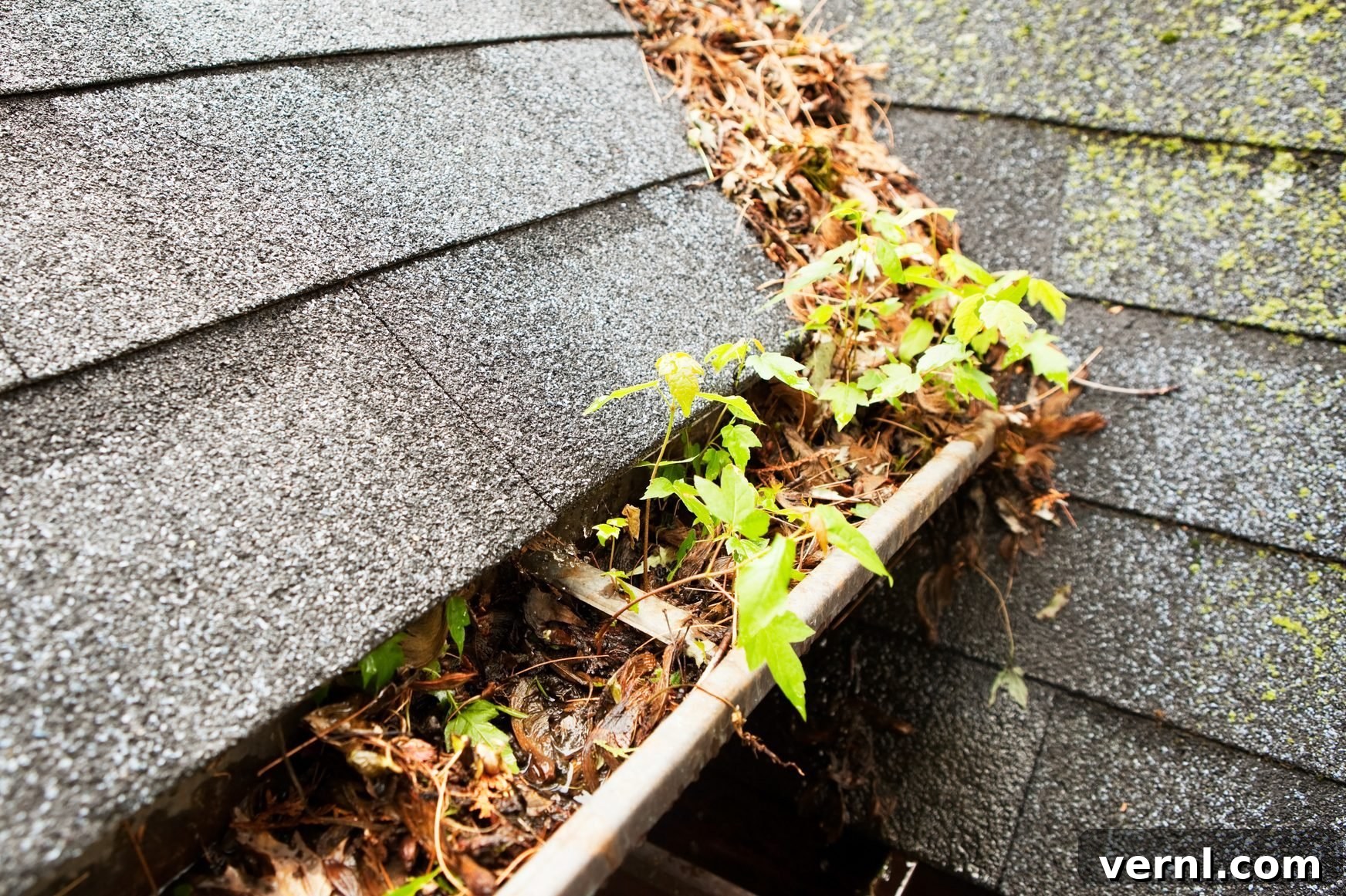
The thought of cleaning your gutters often conjures images of wobbly ladders, precarious heights, and hours of strenuous work. If you find yourself dreading this essential home maintenance task, you are certainly not alone. Many homeowners share this sentiment, and for good reason. The physical demands, coupled with the inherent risks of working at heights, make gutter cleaning one of the least popular chores. I vividly recall my last attempt: the ladder felt heavier, the sun beat down more intensely, and the entire endeavor seemed disproportionately challenging for the perceived reward.
Beyond the discomfort, there are significant safety concerns. The National Institute for Occupational Safety and Health (NIOSH) reports over a hundred ladder-related fatalities in the U.S. annually, along with thousands of injuries. These statistics underscore the critical importance of minimizing ladder usage whenever possible, especially for tasks that can be performed safely from the ground. Whether your reluctance stems from a desire to avoid physical strain, a fear of heights, or a commitment to safety, your concerns are valid and shared.
Fortunately, maintaining clear and functional gutters doesn’t have to involve dangerous ascents. We understand the desire to keep your feet firmly planted on solid ground while ensuring your home is protected from water damage. That’s why we’ve meticulously researched and compiled six ingenious, ladder-free methods to keep your gutters flowing freely. These innovative approaches offer a blend of accessibility, effectiveness, and most importantly, safety, allowing you to tackle this chore with confidence.
As you explore these solutions, it’s crucial to consider the unique characteristics of your home. Gutter height can vary considerably based on your roof pitch, the extent of your eaves’ overhang, and the relative height of your home compared to the surrounding landscape. Additionally, if you plan to use an extension with an existing tool like a shop vacuum, pressure washer, or leaf blower, remember to factor in the length of the tool’s wand or nozzle. A simple measurement can save you a lot of frustration.
To accurately determine the reach you need, grab a measuring tape. Stand comfortably on the ground where you’d typically operate your chosen tool, then measure the distance from your hand to the gutter. Don’t forget to check this in multiple locations around your house! My own gutters, for instance, have a height variance of over a foot due to the slope of my property. This initial step ensures you select a tool or attachment with adequate reach, preventing wasted effort and ensuring effective cleaning.
It’s worth noting for those familiar with previous recommendations that the Looj, a popular gutter-cleaning robot by the makers of the Roomba, is no longer in production. While it captured the imagination, its effectiveness was reportedly more in terrifying squirrels than in delivering a pristine gutter clean!
Effortless Gutter Spray Cleaning with a Hose Adaptor
One of the most straightforward and universally accessible methods for clearing light gutter debris is harnessing the power of water. A dedicated Buyplus 12-foot wand, or similar telescopic attachment, connects directly to your standard garden hose, extending your reach significantly. This simple yet effective tool allows you to direct a concentrated blast of water into your gutters, dislodging leaves, twigs, and other loose accumulations without ever leaving the ground.
Pros of Using a Hose Adaptor
- Highly Accessible: The primary advantage is its low barrier to entry. All you truly need is a functioning garden hose, a common household item. There’s no need for specialized power equipment or extensive setup, making it an ideal tool for quick, routine cleanings.
- User-Friendly Operation: These wands are generally lightweight and easy to maneuver, making the cleaning process less physically demanding compared to some other methods.
- Cost-Effective Solution: Compared to purchasing a pressure washer or hiring professionals, a hose adaptor is a very affordable investment, offering great value for homeowners on a budget.
- Environmentally Conscious (with care): While it uses water, the directed spray can often clear debris quickly, minimizing overall water usage compared to continuous rinsing.
Cons of Using a Hose Adaptor
- The “Waterfall” Effect: Be prepared to get wet! As water blasts into the gutters, some of it inevitably splashes back or cascades down, creating an impromptu shower. While this might be a refreshing bonus on a sweltering August afternoon, it can be quite unpleasant on a crisp, chilly October day, making appropriate waterproof attire a necessity.
- Limited Cleaning Power: While effective for light debris, a standard garden hose adaptor has its limitations. It may struggle with heavily compacted leaves, wet sludge, or stubborn moss that has adhered to the gutter interior. For these more challenging clogs, you might find yourself needing a more powerful solution.
- Potential for Incomplete Cleaning: Without being able to visually inspect the gutters up close, it’s possible to miss some areas or leave behind smaller, sticky residues. This method is best for preventative maintenance rather than tackling severe blockages.
- Water Runoff: The dislodged debris, mixed with water, will flow down your downspouts and potentially onto your landscaping or driveway, requiring a subsequent cleanup.
Boost Your Gutter Cleaning Power with a Pressure Washer
When your gutters are battling stubborn, caked-on grime, compacted wet leaves, or even nascent moss growth, a standard garden hose might not cut it. To inject some serious “oomph” into your gutter cleaning regimen, consider upgrading to an extension specifically designed for pressure washers. Products like the AgiiMan 10-foot extension wand are engineered from robust materials capable of safely handling the high pressure of a power washer, and they typically feature convenient quick-release connectors for rapid assembly and disassembly. This method transforms your pressure washer into a powerful, ground-level gutter clearing machine.
Pros of Using a Pressure Washer Extension
- Superior Effectiveness: The sheer force of a pressure washer stream can blast away almost any type of gutter debris, from dried leaves and twigs to caked-on mud and persistent grime. This makes the cleaning process incredibly quick and thorough, restoring your gutters to pristine condition much faster than manual methods.
- Impressive Reach and Versatility: With the right extension, a pressure washer can effectively clean even second-story gutters and beyond, tackling areas that would otherwise require a dangerously tall ladder. Just ensure you select an extension wand that provides ample length for your specific gutter height.
- Quick-Connect System: Many pressure washer extensions come with quick-connect fittings, significantly speeding up the setup and breakdown process. This efficiency means less time fiddling with connections and more time actively cleaning.
- Deep Cleaning Capability: Beyond just removing surface debris, the high-pressure spray can help dislodge algae and mildew that might be starting to grow inside the gutters, contributing to a cleaner and healthier drainage system.
Cons of Using a Pressure Washer Extension
- Initial Investment Required: The most significant drawback is the prerequisite of owning a pressure washer. If you don’t already have one, the initial purchase price of a quality unit, along with the extension, can be a considerable expense. However, a pressure washer is a versatile tool for many other home cleaning tasks.
- Challenging Control at High Pressure: This is a frequently cited complaint in user reviews. While extensions like the Agiiman are rated for pressure washers up to 4,000 pounds per square inch (psi), controlling a fully extended wand at such high pressures can be extremely difficult and physically demanding. The powerful recoil can make it hard to direct the stream accurately. It’s often advisable to use a lower pressure setting and, for added stability, carefully hook the wand over the edge of the gutter.
- Enhanced “Waterfall” Effect: Just like with a garden hose adaptor, you are almost guaranteed to get wet – and potentially a lot wetter – when using a pressure washer. The increased power means more splash-back. If this is a major concern, consider investing in an extension featuring T-shaped twin nozzles. These ingenious designs are engineered to direct the water flow primarily down the gutter, minimizing spray that comes back over your head and body.
- Potential for Damage: Improper use or excessive pressure can potentially damage gutters, fascia boards, or even the roof shingles. It’s crucial to understand your pressure washer’s settings and to start with lower pressure, increasing it only as needed.
Manual Gutter Clearing with a Specialized Brush
For those who prefer a non-powered, hands-on approach to gutter maintenance, a dedicated gutter brush offers a simple yet effective solution. The Fox Valley Gutter Cleaner by Grixx is a prime example of such a tool, resembling a creative hybrid of a giant pipe cleaner and an oversized bottle brush. Unlike water- or air-powered systems, this method relies purely on mechanical action to dislodge and remove debris, offering a distinct alternative for ladder-free cleaning.
Pros of Using a Gutter Brush
- Affordable Investment: Priced typically around $25, brush cleaners are remarkably budget-friendly, making them accessible to virtually any DIY homeowner. This low cost makes it an excellent entry-level tool for ladder-free gutter maintenance.
- Maximum Accessibility: You don’t need any auxiliary equipment to operate a gutter brush. No power source, no hose, no blower – just the brush itself. This simplicity makes it incredibly convenient to grab and use whenever you notice debris accumulating.
- Straightforward Simplicity: The cleaning motion is intuitive and easy to master: a simple scoop-and-twist action is all it takes to gather and clear debris from the gutter channel. There’s no complex machinery to operate or safety protocols for high-pressure water/air to learn.
- Controlled Cleaning: Since you’re manually manipulating the brush, you have precise control over the cleaning process. This allows you to target specific clumps of debris and work them loose, which can be advantageous in certain situations.
- No Splashing or Spray: Unlike water-based methods, using a brush means you stay completely dry. This is a significant benefit for those who dislike getting wet during chores, especially in colder weather.
Cons of Using a Gutter Brush
- Repetitive and Labor-Intensive: While simple, the process involves a lot of scooping, twisting, and repositioning. Cleaning an entire gutter system with a brush can be quite time-consuming and physically tiring, especially for homes with extensive guttering or heavy debris.
- Less Effective for Stubborn Debris: While good for loose leaves and light blockages, a brush may struggle with wet, compacted sludge, sticky debris, or deeply embedded moss. It requires significant manual effort to dislodge tougher materials, and may not achieve the same level of thoroughness as powered methods.
- Visual Limitation: You still cannot directly see into the gutter channel, meaning you rely on feel and sound to determine if all debris has been removed. This can lead to missed spots or an incomplete clean.
- Messy Debris Removal: The brush pulls debris out of the gutter, often dropping it onto the ground below, necessitating a secondary cleanup effort in your yard or driveway.
Efficient Gutter Cleaning with a Leaf Blower Attachment
For clearing dry leaves and light debris, your existing leaf blower can be transformed into a powerful ladder-free gutter cleaning tool with the right attachment. Similar in concept to extensions for power washers or garden hoses, kits like the Worx GutterPro Attachment Kit extend the reach of your leaf blower. These specialized kits typically feature several interlocking tubes that culminate in a distinctive hooked shape, perfectly designed to direct a powerful stream of air down into your gutters and blow away accumulations from the safety of the ground.
Pros of Using a Leaf Blower for Gutters
- Broad Compatibility: A significant advantage of many leaf blower gutter attachment kits is their wide compatibility. According to manufacturers like Worx, there’s “a 90% chance it’ll securely attach to the blower that’s already in your garage.” This means you likely won’t need to purchase a new leaf blower, making it a cost-effective solution if you already own one.
- Quick and Efficient for Dry Debris: For gutters filled with dry leaves, pine needles, and other light, loose debris, a leaf blower attachment can clear them out remarkably quickly. The powerful airflow sweeps away material with impressive speed, making it one of the fastest ladder-free methods for this type of debris.
- Completely Dry Process: Unlike water-based methods, using a leaf blower means no splashing or getting wet. This is particularly appealing for cleaning in cooler weather or for homeowners who simply prefer to stay dry.
- Versatility of the Leaf Blower: Since you’re leveraging an existing tool, you get added utility. Your leaf blower remains useful for its primary purpose, and with the attachment, it gains a new function, maximizing your tool investment.
Cons of Using a Leaf Blower for Gutters
- Requires an Existing Leaf Blower: If you don’t already own a leaf blower, you’ll need to either borrow or purchase one, adding to the initial cost. For homes without other leaf blowing needs, this might make the method less appealing.
- Effectiveness Hinges on Equipment Power: The success of this technique largely depends on the power output of your leaf blower. A blower with a cubic feet per minute (CFM) rating of less than 300 may struggle, especially with higher gutters or heavier debris. The higher the CFM and MPH (Miles Per Hour) of your blower, the more effective it will be. Wet, matted, or heavy debris will significantly diminish its effectiveness, potentially requiring a different method.
- Creates a Mess: As the name suggests, a leaf blower blows debris out of the gutters. This means leaves, twigs, and dust will be scattered over your lawn, driveway, and potentially your neighbors’ property, necessitating a cleanup of the surrounding area afterward.
- Noise Pollution: Leaf blowers, especially gas-powered models, can be quite noisy. This can be a concern for neighbors or if you prefer quieter cleaning methods.
- Visibility Issues: Like other ground-level methods, you can’t directly see the inside of your gutters, making it hard to confirm that all debris has been thoroughly cleared, particularly in tricky corners or around downspout openings.
Clear Your Gutters with a Versatile Shop Vacuum
If a leaf blower isn’t part of your current tool arsenal, fret not – your trusty shop vacuum can readily step into the role of a ladder-free gutter cleaner. The Vacmaster V2GK Gutter Cleaning Kit, or similar attachments, can convert any standard two-and-a-half-inch shop vacuum into a powerful suction device capable of drawing out gutter debris. An added benefit? Most shop vacuums also feature a blowing port, allowing you the flexibility to either suck up the gunk or blow it away, adapting to the specific nature of your gutter’s contents.
Pros of Using a Shop Vacuum for Gutters
- Exceptional Versatility: This method offers the best of both worlds. The primary vacuuming function allows you to suck up leaves, wet debris, mud, and even small stones directly into the shop vac’s canister, significantly limiting the mess generated on your lawn or driveway. Having the option to switch to a blower mode provides flexibility, allowing you to adapt to the level and type of gunk in your gutter – vacuum wet, heavy material, and blow dry, lighter debris.
- Contained Debris Collection: A major advantage is that the debris is collected, rather than scattered. This means a much cleaner surrounding area during and after the cleaning process, saving you time on post-cleanup.
- Effective for Wet and Dry Debris: Shop vacuums are designed to handle both dry and wet messes, making them highly effective for gutters filled with soggy leaves, compacted mud, or even standing water. This adaptability makes them superior to leaf blowers for wet conditions.
- Thorough Cleaning: The suction power can pull out stubborn, compacted debris that blowing might just push further along. This often results in a more thorough clean, especially around downspout openings where clogs frequently form.
Cons of Using a Shop Vacuum for Gutters
- Requires a Shop Vacuum: As with the leaf blower, this tool won’t work unless you already own a shop vacuum. If you don’t, the initial purchase of the vacuum itself, in addition to the gutter kit, represents an investment. However, a shop vacuum is an incredibly versatile tool for many other garage and home cleaning tasks.
- Potential for Clogging the Vacuum: While powerful, extremely large or dense clumps of debris, particularly wet ones, can still clog the vacuum hose or the attachment. Regular pauses to check for and clear blockages may be necessary.
- Heavy and Cumbersome: Shop vacuums, especially larger models, can be heavy to move around your home. The combination of the vacuum unit and the extended attachment can make the entire setup somewhat cumbersome to maneuver, particularly if the canister fills up with heavy, wet debris.
- Power Source Dependent: Shop vacuums are electric, meaning you’ll need access to power outlets and potentially long extension cords to reach all areas of your home.
- Noise Level: Shop vacuums, like leaf blowers, can be quite noisy during operation, which might be a consideration for some users or in certain environments.
The Ultimate Ladder-Free Solution: Hire a Professional
For those who prioritize absolute convenience, peace of mind, and minimal effort, the ultimate ladder-free gutter cleaning solution is to hire a professional service. This option completely removes you from the task, entrusting it to experienced hands equipped with the right tools and expertise. While it involves a monetary cost, the savings in time, effort, and the elimination of safety risks often make it a worthwhile investment for many homeowners.
The pricing for professional gutter cleaning services is typically determined by several key factors: the total linear footage of your gutters, the height of your gutters (single-story vs. multi-story), the accessibility of the gutters, and the severity of the debris. Costs will naturally vary by region and individual service providers, but here are general base numbers to give you an idea of what to expect:
- Single-story gutters: Expect to pay approximately $0.80 to $1.20 per linear foot. This range accounts for differences in local labor costs and the ease of access.
- Two-story gutters: The cost typically increases due to the added challenge and safety considerations of working at greater heights, ranging from $1.50 to $2.00 per linear foot.
- Additional Factors: Heavily clogged gutters, difficult-to-access areas (e.g., steep roofs, dense landscaping), or homes with numerous complex rooflines may incur additional charges. Some services might also offer package deals for multiple cleanings per year.
When you request a quote from a professional gutter cleaning service, be proactive and ask detailed questions to ensure you understand exactly what’s included. Crucial points to clarify are:
- Downspout Clog Clearing: Confirm that their service explicitly includes clearing any blockages within the downspouts, not just the horizontal gutter channels. Clogged downspouts are a common cause of water damage and often require specialized tools to clear effectively.
- Minor Repairs and Maintenance: Inquire if they provide an option for gutter repair work, such as reattaching loose sections, sealing small leaks, or replacing damaged hangers, should they identify any issues during the cleaning process. Many professionals offer these minor repair services on the spot or can provide a separate quote.
- Debris Removal: Confirm if they will bag and dispose of the removed debris, or if it will be left on your property. Most reputable services will include debris removal as part of their standard package.
- Inspection: Ask if they perform a basic inspection of your gutter system’s overall condition as part of the service, which can alert you to potential future problems.
- Insurance and Licensing: Always ensure that the company is properly licensed and insured. This protects you from liability in case of an accident on your property.
By entrusting your gutter cleaning to professionals, you not only eliminate the risks associated with ladder work but also ensure a thorough and efficient job, keeping your home protected from the elements without lifting a finger.
Choosing Your Ladder-Free Gutter Cleaning Method
With a variety of effective ladder-free gutter cleaning options available, selecting the right method for your home comes down to several factors: the type and amount of debris you typically encounter, your budget, the tools you already own, and your personal comfort level with DIY tasks. For light, dry leaf accumulation, a leaf blower attachment might be the fastest. For stubborn, wet messes, a pressure washer or shop vacuum offers superior power. If you prefer a quiet, manual approach, a gutter brush is ideal. And for complete peace of mind, hiring a professional remains an excellent choice.
No matter which method you choose, regular gutter maintenance is paramount. Clogged gutters can lead to serious and costly problems, including foundation damage, fascia rot, basement flooding, and compromised landscaping. By adopting a proactive, ladder-free approach to gutter cleaning, you can protect your home, save money on potential repairs, and enjoy greater safety and convenience. Say goodbye to the ladder and embrace a smarter way to keep your gutters clear and your home well-maintained!