Navigating winter roads presents unique challenges, demanding the right equipment to ensure safety and control. While many drivers recognize the importance of good tires, a crucial symbol often overlooked is the 3-Peak Mountain Snowflake (3PMS) emblem. This distinctive mark on a tire’s sidewall is more than just a decoration; it’s a certification of superior performance in severe winter conditions. Understanding what this symbol means, why it’s important, and how it differs from other tire designations can be the key to confident and secure winter driving. This comprehensive guide delves into the history, significance, and practical implications of the 3PMS symbol, helping you make informed decisions for your vehicle’s winter readiness.
What Is the 3-Peak Mountain Snowflake Symbol? A Mark of True Winter Performance
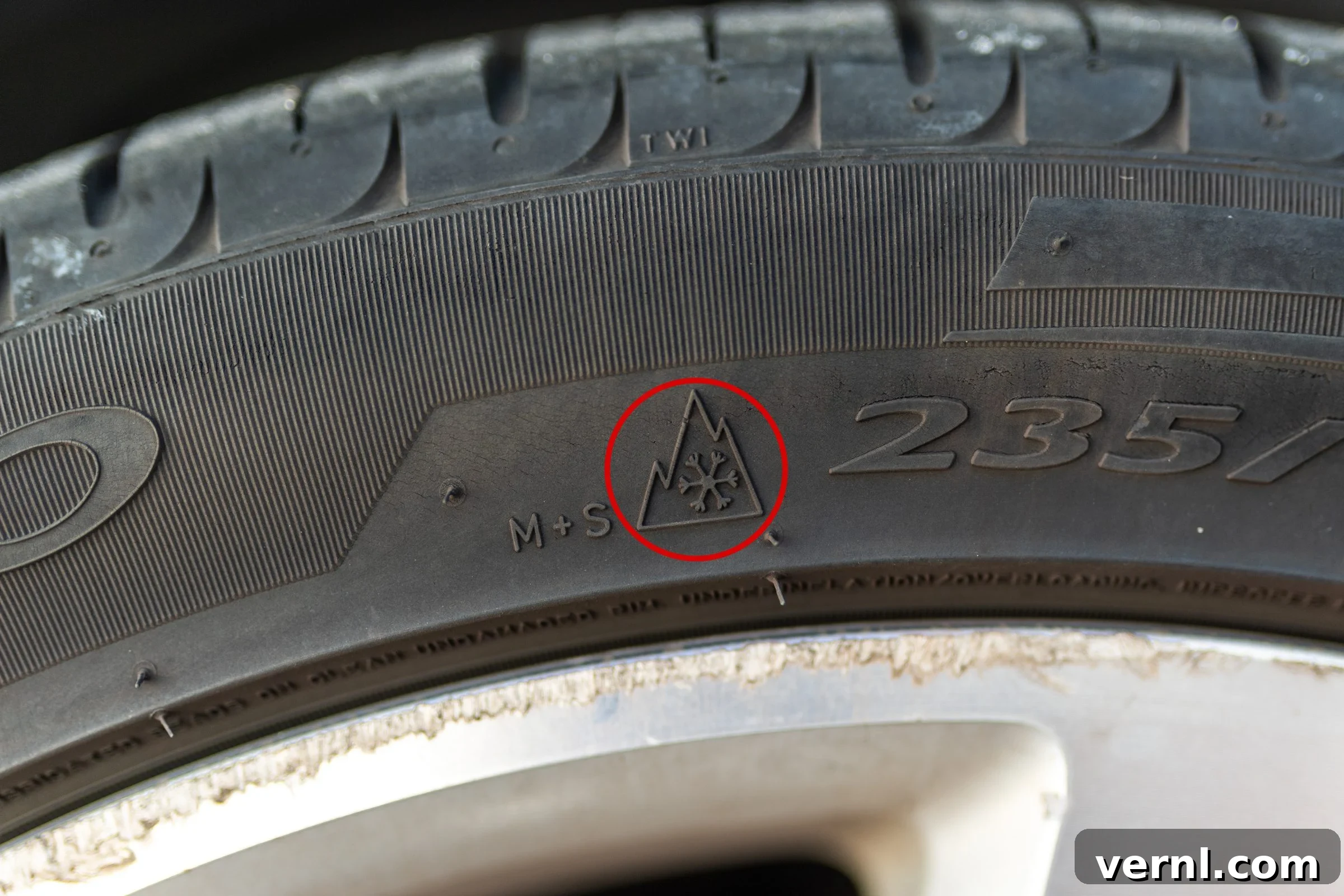
The 3-Peak Mountain Snowflake Symbol, often abbreviated as 3PMS, is an internationally recognized icon signifying a tire’s proven capability in harsh winter environments. Visually, it consists of a six-pointed snowflake set inside a three-peak mountain silhouette. This symbol is not merely applied based on a tire’s appearance or tread design; rather, it indicates that the tire has undergone and passed specific, rigorous performance tests under controlled winter conditions.
Specifically, tires bearing the 3PMS symbol are tested for their ability to accelerate on medium-packed snow. The core of this testing focuses on longitudinal traction, demonstrating the tire’s grip when moving forward from a stop or accelerating. While braking and turning capabilities are undeniably critical for overall winter safety, they are not the primary metrics evaluated for the 3PMS certification itself. However, tires designed to meet this standard typically incorporate features that enhance all aspects of winter performance.
To earn the 3PMS designation, a tire must achieve a traction index score of at least 110. This means it has demonstrated an ability to accelerate at least 10 percent faster than a standard reference all-season tire that does not carry the 3PMS rating. It’s important to note that while many 3PMS tires are dedicated winter tires, some advanced all-season tires have also been engineered to meet these stringent requirements, offering a year-round solution for regions with moderate but significant winter weather.
The development of the 3PMS symbol was a collaborative effort initiated in 1999 by the U.S. Tire Manufacturers Association and the Tire and Rubber Association of Canada. Their goal was to establish a clear, standardized identifier for tires truly capable of handling severe snow conditions, thereby improving road safety. Today, tire manufacturers are required to meet these performance standards for the 3PMS symbol in key markets across the U.S., Canada, and Europe, reflecting its global importance.
What sets 3PMS-rated tires apart physically? They are typically constructed from a specialized rubber compound that remains pliable and flexible even in sub-freezing temperatures, unlike standard all-season rubber that can harden and lose grip. Furthermore, these tires often feature a unique tread design incorporating numerous tiny cuts across their surface, a technique known as siping. Siping creates thousands of additional biting edges that significantly improve traction on both snow and ice, providing enhanced grip and stability when it matters most.
Paul Ulibari, general manager of Colorado Tire and Service in Denver, strongly emphasizes the unparalleled performance of 3PMS tires during severe winter storms, particularly in challenging environments like the Rockies. “They just don’t compare,” Ulibari states, underscoring the critical difference these specialized tires make in adverse conditions.
Where Is This Symbol Found? Avoiding Common Confusions
Identifying a 3PMS-certified tire is straightforward once you know where to look. “The symbol is on the sidewall, and it’s very distinct,” Ulibari confirms. This small, easily recognizable icon is typically molded into the rubber of the tire’s sidewall, alongside other critical information like tire size, load index, and speed rating.
However, Ulibari also highlights a common misconception among drivers: confusing mud and snow (M+S) tires with 3PMS-rated tires. Many consumers, influenced by the robust appearance and aggressive, knobby design of M+S tires, mistakenly believe these are sufficient for severe winter driving. Mud and snow tires are identifiable by an “MS” or “M+S” symbol on their sidewall, and while they offer better traction than standard street tires in light snow and muddy conditions, they do not meet the rigorous performance criteria of the 3PMS standard for severe snow. “People think the bigger and badder the tire looks, the better it’ll do in snow,” Ulibari explains. “But that’s not actually the case.” The 3PMS symbol, unlike the M+S designation, is performance-based and assures a higher level of safety and control in truly challenging winter weather.
Are Some Cars Required To Have 3PMS Tires? Legal Mandates for Winter Safety
The importance of 3PMS tires extends beyond personal safety and vehicle performance; in certain regions, their use is legally mandated during specific winter months to ensure collective road safety. These laws are typically implemented in areas prone to heavy snowfall and icy conditions, where inadequate tire traction can lead to significant hazards and traffic disruptions.
For instance, in the Canadian provinces of British Columbia and Quebec, drivers are legally required to equip their vehicles with 3PMS-rated tires (or dedicated winter tires) from December to March. These regulations aim to reduce accidents, maintain essential services, and prevent roads from becoming impassable during peak winter periods.
Similarly, during winter storms, Colorado enforces a traction law. This law mandates that drivers use tires with a minimum tread depth of at least 3/16th of an inch, and critically, that these tires must bear the 3PMS symbol. The Colorado traction law is an example of how authorities recognize the superior grip and safety offered by 3PMS tires in severe weather, making them a legal necessity rather than just a recommendation. Non-compliance with such laws can result in fines and, more importantly, put drivers and others at increased risk on hazardous roads. These legal requirements underscore the fact that 3PMS tires are not just an upgrade, but an essential safety feature for regions experiencing significant winter weather.
What Other Information Can Be Learned From the Symbols On Tires? Decoding the Sidewall
Beyond the crucial 3-Peak Mountain Snowflake symbol, a tire’s sidewall is a rich repository of information, offering insights into its design, capabilities, and compliance with safety standards. Understanding these various tire symbols is essential for proper vehicle maintenance, safe driving, and ensuring you have the right tires for your specific needs.
The first set of characters typically indicates the **type of tire** and its **dimensions**. For example, a common marking might read “P215/65R15”.
- The initial letter, such as ‘P’, designates the tire type. “P” stands for passenger car tire, while “LT” indicates a light truck tire. Duane “Doc” Watson, a technical trainer at Bosch Mobility Aftermarket, emphasizes the importance of this initial letter for vehicle compatibility.
- Following the letter, “215” represents the tire’s section width in millimeters, from sidewall to sidewall.
- “65” is the aspect ratio, indicating the height of the sidewall as a percentage of the tire’s width. In this case, the sidewall height is 65% of 215mm.
- The letter “R” specifies the tire’s construction, with “R” being the most common, signifying a radial tire. Other constructions like “D” for diagonal (bias ply) or “B” for belted bias are less common in modern passenger vehicles.
- Finally, “15” denotes the diameter of the wheel (rim) the tire is designed to fit, measured in inches.
Next to the size, you’ll find the **Load Index** and **Speed Rating**. These are often presented as a two-digit number followed by a letter, for instance, “91H”.
- The **Load Index** (e.g., “91”) is a numerical code that corresponds to the maximum weight capacity a single tire can safely carry when properly inflated. A higher number indicates a greater load capacity. This is critical for vehicle safety, especially when carrying heavy loads or passengers.
- The **Speed Rating** (e.g., “H”) is an alphabetical code that indicates the maximum safe speed at which the tire is designed to perform for extended periods. Speed ratings range from A1 (lowest) to Y (highest), with common ratings like “S” for 112 mph, “T” for 118 mph, “H” for 130 mph, and “V” for 149 mph. It’s crucial never to exceed your tire’s speed rating, even if your vehicle is capable of higher speeds.
Another vital marking is the **DOT Code**. This code, beginning with “DOT”, signifies that the tire complies with U.S. Department of Transportation safety standards. It also includes valuable information about the tire’s manufacturing. The last four digits of the DOT code indicate the week and year the tire was manufactured (e.g., “3523” means the 35th week of 2023). This is crucial for assessing tire age, as tires generally have a recommended service life, typically around 6-10 years, regardless of tread wear.
Additionally, tires may feature **UTQG (Uniform Tire Quality Grading) ratings** for treadwear, traction, and temperature. Justin Dugan of American Trucks explains, “Additionally, ratings for tread wear, traction and temperature indicate the tire’s expected lifespan, grip capability and heat resistance.”
- **Treadwear** is a comparative rating based on the wear rate of a tire tested under controlled conditions. A tire with a treadwear rating of 400 is expected to last twice as long as a tire with a rating of 200.
- **Traction** ratings (AA, A, B, C) measure a tire’s ability to stop on wet pavement under controlled conditions. AA is the highest rating.
- **Temperature** ratings (A, B, C) indicate a tire’s resistance to heat generation and its ability to dissipate heat. A is the highest rating, signifying better heat resistance.
Some specialized tires also feature **rotation direction** arrows or **inside/outside labels**, particularly if they are directional or asymmetric. These markings help ensure proper installation for optimal performance, especially regarding water displacement and handling characteristics. As Dugan notes, “Some tires also feature rotation direction and inside/outside labels, especially if they are directional or asymmetric, which helps ensure optimal performance.”
However, Chris Pyle, an auto expert with JustAnswer, offers a word of caution: “not all of the symbols are standardized.” While core information like size, load, and speed are regulated, some other markings or brand-specific designations might vary. Pyle advises, “It would be best to look at the brand, name and size and then compare them online to see how they review for different driving scenarios.” This approach ensures drivers can cross-reference manufacturer claims with independent reviews and user experiences, providing a more holistic understanding of a tire’s suitability.
Who Makes Tires With the 3-Peak Mountain Snowflake Symbol? Leading Brands for Winter Performance
A wide array of reputable tire manufacturers produce tires certified with the 3-Peak Mountain Snowflake symbol, offering a broad selection for various vehicle types and driving preferences. These brands invest heavily in research and development to engineer tires that excel in challenging winter conditions, providing drivers with confidence and safety. Top manufacturers known for their 3PMS-rated offerings include:
- Goodyear
- Michelin
- Hankook
- Cooper
- Nokian Tyres (pioneer in winter tire technology)
- Toyo
- BF Goodrich
- Yokohama
- Kumho
- Nitto
- Vredestein
This list represents a fraction of the brands committed to producing high-performance winter and all-weather tires that meet the stringent 3PMS standards, ensuring drivers have access to reliable options for their winter driving needs.
Best Tires With the 3PMS Symbol: Top Picks for Superior Winter Grip
Choosing the right 3PMS tire depends on your specific vehicle, driving habits, and local winter conditions. Here are a few top recommendations highly praised for their performance and reliability, often highlighted by experts like Paul Ulibari.
Cooper Discoverer AT3 4S
The Cooper Discoverer AT3 4S is an exceptional all-season, all-terrain tire specifically designed for trucks and SUVs, earning its 3PMS rating through impressive winter performance. Paul Ulibari proudly uses these tires on his own truck, a testament to their year-round versatility and robust capabilities. He appreciates the convenience of not needing to swap tires seasonally, stating, “I don’t want to be taking them on and off.” Beyond their all-season designation, their performance on snow is truly remarkable, with Ulibari noting, “You won’t go back to winter without one.” He emphasizes the profound difference they make in critical safety aspects: “The stopping ability, the handling ability is night and day.” This tire combines aggressive all-terrain traction with advanced winter compounds and siping, making it a stellar choice for drivers who demand consistent performance in varied conditions, from dry pavement to deep snow.
Michelin X-Ice Snow Tires
For those seeking dedicated winter performance, the Michelin X-Ice Snow tires are a standout choice. These 3PMS-rated tires are engineered specifically for passenger cars, SUV crossovers, and luxury performance vehicles, providing uncompromising grip and stability in the most severe winter conditions. Ulibari particularly commends them as a budget-friendly pick given their exceptional estimated 40,000-mile life—a significant advantage for dedicated winter tires. He highlights a fascinating design feature: “As it starts wearing, it creates an almost rough texture on the tread that literally helps get that additional traction for stopping, handling, acceleration.” This innovative EverGrip technology ensures consistent winter performance throughout the tire’s lifespan, maintaining excellent traction on snow and ice even as the tread wears down. The Michelin X-Ice Snow offers a premium driving experience characterized by quiet comfort, precise handling, and, most importantly, superior safety in icy and snowy environments.
Toyo Celsius All-Season Tire
The Toyo Celsius all-season tire also earns a strong recommendation from Paul Ulibari for its impressive balance of year-round functionality and reliable winter-weather performance. This 3PMS-rated tire is designed to offer confident traction in cold temperatures, light snow, and slush, making it an excellent choice for drivers in regions that experience moderate winters but prefer not to switch to dedicated winter tires. Available for passenger cars, SUVs, crossover SUVs, and even commercial grades, the Toyo Celsius provides versatility across a broad range of vehicles. Its specialized tread compound and design feature snow claws and multi-wave sipes, which work together to enhance grip on snowy and icy surfaces, while maintaining stability and handling on wet and dry roads. It’s a compelling option for those seeking a single tire solution that delivers peace of mind through all four seasons, with a notable emphasis on winter capability.
About the Experts
- Paul Ulibari is the general manager of Colorado Tire and Service in Denver, bringing extensive practical knowledge and experience in tire selection and vehicle maintenance, particularly for challenging Rocky Mountain conditions.
- Duane “Doc” Watson is a highly respected technical trainer at Bosch Mobility Aftermarket. With over 45 years of experience in automotive repair and training thousands of technicians, Doc has earned numerous industry accolades, including Chevrolet Technician of the Year and Buick Service Master of the Year, making him a true authority on automotive components and systems.
- Chris “Moose” Pyle is a master-certified technician with more than two decades of automotive experience. As an expert for JustAnswer.com since 2006, he dedicates his time to answering hundreds of car maintenance and repair questions daily, offering practical and reliable advice to a vast audience.
- Justin Dugan serves as a brand ambassador at American Trucks and has been a prominent automotive writer and TV host since 2011. His expertise lies in aftermarket parts, vehicle performance, and consumer insights within the truck and off-road community.