The art of wood finishing boasts a rich history, stretching back millennia before the Christian era. While the late 19th century introduced and popularized synthetic materials like nitrocellulose lacquer and polyurethane, offering robust wood protection, these are fundamentally plastics. For many discerning woodworkers and enthusiasts who deeply appreciate the inherent beauty and tactile warmth of natural wood, covering it in a plastic-like film feels counterintuitive, if not sacrilegious.
For those seeking an authentic alternative to plastic-based finishes, penetrating wood oils represent an elegant and time-honored solution. During my extensive experience in furniture finishing, I discovered a profound appreciation for a simple yet incredibly effective regimen: two coats of quality Danish oil, followed by a meticulous application of furniture wax and a thorough buffing. This method consistently yielded stunning results, highlighting the wood’s natural character without obscuring it.
It’s worth noting that Danish oil, while an excellent choice, isn’t always a purely natural wood oil, as some formulations may incorporate varnish – a detail we will explore further. Nevertheless, its blend of durability, ease of maintenance, and the captivating aesthetic it imparts makes it a perennial favorite. The inherent advantage of wood oil lies in its ability to penetrate deep into the wood grain, rather than simply sitting on the surface. This deep saturation ensures that an oil finish will never peel, chip, or flake away, a common failure mode of surface coatings. While oil finishes will naturally wear down over time, their restoration is remarkably straightforward. A simple process of wiping away old wax with a solvent like mineral spirits, light sanding, and applying a fresh coat of oil can bring the finish back to life. Wood oils are also suitable for outdoor furniture, though for robust protection against sun-induced fading, a heavily pigmented oil is essential, as unpigmented oils offer minimal UV resistance.
Understanding Wood Oil: The Natural Choice for Protection and Beauty
At its core, wood oil is a specialized type of finish designed to cure and harden within the wood grain, forming an integral part of the timber’s protective barrier. This internal hardening mechanism is crucial for the longevity and resilience of furniture. It’s important to distinguish these hardening oils from non-hardening varieties like olive oil or mineral oil. While non-hardening oils are occasionally used on items like cutting boards and chopping blocks due to their food-safe properties, they are generally unsuitable for furniture. Non-hardening oils can remain sticky, attract dirt, and eventually go rancid, compromising the finish and the wood itself.
The magic of hardening wood oils lies in their chemical reaction with oxygen, a process known as polymerization. When exposed to air, the oil molecules cross-link, forming a durable, plastic-like polymer network that infuses the wood fibers. Only a select few natural sources provide oils capable of this hardening transformation. One primary source is the nut of the tung tree (Vernicia fordii), native to China and parts of Southeast Asia, which yields tung oil. Another vital source is the ripe seed of the flax plant (Linum usitatissimum), cultivated worldwide, which provides flaxseed oil.
Raw pressed flax oil is edible as flaxseed oil. However, once it undergoes a specific boiling process (which actually involves adding metallic driers rather than literal boiling), it transforms into inedible linseed oil, a potent hardening oil. Tung oil generally offers superior hardness and water resistance compared to linseed oil and is often preferred for use on its own in its pure form. Linseed oil, while effective, frequently serves as a foundational ingredient in paints and varnishes due to its excellent film-forming properties and economical cost.
Many modern wood oil formulations expertly combine these two primary hardening oils with a solvent, typically mineral spirits. The solvent thins the oil, allowing for deeper penetration into the wood and accelerating drying times. Some advanced formulations may also incorporate a small amount of varnish, enhancing the finish’s hardness and water resistance. Additionally, wood oil formulations that include pigments can serve a dual purpose, functioning both as a protective finish and a wood stain, imparting color while still offering the benefits of an oil finish.
Exploring the Diverse World of Wood Oil Types
The market for wood finishing oils is rich with brands and specialized formulations. However, most of these products are variations built upon four fundamental types of wood oils, each with distinct characteristics and applications.
Pure Tung Oil: The Premium Protector
In its unadulterated form, tung oil is highly regarded by professional woodworkers for its exceptional ability to penetrate deep into wood fibers, creating a remarkably durable and completely moisture-resistant seal. Its ease of application is a significant advantage, and unlike some other oils, it retains its natural clarity over time, resisting yellowing, which preserves the wood’s true color. The resulting finish is visually stunning, offering a deep, rich luster that truly enhances the wood’s grain. However, tung oil comes with a few considerations: it tends to be more expensive than other options, emits a distinctive and strong odor during application and curing, and has a relatively short shelf life once opened, requiring careful storage.
Boiled Linseed Oil (BLO): The Versatile Workhorse
Pure boiled linseed oil (BLO), like tung oil, is celebrated for being non-toxic once fully cured and remarkably easy to apply, making it a favorite for beginners and seasoned craftsmen alike. The “boiled” designation is a bit of a misnomer; it signifies the addition of metallic driers (such as cobalt or manganese) that significantly accelerate the oil’s drying and curing process compared to raw linseed oil. While BLO provides a beautiful, natural finish, it doesn’t achieve the same level of hardness or water resistance as tung oil, often necessitating more frequent maintenance and reapplication. Furthermore, a BLO finish is susceptible to UV radiation, which can cause it to gradually yellow over time, altering the wood’s appearance. It also creates an environment conducive to mildew growth, especially in humid conditions, which can lead to unsightly dark spots on the finish.
Teak Oil: The Outdoor Defender
Despite its evocative name, teak oil is not derived from teak wood itself. Instead, it is a proprietary blend, a careful formulation typically combining tung and linseed oils with varying amounts of varnish and a solvent. Due to its inclusion of varnish, which forms a surface film, teak oil isn’t considered a pure penetrating oil in the strictest sense; many finishers aptly refer to it as a “wiping varnish.” A key advantage of teak oil, particularly for outdoor applications, is its excellent sun-blocking properties. These UV inhibitors help protect wood from the damaging effects of sunlight, making it a popular and highly effective choice for outdoor furniture, especially those crafted from naturally oily woods like teak.
Danish Oil: The User-Friendly Enhancer
Similar to teak oil, Danish oil is another widely used “wiping varnish” blend. Its composition typically includes a combination of tung and linseed oils, varnish, and a solvent, though the precise formula can vary considerably between manufacturers. Danish oil often incorporates pigments, allowing it to subtly enhance or alter the wood’s natural color while providing protection. It gained its name because it excels at creating a finish reminiscent of the elegant, understated appearance of traditional Danish modern furniture. Danish oil is primarily formulated for interior use, offering a beautiful, durable, and easily maintainable finish that emphasizes the wood’s inherent grain and texture without a heavy surface build-up.
Selecting the Ideal Wood Oil for Your Project
Choosing the right wood oil hinges on several factors, including the type of project, desired aesthetic, and your willingness to commit to application and maintenance. Pure tung oil, with its superior hardness and water resistance, stands as an excellent choice for nearly any finishing situation, particularly those requiring maximum protection, such as countertops or marine applications. However, its higher cost and slower drying time mean that proper application can be a time-consuming endeavor, often stretching the finishing process over several days.
For many woodworkers seeking a balance of durability, aesthetic appeal, and faster turnaround, blended oil formulations that incorporate varnish for added hardness and quicker drying are often preferred. As a general guideline, Danish oil is an exceptional choice for interior woodwork, where its ability to produce a subtle, natural, and easily repairable finish is highly valued. For exterior applications, teak oil is usually the go-to option, specifically formulated with UV inhibitors to protect against the harsh elements and maintain the wood’s appearance over time. Due to the significant variations in formulation between different brands, it is always advisable to thoroughly read customer reviews and product specifications before committing to a purchase. Even with diligent research, the true performance and final aesthetic of a particular wood oil often only become apparent after you’ve tested it on a scrap piece of your chosen wood.
Mastering Wood Oil Finish Application Techniques
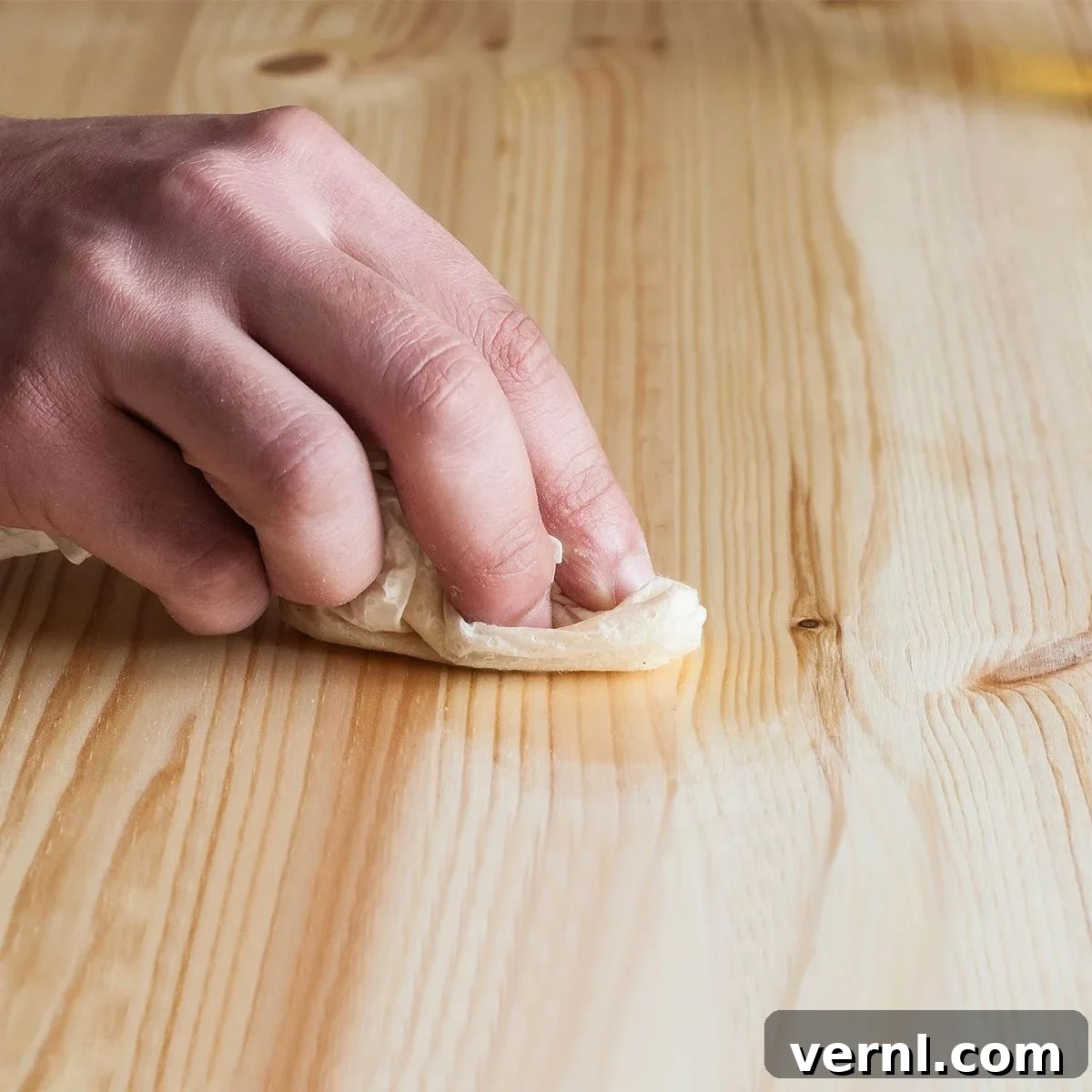
Applying a wood oil finish is a straightforward process, achievable with either a clean rag or a brush. Regardless of the tool, always apply the oil generously in the direction of the wood grain. After allowing the oil to penetrate for approximately 10 to 20 minutes (always refer to the product’s specific instructions), it is absolutely crucial to wipe off any excess oil thoroughly with a clean, lint-free rag. Failing to remove excess oil can result in a sticky, uneven finish that is difficult to remedy. Most wood oil finishes require multiple coats to achieve optimal protection and depth of color. For superior results, lightly scuff-sand the surface with fine-grit sandpaper (e.g., 320-400 grit) between coats, ensuring the previous coat is completely dry to the touch.
The drying time between coats can vary significantly based on the type of oil. Pure tung oil, for instance, is notoriously slow-drying, often requiring the better part of a day, if not longer, for each coat to dry sufficiently before sanding and reapplication. This extended drying time can prolong the entire finishing process to two or even three days. When time is of the essence, blended oils, which incorporate driers and sometimes solvents, dry much faster and offer a more efficient choice for projects on a tight schedule. While faster drying can be convenient, it’s important to remember that speed doesn’t always equate to a superior aesthetic; the deep, rich luster achieved with patiently applied pure oils is often unmatched. Always ensure adequate ventilation during application and curing to facilitate drying and disperse fumes. A critical safety note: rags soaked in oil can spontaneously combust. Always spread them flat to dry completely outdoors, or submerge them in water before disposal.
Once the final coat of oil has fully cured, you can further enhance the finish with a layer of furniture wax. Applying a high-quality wax and then buffing it to a gentle sheen adds an extra layer of protection, increases water resistance, and imparts a silky-smooth tactile feel, completing the timeless beauty of your naturally oiled wood piece.