Effortless Yard Cleanup: The Ultimate Guide to Choosing and Using a Lawn Sweeper
Maintaining a pristine lawn, free from fallen leaves, grass clippings, and miscellaneous yard debris, can often feel like a never-ending battle. The traditional methods of raking and bagging are not only physically demanding—straining your back and joints—but also incredibly time-consuming, eating into precious weekend hours. In the quest for a more efficient and less strenuous approach to yard care, many homeowners turn their attention to lawn sweepers. These ingenious tools promise to transform arduous cleanup tasks into quick, manageable chores, but the question remains: are they truly a worthwhile investment for every homeowner?
This comprehensive guide delves deep into the world of lawn sweepers, meticulously examining their benefits, limitations, and the critical factors to consider before making a purchase. Whether you’re a dedicated gardener striving for perfection, a busy homeowner seeking a shortcut, or simply tired of the manual labor, we’ll equip you with the knowledge to decide if a lawn sweeper is the indispensable lawn care companion you’ve been looking for. We’ve also gathered insights from Tom Perron of Boyden and Perron, a seasoned expert in outdoor power equipment, to provide you with practical, real-world advice.
Understanding How Lawn Sweepers Work
At its core, a lawn sweeper is a mechanical device designed to efficiently collect lightweight yard debris. The magic happens through a simple yet effective mechanism: a rotating brush system. As the sweeper is pushed or pulled across the lawn, a series of durable bristles spin, dislodging and flicking leaves, grass clippings, pine needles, and small twigs upwards into an attached collection bag, known as a hopper. This hopper is typically made from a sturdy, weather-resistant fabric and can hold a significant volume of debris before needing to be emptied. Once the hopper is full, you simply release or unhitch it, depositing the contents into a larger lawn bag, compost pile, or designated waste area. This process eliminates the tedious bending, raking, and bagging associated with manual cleanup, offering a streamlined solution to yard maintenance.
Types of Lawn Sweepers: Finding Your Perfect Match
Lawn sweepers come in various configurations, each suited to different yard sizes, personal preferences, and existing equipment. Understanding the distinctions between the main types is crucial for selecting the right tool for your specific needs.
1. Tow-Behind Lawn Sweepers
- Operation: These robust sweepers are designed to be hitched to the back of a lawn tractor, riding mower, or even an ATV. As the towing vehicle moves, it powers the brushes, which then sweep debris into a large hopper.
- Ideal For: Homeowners with larger properties (typically 1/2 acre or more) who already own a riding mower or tractor. They excel at covering significant ground quickly and efficiently.
- Capacity: Tow-behind models generally feature much larger hopper capacities, reducing the frequency of emptying.
- Efficiency: Their wider sweeping paths and powered operation make them highly efficient for extensive cleanup tasks, especially during peak leaf-falling seasons.
- Considerations: Require a towing vehicle, take up more storage space, and typically represent a larger initial investment.
2. Push Lawn Sweepers (Manual)
- Operation: As the name suggests, these sweepers are operated manually. The motion of pushing the sweeper forward causes the wheels to turn, which in turn rotates the brushes, collecting debris into a smaller front-mounted hopper.
- Ideal For: Smaller to medium-sized lawns (up to 1/2 acre), homeowners without a riding mower, or those who prefer a more active approach to yard work.
- Capacity: Smaller hopper capacities mean more frequent emptying compared to tow-behind models.
- Portability & Storage: Lighter, more compact, and often foldable, making them easier to maneuver around tight spaces and store in garages or sheds.
- Considerations: Requires physical effort, less efficient for very large yards or extremely dense debris.
Our Top Picks: Best Lawn Sweepers on the Market
To help you navigate the myriad of options, we’ve identified some of the highest-rated lawn sweepers that consistently deliver on performance, durability, and value. These selections are based on expert insights and user reviews, catering to different needs and yard conditions.
Best Lawn Sweeper Overall: Agri-Fab 44-inch Tow-Behind Lawn Sweeper
The Agri-Fab 44-inch Lawn Sweeper consistently earns high marks for its robust performance and user-friendly design, making it an excellent all-around choice for most homeowners with riding mowers. This tow-behind model boasts a generous 44-inch sweeping width, allowing you to cover significant areas of your lawn in fewer passes. Its high-capacity hopper, often around 25 cubic feet, means less time spent emptying and more time dedicated to cleaning. The durable steel frame ensures longevity, while the adjustable brush height allows for optimal pickup across various types of debris, from light grass clippings to more substantial leaf litter. Owners appreciate its relatively straightforward assembly and efficient brush action, which can significantly reduce cleanup time. This model typically falls into the $300 to $400 price range, offering a strong balance of features and affordability.
Where to Buy:
- Shop on Home Depot
- Shop on Walmart
- Shop on Ace Hardware
- Shop on Amazon
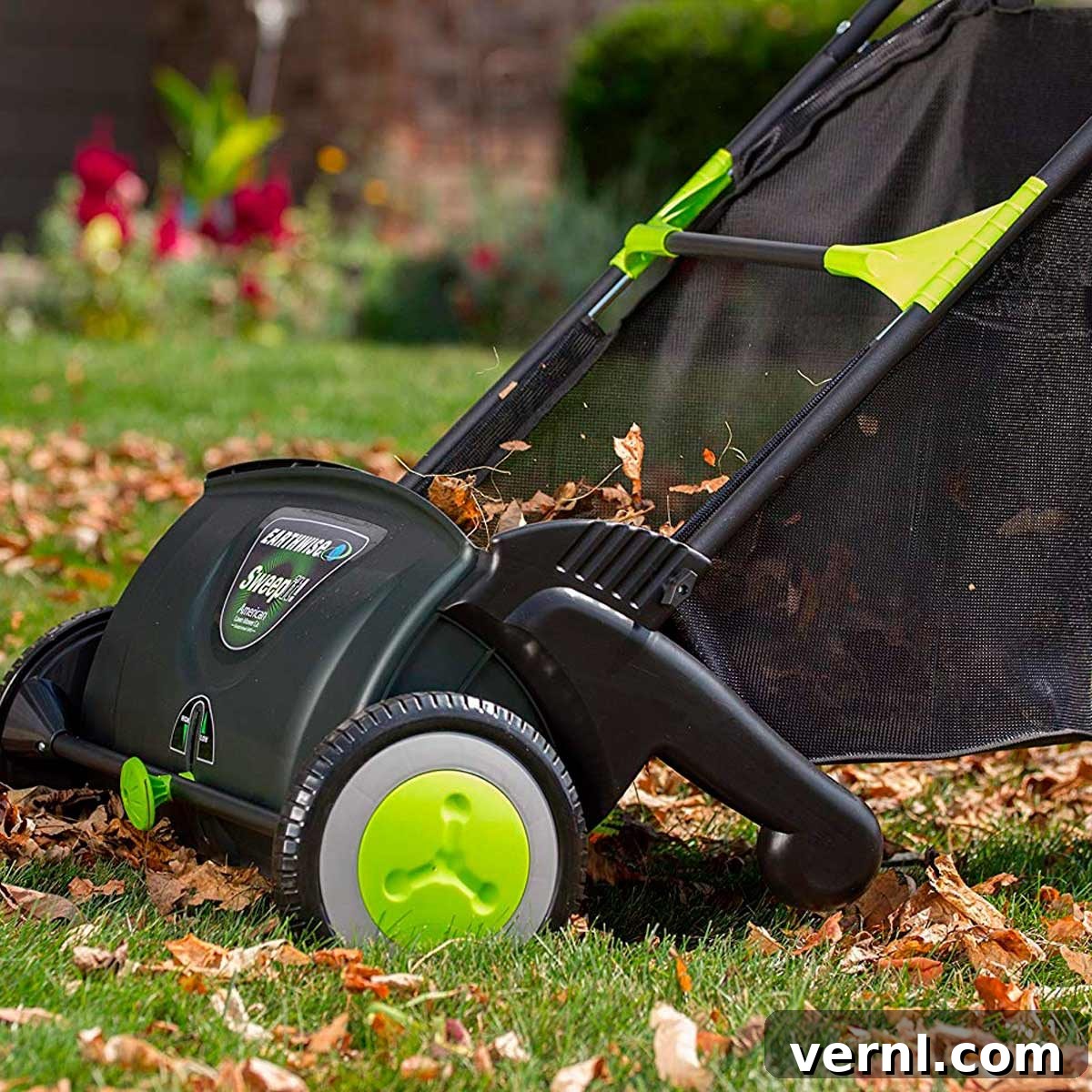
Best Push Lawn Sweeper: Earthwise 21-inch Push Lawn Sweeper
For those with smaller yards or a preference for manual operation, the Earthwise 21-inch Push Lawn Sweeper stands out as a top contender. This compact and lightweight sweeper is designed for easy maneuverability and efficient cleanup of light debris like grass clippings, small leaves, and pine needles. With a 21-inch sweeping width, it’s perfect for navigating around flower beds and tight corners. The 2.6-bushel collection bag offers a decent capacity for its size, minimizing the need for constant emptying on smaller properties. Its robust construction ensures durability, while the adjustable brush height allows for effective sweeping on various lawn heights. Priced typically between $100 and $200, it offers an economical and environmentally friendly alternative to powered equipment, all while providing a light workout.
Where to Buy:
- Shop on Walmart
- Shop on HSN
- Shop on Lowe’s
- Shop on Amazon
Best Lawn Sweeper for Acorns: Ohio Steel 42-inch / 50-inch Pro Sweeper
Dealing with fallen acorns can be a particularly frustrating aspect of yard cleanup, as they are often dense and stubborn. For larger properties laden with acorn-dropping trees, the professional-grade Ohio Steel 50SWP26 Pro Sweeper (or its 42-inch counterpart) is an exceptional choice. Known for its heavy-duty construction and superior brush design, this tow-behind model is engineered to handle tough debris like acorns quickly and efficiently. Its high-traction wheels ensure consistent brush contact even on uneven terrain, and the large capacity hopper minimizes interruptions for emptying. The key to its success with acorns lies in its robust brushes that can effectively scoop up these small, hard objects without damage. The specific size (42-inch or 50-inch) you need will depend on the scale of your lawn and the volume of acorns you typically face each year.
For smaller yards or more localized acorn problems, a specialized tool like the Garden Weasel Small Nut Gatherer can be incredibly effective, designed specifically for picking up small nuts and other similar-sized objects. While not a “sweeper” in the traditional sense, it’s an indispensable tool for targeted acorn cleanup.
Where to Buy:
- Shop on Walmart
- Shop on Lowe’s
Best Lawn Sweeper for Leaves: Brinly 42-inch Tow-Behind Lawn Sweeper
When autumn arrives and your lawn is blanketed in a thick layer of leaves, a powerful and efficient leaf sweeper becomes a true game-changer. The Brinly 42-inch Tow-Behind Lawn Sweeper is specifically engineered to excel at this task. It features six high-velocity sweeping brushes, meticulously designed to pick up a substantial amount of debris in fewer passes, drastically cutting down on cleanup time. The extra-large 20 cubic foot (or more, depending on the specific model) hopper capacity means you can clear a significant portion of your yard before needing to make a trip to the compost pile. Beyond just leaves, this Brinly model is highly effective at collecting pine needles, grass clippings, and even the thatch loosened during dethatching, leaving your lawn exceptionally clean and ready for spring. Its durable construction and smooth operation make it a reliable partner for your fall and spring yard maintenance.
Where to Buy:
- Shop on Northern Tool
- Shop on Amazon
Is a Lawn Sweeper Worth the Investment? Weighing the Pros and Cons
Deciding whether to invest in a lawn sweeper depends heavily on your specific yard, your tolerance for manual labor, and your existing equipment. Here’s a detailed breakdown of the advantages and disadvantages.
The Benefits of Owning a Lawn Sweeper (Pros)
- Significant Time Savings: This is arguably the biggest draw. A lawn sweeper can dramatically cut down the hours you spend raking and bagging, especially on larger properties or during heavy leaf seasons. Instead of days, cleanup can often be completed in a few hours.
- Reduces Physical Strain: Say goodbye to sore backs, aching shoulders, and tired muscles. Sweepers eliminate the repetitive bending, lifting, and pulling associated with manual raking, making yard work accessible to more people.
- Efficient Debris Collection: Lawn sweepers are particularly effective at gathering light-to-medium weight debris such as grass clippings, pine needles, small twigs, and, of course, leaves. They can also effectively pick up freshly fallen acorns.
- Promotes Lawn Health: By removing debris promptly, sweepers prevent leaves and clippings from smothering your grass, which can lead to thatch buildup, fungal diseases, and uneven growth. A clean lawn breathes better and absorbs nutrients more effectively.
- Versatility Beyond the Lawn: Many sweepers can also be used to clean dust and dirt from patios, walkways, and driveways, adding to their utility.
- Composting Made Easy: The collected debris is often ready for immediate composting, making it easier to recycle organic matter back into your garden.
Potential Drawbacks and Limitations (Cons)
- Effectiveness on Deep/Wet Leaves: As Tom Perron from Boyden and Perron advises, “Lawn sweepers are most effective on short grass and don’t do well in deep leaves.” If leaves are piled high or are heavy and wet, a sweeper may struggle, requiring multiple passes or even a preliminary manual rake. Frequent use is key to prevent excessive buildup.
- Not for Heavy-Duty Debris: Large sticks, branches, rocks, or very heavy wet debris can damage the sweeper’s brushes or mechanism. For such items, manual collection is still necessary.
- Storage Requirements: Tow-behind models, in particular, can be bulky and require a dedicated storage space in a garage or shed.
- Initial Investment: While push models are relatively inexpensive, tow-behind sweepers can represent a significant upfront cost (ranging from $300-$400+), which might not be justified for very small yards.
- Requires Short Grass: Perron also notes, “Lawn sweepers are most effective on short grass.” If your grass is too long, the brushes may not make proper contact with the debris or may become tangled.
- Overlap with Mower Baggers: Perron points out, “As most lawn mowers are now bagging mowers, lawn sweepers are usually overlooked.” If your mower already effectively bags clippings and a light layer of leaves, a dedicated sweeper might seem redundant for some. However, sweepers still offer advantages for larger debris or post-mowing cleanup.
In summary, if you have a large yard, dread yard cleanup, and prioritize saving time and your back, a lawn sweeper can be an excellent investment, provided you manage expectations regarding very heavy or wet debris.
Key Features to Consider When Buying a Lawn Sweeper
To ensure you select the best lawn sweeper for your property, pay close attention to these critical features:
- Sweeping Width: This determines how much ground you cover with each pass. Wider sweepers (40-50 inches) are ideal for large properties, while narrower ones (21-36 inches) are better for smaller yards or navigating obstacles.
- Hopper Capacity: Measured in cubic feet or bushels, this indicates how much debris the sweeper can hold. A larger capacity means fewer stops to empty, which is crucial for big yards or heavy leaf fall.
- Brush Type and Quantity: Look for durable, stiff brushes that can effectively lift debris. Models with more brushes or a specific brush design (like high-velocity brushes) often offer superior pickup.
- Brush Height Adjustment: This is vital for adapting the sweeper to different lawn conditions and debris types. Adjustable brushes ensure optimal contact with the ground for efficient collection without damaging your lawn.
- Construction Material and Durability: A sturdy steel frame and high-quality components will ensure your sweeper lasts for many seasons. Check reviews for reports on wheel durability and overall build quality.
- Dumping Mechanism: For tow-behind models, look for easy-to-use lever or rope-pull dumping systems that allow you to empty the hopper from your tractor seat. For push models, consider how easily the bag detaches for emptying.
- Wheel Type and Size: Larger wheels with good traction can improve maneuverability and performance, especially on uneven terrain.
- Ease of Assembly and Storage: Some sweepers require significant assembly, while others are nearly ready out of the box. Consider models with foldable hoppers for easier storage.
Tips for Maximizing Your Lawn Sweeper’s Performance
Getting the most out of your lawn sweeper involves more than just pushing or pulling it. Follow these tips for optimal results and longevity:
- Mow First (If Necessary): As Tom Perron advised, sweepers work best on short grass. If your lawn is overgrown, a quick mow before sweeping will make debris collection far more efficient.
- Keep it Dry: Avoid sweeping wet leaves or grass clippings. Wet debris is heavier, sticks to the brushes, and can clog the hopper, reducing efficiency and potentially damaging the sweeper. Wait for a dry day.
- Adjust Brush Height: Experiment with the brush height to find the sweet spot. The brushes should just skim the top of the grass, gently lifting debris without digging into the turf. Too high, and they miss debris; too low, and they can strain the mechanism or wear out quickly.
- Overlap Your Passes: To ensure complete coverage, overlap each pass by a few inches. This minimizes missed spots and ensures a thoroughly clean lawn.
- Don’t Overfill the Hopper: While large hoppers are convenient, overfilling them can reduce sweeping efficiency and make dumping more difficult. Empty the bag when it’s about 3/4 full.
- Sweep in Consistent Patterns: Just like mowing, sweeping in straight, overlapping lines helps ensure no areas are missed.
- Mind the Terrain: While sweepers handle most lawns, be cautious on very steep slopes or extremely uneven ground, which can affect performance or cause tipping.
Essential Lawn Sweeper Maintenance for Longevity
Proper maintenance is key to ensuring your lawn sweeper remains a reliable tool season after season:
- Clean After Each Use: Remove all debris from the brushes, hopper, and undercarriage after each use. This prevents buildup, rust, and keeps the components moving freely.
- Lubricate Moving Parts: Periodically lubricate gears, axles, and other moving parts according to the manufacturer’s recommendations to ensure smooth operation and prevent wear.
- Inspect Brushes: Regularly check the brushes for wear and tear. Worn brushes are less effective and should be replaced. Ensure they are free of tangles from string or long grass.
- Check Tires/Wheels: For tow-behind models, maintain proper tire pressure. For all models, inspect wheels for damage or obstructions that could impede movement.
- Store Properly: When not in use, store your lawn sweeper in a dry, covered area to protect it from the elements. If it’s a foldable model, collapse it for compact storage.
- Tighten Fasteners: Vibrations from use can loosen bolts and nuts over time. Periodically check and tighten all fasteners to maintain structural integrity.
FAQ: Your Top Questions About Lawn Sweepers Answered
Are lawn sweepers worth it?
Absolutely! For anyone tired of the back-breaking work of raking leaves, lawn sweepers are a fantastic investment. They make incredibly short work of leaves, grass clippings, and various yard debris. Using a lawn sweeper will save you significant time and effort, especially if you have a medium to large yard or frequently deal with falling leaves or pine needles.
What is the best lawn sweeper?
The “best” lawn sweeper isn’t a one-size-fits-all answer; it largely depends on your specific yard size, the type of debris you’re collecting, and whether you own a riding mower. However, top-rated models from reputable brands like Agri-Fab, Earthwise, Brinly, and Ohio Steel consistently receive high marks for their performance, durability, and efficiency in various cleanup tasks. Consider models praised for their sweeping width, hopper capacity, and brush quality.
What is better, a lawn sweeper or a bagger?
Both lawn sweepers and bagging attachments for mowers serve different, though sometimes overlapping, purposes. Baggers are excellent for simultaneously mowing and collecting grass clippings and a light layer of leaves. Lawn sweepers, on the other hand, are typically used *after* mowing and are often more effective at collecting larger debris like significant leaf accumulations, pine needles, small twigs, and even acorns. If your primary goal is collecting clippings while you mow, a bagger is great. If you need dedicated, efficient cleanup of diverse debris types across a larger area, a sweeper is often superior.
What will a yard sweeper pick up?
Lawn sweepers are designed to collect a wide range of lightweight to medium-weight yard debris. This includes fallen leaves (dry and not excessively deep), grass clippings, pine needles, small twigs, freshly fallen acorns, and even light gravel or small pebbles from hard surfaces. They are generally not suitable for very large sticks, heavy branches, wet mud, or very dense, wet leaf piles.
About the Expert
- Tom Perron is a second-generation owner of Boyden and Perron, a highly respected outdoor power equipment retailer based in Amherst, Massachusetts. His extensive experience in the industry provides valuable, practical insights into the performance and utility of various lawn care tools.