
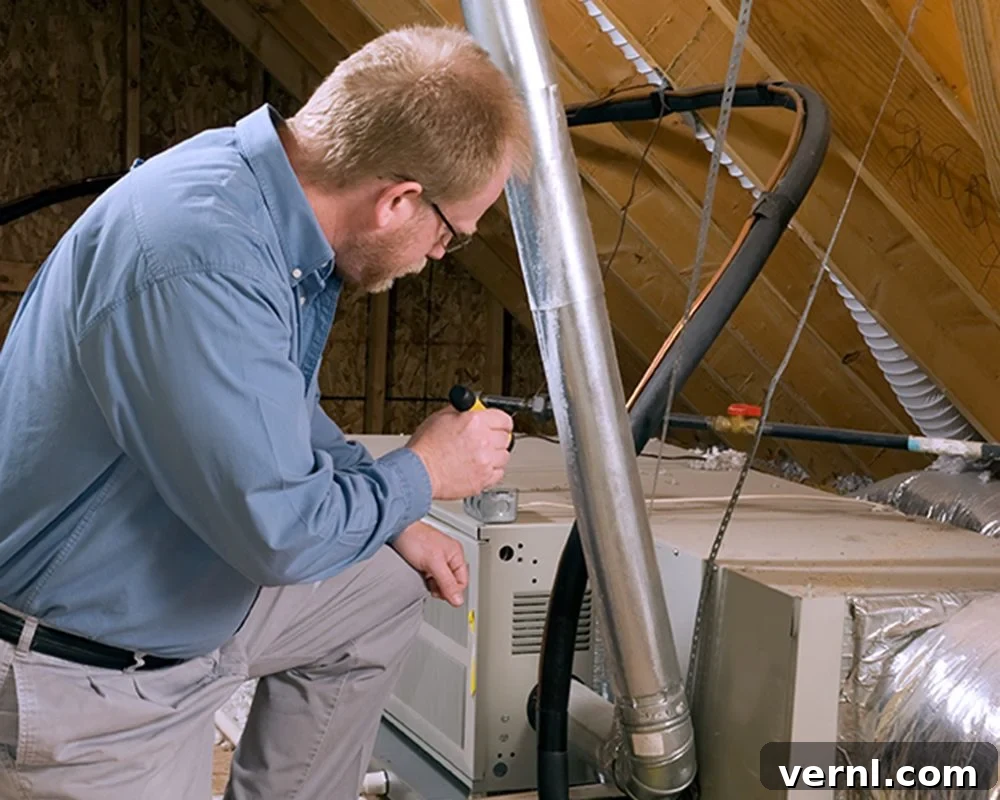
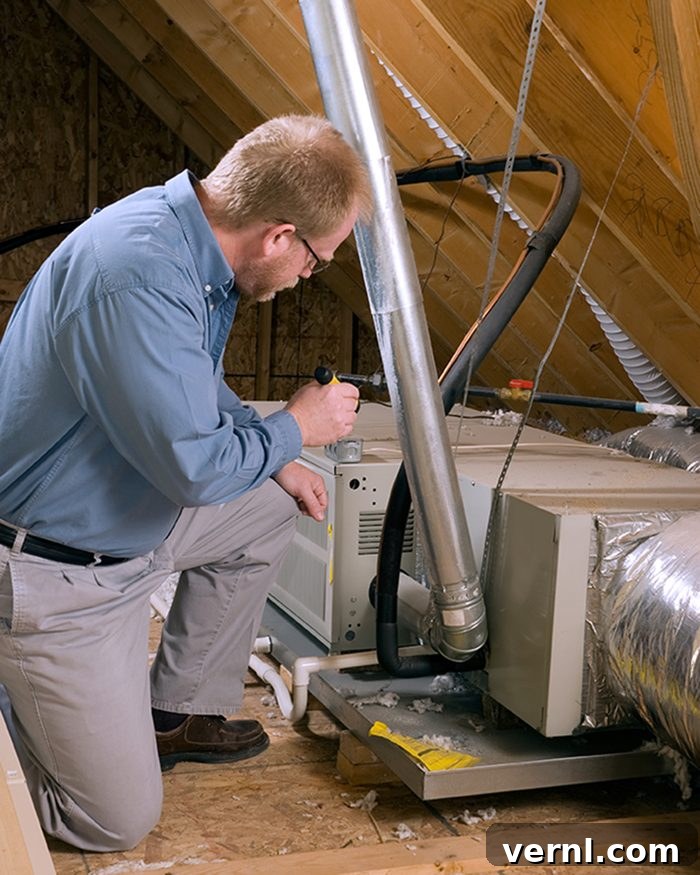
For many homeowners, the idea of installing a furnace—a vital component of any HVAC system—in their attic might seem unconventional, or even impossible. A common misconception suggests that attics lack the necessary space or accessibility for such a significant installation. However, this is far from the truth. In fact, provided your attic is properly insulated and meets specific criteria, installing a furnace there can be an incredibly sensible and space-saving solution. This comprehensive guide will explore the ins and outs of attic furnace installation, helping you understand its benefits, drawbacks, and crucial considerations for a successful setup.
Embracing the Attic for Your Furnace Installation Needs
Traditionally, furnaces find their homes in basements, utility closets, or garages. These locations have long been the default for housing heating equipment. But what happens when your home lacks a basement, has a garage already brimming with vehicles and tools, or simply doesn’t offer a suitable closet space? This is where the attic emerges as a viable, often overlooked, alternative. “Attic furnace installations have been a practiced solution for decades,” explains Chris Roth, a licensed HVAC contractor and the owner/CEO of National Technical Institute in Las Vegas. “The reality is that space elsewhere in the home isn’t always an option, driving a growing demand for attic-based furnace solutions.”
Modern residential architecture and the design evolution of HVAC equipment have made attic installations increasingly practical. Many states and localities permit furnaces to be installed in attics, provided that stringent national standards and state codes are meticulously followed. These regulations ensure safety, efficiency, and longevity of the system, safeguarding both your investment and your home’s occupants. Understanding these guidelines and working with qualified professionals is paramount for a successful and compliant installation.
Unlocking the Benefits of an Attic Furnace System
Opting for an attic furnace comes with a surprising array of advantages, particularly for homeowners looking to optimize their living space and enhance home safety. These benefits can make the attic an attractive location for your home’s primary heating system.
Streamlined and Adaptable Installation Process
The vast majority of homes are equipped with an attic, offering a potentially expansive and flexible area for HVAC components. A significant innovation in modern furnace design is the ability for units to be installed in multiple orientations—vertically or horizontally—to best suit the available space. “Manufacturers are increasingly designing furnaces with versatile installation options, such as horizontal configurations, which are exceptionally well-suited for attic placements,” notes Roth. This adaptability means that whether your attic is spacious enough for a unit to sit on the floor or requires suspension from rafters, there’s likely a furnace model that can accommodate it. This flexibility often simplifies the installation process for skilled technicians, reducing complexity compared to squeezing units into confined traditional spaces.
Reclaiming Valuable Interior Storage Space
One of the most compelling reasons to move your furnace to the attic is the liberation of precious interior square footage. If your furnace currently occupies a corner of your garage, a section of your basement, or a dedicated utility closet, that space is effectively lost for storage, living, or other functional purposes. Attics, by contrast, are often underutilized or primarily serve as dead space. Relocating the furnace here frees up valuable room elsewhere in your home, allowing you to maximize storage, expand a living area, or create a new functional zone that wouldn’t otherwise be possible.
Potential for Reduced Installation Costs
While every HVAC installation project comes with its unique cost factors, placing a furnace in the attic can, in some scenarios, lead to slightly lower installation expenses. Chris Roth highlights a key reason: direct venting. “Installing a furnace in the attic often allows for it to be vented directly through the roof, which can significantly simplify the exhaust system. Furthermore, ductwork installation may not be as intricate or extensive, particularly for homes with multiple stories, which can contribute to a lower overall cost,” he explains. Shorter, more direct duct runs, especially to upper-level registers, can reduce material and labor requirements, making the attic option financially attractive.
Enhanced Protection Against Flood Damage
The elevated position of an attic furnace provides a crucial layer of protection against one of the most destructive forces for home appliances: flooding. Furnaces installed in basements or at ground level are highly susceptible to water damage from heavy rains, overflowing rivers, failed sump pumps, or even severe ice and snow melt. Floodwaters can severely damage electrical components, corrode metal parts, and create hazardous situations, often necessitating a complete and costly replacement of the unit. An attic furnace, positioned well above potential flood levels, mitigates this risk significantly, offering greater peace of mind and potentially saving homeowners from substantial repair or replacement costs.
Improved Home Aesthetics and Reduced Noise Pollution
By moving the furnace to the attic, you remove a large, utilitarian piece of equipment from visible living areas or high-traffic zones. This can improve the aesthetic appeal of your home, eliminating the need to design around a bulky furnace or obscure it with cabinetry. Additionally, while furnaces are generally designed for quiet operation, some level of mechanical noise is unavoidable. Housing the unit in the attic, away from common living spaces, can help reduce ambient noise in your home, contributing to a more tranquil and comfortable environment, especially if soundproofing measures are implemented during installation.
Navigating the Drawbacks of Attic Furnace Placement
While the benefits of an attic furnace are clear, it’s equally important to consider the potential challenges and drawbacks. Understanding these can help you make an informed decision and implement strategies to mitigate them effectively.
Risk of Undetected Malfunctions and Maintenance Challenges
One of the primary concerns with an attic furnace is the increased likelihood of problems going unnoticed. Many of the early signs of a failing furnace, such as unusual noises like squealing fan motors, clunking, or persistent humming, are typically audible when the unit is located within or close to the main living space. “If the furnace is tucked away in the attic, these subtle sounds often go unheard,” says Roth. “This can lead to a situation where a minor issue escalates into a complete breakdown before it’s detected, resulting in more costly repairs and a prolonged period without heat.” Furthermore, routine maintenance and emergency repairs can be more challenging due to limited attic access, requiring technicians to navigate tight spaces, often in uncomfortable temperatures. This can sometimes translate into higher labor costs for servicing. Homeowners must be diligent about scheduling annual professional inspections to counteract this drawback. Don’t forget to check out these easy furnace fixes, but always prioritize professional assessment for attic units.
Increased Susceptibility to Ductwork Issues and Energy Loss
Attics are notoriously hostile environments for HVAC ductwork. In the summer, attic temperatures can soar, often exceeding 130°F, while winter temperatures can plunge below freezing. These extreme temperature fluctuations put immense stress on duct materials, leading to expansion and contraction that can cause seams to separate, allowing the development of pinhole leaks and small tears over time. When your air conditioning system is running, leaky ductwork in a scorching attic means your system is working harder to cool air that ultimately escapes into the unconditioned space, or even worse, pulls in hot attic air. If you notice your cooling power has diminished, or your heating bills are inexplicably high, faulty attic ductwork could be the culprit. Proper sealing, insulation (R-8 minimum), and regular inspection of all attic ductwork are critical to combat this issue and maintain system efficiency.
Naturally Lower Efficiency and Higher Operating Costs
Recalling basic physics from junior high, warm air naturally rises, and cool air sinks. A furnace installed in the attic is tasked with forcing warm air downwards, against its natural tendency, to heat the lower floors of your home. Conversely, a basement furnace benefits from the natural upward convection of heated air. This principle can lead to higher energy bills and reduced overall system efficiency, as the furnace has to work harder to distribute heat throughout the entire dwelling. To counteract this inherent disadvantage, Roth strongly advises homeowners considering an attic installation to select a high-efficiency furnace model, ideally one with a variable-speed fan, and to invest in superior duct insulation and sealing to minimize heat loss during distribution.
More Intrusive Ceiling Openings for Air Distribution
Given that warm air naturally rises, an attic furnace installation typically necessitates more numerous or larger duct openings in ceilings throughout the home. These vents are crucial for effectively pushing the conditioned warm air down and circulating it evenly to achieve a comfortable and consistent temperature in all living spaces. While modern vent designs can be relatively discreet, a higher number of ceiling vents can be more visually prominent than a system relying on floor-level registers, which might be a consideration for some homeowners focused on interior aesthetics.
Potential for Condensate Drainage Issues
High-efficiency furnaces produce condensate (water) as a byproduct of their operation, which needs to be safely drained away. In an attic installation, this condensate must be piped out of the attic, often through the home’s exterior wall or into an existing drain line. If the condensate line becomes clogged, freezes, or leaks, it can lead to significant water damage to the ceiling and walls below. Proper installation includes a secondary drain pan with a safety shut-off switch to prevent overflows, but vigilance is required to ensure these systems function correctly, especially since they are out of sight.
Structural Requirements and Access Limitations
The weight of a furnace, especially combined with the air handler and associated ductwork, can be substantial. Older homes or those not originally designed for attic HVAC might require structural reinforcement to safely support the equipment. Furthermore, access to the attic itself, and to the furnace within the attic, must meet specific code requirements. This includes adequately sized access openings, permanent walkways, proper lighting, and service platforms to ensure technicians can safely and efficiently perform maintenance and repairs. Failing to meet these access standards can complicate service and potentially increase costs.
When Is the Right Time for an Attic Furnace Installation?
An attic furnace can be integrated into your home’s HVAC system at various stages. This option is particularly ideal during new construction projects, where the entire system can be designed from the ground up to optimize attic placement. It’s also a viable and often practical solution during major home remodels or when replacing an existing furnace, especially if you’re looking to free up space in other areas of your home. Regardless of the project stage, the critical step is to engage a licensed and reputable HVAC professional. Their expertise ensures that all safety rules, national standards, and local building codes are rigorously followed, guaranteeing a safe, efficient, and compliant installation.
Essential Considerations for Furnace Replacement and Upgrades
Whether you’re considering an attic installation or a conventional furnace replacement, upgrading your heating system is a significant investment that can dramatically boost your home’s comfort and energy efficiency. Before making a decision, keep these crucial aspects in mind:
- How Upgrading Your Furnace Saves You Money: Explore the long-term financial benefits of investing in a new, more efficient furnace, including reduced energy consumption and potential rebates.
- What to Know Before Replacing Your Furnace: Gain insights into the key factors to consider, such as furnace size, fuel type, AFUE rating, and contractor selection, to ensure you make the best choice for your home.
Choosing to install a furnace in your attic presents a modern, space-saving solution for home heating. While it offers numerous advantages, from freeing up valuable living space to protecting against flood damage, it also comes with unique challenges, particularly concerning maintenance access and potential efficiency impacts. By understanding both the benefits and drawbacks, and by partnering with certified HVAC professionals, homeowners can make an informed decision that leads to a comfortable, efficient, and compliant heating system for years to come.