Unlock Peace of Mind: The Ultimate Guide to Creative Apple AirTag Uses
In an era where personal belongings are more valuable and seemingly easier to misplace, Apple AirTags have emerged as a revolutionary solution, offering a beacon of hope for countless individuals. These tiny, powerful trackers have soared in popularity, transforming the way people safeguard their valuables – from essential everyday items like AirPods, wallets, and car keys to significant investments such as luggage and even vehicles. The universal dread of losing an expensive item is real, and AirTags provide an elegant, proactive remedy.
You’ve likely witnessed the viral sensation of travelers using AirTags to locate misplaced luggage, turning potential travel nightmares into mere inconveniences. Whether navigating bustling airports or embarking on a summer road trip, the ability to pinpoint your belongings offers unparalleled reassurance. However, the utility of AirTags extends far beyond traditional tracking. People are constantly discovering innovative and unexpected ways to integrate AirTags into their daily lives, simplifying routines, enhancing security, and ultimately saving money on costly replacements. This guide delves into these ingenious applications, revealing how you can leverage AirTags to make your life easier and keep your most cherished possessions safe and sound.
What Exactly Is an Apple AirTag?
At its core, an AirTag is a compact, button-shaped device, roughly 1.26 inches in diameter and weighing a mere 11 grams. Designed for simplicity and durability, it’s often described as a sophisticated digital breadcrumb. Its primary function is to help you locate items within a close proximity, typically between 30 to 100 feet, using Bluetooth Low Energy (LE) connectivity. The range can vary depending on environmental factors like walls indoors or open spaces outdoors.
But the true genius of the AirTag lies in its integration with Apple’s sprawling “Find My” network. When an AirTag is outside the direct Bluetooth range of your own device, it harnesses the power of hundreds of millions of Apple devices (iPhones, iPads, Macs) worldwide. Any compatible Apple device that comes within Bluetooth range of your lost AirTag can anonymously detect its signal and relay its location back to the Find My network. This process is completely encrypted and anonymous, meaning neither the device owner who relays the signal nor Apple itself knows the identity of your AirTag or its location. Only you can see it on the “Find My” app map.
For even greater precision, users with an iPhone 11 or newer can utilize “Precision Finding.” This advanced feature leverages Ultra Wideband (UWB) technology, guiding you directly to your AirTag with visual, haptic, and audio feedback. It’s like having a digital compass that points you exactly to your item, showing you the precise distance and direction within a few feet.
Each AirTag is designed for individual use but can be shared with up to five other people. This collaborative tracking is ideal for families or groups who share items like a car, a set of keys, or even a pet. When an item is misplaced nearby, you can trigger a sound on the AirTag’s built-in speaker, making it easier to pinpoint its exact location, even if it’s buried under a pile of clothes or slipped behind a couch cushion.
Privacy and security are paramount to Apple’s design philosophy for AirTags. As stated on Apple’s website, the entire tracking process is anonymous and end-to-end encrypted. AirTags also incorporate features to prevent unwanted tracking, alerting you if an unknown AirTag is traveling with you. The replaceable CR2032 coin cell battery typically lasts over a year, ensuring long-term peace of mind with minimal maintenance.
AirTags are available in packs of 1 for $29 or a 4-pack for $99 directly from Apple. However, competitive pricing can often be found, such as a 4-pack for $80 on Amazon, making them an accessible investment for protecting your more valuable possessions.
Creative and Practical Ways to Utilize AirTags for Enhanced Security and Convenience
1. Safeguarding Your Luggage During Travel
One of the most widely recognized and stress-reducing applications of AirTags is for luggage tracking. For frequent travelers or anyone embarking on a journey where checked bags are a necessity, an AirTag provides an invaluable layer of security and peace of mind. The anxiety of a lost bag, especially during connecting flights or international travel, can quickly overshadow the excitement of a trip. By placing an AirTag inside your luggage, you gain real-time visibility into its whereabouts. You can confirm it made it onto your flight, track its journey during layovers, and even watch it move towards baggage claim upon arrival. This proactive capability not only alleviates stress but can also expedite the recovery process should your bag go truly astray, giving you precise location data to share with airline staff.
2. Keeping Tabs on Your Beloved Pets
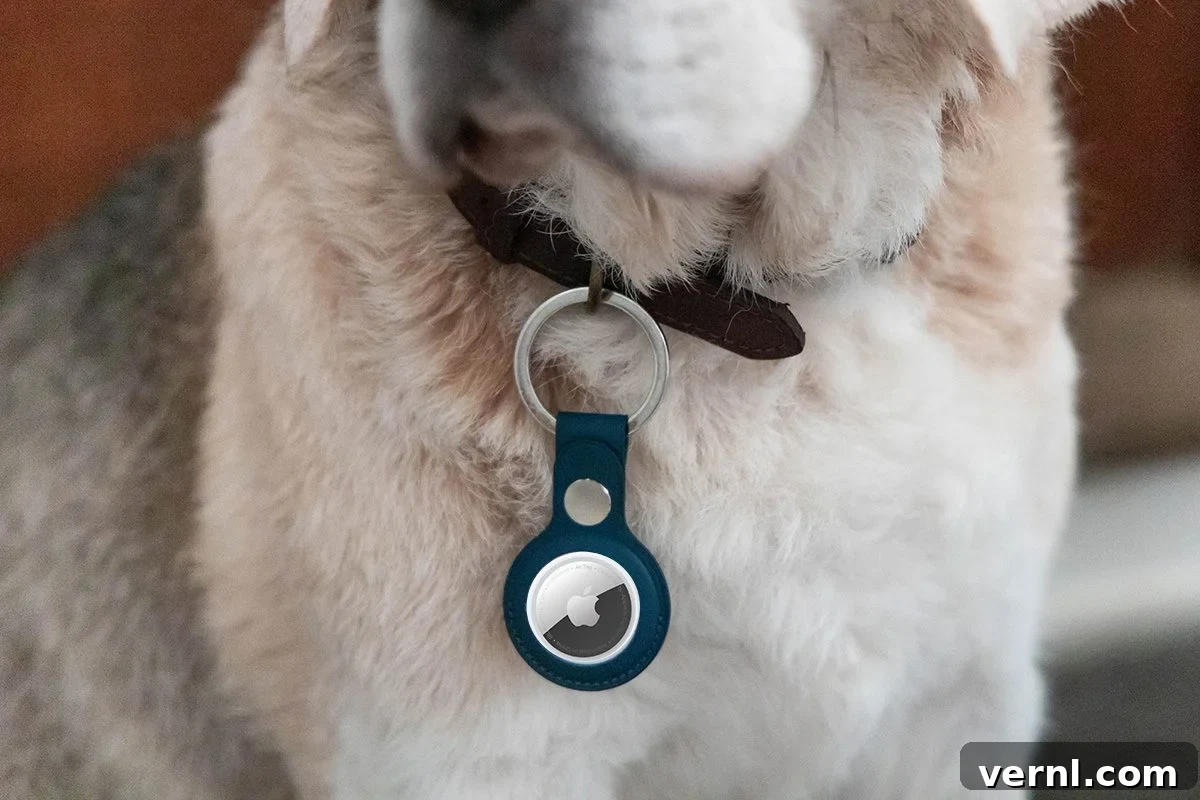
Pets are cherished family members, and the thought of them wandering off or getting lost is a nightmare for any owner. Attaching an AirTag to your pet’s collar can be a life-saver, especially for adventurous dogs or curious cats. While microchips provide permanent identification, an AirTag offers active tracking capabilities, allowing you to quickly locate your furry friend if they dart out an open door, escape the yard, or get separated during a walk. For this use, ensure the AirTag holder is secure and comfortable, preventing it from snagging or becoming a choking hazard. It’s a modern solution that complements traditional identification methods, significantly increasing the chances of a swift reunion.
3. Never Lose Your Keys Again: Keychain and Car Fobs

The daily scramble to find misplaced keys is a universal frustration that can derail an entire morning. Whether it’s your car keys, house keys, or office keys, the minutes spent searching can feel like an eternity, especially when you’re in a rush. Attaching an AirTag to your keychain or car key fob is one of the simplest yet most impactful uses. With a quick tap in the Find My app, you can make your AirTag play a loud sound, instantly guiding you to its hiding spot – be it under a pile of mail, deep within a couch cushion, or in an overlooked pocket. This small addition can save countless moments of stress and ensures you’re always ready to head out the door.
4. Locating Your Car or Other Vehicles
Imagine forgetting where you parked your car in a sprawling airport lot, a multi-story parking garage, or a crowded festival. Placing an AirTag discreetly inside your car can solve this common conundrum. Beyond simple convenience, an AirTag can prove invaluable in more serious situations, such as if your car gets towed or, worse, stolen. While not a theft prevention device, an AirTag can significantly aid in recovery efforts by providing law enforcement with precise location data. This application also extends to other vehicles like motorcycles, scooters, or even boats, offering an added layer of security for valuable assets.
5. Assisting Loved Ones with Memory Challenges
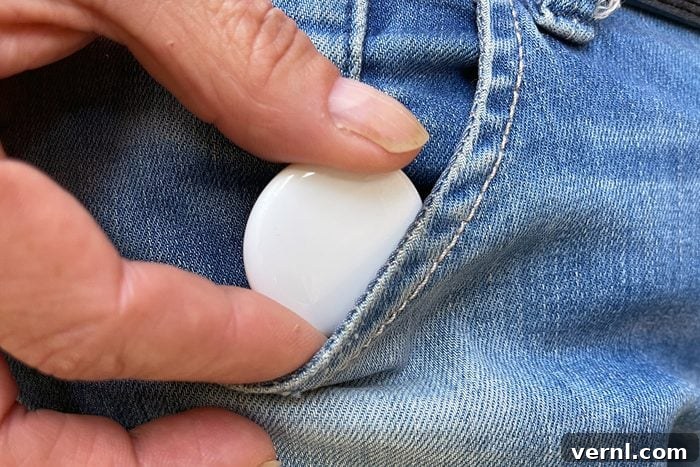
For caregivers of elderly individuals, especially those living with conditions like Alzheimer’s or dementia, the possibility of a loved one wandering off can be a constant source of anxiety. Attaching an AirTag to a walker, a jacket, a bag, or even discreetly sewn into clothing can provide a vital safety net. This non-intrusive tracking method allows caregivers to monitor their loved one’s location, offering critical peace of mind and enabling quick action in unfortunate instances where they might become disoriented or lost. It’s a compassionate application that supports independence while ensuring safety.
6. Tracking Your Robot Vacuum
Robot vacuums are fantastic for automating home cleaning, but in larger homes or complex layouts, they can sometimes wander off, get stuck in unusual places, or simply run out of battery far from their charging station. Manually searching for a dormant robot vacuum can be surprisingly time-consuming. By affixing an AirTag to your robot vacuum, you gain an effortless way to locate it. If its built-in tracking features fail or if it simply gets lost in a remote corner of your home, a quick ping from your phone will lead you directly to your automated cleaner, saving you the hassle of a house-wide search.
7. Securing Your Medication Case
For individuals who rely on daily medications, misplacing a pill case or bottle can lead to significant health concerns. Whether you’re at home or on the go, staying organized with your prescriptions is crucial. Attaching an AirTag to a pill case or medication bottle offers an excellent solution to this problem. This is particularly beneficial for those with memory issues or anyone who frequently travels, ensuring that vital medications are always within reach or easily locatable if misplaced. It provides an extra layer of reassurance, helping you or your loved ones maintain critical health routines without added stress.
8. Preventing Bike Theft and Aiding Recovery
Unfortunately, bikes, especially valuable e-bikes or road bikes, are a common target for thieves. While a robust lock is essential, adding an AirTag can significantly enhance your bike’s security and increase the chances of recovery if it is stolen. The key is discreet placement: hide the AirTag in a non-obvious spot, such as within a seat post, inside a bell, beneath the saddle, or even secured within a frame bag. This stealthy placement makes it less likely for a thief to discover and remove the tracker, providing you with a crucial tool to track your bike’s location and assist law enforcement in its retrieval.
9. Locating Lost Drones
Drones, particularly those used for photography, videography, or professional inspections, can be expensive pieces of equipment. They are susceptible to crashes, signal loss, or battery failure, especially when flying at long distances or in challenging terrain. A lost drone can be incredibly difficult to find, especially if it lands in dense foliage or over water. Attaching an AirTag to your drone provides an invaluable backup tracking solution. If the drone’s built-in GPS or software fails, or if its battery dies mid-flight, the AirTag can help you pinpoint its last known location, making recovery efforts far more successful and saving you from the cost of replacing a lost drone.
10. Finding Elusive Remotes and Controllers
It’s a scenario we’ve all faced: the remote control mysteriously vanishes, seemingly swallowed by the couch or spirited away by an unseen force. Whether it’s for your Apple TV, Roku device, gaming console, or even your soundbar, small remotes and controllers are prime candidates for misplacement. Attaching an AirTag to these frequently lost items is a simple yet profoundly effective solution. A quick ping will lead you directly to the culprit, eliminating frustrating searches and bringing immediate relief. This application highlights how AirTags excel at solving small, everyday annoyances that collectively add up to significant time-wasting.
11. Tracking Wallets and Purses
A lost wallet or purse can be one of the most stressful experiences, often containing not just money but also critical identification, credit cards, and sentimental items. Discreetly placing an AirTag inside your wallet or purse provides an immediate advantage if it’s misplaced or stolen. While it won’t prevent theft, it significantly increases the chances of locating it quickly, potentially before sensitive information can be compromised. For those prone to setting down their wallet and forgetting where, the AirTag offers an instant way to rectify the oversight.
12. Monitoring Kids’ Backpacks or School Bags
For parents, ensuring children keep track of their belongings, especially school bags containing textbooks, laptops, and personal items, can be a challenge. Attaching an AirTag to a child’s backpack offers peace of mind. It helps locate a bag left behind at school, a friend’s house, or on public transport. This is particularly useful for younger children who might be prone to misplacing their belongings, providing a simple way for parents to ensure important items make it home safely.
Frequently Asked Questions About Apple AirTags
Are there any AirTag alternatives available?
Yes, the market offers several AirTag alternatives, many of which are compatible with both iOS and Android devices, or operate within their own unique ecosystems. The most common alternatives include the Chipolo One Spot (which, like AirTags, leverages Apple’s Find My network), the ATUVOS Air Tag, and Tile by Life360. When considering an alternative, it’s crucial to evaluate factors like tracking range, battery life (and whether the battery is replaceable), waterproof ratings, the size and form factor, and importantly, its compatibility with your specific devices and preferred ecosystem. Each brand offers slightly different features and network coverage, so choose one that best fits your individual needs.
How do I set up an AirTag?
Setting up an AirTag is remarkably simple and takes only a few seconds. First, ensure your iPhone or iPad is running the latest version of iOS or iPadOS. Remove the AirTag from its packaging and pull out the battery tab to activate it. Hold the AirTag close to your iPhone or iPad, and a “Connect” card will automatically appear on your screen. Tap “Connect,” give your AirTag a name (e.g., “My Keys,” “Luggage”), and then link it to your Apple ID. Once connected, your AirTag will appear in the “Items” tab of the Find My app, ready to track.
What about privacy and unwanted tracking with AirTags?
Apple has designed AirTags with robust privacy features to prevent unwanted tracking. The Find My network uses end-to-end encryption, meaning only you can see the location of your AirTag, and not even Apple knows its whereabouts. AirTags also have unique, rotating Bluetooth identifiers to prevent tracking over time. Crucially, if an unknown AirTag is traveling with you over a period of time, your iPhone will send you an alert, allowing you to locate the AirTag and disable it. If you don’t have an iPhone, the AirTag will eventually play a sound to draw attention to itself. These features are designed to protect individuals from malicious use while providing a powerful tracking tool for personal belongings.
How long does the AirTag battery last, and is it replaceable?
Each Apple AirTag comes with a standard, user-replaceable CR2032 coin cell battery, which typically lasts for over a year with normal use. The Find My app will notify you when the battery level is low, giving you ample time to replace it. Replacing the battery is straightforward: simply press down and rotate the polished stainless steel back cover counterclockwise to open the compartment, swap out the old battery for a new one, and then replace the cover.
Are AirTags waterproof?
AirTags are designed to be durable and resistant to everyday spills and splashes. They boast an IP67 rating under IEC standard 60529, meaning they are resistant to dust and can withstand immersion in water up to 1 meter (3.3 feet) for up to 30 minutes. This level of resistance makes them suitable for most common scenarios like rain, accidental splashes, or brief submersion, but they are not fully waterproof and should not be intentionally used for extended underwater activities.
What is the range of an AirTag?
The “range” of an AirTag can be understood in two ways. Firstly, its direct Bluetooth range for immediate tracking is approximately 30-100 feet (10-30 meters), depending on whether you’re indoors or outdoors and obstructions. Within this range, you can use Precision Finding (on compatible iPhones) and play a sound. Secondly, and more powerfully, its range is effectively global through the Find My network. As long as your AirTag comes within Bluetooth range of any device participating in the Find My network (hundreds of millions of Apple devices worldwide), its location can be anonymously relayed to you, making its practical tracking range virtually limitless.
Sources
- Apple: AirTag Tech Support
- MysteriumVPN: How Far Can You Track An AirTag? Distance Limitations Explained
Related Articles
- The Real Reason Aluminum Foil Has a Shiny Side and a Dull Side
- Think Adirondack Chairs Are Uncomfortable? You’re Using Them Wrong
- Why You Shouldn’t Crush Aluminum Cans Before Recycling