Mastering Island Sink Plumbing: High Loop Vent vs. Air Admittance Valve (AAV)
Installing a kitchen island with a sink adds both aesthetic appeal and functional convenience to your home. However, the unique placement of an island sink, detached from traditional wall plumbing, presents a distinct challenge: proper drain venting. Unlike sinks positioned against a wall, an island sink isn’t directly adjacent to the building’s main vent network, making standard venting solutions impractical or impossible. Ensuring adequate ventilation is paramount for a functional and safe plumbing system.
The core problem lies in connecting the sink drain to the building’s vent system when the sink sits in the middle of the floor. Vent pipes are designed to rise from the drain, and running a horizontal vent pipe directly from an island sink into a distant wall would create an unsightly and impractical obstruction in your kitchen space. Fortunately, professional plumbers have developed two primary, code-approved methods to tackle this unique dilemma: the traditional high loop vent and the more modern air admittance valve (AAV), also known as a Studor valve or “cheater” valve.
Deciding between these two methods requires understanding their mechanics, advantages, disadvantages, and critically, local plumbing code compliance. While one offers time-tested reliability, the other boasts simplicity and space-saving benefits. Esteemed home renovator Myles Robinson champions the AAV for its efficiency and ease of installation in confined spaces. Conversely, seasoned plumber Kelly Russum often advocates for the high loop, emphasizing its long-term reliability where conditions permit. This comprehensive guide will delve into both methods, helping you make an informed decision for your island sink installation.
Before diving into the specifics of island sink venting, it’s crucial to grasp the fundamental role of plumbing vents in your home. You can also learn more about common reasons why sinks stop working.
The Critical Importance of Plumbing Venting
Plumbing vents are the unsung heroes of your home’s drainage system. Far from being simple pipes that allow air to escape, they form a sophisticated network designed to maintain balanced air pressure throughout your plumbing. This network of pipes extends from your drains, through your walls, and typically exits through a main stack pipe on your roof, allowing air and gases to ventilate outdoors.
The primary function of a vent system is to supply a steady stream of air to the drainage pipes. This airflow is essential for two main reasons:
- Pressure Equalization: As water and waste flow down your drain pipes, they create negative pressure, or a vacuum, behind them. Without a vent, this negative pressure would act like a powerful siphon, pulling water out of your P-traps.
- Preventing Siphonage and Sewer Gas Entry: The P-trap, that U-shaped bend under every sink, is designed to hold a small amount of water. This water creates a barrier, preventing noxious and potentially hazardous sewer gases from entering your home. If a vent fails to equalize pressure, the water seal in the P-trap can be siphoned away, leaving an open pathway for unpleasant and dangerous sewer gases (which can contain methane and hydrogen sulfide) to infiltrate your living space.
In addition to preventing sewer gas, proper venting also ensures that water and waste move through your pipes at the correct velocity. A flow that’s too slow can leave behind solid debris, leading to frequent clogs and blockages. Conversely, a flow that’s too fast due to excessive suction can also lead to siphoning issues and reduced drainage efficiency. The vent system, by maintaining atmospheric pressure, allows gravity to do its job effectively, ensuring smooth, consistent, and hygienic waste removal.
The High Loop Method for Venting an Island Sink
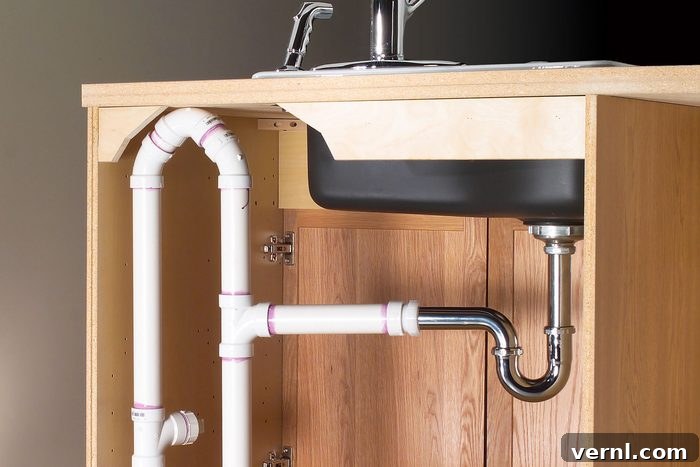
For decades, the high loop method has been the gold standard for venting island sinks, largely due to its adherence to traditional plumbing principles and widespread acceptance by plumbing codes. This method effectively mimics a standard wall vent but adapts it for an island setting.
How the High Loop Vent Works
In a typical kitchen sink adjacent to a wall, the vent pipe connects to the drain line and rises vertically within the wall cavity. To prevent it from becoming plugged with waste, the pipe must extend at least six inches vertically above the sink’s flood level rim (the point at which the sink would overflow) before it can turn horizontal. An island sink, by its nature, doesn’t have a wall for this vertical rise.
The high loop, also known as an island loop vent or Chicago loop vent, solves this by creating the necessary vertical rise within the island cabinet itself. Here’s a breakdown:
- Connection to the Drain: The vent pipe first connects to the waste pipe directly after the P-trap, similar to a regular vent.
- Vertical Rise within Cabinet: From this connection, the vent pipe rises vertically inside the island cabinet, forming a high loop that extends as close to the underside of the countertop as possible. This upward trajectory is crucial to ensure that the vent opening is well above the sink’s flood level, preventing any possibility of waste backing up into and blocking the vent pipe.
- Loop Formation: At its highest point, the pipe makes a turn and then drops back down, still within the cabinet, eventually passing through the floor of the island.
- Underfloor Connection: Once under the floor, this vent pipe then runs horizontally (or with a slight slope for drainage) to connect with the main building vent network, which is typically located behind a nearby wall or within a utility chase.
Advantages of the High Loop Method
- Reliability: As a passive system, the high loop has no moving parts to wear out or fail, offering excellent long-term reliability.
- Code Compliance: It is widely accepted by most plumbing codes across different jurisdictions, making it a safe and preferred choice for inspectors.
- Traditional and Proven: This method relies on time-tested principles of gravity and air pressure, ensuring consistent performance.
Disadvantages and Considerations
- Space Requirements: This is the most significant drawback. As plumber Kelly Russum points out, “If you have at least 32 inches of vertical space under the sink to create the loop, it’s usually viable.” The loop needs to rise substantially, which can consume valuable cabinet space, potentially impacting the installation of garbage disposals or pull-out storage.
- Installation Complexity: Routing the vent pipe through the floor and connecting it to the main vent stack can be more labor-intensive and costly, especially in existing homes or on upper floors. Russum further advises, “using the high loop method is more practical for one-floor homes or first-floor installations where there’s easy access to the vent stack without needing to go through multiple floors.”
- Structural Considerations: Drilling through floor joists may be required to route the vent pipe, which can involve structural assessments and additional work.
Important Note: Always obtain approval from your local plumbing inspector before installing a high loop vent. Some codes may require a secondary clean-out in the vertical wall vent pipe for easier maintenance and clog removal.
Utilizing an Air Admittance Valve (AAV)
The air admittance valve (AAV), also known by brand names like Studor valve or sometimes less formally as a “cheater” valve, offers a more compact and often simpler alternative to the traditional high loop vent. These mechanical devices provide an on-demand air supply to the drainage system, eliminating the need for extensive vent piping.
How an AAV Works
An AAV is a specialized plumbing fitting that can be easily integrated into the drain pipe, typically on the horizontal waste arm extending from the P-trap within the island cabinet. Myles Robinson explains its function clearly: “It works by allowing air into the drainage system when it needs it, but sealing shut to prevent any foul smells from escaping. This makes it particularly useful in situations where traditional venting might be difficult—like in a kitchen island.”
The type of AAV typically approved for island sinks is gravity-operated, distinguishing it from simpler, spring-loaded devices sometimes found in mobile homes or recreational vehicles. Here’s how it functions:
- Negative Pressure Activation: When water flows down the drain, it creates negative pressure within the pipe.
- Air Admission: This negative pressure pulls open a diaphragm or seal inside the AAV, allowing outside air to be drawn into the drainage system. This influx of air equalizes the pressure, preventing siphoning of the P-trap water.
- Sealing Shut: Once the flow of water stops and the pressure equalizes, gravity causes the diaphragm or seal to drop back into place, forming an airtight seal. This seal is critical for preventing sewer gases from escaping into your home.
Modern AAVs are designed with durable, non-corrosive components, making them more reliable than older “cheater” valves. However, for it to work properly, airflow to the AAV cannot be restricted by anything inside the cabinet, and plumbing codes typically require it to be easily accessible for inspection or replacement in case of failure.
Advantages of the AAV Method
- Ease of Installation: AAVs are significantly simpler and quicker to install than high loops, often involving just a connection to the drain pipe within the cabinet.
- Space-Saving: Their compact size frees up valuable under-sink cabinet space, which is often a premium in kitchen islands.
- Cost-Effective: Generally, the materials and labor for installing an AAV are less expensive than for a high loop, especially in renovation projects.
- Flexibility: They offer greater flexibility in placement, making them ideal for existing homes or where structural modifications for a high loop are impractical.
Disadvantages and Key Considerations
- Mechanical Failure Risk: As mechanical devices, AAVs have moving parts that can eventually fail. Seals can degrade, or the valve can get stuck open or closed, leading to venting issues or sewer gas leaks. This is a primary concern for plumbers like Kelly Russum, who states, “AAVs are mechanical devices that can fail and are less reliable in the long run.”
- Code Acceptance Varies: This is perhaps the biggest hurdle. Some (but not all) state and local plumbing authorities agree with Russum and allow AAVs only in very specific circumstances, or not at all. Always check your local plumbing codes and get inspector approval before considering an AAV.
- Limitations with High Volume Discharge: AAVs sometimes struggle to keep up with the venting demands of high-volume appliances like modern dishwashers (18 to 22 gallons per minute discharge) or washing machines, potentially leading to slow drainage or gurgling.
- Multi-Story Building Limitations: They have a tougher time relieving pressure in complex drainage and vent systems of buildings five stories or taller, where a more robust, integrated vent system is typically required.
As Kelly Russum firmly advises, “As a plumber, I always start by checking whether the high loop method is possible, and only then do I consider the installation of an AAV. High loop and AAV are not two options to choose from — you do the high loop if it’s possible and AAV only if the high loop method is not possible in your situation.” This highlights the professional preference for passive, mechanical-free systems when feasible.
Choosing the Right Venting Method for Your Island Sink
The decision between a high loop vent and an AAV for your island sink isn’t just a matter of preference; it’s a critical choice influenced by local plumbing codes, available space, budget, and desired long-term reliability. Here’s a summary to guide your decision:
Local Plumbing Codes: The First Step
Before any planning or purchasing, contact your local building department or a licensed plumber to understand specific requirements and permitted venting methods in your area. This is non-negotiable, as codes vary significantly by region. If AAVs are prohibited, your decision is already made.
Space Availability
- High Loop: Requires significant vertical space (typically 30-36 inches) under the sink for the loop. Ideal for new construction or installations where generous cabinet space is allocated, or where it’s easy to route a pipe down to a main vent stack below.
- AAV: Requires minimal space, usually fitting discreetly behind the sink bowl or garbage disposal. This makes it an excellent choice for tight spaces, smaller islands, or renovation projects where extensive pipe routing is difficult.
Reliability and Maintenance
- High Loop: Offers superior long-term reliability with no moving parts. Once correctly installed, it requires minimal to no maintenance other than routine drain cleaning.
- AAV: Being a mechanical device, it has a finite lifespan and can fail, potentially requiring replacement every 10-20 years (or sooner, depending on quality and usage). Regular accessibility for inspection is a code requirement in many areas where they are permitted.
Installation Complexity and Cost
- High Loop: Generally more complex and labor-intensive to install, potentially involving floor modifications and longer pipe runs, leading to higher installation costs.
- AAV: Simpler and faster to install, making it a more budget-friendly option for both materials and labor, particularly for DIY enthusiasts (where codes allow).
While Myles Robinson praises the AAV for its “efficient and easy installation in tight spaces,” Kelly Russum’s professional experience underscores the high loop’s “preferable venting method” where conditions allow due to its inherent reliability. If your local code permits AAVs, and you’re dealing with space constraints or a limited budget, it can be an excellent solution. However, if you prioritize maximum long-term reliability and have the space, the high loop remains the most robust option.
Professional Installation Recommended
Plumbing an island sink, regardless of the method chosen, involves intricate knowledge of drainage principles and local codes. For most homeowners, hiring a licensed plumber is the safest and most reliable approach to ensure a code-compliant, leak-free, and properly functioning system. A professional can assess your specific situation, navigate local regulations, and execute the installation with expertise, saving you from potential headaches and costly repairs down the line.
About the Experts
- Myles Robinson boasts over 15 years of invaluable experience in home improvement and currently serves as the CEO of UK Composite Doors.
- Kelly Russum established KC’s 23 ½ Hour Plumbing and Air Conditioning way back in 1978, a testament to his enduring commitment to the trade. He expertly services Palm Springs, the Coachella Valley, and numerous other California communities.