
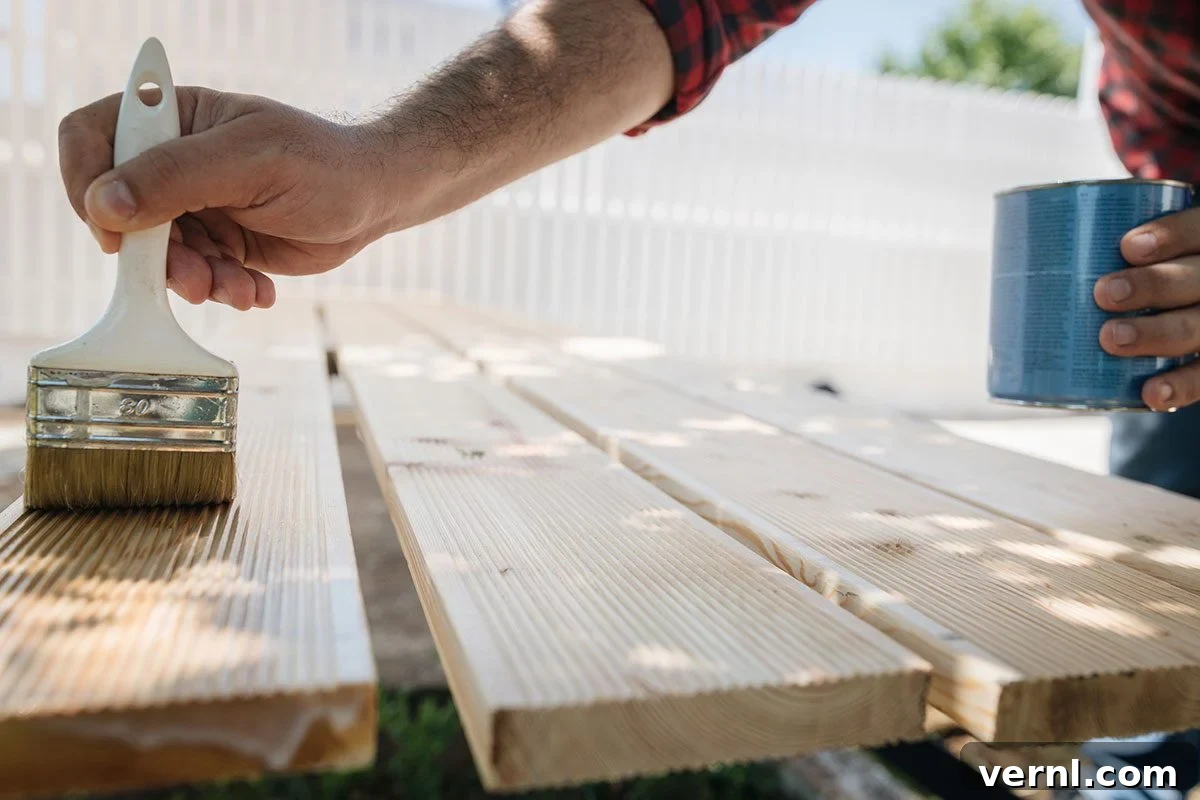
The Ultimate Guide to Exterior Wood Stain: Protect, Preserve, and Beautify Your Outdoor Wood
Imagine the frustration: you’ve just invested time and effort into finishing your deck with a traditional, film-forming sealant. The surface gleams, the wood grain is exquisitely visible, and it feels perfectly waterproof. Yet, fast forward just a year or two, and the relentless cycle of seasonal precipitation, harsh UV rays, and fluctuating temperatures takes its toll. That once beautiful finish cracks, peels, and flakes away. Now, you’re faced with the daunting and time-consuming task of stripping, sanding, and completely refinishing your outdoor surfaces.
There is a superior alternative, a smarter approach to protecting your exterior wood: exterior wood stain. Unlike surface coatings, wood stains offer a unique blend of protection, aesthetic enhancement, and significantly easier long-term maintenance, making them the preferred choice for discerning homeowners.
What is Exterior Wood Stain and How Does It Work?
Exterior wood stain is a specialized protective coating designed to penetrate the wood fibers rather than forming a thick, opaque layer on the surface. This fundamental difference is key to its appeal and performance. While traditional paints and sealants create a film that sits atop the wood – vulnerable to cracking, chipping, and peeling under environmental stress – stains soak into the pores of the wood, becoming an integral part of its structure.
This penetration allows the wood to breathe, reducing the likelihood of moisture getting trapped underneath and causing damage. Stains impart rich color and enhance the natural beauty of the wood grain without obscuring it entirely. They are primarily composed of a base (either oil or water), solvents, and crucial pigments. These pigments are not just for color; they play a vital role in protecting the wood from the damaging effects of ultraviolet (UV) radiation, which can cause graying and deterioration over time. By filtering out harmful UV rays, stains help preserve the wood’s structural integrity and aesthetic appeal for longer.
While stains may not offer the same heavy-duty wear resistance as some paints or thick epoxy coatings, their distinct advantages lie in their ease of application, seamless reapplication, and relatively trouble-free maintenance, making them a practical and beautiful choice for a variety of outdoor wood finishes.
Understanding the Different Types of Exterior Wood Stain
The world of exterior wood stains has evolved considerably, offering various formulations tailored to different needs and preferences. Understanding the distinct characteristics of each type is crucial for making an informed decision for your project.
Oil-Based Wood Stain
Oil-based stains have been a staple for protecting decks, fences, and other outdoor structures for many decades, earning a reputation for their deep penetration and durable finish. These traditional formulations are renowned for their ability to soak effectively into wood fibers, providing excellent protection from moisture and enhancing the wood’s natural oils. Their slower drying time is a significant advantage, allowing for easier application and manipulation, which helps in achieving an even, professional-looking finish without unsightly lap marks.
When applied correctly, oil-based stains can offer long-lasting protection, with maintenance typically involving a simple cleaning and reapplication of the product every few years. They are also generally the most economical choice upfront, offering good value for their protective qualities. Common oils used in these stains include linseed oil and tung oil, which nourish the wood and provide a rich, warm aesthetic.
However, oil-based stains do come with a few drawbacks. They contain volatile organic compounds (VOCs), which evaporate into the atmosphere during application and drying. These VOCs can be potentially harmful to the environment and human health if proper precautions are not taken. For this reason, it is crucial to apply oil-based stains in a well-ventilated area, such as outdoors, and always adhere to the manufacturer’s safety recommendations printed on the product container. While respirators are generally not required for typical outdoor applications with sufficient airflow, eye protection and gloves are always advisable. Another consideration is their tendency to attract mildew over time, especially if applied too thickly or if the wood is in a consistently damp or shaded environment. Regular cleaning and proper application can mitigate this issue.
Water-Based Wood Stain
Water-based stains represent a more modern technological advancement in exterior wood protection, offering distinct advantages that appeal to environmentally conscious users and those seeking advanced performance features. Many manufacturers of water-based products claim enhanced resistance to UV rays compared to their oil-based counterparts, suggesting longer periods between maintenance applications. While improvements are constant, real-world longevity can sometimes vary, and some users still find oil-based products to offer slightly longer wear, especially in high-traffic or extreme sun exposure areas.
A significant benefit of water-based stains is their resistance to microbial growth; they are less prone to attracting mold, mildew, and other microorganisms. Some formulations even incorporate zinc or other fungicides for extra mildew and rot resistance. From a safety and cleanup perspective, water-based stains are superior. They contain minimal to no VOCs, making them safer for both the applicator and the environment. Cleanup is remarkably easy, requiring nothing more than soap and water for brushes and tools.
The application of water-based exterior wood stain, however, can be more challenging than with oil-based products. Because they do not penetrate as deeply and dry much more quickly, careful and methodical application is essential to avoid visible brush strokes, lap marks, or blotchy areas. It’s often recommended to work in smaller sections and maintain a “wet edge” to ensure a uniform finish, which might require a bit more experience or careful planning for DIYers.
Hybrid Wood Stain
The innovation in wood stain technology has led to the development of hybrid stains, which skillfully blend the best attributes of both oil-based and water-based formulations. These sophisticated products aim to deliver the superior durability, low VOC content, and environmental benefits of water-based components, alongside the deep penetration, rich visual appeal, and ease of application often associated with oil-based products. Hybrid stains are becoming increasingly popular as they offer a balanced solution, providing robust protection and beautiful finishes with reduced environmental impact and user-friendly characteristics.
Stain Opacities: Enhancing or Hiding the Wood Grain
Beyond the base type, another critical factor when choosing an exterior wood stain is its opacity. This refers to how much of the wood grain and natural color will show through the applied finish. Understanding the different levels of opacity is essential for achieving your desired aesthetic and level of protection:
- Clear/Transparent Stains: These stains offer minimal pigment, primarily focusing on UV protection and waterproofing while allowing the natural beauty and color of the wood to shine through almost entirely. They require more frequent reapplication as they offer the least amount of UV defense.
- Semi-Transparent Stains: Containing more pigment than clear stains, semi-transparent options add a hint of color while still allowing a significant portion of the wood grain to be visible. They provide better UV protection and durability than clear stains and are a popular choice for enhancing the natural look of wood.
- Semi-Solid Stains: These stains offer a greater concentration of pigment, providing more uniform color and obscuring some of the wood grain, though subtle textures and patterns may still be discernible. Semi-solid stains offer excellent UV protection and are ideal for wood that has some minor imperfections or color variations you wish to minimize.
- Solid Stains: Behaving much like a thin paint, solid stains contain the most pigment, completely covering the wood grain and providing an opaque, uniform color. They offer the highest level of UV protection and durability, making them an excellent choice for older, weathered wood that may have significant imperfections or for achieving a specific color aesthetic. Solid stains are also ideal for those who want the look of paint but with the penetrating benefits and easier maintenance of a stain.
Choosing the Right Exterior Wood Stain for Your Project
Selecting the ideal wood stain is not a one-size-fits-all decision; it depends on a multitude of factors specific to your project, environmental conditions, your experience level, and personal aesthetic preferences. Thoughtful consideration of these elements will ensure a successful and long-lasting finish.
- Consider Sun Exposure: The amount of direct sunlight your wood surface receives is paramount. If your deck or fence is bathed in intense sunlight for many hours a day, UV protection is critical. While some oil-based stains offer good UV resistance, water-based products, especially modern formulations, often boast superior UV inhibitors and performance in this regard. Clear or transparent stains will always require more frequent maintenance in high-sun areas compared to more pigmented options.
- Note the Type of Wood You’re Finishing: Different wood species react differently to stains. Softwoods like pine, cedar, and fir are highly absorbent, meaning they can soak up stain quickly and unevenly. For less experienced DIYers, quick-drying water-based stains applied to highly absorbent softwoods can result in blotchy or uneven finishes due to rapid absorption before the stain can be properly worked in. Oil-based stains, with their longer open time, are often more forgiving on these wood types. Hardwoods, such as oak or mahogany, are denser and absorb stain less readily, often benefiting from thinner applications or specific formulations.
- Consider Climate and Environment: Your local climate significantly impacts stain performance. Warm, humid weather creates an environment where mold and mildew thrive. While oil-based products are generally effective, they can be more susceptible to mildew growth if applied too thickly or in consistently damp conditions. Water-based stains, often formulated with advanced mildewcides, can be an excellent choice for humid regions. Conversely, in dry, arid climates, the wood needs robust protection against cracking and splitting from excessive drying.
- Desired Aesthetic and Opacity: Decide how much of the wood’s natural grain you want to show. Do you prefer a subtle enhancement (transparent/semi-transparent) or a solid, uniform color (solid stain)? This choice directly influences the stain’s longevity and the character of your finished project.
- Skill Level and Application Ease: If you’re a novice, an oil-based stain might be more forgiving due to its longer drying time, allowing you more time to correct mistakes and achieve an even coat. Water-based stains often require quicker, more precise application.
- Always Test the Product: Before committing to your entire deck, fence, or lawn furniture set, always apply the chosen stain to a small, inconspicuous area or a scrap piece of the same wood. This allows you to assess the color, absorption rate, and overall appearance, ensuring it meets your expectations.
Essential Staining Tools and Preparation
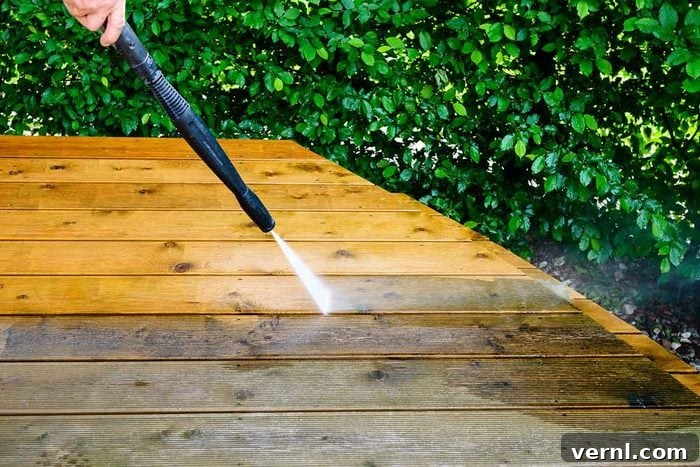
The success and longevity of any exterior wood staining project hinge significantly on proper surface preparation. Skipping this crucial step can lead to poor adhesion, uneven color, and premature finish failure. Gather all the necessary tools for both preparation and application before you begin.
Surface Preparation Tools:
- Pressure Washer: While not strictly essential for every project, a pressure washer can drastically reduce the time and effort spent on manual cleaning and sanding. It is particularly effective for removing dirt, grime, mildew, and loose flakes of old finish. When using a pressure washer, always use a wide fan tip and keep the nozzle moving to avoid damaging the wood fibers. Allow the wood to dry completely, typically 24-48 hours, before proceeding to sanding.
- Power Sander: A hand-held random orbit sander is suitable for most small to medium-sized projects. For larger areas like extensive decks or verandas, consider investing in or renting a walk-behind floor sander for greater efficiency. Experts and stain manufacturers universally recommend using 60-grit sandpaper for the final pass. This grit level creates an optimal surface profile that maximizes the wood’s absorbency, allowing the stain to penetrate deeply and ensuring the highest durability of the finish. Coarser grits (e.g., 40-grit) can be used for initial removal of old finishes, followed by 60-grit for finishing.
- Deck Cleaner/Brightener: For deep cleaning and restoring the wood’s natural color, especially after pressure washing, dedicated deck cleaners and brighteners are invaluable. They help remove stubborn stains and open up the wood pores for better stain absorption.
- Scrapers and Wire Brushes: Useful for removing stubborn peeling paint or stain in tight corners or areas a sander can’t reach.
Stain Application Tools:
The best application method depends on the size and complexity of your project, as well as the specific type of stain you’ve chosen. Always consult the stain manufacturer’s recommendations on the product label.
- Rollers: For large, flat surfaces such as decks, patios, and long fences, rollers offer superior efficiency and coverage compared to brushes. If you are applying a water-based acrylic stain, ensure you use a synthetic fiber roller cover, as natural fibers can absorb water and degrade. A quality roller frame and a proper nap size (typically 3/8″ or 1/2″) will provide even distribution.
- Brushes: High-quality brushes are essential for applying stain to smaller areas, intricate railings, spindles, trim, and corners where rollers cannot reach. Use natural bristle brushes for oil-based stains and synthetic (nylon/polyester) brushes for water-based stains. A good quality brush ensures smooth application and prevents streaking.
- Sprayers: Various types of sprayers—from handheld pump sprayers to electric HVLP (High Volume Low Pressure) or airless sprayers—can be purchased or rented. Sprayers offer the most efficient and uniform application, particularly for large or complex surfaces like lattice work and fences, as long as the stain is compatible (check manufacturer guidelines). Always mask off surrounding areas to prevent overspray.
- Pads/Applicators: Some applicators, such as stain pads or lambswool applicators, are designed for smooth, even coverage on decks and can be a good alternative to rollers or brushes for certain types of stains.
- Rags: Clean, lint-free rags are ideal for wiping off excess stain, particularly with transparent or semi-transparent products, to prevent blotchiness and ensure a natural finish. They are also useful for touch-ups.
- Safety Gear: Always wear appropriate personal protective equipment, including gloves (nitrile or chemical-resistant), eye protection, and old clothing. If working with oil-based stains in confined or poorly ventilated areas, a respirator might be necessary.
- Buckets and Stir Sticks: Use separate buckets for mixing and application, and always stir your stain thoroughly before and periodically during application to ensure pigments are evenly distributed.
Maintaining Exterior Wood Stain for Lasting Beauty
One of the most significant advantages of choosing stains over film-forming finishes is the remarkable ease of maintenance. This benefit not only saves time and effort in the long run but also contributes to the overall cost-effectiveness of using stain.
Unlike paints and sealants that inevitably crack and peel, stains simply wear down gradually over time due to exposure to weather and foot traffic. Depending on the level of wear and environmental exposure, most oil-based and water-based stains will require reapplication every few years, typically ranging from 2 to 5 years. While this might seem frequent, the process of sprucing up a stained surface is often a breeze compared to the laborious efforts required for traditional finishes.
Because stains don’t form a brittle film that fails by peeling, the preparation for reapplication is significantly simpler. Often, a simple wash with a mild detergent and water, or a specialized deck cleaner, is all that’s needed to prepare the surface. Once clean and completely dry, a fresh coat of stain can be applied directly over the existing worn stain using a brush, roller, or rag. There’s usually no need for extensive sanding or stripping, which dramatically cuts down on maintenance time and effort.
In contrast, film-forming finishes, including certain stain and sealer hybrid products, demand a much more intensive maintenance regimen. When these finishes start to look worn, cracked, or peeled, they must be meticulously stripped away—often involving harsh chemical strippers and aggressive sanding—before a new coat can be applied. This is a messy, time-consuming, and physically demanding task.
While the beauty of stains lies in their low-fuss reapplication, it’s worth noting that after several repeated reapplications over many years, you may achieve the best results by performing a light sanding of the surface before applying a fresh coat. This helps to remove any accumulated residue and ensures optimal penetration and adhesion for the new stain layer, revitalizing the wood’s appearance and protection.
Many outdoor woodworking enthusiasts, myself included, often avoid using separate sealers on top of stains or relying solely on complex stain-sealer combination products. The primary reason is the increased difficulty of maintenance associated with these layered or hybridized finishes. Outdoor woodwork, by its very nature, is often appreciated for its more natural, rustic, and less refined appearance compared to its indoor counterparts. For most projects, a straightforward application of a quality water or oil-based stain is more than sufficient to achieve excellent protection, a beautiful aesthetic, and effortless long-term care.
Common Wood Staining Pitfalls to Avoid
Even with the right product and tools, certain mistakes can undermine your staining efforts. Being aware of these common pitfalls can help ensure a successful and satisfying outcome for your exterior wood project.
- Applying Water-Based Stain on Highly Absorbent Wood Improperly: Using quick-drying water-based stain on very absorbent woods like cedar or pine without proper technique is a recipe for disaster. These woods can rapidly “drink up” the stain, leading to visible brush strokes, lap marks, and a blotchy, uneven appearance. To avoid this, work in small, manageable sections, apply evenly and quickly, and maintain a “wet edge” to allow for seamless blending. Consider using a stain pad applicator for smoother results.
- Rushed Application: Haste makes waste, especially when staining. Rushing the application process, particularly with fast-drying water-based products, almost guarantees visible brush strokes, streaks, and uneven blotches. Take your time, apply thin, even coats, and allow adequate drying time between coats (if multiple coats are recommended). Slow and steady wins the race for a professional-looking finish.
- Inadequate Surface Preparation: This is arguably the most critical and frequently overlooked step. Failing to thoroughly clean, remove old finishes, and sand the surface before applying new stain will severely compromise the adhesion, longevity, and appearance of your finish. Old, peeling finishes will prevent the new stain from penetrating properly, and dirt or mildew will be trapped under the new coat. Always dedicate ample time to cleaning and sanding to create a pristine surface for the stain.
- Staining in Direct Sunlight or Extreme Temperatures: Applying stain in direct, hot sunlight or during extreme temperatures (either too hot or too cold) can significantly impact drying time and overall finish quality. Hot sun can cause the stain to dry too quickly, leading to unevenness and blotching. Very cold temperatures can prevent the stain from curing properly. Always check the manufacturer’s recommended temperature range and aim to stain during cooler parts of the day or on overcast days.
- Not Stirring the Stain Adequately: Pigments in wood stains can settle at the bottom of the can. If you don’t stir the stain thoroughly and regularly during application, the color will be inconsistent. Always use a stir stick to mix the stain from the bottom up, ensuring an even distribution of pigments.
- Applying Too Much Stain: Over-applying stain, especially oil-based products, can lead to a sticky residue that doesn’t fully dry, attracts dirt, and can become a breeding ground for mildew. It’s better to apply two thin coats than one thick coat. Wipe off any excess stain that hasn’t penetrated the wood after the recommended dwell time.
Exterior wood stain may not transform your deck, fence, or lawn furniture into the lustrous deck of a luxury yacht. However, for many homeowners and outdoor enthusiasts, it represents the optimal balance between robust protection from the elements, a naturally beautiful appearance that enhances the wood’s character, and refreshingly trouble-free maintenance. Before you move ahead with your project, ensure you understand how long does wood stain takes to dry to achieve the best results.