Creating a Hummingbird Haven: Essential Flowers and Expert Tips for Your Garden
There’s an undeniable magic that unfolds in a garden when hummingbirds arrive. These tiny, iridescent jewels, darting from blossom to blossom with unparalleled speed and grace, bring an electrifying energy that captivates anyone lucky enough to witness it. For garden enthusiasts and bird lovers alike, the arrival of hummingbirds is a cause for celebration, a true highlight of the growing season. It feels like hitting the jackpot when these glittering delights choose our backyards and garden spaces as their preferred feeding grounds, transforming a simple outdoor area into a vibrant, buzzing sanctuary.
If you, like many passionate gardeners, dream of attracting these remarkable creatures to your outdoor oasis, you’re in luck. Cultivating a hummingbird-friendly garden is a profoundly rewarding endeavor, offering both immense satisfaction and a dynamic spectacle of nature. With a thoughtfully chosen selection of beautiful, nectar-rich flowers and a few strategic tips, you can easily encourage these aerial acrobats to become regular visitors, adding a touch of enchantment to your daily life and contributing to vital pollinator conservation efforts.
The Art of Attracting Hummingbirds: A Gardener’s Guide to Flora
To provide the most welcoming environment for hummingbirds, understanding their dietary preferences and migratory patterns is key. I recently had the pleasure of speaking with Kathi and Michael Rock from Madison, WI, seasoned hummingbird enthusiasts who have dedicated 25 years to meticulously documenting the floral preferences of hummingbirds in their region. Their extensive research offers invaluable insights for gardeners aiming to cultivate a truly attractive habitat.
“We believe, in terms of gardening, that it’s important to have something blooming from mid-May to mid-October,” Kathi advises. This crucial period ensures a continuous food source throughout the hummingbirds’ breeding season and, most importantly, during their arduous migration when they need abundant energy. While this specific timeframe may vary slightly depending on your USDA plant hardiness zone and local climate, the overarching goal remains the same: provide a consistent buffet of nectar-rich blooms, particularly as they prepare for their long journeys south or arrive exhausted from them.
Top Flowers That Call to Hummingbirds
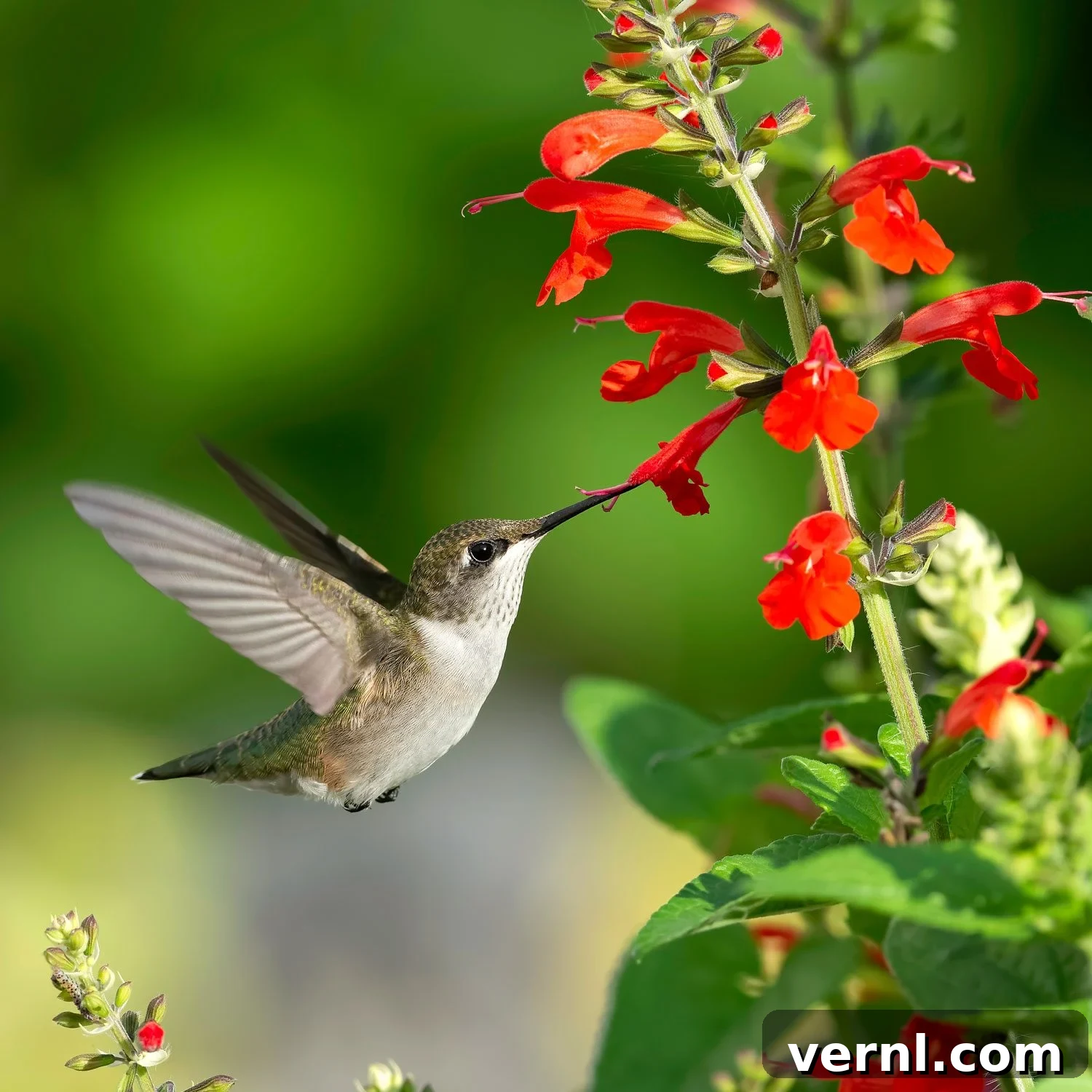
Hummingbirds are particularly drawn to flowers with specific characteristics: often brightly colored (especially red), trumpet-shaped, and rich in high-energy nectar. Here are some of the most effective and visually stunning plants to incorporate into your garden, each with unique attributes that appeal to these tiny marvels:
Cardinal Flower (Lobelia cardinalis)
A true showstopper in any garden, the Cardinal Flower is a native perennial that effortlessly commands attention. Hardy between Zones 3 to 9, it grows impressively tall, reaching anywhere from 3 to 6 feet, creating a striking vertical element and a dramatic backdrop in flower beds. This robust plant thrives in full sun and, true to its name, is often found naturally in wet, boggy areas, making ample and consistent watering a crucial requirement for its success in a garden setting. Its vibrant presence not only enhances aesthetic appeal but also serves a vital ecological role, especially in riparian zones.
Why hummingbirds adore this plant: The Cardinal Flower is a hummingbird magnet, and for good reason. Its brilliant, fiery red, tubular blossoms are not only visually arresting but also abundantly rich in nectar. This specific color and shape are perfectly evolved to attract hummingbirds, who, in turn, serve as the primary pollinators for this remarkable species. The plant’s survival literally depends on these tiny birds, making it an irresistible and mutually beneficial choice for your garden. Its tall stalks make the flowers easily visible from a distance, guiding hummingbirds directly to their sweet reward.
Large Firecracker Plant ‘Vermillionaire’ (Cuphea hybrid ‘Cupver’)
Among the vast Cuphea family, which boasts over 200 diverse species, the ‘Vermillionaire’ cultivar stands out as a particular favorite among hummingbirds. This exceptional variety features an abundance of fiery orange-red tubular flowers that bloom prolifically, creating a breathtaking display of continuous color. It grows in an attractive mounding habit, typically reaching about 30 inches in height and spreading up to 2 feet across. Best suited for Zones 8 to 11 when planted directly in the ground, gardeners in cooler climates (Zones 7 and below) can still enjoy its splendor by cultivating it in large containers, allowing for easy overwintering indoors. This plant offers vigorous, continuous blooms from spring until the first hard frost, ensuring a prolonged period of nourishment for your feathered friends.
Why hummingbirds adore this plant: The ‘Vermillionaire’ is a prime food source for hummingbirds, primarily due to its perfectly shaped, nectar-laden tubular flowers. These blossoms are ideally suited for a hummingbird’s long, slender beak, providing easy access to a sweet reward without competition from insects with shorter proboscises. Crucially, this plant blooms tirelessly deep into the season, often when many other nectar sources have begun to fade. This extended bloom period makes it an invaluable resource for hummingbirds, particularly as they require increased energy reserves for migration and raising late broods.
Salvia ‘Amistad’
A true champion in the hummingbird garden, Salvia ‘Amistad’ consistently receives high praise from experts like Michael Rock. “One of our favorites is Salvia ‘Amistad.’ It can easily grow 5 ft. tall, blooms continuously and doesn’t need deadheading,” he notes. This robust perennial, though technically hardy only in Zones 8 to 10, offers a fantastic solution for gardeners in colder regions: it can be carefully dug up and overwintered in a frost-free garage or basement, then replanted the following spring. For optimal growth and an explosion of its deep purple blooms, plant ‘Amistad’ in a location that receives full sun and ensure it is consistently well-watered. Its imposing height and vibrant color make it an architectural marvel in the garden, constantly drawing the eye of both humans and hummingbirds.
Why hummingbirds adore this plant: As Kathi Rock emphatically states, “September is for salvias!” This sentiment rings especially true for ‘Amistad’. Its continuous blooming habit extends well into the crucial late-season period when hummingbirds are frantically foraging to double their body weight in preparation for their long and demanding migratory journeys. The abundance of nectar provided by ‘Amistad’ during this critical time makes it an indispensable component of any hummingbird-friendly landscape, offering life-sustaining fuel when it’s needed most. Its sturdy stems and abundant flowers provide multiple feeding opportunities simultaneously.
Red Firecracker Penstemon (Penstemon eatonii)
Among the diverse and beautiful Penstemon family, the Red Firecracker Penstemon is a quintessential choice for attracting hummingbirds, and indeed, a personal favorite for many gardeners. Hardy between Zones 4 to 9, these plants thrive when they receive ample morning sun but are granted some protection from the intense heat of the afternoon, particularly in warmer climates. Growing to a modest height of up to 2 feet tall and a foot wide, they offer immense value as a nectar plant without demanding excessive garden space, making them ideal for borders or rock gardens. Their unique form and brilliant color make them stand out in any pollinator-focused bed.
Why hummingbirds adore this plant: The allure of the Red Firecracker Penstemon lies in its distinctive and highly accessible floral structure. Its bright red, tubular flowers are neatly arranged along tall, sturdy stems, creating a vertical beacon that is incredibly easy for hummingbirds to spot and access. A single, mature plant can be remarkably productive, producing up to thirty nectar-filled stems, offering a bountiful feast. The popularity of this plant among hummingbirds is so profound that these fiercely territorial birds will often engage in spirited aerial skirmishes to defend the prime feeding grounds around these coveted plants, a testament to their high value as a food source!
Trumpet Honeysuckle (Lonicera sempervirens)
While many varieties of honeysuckle exist, gardeners must exercise caution. As Kathi Rock points out, “Honeysuckle vines grow just about everywhere.” However, highly invasive species like Japanese honeysuckle (Lonicera japonica) can wreak havoc on native ecosystems, outcompeting native plants and altering habitats. Instead, savvy gardeners should opt for the ecologically responsible and equally beautiful Trumpet Honeysuckle (Lonicera sempervirens), also known as Coral Honeysuckle. This hardy, native perennial vine offers a fantastic alternative, providing stunning blooms without the ecological risk. It requires a robust support system – such as a trellis, arbor, or sturdy fence – to showcase its climbing beauty. Trumpet Honeysuckle performs exceptionally well in conditions ranging from full sun to partial shade, making it adaptable to various garden placements.
Why hummingbirds adore this plant: The Trumpet Honeysuckle is a marvel of co-evolution. Its elongated, trumpet-shaped flowers, typically in shades of red, orange, or yellow, are perfectly designed to accommodate the slender bills of hummingbirds, providing an exclusive and abundant source of nectar. Blooming profusely from mid-spring through the end of summer, this vine ensures a long and reliable food supply for hummingbirds throughout their active season. Beyond its nectar, the dense foliage of the vine can also offer essential shelter and nesting sites, further enhancing its appeal as a multi-functional habitat plant.
Pussy Willows (Salix discolor or similar species)
Often overlooked in discussions about hummingbird-attracting plants, Pussy Willows are, surprisingly, excellent additions to a pollinator-friendly garden, particularly for providing crucial early-season resources. These easily grown shrubs thrive in sunny locations and are best positioned on the periphery of your lawn or garden, or in areas with consistent moisture. Depending on the chosen variety, Pussy Willows can present as wild, sprawling shrubs or be meticulously trimmed into elegant weeping forms, adding a unique textural and seasonal interest to the landscape with their soft, fuzzy catkins.
Why hummingbirds adore this plant: While Pussy Willows are not renowned for their direct nectar contribution, their importance to hummingbirds lies in a different, equally vital offering. As Marlene Pantin, Partnerships Manager for the National Audubon Society’s Plants for Birds program, wisely advises, “When selecting plants that attract hummingbirds, you want to think about not only plants that would be a good source of nectar, but also a good source of nesting materials.” The soft, cottony catkins of Pussy Willows provide essential, delicate fibers that hummingbirds meticulously collect to line their tiny, cup-shaped nests, ensuring warmth and protection for their young. Their early spring bloom also offers a valuable, though often subtle, source of sap and small insects, which are crucial for hummingbirds emerging from migration before other flowers are in full swing.
Expanding Your Hummingbird Garden: Additional Nectar Powerhouses
To further enhance your garden’s appeal and ensure a continuous flow of food throughout the growing season, consider integrating other proven hummingbird favorites. A diverse selection of plants will provide a varied diet and consistent blooms, ensuring your garden is always a bustling hub of activity:
- Bee Balm (Monarda didyma): A vibrant native perennial with unique, shaggy, tubular flowers. Available in shades of red, pink, and purple, it’s loved by hummingbirds and many other pollinators.
- Larkspur (Delphinium species): Tall, stately spires of blue, purple, or pink flowers that offer accessible nectar, particularly for larger hummingbird species.
- Bleeding Heart (Dicentra spectabilis): Its distinctive heart-shaped flowers, often pink or white, provide crucial early season nectar in shaded or partially shaded spots, bridging the gap before summer blooms.
- Zinnia (Zinnia elegans): While not strictly tubular, single-flowered zinnias with flat centers can offer accessible nectar and are easy-to-grow annuals that provide continuous color.
- Petunia (Petunia species): Many varieties, especially those with trumpet shapes and vibrant colors, are excellent nectar sources and can spill beautifully from hanging baskets or containers.
- Columbine (Aquilegia species): Known for their intricate, spurred flowers that are perfectly shaped for hummingbird bills, offering early to mid-spring nectar.
Beyond Blooms: Essential Tips for a Thriving Hummingbird Habitat
Creating an irresistible haven for hummingbirds extends beyond just planting the right flowers. A truly welcoming environment addresses all their needs: a consistent food supply, reliable water sources, and secure shelter. By integrating these additional elements, you can ensure your garden becomes a vibrant, safe, and sustainable home for these aerial wonders, inviting them to stay and even nest.
Provide Nectar Feeders with Diligent Care
While natural flower nectar is always preferred, feeders can serve as an excellent supplementary food source, especially during peak migration periods or when natural blooms are scarce. They also offer a fantastic opportunity for close-up observation, allowing you to appreciate the hummingbirds’ intricate beauty from your window or patio. The Rocks, experienced hummingbird observers, recommend a strict cleaning and refilling schedule: change the nectar solution every three to five days, more frequently in hot weather, to prevent fermentation and bacterial growth. The ideal nectar mixture is simple: four parts water to one part granulated sugar. Remember, absolutely nothing else is needed. Avoid using red dye in your feeders; it is unnecessary and potentially harmful to hummingbirds. Their attraction to red is naturally inherent, and the color of your feeder will suffice to catch their eye.
Optimal Feeder Placement and Maintenance: Position feeders in shaded areas to keep the nectar fresh longer and prevent rapid fermentation. Place them away from strong winds and out of reach of predators like cats. Clean them thoroughly with hot water and a bottle brush, ideally every few days, to prevent mold and bacteria buildup, which can be fatal to hummingbirds. Consider having multiple feeders in different locations to reduce competition among territorial birds.
Offer Life-Giving Water Features
Hummingbirds, like all birds, require access to fresh water not only for drinking but also for bathing. While they won’t typically use traditional birdbaths with standing water, they are highly attracted to moving water. As Marlene Pantin from the National Audubon Society highlights, “Water features, like a dripping fountain or a water mister, are a great addition, as hummingbirds like to bathe.” A small, shallow fountain with a gentle drip or misters that create fine droplets on foliage will be immensely popular. Observe them fluttering through the mist, meticulously cleaning their delicate feathers – it’s a truly captivating sight and essential for their feather health.
Effective Types of Water Features for Hummingbirds:
- Misters: Create fine sprays of water that mimic dew or rain, which hummingbirds love to fly through and bathe in. Place them near plants to encourage interaction.
- Drippers: A slow drip of water from an elevated source (like a hanging bucket with a small hole) into a shallow basin creates attractive ripples and sounds that draw attention.
- Small, recirculating fountains: Choose designs with gentle splashes and minimal depth rather than strong jets, ensuring easy access for these tiny birds.
Ensure any water feature is kept meticulously clean and filled with fresh water regularly to prevent the growth of harmful bacteria and algae.
Commit to a Pesticide-Free Environment
Perhaps the most critical step in creating a healthy, thriving habitat for hummingbirds is a steadfast commitment to avoiding pesticides. Regardless of the beautiful flowers you plant, a garden saturated with chemicals will be detrimental to all wildlife. “You should avoid pesticides since hummingbirds also eat insects,” emphasizes Pantin. While known primarily for their nectar diet, hummingbirds are also voracious insectivores, relying on tiny spiders, gnats, aphids, and other small insects for essential protein, especially crucial for their growing young. Pesticides eliminate these vital food sources and can directly harm hummingbirds who ingest contaminated insects or nectar. Embracing organic gardening practices, such as companion planting, attracting beneficial insects, and manual pest removal, supports a healthy ecosystem for all wildlife, including your beloved hummingbirds.
Broad Benefits of Organic Gardening for Hummingbirds:
- Protects hummingbirds and other pollinators from harmful chemical exposure.
- Ensures a healthy population of insects for hummingbirds’ essential protein needs, particularly during nesting.
- Promotes overall garden biodiversity, leading to a more resilient and balanced ecosystem.
- Contributes to healthier soil and plant vigor, creating a more sustainable environment.
Provide Adequate Shelter and Nesting Opportunities
Beyond food and water, hummingbirds need safe places to rest, perch, and nest, shielded from predators and harsh weather. Mature trees, dense shrubs, and thick vines provide crucial shelter and vital cover. Consider planting a variety of plant heights and types to offer different perching options throughout the day and year. While specific “hummingbird houses” are generally ineffective for nesting, providing natural nesting materials (like the aforementioned pussy willow catkins, or even small bits of cotton left in a sheltered, dry spot) can be helpful. A dense, untamed corner of your garden or a thicket of native shrubs can be a perfect, undisturbed spot for them to build their tiny, camouflaged nests, often adorned with lichen and spider silk for camouflage and structure.
By integrating these comprehensive elements into your garden design, you’re not just planting flowers; you’re cultivating a vibrant, living ecosystem that supports hummingbirds through every stage of their fascinating lives. The rewards of witnessing these jewel-toned birds thrive in your own backyard are immeasurable, offering endless joy and a profound connection to the natural world.
About Our Esteemed Experts:
The invaluable insights shared in this guide come from dedicated individuals who have spent years observing and understanding hummingbirds:
Kathi and Michael Rock: These passionate naturalists have generously shared their quarter-century of hummingbird observations, both through an engaging online community and at various birding and gardening events. Their annual garden tour has become a highly anticipated highlight for local enthusiasts, showcasing a real-world example of a thriving hummingbird sanctuary and inspiring countless others.
Marlene Pantin: As the Partnerships Manager for the National Audubon Society’s highly impactful Plants for Birds program (learn more here), Marlene is a leading voice in ecological gardening and bird conservation. Her expertise extends beyond birds, as she is also a formidable advocate for the preservation and creation of parks and open spaces throughout New York, championing green initiatives for broader community benefit and healthier urban environments.
Sources
- Fact Sheet: “Firecracker Penstemon”
- NC State Extension: “Cuphea hybrid ‘Cupver'”
- High Country Gardens: “The Hummingbirds are Back”
- Wisconsin Horticulture Division of Extension: “Cardinal Flower, Lobelia cardinalis”
- High Country Gardens: “Friendship Sage, Salvia Amistad”
- National Audubon Society: “Plants for Birds Program”