
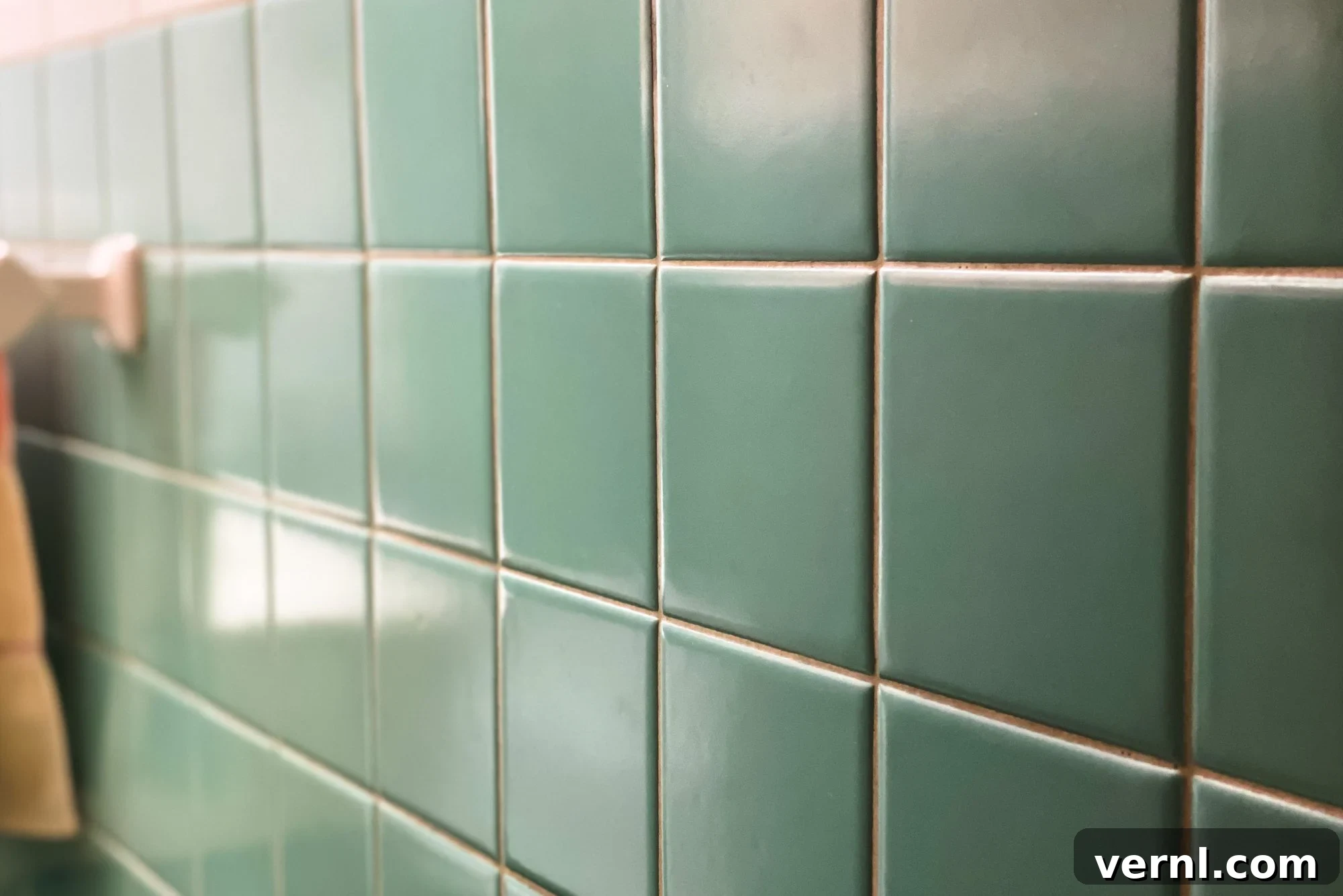
My journey into the captivating world of vintage tiles began unexpectedly, tucked away in the charming coastal city of Sarasota, Florida. Owning a mid-century modern home from 1958, I cherished its original features, including the unique aqua blue bullnose tiles gracing my bathroom. However, a necessary plumbing repair behind the toilet demanded the removal of four 4-inch by 4-inch tiles, presenting an immediate design dilemma.
The quest to find identical replacements proved daunting. Despite diligently exploring local resale shops, antique stores, and salvage yards, the exact vintage tiles I needed remained elusive. In a pinch, my solution was a makeshift one: painting white tiles to approximate the original blue, then sealing them with a clear spray-on enamel. While functional and discreetly placed behind the toilet, it was far from a perfect match. This experience, however, ignited a curiosity about the deeper world of historic home materials.
Had I delved a bit further online, I would have discovered a vibrant community of dealers and artisans specializing in the sale and reproduction of vintage tiles for kitchens, bathrooms, fireplace surrounds, and other period-specific applications. These experts not only connect homeowners with hard-to-find pieces but also offer invaluable insight into the characteristics that define vintage tile, effective methods for working with existing installations, and the compelling reasons why preserving or replicating the authentic look is worth the effort. Let’s explore the rich history, unique charm, and practical aspects of vintage tile that make it a coveted element in timeless home design.
Defining Vintage Tile: What Sets It Apart?
The term “vintage” is often used broadly, but when applied to tiles, it carries specific connotations rooted in historical manufacturing and design trends. There isn’t a universally agreed-upon exact age when a tile transitions from “old” to “vintage,” but industry experts offer helpful guidelines.
Josh Blanc, an accomplished artist and owner of Clay Squared to Infinity in Minneapolis, Minnesota, considers “vintage tiles in America to be those installed in homes built from the 1890s through the 1950s.” He notes that each distinct period showcased unique styles, color palettes, and manufacturing techniques, making identification an exciting historical journey.
Scott Wells, owner of Wells Tiles & Antiques in Los Angeles, offers a slightly broader perspective based on his three decades in the business. He explains, “The term ‘vintage’ is used very loosely. We generally consider tile that is approximately 30 years or older to be vintage.” Wells further distinguishes this from “antique tile,” which he defines as being 100 years old or more – a category that is, understandably, much rarer and more challenging to procure.
Hallmarks of Historical Tile Manufacturing
What truly distinguishes vintage tiles from their modern counterparts goes beyond age; it’s embedded in their physical characteristics, dimensions, glazes, and overall manufacturing processes:
- Thickness and Durability: As Wells points out, many older tiles exhibit a greater thickness. “Most of our older tiles are approximately 1/2-inch thick,” he states, contrasting this with modern tiles, which often range from 1/4-inch to 3/8-inch. This added material often translates to superior durability and longevity, allowing them to withstand decades of wear.
- Unglazed Porcelain: Blanc highlights the widespread use of unglazed porcelain tiles across various eras. In these tiles, the color permeates the entire body of the tile, rather than just being a surface application. This characteristic makes them incredibly robust and resistant to fading or wear, as chips or surface abrasion won’t reveal a different color underneath.
- Glazes and Finishes: Vintage glazes often possess a unique depth and subtle imperfections that are difficult to replicate with modern mass-production techniques. They might exhibit slight variations in tone, a softer sheen, or a hand-applied quality that adds character.
- Dimensions and Shapes: Tile sizes and shapes were often standardized differently in the past. While some modern reproductions aim for similar dimensions, subtle variations can make exact matching challenging. Mid-century homes, for example, pioneered multi-sized patterns, even incorporating tiny unglazed porcelain tiles as small as 3/4-inch by 1-9/16-inch.
- Design and Patterning: Each architectural era boasted distinctive tile aesthetics:
- Victorian Era (Late 19th – Early 20th Century): Characterized by elaborate borders, intricate geometric patterns, and often a rich, jewel-toned color palette. These tiles frequently adorned entryways, fireplace hearths, and elegant hallways, serving as focal points within the home.
- Bungalow Style (Early 20th Century): Popularized by homes like the Sears, Roebuck and Co. kit homes, this style often favored simpler designs. Unglazed porcelain hexagons were common, frequently featuring solid colors accented with smaller florets or other subtle decorative elements, creating a charming, understated elegance.
- Mid-Century Modern (Mid-20th Century): Embraced clean lines, geometric simplicity, and often a departure from highly ornate patterns. Multi-sized tile patterns became prevalent, utilizing a range of hues, from earthy tones to vibrant pastels, reflecting the era’s forward-thinking design philosophy.
Understanding these historical nuances is crucial for anyone embarking on a renovation project involving vintage tiles, whether for repair, restoration, or a full-scale redesign.
The Challenge of Matching: Modern vs. Vintage Tiles
When faced with the need to replace even a small section of vintage tile, the quest for an exact match can quickly become a significant hurdle. The differences between historical and contemporary manufacturing often make seamless integration nearly impossible with off-the-shelf modern options.
Why Modern Tiles Fall Short
Blanc articulates the core issue: “Modern reproduction tiles focus on a few iconic designs and mass produce them at a low price.” While this makes popular styles like white hexagon tiles with black florets – reminiscent of the bungalow period – widely accessible, they come with significant limitations. “They offer little to no customization or variations in color choices and sizes,” he explains. This lack of flexibility is a major drawback when trying to blend new with old.
Beyond design limitations, the fundamental differences in manufacturing processes pose the greatest challenge:
- Glaze Techniques: Vintage glazes, often applied by hand or with older machinery, can have unique variations in thickness, opacity, and texture. Modern tiles typically use highly automated processes that produce uniform, consistent glazes, which can look starkly different when placed next to a vintage piece, even if the color is similar. The depth of color, the way light reflects off the surface, and even the tactile feel can be distinctly different.
- Size Inconsistencies: While modern tiles are manufactured to precise, standardized dimensions, older tiles often exhibit slight variations due to less advanced machinery or kiln firing processes. A new tile that is nominally the same size may be a fraction of an inch off, leading to noticeable discrepancies in grout lines and overall alignment within an existing vintage installation.
- Color Fading and Patina: Over decades, vintage tiles develop a unique patina. Exposure to light, wear, and cleaning agents can subtly alter their original color, creating a hue that no brand-new tile can perfectly replicate. This aged appearance is part of their charm but makes matching a “fresh” tile difficult.
The Role of Reproduction Vintage Tiles
For those committed to authenticity, artisan reproduction tiles offer a viable and often superior alternative to mass-produced modern options. Craftspeople like Blanc and his team at Clay Squared to Infinity dedicate themselves to producing reproduction vintage tiles that meticulously adhere to historical patterns, sizes, and color schemes. These artisans often use traditional techniques, materials, and custom glazes to create tiles that are virtually indistinguishable from the originals, making them ideal for seamless repairs or extensions of existing vintage installations.
While an exact, “invisible” match might remain elusive in some cases, investing in high-quality reproduction tiles provides the closest possible aesthetic and material integrity, preserving the historical character of your home.
The Longevity Debate: Is Vintage Tile Truly Better Made?
Beyond the undeniable aesthetic appeal, many homeowners ponder whether vintage tiles offer tangible advantages in terms of quality and durability compared to their modern counterparts. While both have merits, experts often lean towards the enduring strength of older materials.
Scott Wells is a strong proponent of the older craftsmanship. He notes a significant difference in material thickness: “Most of our older tiles are approximately 1/2-inch thick, whereas today, most new tile is between 1/4-inch to 3/8-inch thick. So I would say, not as durable.” This extra material contributes to the tile’s structural integrity, making it more resistant to impacts and less prone to cracking over time.
This observation aligns with a general understanding of manufacturing history. Before the advent of mass-production techniques focused on cost efficiency and rapid style changes, building materials were often made with greater substance and an expectation of long-term performance. Vintage tiles, particularly those from the early to mid-20th century, were frequently crafted to be integral, long-lasting components of a home, built to withstand generations of use.
Josh Blanc, while acknowledging the durability of all well-made ceramic tile, offers a keen insight into modern industry trends. He suggests that “the [tile] industry expects homeowners to change styles and rip out what was put as the next trend takes hold.” This implies a market driven by cyclical design preferences rather than absolute material longevity. However, Blanc emphasizes a crucial point: “Ceramic tile is extremely durable and is supposed to be a 100-year product no matter what tile you choose.”
This statement underscores that while vintage tiles may often boast greater physical thickness, the ultimate longevity of any tile installation—vintage or modern—rests heavily on the quality of its installation. Proper surface preparation, appropriate adhesives, and expert grouting are paramount. A poorly installed thick vintage tile will fail just as surely as a poorly installed modern one. When installed correctly, both can offer impressive durability. However, the inherent robustness and often richer material composition of genuinely vintage tiles often give them an edge in terms of intrinsic strength and resistance to the rigors of time, contributing to their enduring appeal and value.
Preserving the Past: How to Clean and Maintain Vintage Tile
Maintaining vintage tile is key to preserving its beauty and ensuring its longevity. Unlike new tiles, older installations may require a gentler touch and specific care routines to avoid damage. The condition of the grout, in particular, plays a critical role in the overall appearance and structural integrity of the tiled surface.
Grout Care: The Unsung Hero
“Grout needs to be redone on a semi-regular basis depending on use,” advises Josh Blanc. Over time, grout can crack, crumble, or become discolored, detracting from the tile’s appearance and potentially allowing moisture to penetrate beneath the tiles. Regular maintenance, including cleaning and occasional re-grouting, “saves homeowners lots of money and makes their tile installation look new again,” Blanc asserts. This proactive approach prevents minor issues from escalating into costly repairs.
If you prefer to entrust your grout repair to a professional, Blanc highly recommends The Grout Doctor, a reputable company with locations across the US, known for their specialized expertise in grout restoration and cleaning.
Gentle DIY Cleaning for Everyday Sparkle
For routine tile cleaning, especially for delicate vintage surfaces, harsh chemicals and abrasive tools should be avoided. Blanc suggests an effective and gentle DIY cleaning solution that you can easily prepare at home:
- 1/4 cup white vinegar
- Two teaspoons borax
- 3-1/2 cups hot water
- Twenty drops of essential oil (Blanc prefers lavender or lemon for their refreshing scents)
- 1/4 cup liquid dish soap
Instructions:
- Combine all ingredients in a spray bottle and shake gently to mix.
- Spritz the solution liberally onto the tile surfaces, allowing it to sit for a few minutes to penetrate grime.
- Wipe clean with a soft cloth, paper towel, or a non-abrasive sponge. For stubborn spots or textured tiles, a soft-bristled brush can be used, but always test in an inconspicuous area first.
- Rinse the surface with clean water and dry with a fresh cloth to prevent water spots.
This homemade solution is effective at cutting through grease and grime without risking damage to the tile’s glaze or grout. Always avoid steel wool, highly acidic cleaners, or scrub brushes with hard bristles, as these can scratch vintage glazes or erode grout lines. Consistent, gentle cleaning will ensure your vintage tiles continue to add character and beauty to your home for many more years.
Repairing and Restoring Vintage Tiles: When to Mend, When to Replace
Even with the most diligent care, accidents happen, or the passage of time can take its toll on vintage tile installations. When a few tiles become damaged, the decision between repairing, replacing, or fully restoring requires careful consideration. The goal is often to maintain the original aesthetic while ensuring structural integrity.
The Art of Repairing Minor Damage
If a tile has experienced a clean break and all pieces are retained, it might be tempting to meticulously piece them back together and reinstall them. While this can sometimes be successful, it’s crucial to manage expectations. Unless the break is exceptionally clean and the reassembly flawless, “it’s unlikely the repair will be ‘invisible’,” as the original article notes. Cracks along repair lines are almost certainly going to show, particularly on glazed tiles where the repair adhesive might alter the light reflection.
For small chips or hairline cracks, some homeowners might attempt to fill them with epoxy or specialized tile repair kits. These solutions can offer a cosmetic fix, but rarely achieve a perfect, seamless match in terms of color, texture, or gloss. Such repairs are often best suited for less visible areas or where the goal is simply to prevent further deterioration rather than achieving an unblemished appearance.
Addressing Structural Issues and Major Damage
When tile damage goes beyond a simple break and points to a deeper structural problem—such as water infiltration, subfloor movement, or settling—Josh Blanc advises a more aggressive approach. In these scenarios, “you’ll likely need to chisel them out and investigate the problem.” Ignoring underlying structural issues will only lead to recurring tile damage, potentially escalating into more significant and costly repairs down the line. This might involve removing a larger section of tile to access and rectify the problem with the subfloor or wall structure before new tiles can be installed.
Professional Restoration: A Worthwhile Investment
For extensive damage, or when preserving the historical integrity of a significant vintage installation is paramount, professional tile restoration is often the best course of action. Experts in this field possess the specialized knowledge, tools, and materials to:
- Carefully remove damaged tiles without disturbing surrounding ones.
- Source appropriate replacement tiles, whether genuine vintage pieces or custom reproductions.
- Prepare the substrate properly to prevent future issues.
- Re-grout and finish the installation to blend seamlessly with the original.
- Address underlying structural problems effectively.
While seemingly more costly upfront, professional restoration can save money in the long run by preventing recurring problems and significantly enhancing the value and authenticity of your home’s historic features. It’s an investment in preserving a piece of your home’s unique history and character.
The Hunt for History: Where to Buy Vintage Tile
Embarking on a quest for genuine vintage tiles requires patience, persistence, and knowing where to look. While challenging, the reward of finding that perfect, historically accurate piece for your home is immeasurable.
Scott Wells of Wells Tiles & Antiques emphasizes the importance of authenticity: “It’s always advisable to search for the old tile if one is trying to match an existing installation.” He cautions that even if a new tile shares the same design, “it would stand out noticeably next to the original antique/vintage tile.” The subtle patina, glaze variations, and unique wear patterns of aged tiles simply cannot be replicated by new ones.
Specialized Dealers: Your First Stop for Authenticity
For the most reliable and extensive selection, specialized vintage and antique tile dealers are an invaluable resource. These businesses often dedicate decades to sourcing, acquiring, and curating collections of historical tiles from various periods. Wells proudly states that his Los Angeles store offers “the country’s largest inventory of vintage tile.” These dealers not only sell tiles but often possess deep knowledge about their origins, characteristics, and appropriate applications.
However, even with extensive inventories, finding a large quantity for an entire room can be a significant undertaking. “It’s difficult to obtain a large amount of vintage or antique tile, so finding enough, especially from one source, for an entire room would be a chore,” Wells advises. For larger projects, a degree of flexibility in design or a willingness to incorporate complementary modern or reproduction tiles may be necessary.
Reproduction Tile Artisans: Crafting the Past Anew
When genuine vintage tiles are too scarce or cost-prohibitive, high-quality reproduction tiles offer an exceptional alternative. These artisans recreate historical designs, colors, and textures, providing a solution that perfectly harmonizes with existing vintage elements.
- Clay Squared to Infinity: Josh Blanc’s studio and showroom specializes in crafting beautiful vintage reproduction tiles, capturing the essence of various historical periods.
- Restoration Tile: Another highly recommended producer, Restoration Tile is known for its meticulous reproductions of historic tile designs, providing authentic options for restoration projects.
Online Resources and Communities
The internet has become a powerful tool for connecting with vintage tile sources:
- Retro Renovation: Blanc is a fan of this online resource, which serves as a comprehensive guide for vintage home restoration and materials. It’s an excellent place to find advice, inspiration, and leads to suppliers.
- Online Marketplaces: Websites like eBay, Etsy, and Facebook Marketplace can yield surprising finds. Searching for specific patterns, colors, or eras can sometimes unearth small batches of genuine vintage tiles.
- Architectural Salvage Websites: Many architectural salvage companies maintain online inventories, allowing you to browse their collections from afar.
Local Exploration: Digging for Hidden Gems
Closer to home, the thrill of the hunt often lies in exploring local avenues:
- Thrift Stores and Consignment Shops: While often a long shot, these stores occasionally have small boxes of leftover vintage tiles from past renovations.
- Architectural Salvage Companies: These businesses specialize in reclaiming materials from demolished or renovated buildings. They are prime locations for finding genuine vintage tiles, often at competitive prices. Visiting in person allows you to inspect the tiles for condition, quantity, and authenticity.
- Estate Sales and Garage Sales: Keep an eye out for sales in older neighborhoods. Homeowners might be clearing out old building materials, including unused or salvaged tiles.
When buying reclaimed tiles, always inspect them carefully for damage, assess the quantity available, and confirm they are suitable for your project. The journey to finding the perfect vintage tile might take time, but the unique character and historical integrity they bring to your home make every moment of the search truly worthwhile.