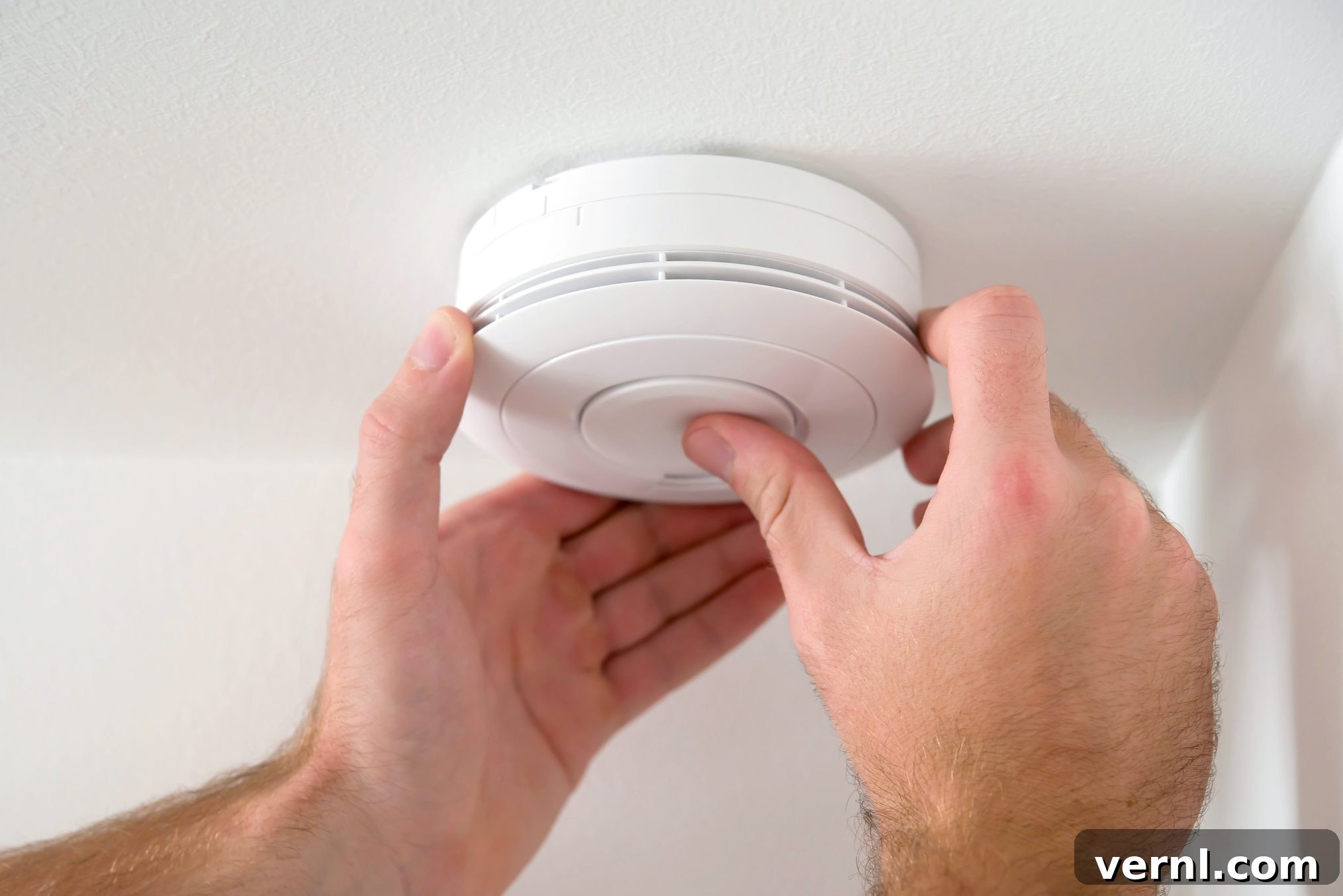
We all know that smoke detectors save lives, acting as crucial early warning systems during residential fires. Given their life-saving potential, ensuring these essential devices function correctly is paramount for the safety of every household. Alarming statistics from a 2021 report by the National Fire Prevention Association (NFPA) highlight this urgency, revealing that more than half of all residential fire-related deaths occurred in homes where smoke alarms were either non-functional or entirely absent. This sobering fact underscores the critical importance of proper smoke detector installation and diligent maintenance.
Fortunately, maintaining your smoke detectors is a straightforward task that doesn’t require extensive expertise. Key steps include changing batteries every six months, ensuring the units are free from obstructions, and crucially, replacing the entire unit every 10 years. While many homeowners are aware of battery changes, the 10-year replacement guideline is often overlooked, leading to a false sense of security. Understanding not just how often but also *why* this replacement is so vital can significantly enhance your home’s fire safety.
Note: Technically, a “smoke detector” is the sensor component that triggers a “smoke alarm,” which then sounds a warning tone. For practical purposes, and as commonly understood, almost all residential units combine both functions. Throughout this guide, we will use the term “smoke detector” to refer to these comprehensive household fire safety devices.
The Undeniable Importance of Replacing Your Smoke Detectors
Like any electronic device, smoke detectors are not designed to last forever. Over time, their internal components degrade, and their sensitivity can diminish significantly. Accumulated dust, grime, and environmental factors can compromise the detector’s ability to accurately sense smoke particles. This reduction in sensitivity means the alarm may fail to sound when it’s most needed, transforming a potentially life-saving device into a silent, ineffectual one.
Moreover, older smoke detectors are prone to issuing high-pitched warning chirps, typically indicating a low battery. However, some models are programmed to chirp when the unit itself has reached its end-of-life, signaling that it’s time for replacement. Unfortunately, in an attempt to silence these annoying chirps, many individuals disconnect the smoke detector, then inadvertently forget to replace or reactivate it. This dangerous oversight leaves homes vulnerable to fire hazards. Regular replacement ensures that your home’s first line of defense against fire remains fully operational, keeping you and your family protected.
Understanding the Lifespan: How Often Should Smoke Detectors Be Replaced?
The universal recommendation from fire safety experts, including the NFPA and manufacturers, is clear: all smoke detectors should be replaced 10 years after their manufacture date. This guideline applies irrespective of whether the unit is battery-operated or hard-wired into your home’s electrical system, and it holds true across all brands and models. The 10-year mark is not arbitrary; it’s based on extensive research and testing that indicates the reliable operational lifespan of the sensing components within the detector.
Combination smoke and carbon monoxide (CO) detectors introduce an additional layer of consideration. These units often have two distinct sensors, each with its own lifespan. While the smoke alarm component might adhere to the 10-year rule, the CO detector sensor typically expires sooner, often between five and seven years. Therefore, combination units should be replaced every five to 10 years, depending on the earlier expiration date of the CO detector element. Always check the manufacturer’s instructions and the specific expiration date printed on the unit itself for accurate guidance.
The primary reason for this strict replacement schedule is straightforward: over time, the detector’s sensitivity degrades. Photoelectric sensors can accumulate dust on their internal optical chamber, while ionization sensors’ tiny radioactive sources slowly diminish in effectiveness. After a decade, the risk of a unit failing to detect smoke promptly and effectively increases significantly. Prioritizing timely replacement is a small investment for continuous, reliable fire protection.
Psst! If you’re tackling this task yourself, this comprehensive guide on how to replace hard-wired smoke detectors might prove incredibly useful.
Telltale Signs Your Smoke Detectors Are Due for Replacement
While the 10-year rule is the golden standard, several other indicators can signal that your smoke detector needs to be replaced sooner. It’s crucial to be vigilant and address these signs promptly to maintain optimal home safety.
Some modern smoke detectors are designed to emit a specific chirp after 10 years of service, acting as a clear end-of-life warning. However, not all units feature this convenience. Therefore, the most reliable method to ascertain your detector’s age is to locate the manufacture date on the back or side of the unit. If this date is obscured, unreadable, or you cannot find it, it’s always safest to err on the side of caution and install a new one without delay.
But age isn’t the sole determinant for replacement. Here are several other critical signs that it’s time to upgrade your smoke detectors:
Dirty Detectors: A Silent Threat
Over time, any smoke detector will inevitably accumulate dust, dirt, grease, and other airborne particles on its surfaces and, more critically, within its sensing chamber. Detectors situated in areas with higher airborne contaminants, such as kitchens, workshops, or near dusty vents, are particularly susceptible to this issue. This buildup can significantly impede the detector’s ability to sense smoke effectively, rendering it less responsive or even completely ineffective.
Pro tip: For kitchens, consider installing a photoelectric alarm. These detectors are designed to be less susceptible to nuisance alarms triggered by cooking fumes or steam, which can often lead to homeowners disabling their alarms out of frustration. Frequent false alarms not only create inconvenience but can also prematurely wear out the unit, necessitating more frequent replacement than usual.
Painted Detectors: Blocking the Path to Safety
Despite clear warnings and labels that explicitly state “Do Not Paint,” it’s surprisingly common to find smoke detectors painted over during home renovations or simple redecorations. Paint, even a thin layer, can clog the small openings and vents through which smoke needs to enter the sensing chamber. This obstruction severely impedes smoke particles from reaching the sensor, effectively rendering the detector almost useless in a fire emergency. Any smoke detector that has been painted over should be replaced immediately, as its ability to provide early warning has been compromised.
Insect Activity: Tiny Intruders, Big Problem
Small insects, their husks, or spider webs can create significant interference within a smoke detector’s sensing chamber. These tiny invaders can block the pathways for smoke entry or interfere with the internal optical or ionization sensors, leading to a dramatic reduction in the detector’s sensitivity or even causing false alarms. If you notice signs of insect activity, such as webs or dead insects, inside or around the unit, you can attempt to clean it gently. However, after cleaning, it’s imperative to test the unit regularly. If there’s any lingering doubt about its reliability, or if insect activity persists, replacement is the safest course of action.
Failed Tests: When the Alarm Stays Silent
All smoke alarms are equipped with a “Test” button, designed to check both the functionality of the sensors and the audibility of the alarm siren. It is recommended practice to test your smoke detectors at least once a month. To do this, simply press and hold the test button for a few seconds. A loud, clear alarm tone should sound. If the alarm fails to sound, or if the sound is weak or intermittent, the unit is defective and must be replaced without hesitation. A silent test button means a silent alarm during a real fire, a risk no homeowner should take.
Persistent Chirping: Beyond a Low Battery
Persistent short chirps from your smoke detector typically indicate that something is wrong. Most often, this is a signal of a low battery, prompting you to replace it immediately. However, if these chirps continue even after you have installed a brand-new battery, it’s a strong indicator that the unit itself is faulty or has reached its end-of-life. Some modern smoke detectors come equipped with a sealed, non-replaceable 10-year battery. When these units approach their 10-year mark, they will often emit a warning chirp – this is your definitive cue that the entire unit needs to be replaced, not just the battery. Understanding the difference between a low-battery chirp and an end-of-life chirp is critical for ensuring continuous protection. When planning to buy a new one, educate yourself on the different types of smoke detectors available to make an informed choice.
Maintaining Your Alarm: Simple Cleaning for Extended Lifespan
While replacement at the 10-year mark is non-negotiable, you can extend your detector’s effective lifespan and ensure its consistent sensitivity through regular cleaning. This simple maintenance step is smart to perform when conducting your monthly test checks or during the biannual battery changes. Always refer to the manufacturer’s specific cleaning recommendations for your model, but generally, alarm manufacturer First Alert suggests these effective cleaning tips:
- Gently vacuum the exterior of the detector using the soft brush attachment of your vacuum cleaner. This helps remove loose dust and cobwebs without damaging the unit.
- Utilize a can of clean compressed air, readily available at office supply stores, to carefully blow away any debris that may have settled inside the sensing chamber. Hold the can upright and use short bursts to avoid moisture buildup.
- Crucially, avoid using water, liquid cleaners, chemical solvents, or industrial air compressor machines. These substances can damage the sensitive electronic components inside the detector, leading to malfunction or complete failure.
Regular cleaning, coupled with timely battery replacement and adherence to the 10-year replacement rule, forms a comprehensive strategy for maintaining a safe home environment. Smoke detectors are relatively inexpensive devices that offer invaluable protection. Their proper functioning can be the difference between a minor incident and a tragic loss. Don’t compromise on fire safety; make sure your smoke detectors are always up to the task of protecting your loved ones and your property.
Choosing the Right Smoke Detector for Your Home
When it’s time to replace your smoke detectors, understanding the different types available can help you make an informed decision:
- Ionization Smoke Detectors: These are generally more responsive to fast-flaming fires that produce smaller, less visible smoke particles. They contain a small amount of radioactive material that ionizes the air between two electrodes, creating a current. Smoke disrupting this current triggers the alarm.
- Photoelectric Smoke Detectors: These detectors are more effective at detecting slow, smoldering fires that produce larger, visible smoke particles. They work by emitting a light beam into a chamber. When smoke enters the chamber and reflects light into a sensor, the alarm is triggered. Photoelectric alarms are also less prone to false alarms from cooking fumes.
- Dual-Sensor Smoke Detectors: Combining both ionization and photoelectric technologies, these units offer broad protection against both types of fires. They are an excellent choice for comprehensive coverage.
- Smart Smoke Detectors: These advanced devices connect to your home’s Wi-Fi network and can send alerts to your smartphone, even when you’re away from home. Many also integrate with smart home systems, offer self-testing features, and have longer-lasting batteries or hardwired connections.
For optimal protection, fire safety experts recommend installing both ionization and photoelectric type smoke detectors, or opting for dual-sensor units, especially on every level of your home, inside and outside sleeping areas, and in main living spaces.
Strategic Placement for Maximum Protection
Proper placement of your smoke detectors is just as critical as their maintenance and timely replacement. To ensure the highest level of safety for your household, consider the following guidelines:
- Every Level: Install at least one smoke detector on every level of your home, including the basement.
- Sleeping Areas: Place a smoke detector inside every bedroom and in the hallway or area immediately outside of each sleeping area.
- Central Locations: For open-plan homes, position detectors in central locations that can detect smoke from multiple areas.
- Avoid “Nuisance” Areas: To minimize false alarms, avoid placing detectors too close to kitchens (within 10 feet of cooking appliances), bathrooms with showers, or heating vents where steam or fumes could trigger them. For kitchens, a photoelectric detector or a detector with a “hush” button is often recommended.
- Ceiling or High on Wall: Smoke rises, so install detectors on ceilings or high on walls (within 4-12 inches of the ceiling). Avoid placing them in corners, as dead air spaces can prevent smoke from reaching them efficiently.
Following these placement guidelines, combined with regular testing and timely replacement, creates a robust fire safety strategy that gives you the best chance of early detection and safe evacuation in the event of a fire.