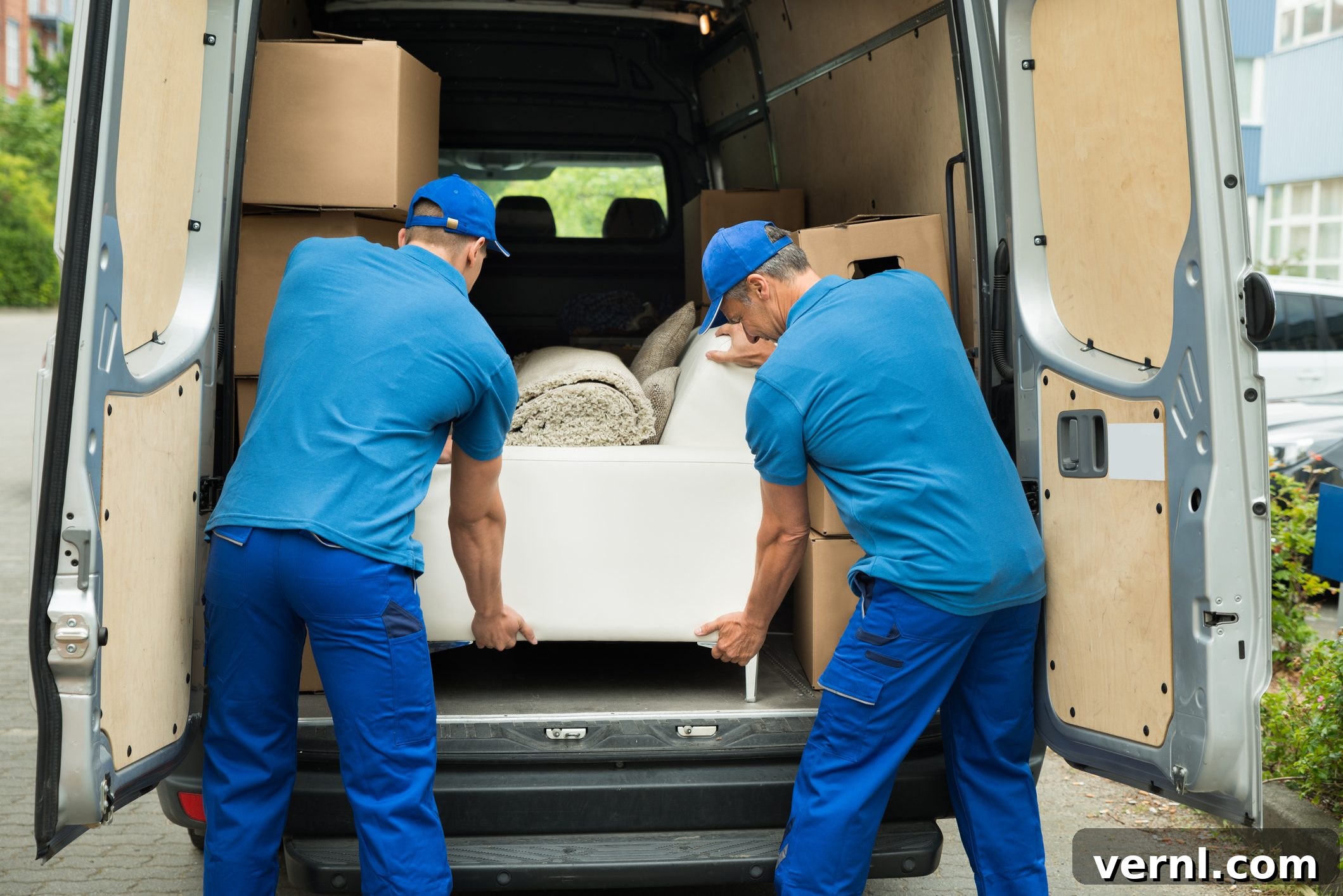
Have you ever found yourself suddenly “out of town” when a friend asks for help with their move? The sheer thought of hauling heavy furniture can send shivers down anyone’s spine. Yet, this is the demanding reality for professional furniture delivery teams day in and day out. They expertly navigate colossal couches, bulky recliners, and king-sized beds, not just carrying immense weight but also tackling the complex challenge of maneuvering these items through tight doorways, up flights of stairs, and into their designated spots.
Just as difficult to navigate is America’s intricate tipping culture. When it comes to various service industries, the unspoken rules of gratuity can often leave consumers feeling bewildered. This confusion often extends to professional furniture delivery. What’s the proper etiquette? Should you tip for furniture delivery, especially after paying a significant delivery fee? And if so, how much is appropriate?
Imagine this scenario: Your brand-new, oversized sectional couch is finally arriving. You’ve mentally prepared for the big day, even having a tip ready. But then two delivery professionals show up. Suddenly, questions flood your mind: Should you have exact change? Will the individual you hand the tip to share it fairly with their colleague? Is a tip even expected, given the substantial delivery charge you’ve already paid? These are common dilemmas that many homeowners face.
The situation can become even more complicated if issues arise. Perhaps you notice a scuff mark or a small tear after the delivery team has left, a potential result of them dragging the furniture on rough surfaces. Should that impact your decision to tip? These moments of uncertainty highlight the need for clear guidance on tipping for furniture delivery. This comprehensive guide aims to demystify the process, offering practical advice to help you confidently navigate tipping for your next furniture delivery.
Should You Tip for Furniture Delivery? Unpacking the Etiquette
In most cases, the answer is a resounding yes. Tipping is a widely accepted practice designed to acknowledge and reward exceptional service. Furniture delivery, by its very nature, is an incredibly demanding, labor-intensive job that requires significant physical strength, skill, and careful handling. These professionals lift, carry, and maneuver incredibly heavy and often fragile items, often contending with challenging environments like stairs, narrow hallways, and adverse weather conditions.
While tipping furniture deliverers might differ slightly from the expectations associated with waitstaff, who often rely heavily on tips to supplement lower hourly wages, it remains a common and highly appreciated gesture. It signifies your recognition of their hard work, professionalism, and the care they take with your belongings. When a delivery crew provides quality, on-time, or otherwise remarkable service, a tip serves as a direct expression of your satisfaction and gratitude.
“Good behavior doesn’t just fall out of a delivery truck,” emphasizes certified etiquette professional Lisa Mirza Grotts. As the former director of protocol for the city and county of San Francisco and a long-time manners blogger for the Huffington Post, Grotts understands the nuances of social graces. She adds, “It takes human beings to go the distance to provide friendly, satisfactory service.” This means the polite interactions, the careful placement of your furniture, the prompt arrival, and the overall positive experience are all efforts that deserve recognition. Therefore, showing appreciation to these dedicated workers through a tip is a thoughtful and appropriate gesture.
How Much To Tip Furniture Delivery: A Detailed Breakdown
Determining the right amount to tip for furniture delivery can feel subjective, but there are some general guidelines to help you. Lisa Mirza Grotts suggests a starting point: “In general, plan for $20 per person, unless a complex assembly is required, or if they had to stay very late.” However, like any tipping decision, the final amount is ultimately up to you and should reflect your satisfaction with the service received. It’s perfectly acceptable to adjust the tip based on the specific circumstances of your delivery, the effort involved, and your personal budget.
Several key factors should influence your tipping decision:
- Size and Volume of Delivery: The sheer quantity and bulk of the items being delivered play a significant role. A single, lightweight barstool easily brought to a first-floor apartment might warrant a smaller tip, perhaps $5. In contrast, a delivery consisting of multiple heavy items – such as a full bedroom set, a large dining table, or a massive sectional sofa – definitely justifies the $20 per person recommendation, if not more. Consider the cumulative effort required to move numerous substantial pieces.
- Assembly Requirements: Many pieces of furniture, even those not from a notoriously complex brand like IKEA, require some level of assembly. This could range from attaching legs to a table, setting up a bed frame, or configuring a modular sofa. Assembly adds extra time, skill, and effort to the delivery process. If your delivery includes items that the crew has to assemble, it unequivocally warrants a tip of at least $20 per person, and potentially higher for intricate or time-consuming builds.
- Difficulty of Delivery: This is perhaps the most crucial factor. Evaluate the physical challenges the delivery team had to overcome:
- Stairs and Elevators: Is your apartment on the fourth floor of a walk-up building? Or perhaps your home has multiple levels and the furniture needs to go to the basement or an upper floor. Navigating stairs with heavy items is incredibly strenuous and increases the risk of damage. If there’s no working elevator, or if the elevator is too small, be prepared to tip generously.
- Access Obstacles: Were there narrow hallways, tight turns, or difficult entry points (e.g., a tricky gate, a long winding driveway, a small front door)? These challenges require greater care, precision, and time.
- Distance from Truck: Did the delivery truck have to park far from your entrance, necessitating a long haul across a lawn or driveway?
- Unfavorable Conditions: Was the delivery made in the pouring rain, extreme heat, heavy snow, or freezing temperatures? Delivering heavy furniture in adverse weather conditions significantly increases the difficulty and discomfort for the crew.
For particularly arduous deliveries, such as a three-hour ordeal involving four flights of stairs in the middle of a scorching August day, a tip beyond the standard $20 per person would be a thoughtful gesture of appreciation for their exceptional effort.
- Service Level and Professionalism: Consider any service that goes above and beyond the basic delivery. This includes:
- Punctuality and Communication: Arriving within the promised window and providing clear communication regarding their estimated arrival.
- Care for Property: Showing respect for your home by being careful with walls, floors, and existing furniture, perhaps even laying down protective coverings.
- Extra Time and Effort: Spending additional time to perfectly place furniture, making minor adjustments, or helping rearrange.
- Problem-Solving: Creatively finding solutions for difficult placements or navigating unexpected obstacles.
- Friendliness and Respect: A courteous, professional, and friendly demeanor, including being respectful of your children or pets.
As Grotts aptly summarizes, “Like any other gratuity, the amount should reflect your satisfaction with the delivery team.” Your tip is a direct reflection of your appreciation for their service, so tailor it to the specific experience you received.
Furniture Delivery Tip Alternatives: Beyond the Cash
While monetary tips are universally appreciated and generally preferred, are there ever acceptable alternatives or additions to a cash gratuity? Absolutely. In certain situations, non-monetary gestures can significantly enhance the delivery team’s experience and show your appreciation, especially when combined with a cash tip.
One of the most widely accepted and appreciated alternatives is offering refreshments. Imagine a delivery person sweating through a triple-digit summer day in Texas; an ice-cold bottle of water, a soda, or even a sports drink can be an absolute lifesaver. Similarly, on a chilly day, a hot coffee or tea can provide much-needed warmth. Snacks like granola bars, fruit, or individually wrapped treats are also often welcomed, especially if the team has a long day of deliveries ahead. While these gestures won’t replace the financial benefit of a cash tip, they demonstrate thoughtful hospitality and recognition of the physically demanding nature of their work.
It’s important to remember that a little coin will buy them many more refreshments than a single bottle of water can provide. So, consider offering drivers a refreshing drink as well as a tip. If your budget is tight and a generous cash tip isn’t feasible, offering what you can, even a smaller cash amount combined with a cold drink, is still a kind and appreciated gesture. These small acts of generosity can significantly brighten a delivery person’s day and make them feel seen and valued.
When Not to Tip for Furniture Delivery: Understanding the Exceptions
While tipping for furniture delivery is a good practice and generally encouraged, it’s not an absolute requirement in every single instance. There are specific scenarios where withholding a tip is acceptable, or even necessary, and times when companies have policies against it. Understanding these exceptions is crucial for navigating the tipping landscape appropriately.
Company Policy Prohibitions
Some stores and delivery companies have explicit policies that prohibit their workers from accepting tips. This can be for various reasons: to maintain consistent pricing, ensure employees are compensated directly through their wages, or to prevent any perception of favoritism or coercion. If you encounter such a policy, it’s essential to respect the rule. Pressuring employees to take a tip when they are forbidden to do so can create an awkward and uncomfortable situation for them.
If you’re unsure whether tipping is accepted, there are a few ways to find out:
- Simply Ask: The easiest way is often to politely ask the delivery workers directly if they are allowed to accept tips. They will typically tell you.
- Attempt to Tip: You can try to offer the tip and observe their reaction. If they decline and explain the company policy, simply accept their refusal gracefully.
- Inquire in Advance: For absolute certainty, you can call the furniture company or retailer beforehand, ask at the point of purchase, or check their website. Many companies provide information on their tipping policies online. The internet also has no shortage of forums where current and former employees share behind-the-scenes tidbits about company policies.
When Service Falls Short
Just as a tip rewards excellent service, withholding a tip can be a signal that the service did not meet acceptable standards. While no one wants to be perceived as ungrateful, there are legitimate reasons to choose not to tip, or to significantly reduce the amount. These reasons typically revolve around poor service, negligence, or unprofessional conduct:
- Damage to Furniture or Property: If the delivery team visibly damages your new furniture during transit or placement, or causes damage to your home (e.g., scuffing walls, scratching floors, breaking an item), a tip is not warranted. In such cases, your priority should be to document the damage and report it immediately to the company.
- Unprofessionalism: This includes rude or disrespectful behavior, an unwillingness to adhere to reasonable requests (within the scope of their job), or exhibiting a careless attitude.
- Excessive Lateness Without Communication: While delays can happen, a lack of communication or extreme unpunctuality without a valid explanation can be frustrating.
- Mishandling and Negligence: If the team is clearly rushing, mishandling items, or exhibiting a lack of care (e.g., dragging items on the ground, leaving debris), it reflects poor service.
In situations of poor service, rather than just silently withholding a tip, it is often more effective to provide feedback directly to the delivery company. This allows them to address the issue and potentially improve their service for future customers. Documenting the problem with photos or videos and contacting customer service is the appropriate course of action.
The Delivery Fee Dilemma
One common misconception that often leads people to skip the tip is the belief that the “delivery fee” they paid goes directly to the drivers. Unfortunately, this is rarely the case. Delivery fees are typically operational costs for the company. They cover fuel, vehicle maintenance, insurance, administrative overhead, and employee salaries or contractor fees, but they don’t usually act as a direct gratuity for the individual delivery team. In many instances, especially with larger companies or custom furniture manufacturers, the delivery service is outsourced to a third-party logistics company. So, even if you paid a hefty delivery fee, the actual people bringing the furniture to your home may only receive a small portion, if any, of that fee directly. Therefore, if you can afford it and the service was good, tipping those individuals remains a separate and appreciated gesture.
Making the Tipping Process Smooth and Stress-Free
To ensure a seamless and comfortable tipping experience for both you and the delivery team, a little preparation goes a long way. Having your tip ready in advance can prevent awkward fumbling and ensure the gesture is received as intended.
- Have Cash on Hand: Cash is king when it comes to tipping. It’s immediately accessible to the workers, easy to divide, and doesn’t involve any processing fees or delays associated with digital payments. Before the delivery day, make sure you have small denominations ($5, $10, $20 bills) so you can easily adjust the amount based on the service received and the number of people on the team.
- Time Your Tip Appropriately: The best time to offer a tip is typically at the end of the service, once all the furniture has been placed and you’ve had a chance to inspect the items and the work done. This allows you to assess the full scope of their effort and the quality of their service.
- Offer Gratefully and Directly: When you hand over the tip, do so with a smile and a sincere “Thank you for your hard work!” or “We really appreciate your careful delivery.” Making eye contact and expressing genuine gratitude reinforces the positive intent of the tip. If there are multiple workers, you can hand the total amount to one person and state, “Please split this with your team,” or ideally, provide individual tips if you have the exact amounts.
- Don’t Be Afraid to Adjust: Remember, the suggested amounts are guidelines. If the delivery was exceptionally quick and easy, or if your budget is particularly tight, a slightly lower amount might be appropriate. Conversely, if the team went above and beyond, battled extreme conditions, or expertly handled a particularly challenging setup, feel free to tip more generously. Your tip is a direct reflection of your satisfaction.
Beyond the Tip: Other Ways to Show Appreciation
While a cash tip is the most direct form of appreciation, it’s not the only way to recognize outstanding service. If you’ve had an exceptional experience, consider these additional gestures:
- Positive Feedback to the Company: Many companies have surveys, review platforms, or customer service lines where you can leave feedback. Mentioning the names of specific delivery team members and detailing their excellent service can be incredibly valuable to them. Good reviews can lead to recognition, bonuses, or even promotions for the employees.
- Online Reviews: Posting a positive review on platforms like Google, Yelp, or the company’s social media pages can boost their reputation and provide public recognition for the team’s efforts.
- Direct Compliment: A simple, sincere verbal compliment directly to the delivery team and, if possible, to a manager or supervisor, can also go a long way in making them feel valued.
In conclusion, navigating the world of tipping for furniture delivery doesn’t have to be a source of stress. By understanding the effort involved, considering the various factors that influence service difficulty, and being prepared with cash, you can confidently and appropriately show your appreciation for the hard work of these professionals. A thoughtful tip not only rewards their labor but also fosters a culture of recognition for a job well done, making the arduous task of moving heavy furniture a little lighter for everyone involved.