
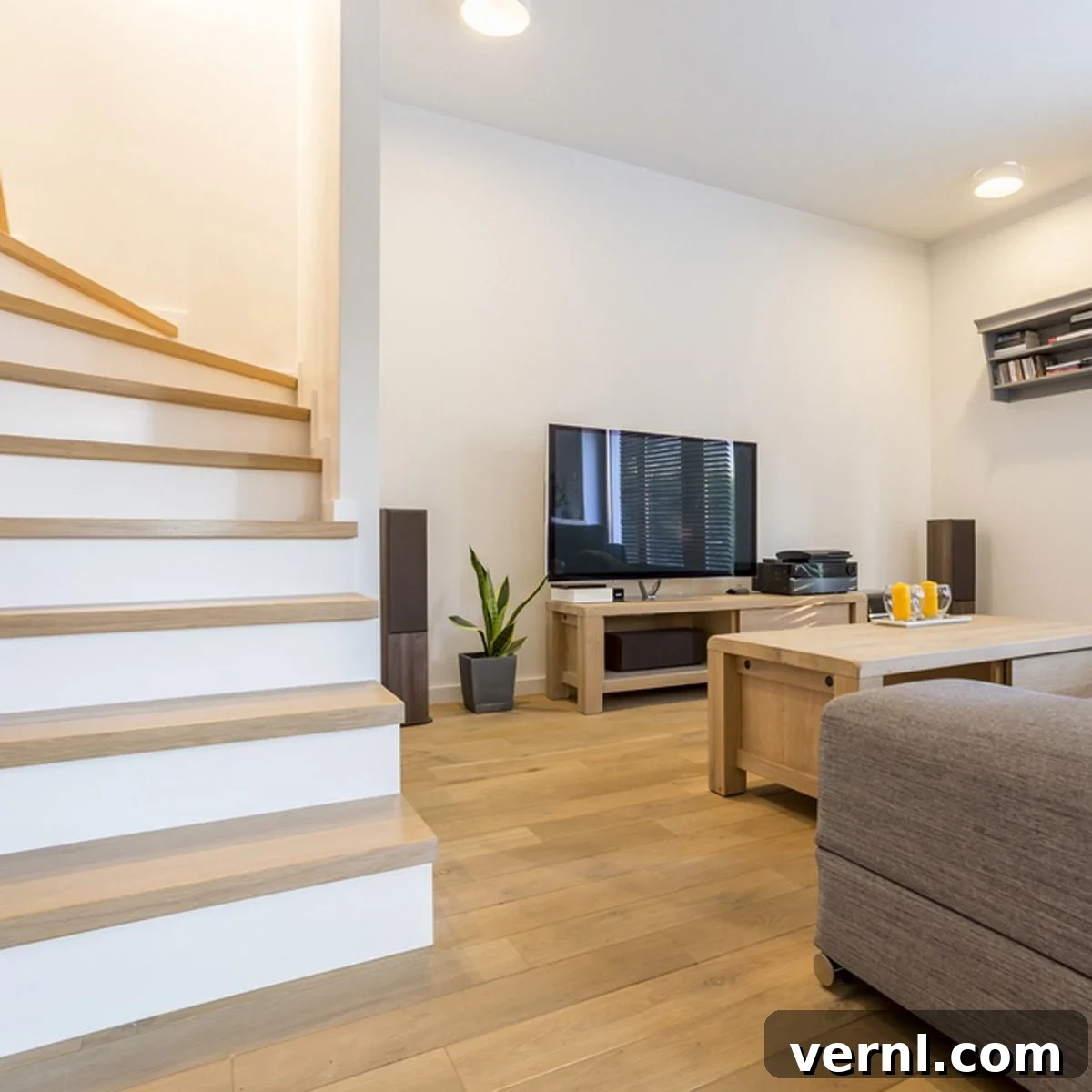
Choosing the Best Basement Flooring: A Comprehensive Guide for Moisture-Prone Spaces
Transforming your basement into a comfortable, functional living area starts with selecting the right flooring. Unlike other rooms in your home, basements present unique challenges, primarily due to moisture. It’s not just about the potential for unexpected water leaks; pervasive issues like condensation and water vapor migration are constant threats that can lead to mold growth and damage your investment. Therefore, choosing a moisture-resistant or waterproof flooring material is paramount for any successful basement renovation.
Beyond moisture concerns, the functionality and aesthetics of your basement space play a crucial role in flooring selection. Jeff Palla, President of Mr. Handyman, emphasizes that thinking about how you’ll use the area – whether it’s a cozy family room, a bustling playroom, a productive home office, or a personal gym – and anticipating the wear and tear it will endure, will guide you toward materials that are not only visually appealing but also exceptionally durable. This comprehensive guide explores the best flooring options for basements, offering in-depth insights into their unique benefits, essential installation considerations, and proactive strategies to protect your valuable space from moisture damage and mold.
Vinyl Plank Flooring / Vinyl Tile Flooring: The Ultimate Moisture Champion
Vinyl plank flooring (VPF) and vinyl tile flooring (VTF) consistently rank among the top choices for basements, and for very compelling reasons. Often compared to click laminate flooring, modern vinyl options offer superior performance in three critical areas that make them uniquely suited for below-grade environments.
Unmatched Moisture Resistance
The primary and most significant advantage of VPF and VTF is their inherent impermeability to both liquid water and water vapor. This characteristic is a true game-changer for basements, where even seemingly dry concrete slabs can allow enough insidious moisture vapor to migrate upwards, creating an ideal environment for mold and mildew growth. Vinyl’s advanced synthetic composition ensures it won’t swell, warp, or degrade in the persistent presence of moisture, providing an incredibly reliable barrier against dampness and substantially reducing the risk of unhealthy mold issues.
Exceptional Durability and Longevity
Beyond their impressive moisture resistance, vinyl plank and tile flooring are renowned for their incredible durability. Made from robust, multi-layered materials, they are meticulously engineered to withstand significant daily wear and tear. This includes heavy foot traffic, potential scratches from pets or furniture, and impacts from dropped items. Whether you’re planning a busy playroom, a high-traffic entertainment zone, or a utilitarian laundry room, vinyl flooring maintains its pristine appearance and structural integrity for many years. The only fundamental difference between VPF and VTF lies purely in their aesthetic format: planks are rectangular, skillfully mimicking the look of hardwood, while tiles are square, often replicating the sophisticated appearance of natural stone or ceramic.
Installation Flexibility and Ease
Another significant benefit of this type of vinyl flooring is its inherent flexibility, which translates directly to easier installation compared to more rigid materials like traditional laminates or hardwood. Unlike laminates that demand an almost perfectly flat subfloor, vinyl can gracefully accommodate minor subfloor imperfections, making it a considerably more forgiving option for the often-uneven surfaces of basement concrete slabs. “It can be applied directly to a concrete floor with an adhesive, making it easy to install,” explains Jeff Palla. Many modern vinyl options also feature innovative click-lock systems, allowing for a floating installation that is remarkably quick, clean, and incredibly DIY-friendly, further enhancing its appeal for homeowners undertaking basement renovation projects.
Featured Vinyl Flooring Products
Smartcore Lanier Hickory Waterproof Interlocking VPF
Shop Now
Smartcore Mandalay Marble Waterproof VTF
Shop Now
Achim Importing Nexus Self Adhesive Vinyl Tile
Shop Now
Carpet: Unrivaled Comfort and Warmth for Basement Living
For basements designated as cozy family rooms, tranquil bedrooms, or vibrant play areas, nothing quite matches the soft, cushioned comfort and inherent warmth that wall-to-wall carpet provides. Brian Shaunfield, a respected flooring expert and Lowe’s store manager, confidently states, “If you’re looking to furnish a basement family room or playroom, wall-to-wall carpet is an ideal option for soft cushioned comfort on the floor.” Beyond its tactile comfort, carpet also offers exceptional sound absorption properties, significantly helping to create a quieter, more intimate, and acoustically pleasing atmosphere in what can often be a reverberant basement space.
Understanding Basement Carpet Installation: The Critical Role of a Subfloor
However, installing carpet in a basement requires meticulous consideration of moisture management. A common and critically detrimental mistake is the direct laying of carpet and its underlayment onto bare concrete. This oversight frequently leads to the infamous “musty basement” smell, particularly exacerbated during humid summer months. The scientific explanation lies in the principle of the dew point: when warm, moisture-laden air permeates the carpet fibers and comes into close contact with the cooler concrete slab below, that air can cool down significantly to its dew point. At this temperature, the invisible moisture in the air condenses into microscopic water droplets, creating a damp, insidious environment within the carpet fibers or underlay that is perfectly conducive to rapid mold and mildew growth.
To proactively prevent this undesirable scenario, it is absolutely essential to install basement carpet on top of a properly constructed vapor-impervious subfloor. This specially engineered subfloor system serves multiple critical functions vital for a healthy and comfortable basement:
- Vapor Barrier: Its primary role is to create an effective barrier that prevents insidious moisture vapor from the concrete slab from ever reaching the sensitive carpet and underlayment.
- Thermal Break: It physically elevates the carpet off the cold concrete, acting as a crucial insulating layer. This not only makes the carpet dramatically more pleasant and warm to walk on, especially in winter, by raising the surface temperature, but also prevents the carpet from becoming cold enough to trigger condensation.
- Airflow & Drainage: Many advanced subfloor systems are designed with channels or dimples that allow for minimal air circulation beneath the carpet and provide a pathway for any incidental moisture to drain, further helping to manage potential dampness.
By investing in and properly installing a suitable subfloor, you can confidently enjoy the luxurious feel and insulating benefits of carpet in your basement without the lingering worry of moisture-related issues, thereby ensuring a fresh, healthy, and inviting environment for years to come.
Featured Carpet Products
Style Selections Reclaim Heirloom Textured Carpet
Shop Now
Albero Valley Premium Self Peel and Stick Carpet Tile
Shop Now
Stainmaster Notorious Gaucho Textured Carpet
Shop Now
Rubber Flooring: Durable, Practical, and Exceptionally Resilient
When paramount functionality, extreme durability, and absolute moisture protection are the top priorities, particularly in demanding utility areas, dedicated home gyms, or bustling children’s play areas, rubber flooring emerges as an outstanding and highly practical choice for basements. This informal yet incredibly robust flooring option is inherently unaffected by moisture, whether present in liquid form or as pervasive vapor, solidifying its position as an incredibly reliable and low-maintenance solution for any below-grade space.
Key Benefits of Choosing Rubber Flooring for Your Basement
- Superior Moisture Resistance: Rubber’s completely non-porous nature makes it intrinsically waterproof. It will not absorb water, will not support mold or mildew growth, and will not degrade from high humidity, providing unparalleled peace of mind in even the dampest basement environments.
- Exceptional Durability and Impact Absorption: Engineered for extreme resilience, rubber flooring can effortlessly withstand heavy impacts from dropped weights, significant foot traffic from active areas, and the sustained weight of gym equipment or heavy machinery without showing any signs of wear, dents, or damage. Its impressive lifespan makes it a highly cost-effective and long-term investment.
- Comfort and Enhanced Safety: Rubber offers remarkable shock absorption, providing a comfortable and forgiving surface underfoot – a significant advantage for areas where standing for extended periods or engaging in physical activity is common. Furthermore, its natural grip provides a reliable non-slip surface, significantly enhancing safety and reducing the risk of accidents.
- Easy Installation and Adaptability: Most rubber flooring solutions designed for basements come in the form of convenient interlocking tiles or large rolls. Interlocking tiles are particularly user-friendly, allowing for quick, adhesive-free DIY installation. Their modular nature also means easy removal, replacement, or reconfiguration should your basement’s purpose or layout evolve over time.
- Effective Sound Dampening: The dense and pliable composition of rubber naturally helps to absorb sound, significantly reducing echoes and mitigating noise transmission. This creates a much quieter and more pleasant space, which is especially beneficial in playrooms, home gyms, or workshops where noise generation can be a concern.
From a professional-grade home gym to a robust and practical workshop floor, rubber flooring offers a unique blend of high performance, unwavering practicality, and exceptional resilience that makes it one of the absolute best flooring options for specialized and demanding basement applications.
Featured Rubber Flooring Products
Flexco Interlocking Rubber Gym Floor Tile
Shop Now
Rubber-Cal Recycled Flooring Roll
Shop Now
Mats Inc. Inflex Rubber Tile
Shop Now
Ceramic and Porcelain Tiles: Where Elegance Meets Uncompromising Durability
For homeowners seeking a highly durable, inherently water-resistant, and aesthetically versatile flooring solution capable of transforming their basement into a sophisticated and long-lasting living space, ceramic and porcelain tiles stand out as exceptional choices. Jeff Palla rightly highlights their “high durability, water-resistance and long-lasting performance.” These tough, attractive, and hard-wearing materials can elevate a basement’s aesthetic, provided two crucial installation details are meticulously understood and expertly addressed.
The Indispensable Role of an Uncoupling Membrane
The first and most vital installation detail is to absolutely never install hard-surface tiles, such as ceramic and porcelain, directly onto a bare concrete basement slab. While concrete appears to be a stable and inert surface, it is subject to subtle yet significant movements, including expansion and contraction caused by temperature fluctuations, moisture changes, and ongoing curing processes. Tiles, being rigid and brittle, do not flex or move in the same way as the concrete substrate. This differential movement can create immense shear stress that, over time, inevitably leads to unsightly tile cracks, loosened tiles, or compromised grout lines. To proactively prevent these common and costly failures, tiles must be installed on top of an uncoupling membrane.
An uncoupling membrane acts as a protective, flexible layer meticulously placed between the concrete subfloor and the tile assembly. Its ingenious design effectively isolates the tile from the lateral movements and stresses of the concrete below, allowing for a small but critically important amount of side-to-side tile movement. This dramatically reduces the likelihood of stress cracks appearing in both the tile and grout, ensuring an incredibly reliable, stable, and long-lasting installation. Furthermore, many modern uncoupling membranes are engineered with built-in waterproofing properties, adding an invaluable extra layer of moisture protection specifically for your basement environment.
Combating Cold Feet: The Luxury of Radiant Floor Heating Solutions
The second key consideration, particularly for basements located in colder climates, is the inherent coolness of tile floors. Concrete slabs are excellent thermal conductors, and they continuously draw cold from the ground, making bare tile surfaces feel uncomfortably chilly, especially during colder months. A brilliant and highly effective solution for this common issue is to integrate an electric radiant floor heating system during the tile installation process. Many advanced uncoupling membranes are specifically designed with channels or grooves to perfectly accommodate electric heating cables.
These sophisticated systems function by embedding thin heating wires within a protective, thin layer directly beneath the tile, gently and evenly warming the entire floor surface. The very best radiant heating systems incorporate built-in insulation that efficiently directs heat upwards into the living space, crucially preventing valuable heat loss downwards into the cold concrete slab. This thoughtful integration not only makes your basement tile floor wonderfully warm, luxuriously inviting, and exceptionally comfortable, but it also contributes significantly to overall basement comfort and can even enhance energy efficiency, transforming a cold, hard surface into a truly luxurious and functional amenity.
Video Placeholder for DAM ID: 27815 – How to Install Tile (Example)
Featured Ceramic & Porcelain Tile Products
Viena Bianco Calacata Ceramic Marble Look Floor Tile
Shop Now
Supreme Tile Porcelain Honeycomb Mosaic Tile
Shop Now
Merola Stella Porcelain Patterned Tile
Shop Now
Ivy Hill Montgomery Ribbon Porcelain Tile
Shop Now
MSI Paloma Encaustic Look Porcelain Tile
Shop Now
Laminate Flooring: Aesthetic Appeal at an Accessible Price Point
Since its groundbreaking introduction to North America by Pergo in 1993, laminate flooring has maintained its status as a hugely popular choice among homeowners. It skillfully offers the sophisticated and timeless look of real hardwood floors without the prohibitive premium price tag. Importantly, modern laminates have undergone significant advancements, boasting improved moisture resistance, as effectively demonstrated by various submersion tests, making them a genuinely viable and attractive option for many basement scenarios today.
Durability and Critical Abrasion Resistance
The inherent durability of laminate flooring is excellent, provided you diligently select a product with an appropriate abrasion class (AC) rating. The AC rating is a standardized scale, ranging from one to five, which precisely measures a laminate’s resistance to surface wear, impact, stains, and moisture penetration. For basements, which frequently experience moderate to heavy foot traffic and varied activities, choosing a laminate with an AC rating of three (which is suitable for general residential use) or higher (recommended for commercial or heavy residential use) is strongly advised. This careful selection ensures your flooring will robustly stand up to the daily demands of basement life and meticulously maintain its attractive appearance for many years to come.
Addressing Subfloor Flatness: A Key Consideration for Laminate Installations
The primary and most critical challenge associated with installing laminate flooring in basements lies in its stringent requirement for an exceptionally flat subfloor. Most manufacturers specify that the subfloor should exhibit no more than a 1/4 inch of deviation from perfect flatness over an extended 10-foot radius. Regrettably, many existing concrete basement floors often do not naturally meet this demanding requirement, frequently exhibiting subtle dips, noticeable humps, or general unevenness that must be corrected.
However, this crucial issue is by no means insurmountable. Specialized floor leveling compounds or advanced self-leveling underlayments can be effectively employed to meticulously correct significant imperfections, thereby creating the absolutely necessary flat and uniform surface for a successful and long-lasting laminate installation. Furthermore, laminates should always be meticulously installed over specialized subfloor systems designed for basement use. The very best basement subfloor panels offer multiple indispensable benefits:
- Effective Moisture Barrier: They act as a critical vapor barrier, diligently protecting the laminate planks from any insidious moisture rising from the concrete slab below.
- Thermal Insulation: They provide a valuable thermal break, effectively insulating the floor, making it significantly warmer and more comfortable underfoot.
- Consistent Flat Surface: They help to create a consistently flat and perfectly stable surface upon which the laminate can be installed without issues.
- Leveling Support: Crucially, many advanced subfloor systems are cleverly designed to accept leveling shims, allowing installers to fine-tune the flatness with precision and ensure a perfectly stable, wobble-free installation surface for your beautiful laminate flooring.
With proper and diligent subfloor preparation and the selection of the right subfloor system, laminate flooring can undoubtedly be an attractive, impressively durable, and budget-friendly choice for expertly finishing your basement, providing both beauty and practicality.
Featured Laminate Flooring Products
Style Selections Florian Oak Wood Plank Laminate Flooring
Shop Now
Montserrat Tyrell Oak Laminate Flooring
Shop Now
Christina & Son Pearl Leather Laminate Flooring
Shop Now
What to Look for When Buying Basement Flooring: Key Considerations
Choosing the ideal flooring for your basement involves more than simply selecting a material based on its aesthetic appeal; it necessitates a strategic and informed approach to ensure long-term durability, comfort, and a healthy indoor environment. Several key factors should profoundly influence your decision-making process:
- Thorough Assessment of Moisture and Humidity Levels: This factor is absolutely paramount. As Brian Shaunfield wisely advises, “It’s important to evaluate the moisture and humidity in your basement, as that can impact which flooring option is best so it doesn’t warp or buckle.” Basements are inherently susceptible to varying levels of humidity and potential water intrusion. Consider conducting a precise concrete moisture test (e.g., utilizing a calcium chloride test kit or a sophisticated relative humidity probe) to accurately gauge your basement’s specific conditions before finalizing any flooring selection. Opting for materials specifically engineered to be waterproof or highly water-resistant is crucial to proactively prevent any undesirable mold build-up and protect your investment.
- Mandatory “Below-Grade” Rating: Shaunfield emphasizes another critically important tip: “Make sure the material is labeled ‘below-grade’.” This specific designation signifies that the flooring product has been meticulously designed, rigorously tested, and certified for robust installation in basement environments. These spaces present unique conditions, including distinct temperature fluctuations, higher ambient humidity, and a greater potential for moisture, which differ significantly from ground-level or above-grade installations. Products lacking this essential rating may not perform optimally, could degrade prematurely, or may even fail rapidly when exposed to the challenging conditions inherent in a basement setting.
- Intended Use and Lifestyle of the Space: Carefully consider how your renovated basement will primarily be used. A dedicated home gym, for instance, would greatly benefit from the durable, shock-absorbent properties of rubber flooring. Conversely, a luxurious guest suite or a refined entertainment area might perfectly feature resilient vinyl planks or elegant ceramic tiles complemented by the comfort of radiant heat. A vibrant children’s playroom or an informal family gathering space might prioritize soft comfort with carpet tiles, always installed over a proper subfloor for moisture control and warmth.
- Required Durability and Ease of Maintenance: Assess the anticipated foot traffic, the potential for spills, and the likelihood of impacts. Vinyl and porcelain/ceramic tiles are widely recognized for their extreme durability and remarkably easy maintenance. Carpet, while offering unmatched comfort, typically requires more frequent and thorough cleaning.
- Personal Style and Realistic Budget Constraints: While practical considerations are undeniably vital, your personal aesthetic preferences and budgetary limitations will certainly play a significant role in your ultimate decision. Jeff Palla astutely points out that “Ceramic and porcelain tiles are durable and stylish, but cost more and can be difficult to clean.” Conversely, “Luxury vinyl planks are affordable and easy-to-maintain, but hard to install and remove.” Shaunfield adds that “Engineered hardwood gives you the look of traditional hardwood, but it’s cheaper, easier to install and has more durability to heat, moisture and scratches.” Striking the right balance among these factors will guide you to the perfect flooring choice that harmonizes with your home and lifestyle.
- Installation Requirements and DIY Feasibility: Consider the complexity of installation. Some flooring types are notably DIY-friendly (e.g., click-lock vinyl planks, interlocking rubber tiles), offering cost savings on labor. Others, such as ceramic tile or laminates that demand extensive subfloor preparation and precise leveling, may strongly warrant professional installation, which will impact your overall project budget.
Common Basement Flooring Mistakes to Avoid for Long-Term Success
Successfully flooring a basement involves more than just meticulously picking an attractive material; it means proactively identifying and avoiding common pitfalls that can unfortunately lead to costly repairs, unsightly damage, and even adverse health issues over time. Here are some of the key mistakes homeowners frequently make and how to effectively steer clear of them:
- Ignoring Existing Moisture Issues: This is arguably the most significant and detrimental mistake. Never attempt to lay new flooring over an active or even latent moisture problem. Prior to installing any flooring material, it is absolutely imperative to ensure your basement is thoroughly dry. Address all leaks, seal any cracks in the foundation, and manage excessive humidity (e.g., through the consistent use of a high-capacity dehumidifier or the application of specialized waterproofing sealants) *before* proceeding. Installing flooring over any dampness is a direct invitation for pervasive mold, mildew growth, and inevitable flooring damage.
- Skipping the Essential Vapor Barrier or Subfloor System: As extensively discussed throughout this guide, a proper vapor-impervious subfloor or a dedicated uncoupling membrane is fundamentally crucial for carpet, laminate, and even many tile installations in basements. Installing directly on bare concrete, particularly with permeable materials, allows insidious moisture vapor to penetrate and condense within the flooring, leading to irreversible rot, unhealthy mold growth, and persistent musty odors.
- Choosing Non-Below-Grade Materials: It’s critical to understand that not all flooring materials are created equal or designed for basement environments. Materials specifically designed and rated for above-ground use may warp, buckle, cup, or degrade rapidly when exposed to basement-specific conditions, such as consistent coolness, higher humidity levels, and potential moisture vapor. Always diligently verify that the flooring product carries a “below-grade” rating to ensure its suitability and longevity.
- Neglecting Subfloor Flatness: This is especially critical for floating flooring products like laminate and many vinyl planks. An uneven subfloor can cause planks to gap, create noticeable soft spots or “clicks” underfoot, or even lead to structural breakage over time. Investing the necessary time or funds in proper subfloor leveling – using self-leveling compounds or grinding high spots – is essential to ensure a stable, aesthetically pleasing, and durable installation.
- Improper Material Acclimation: Many flooring materials, particularly laminates and engineered wood products, require a specific period (typically 48-72 hours) to properly acclimate to the basement’s unique temperature and humidity levels before installation. Failing to allow for adequate acclimation can lead to significant expansion or contraction of the material after installation, resulting in unsightly gaps, severe buckling, or warping.
- Inadequate or Incorrect Underlayment: While a subfloor system provides a structural barrier and leveling, an appropriate underlayment offers additional critical benefits such as enhanced sound dampening, improved thermal insulation, and added cushioning underfoot. Choosing the wrong type of underlayment, or neglecting to use one where specified, can significantly compromise the comfort, performance, and longevity of your chosen flooring.
By being acutely aware of these common mistakes and diligently taking preventative measures, you can ensure that your basement flooring project is a resounding success, culminating in a beautiful, healthy, exceptionally functional, and long-lasting living space that you and your family will enjoy for years.
Why You Should Trust Our Unparalleled Expertise
Our comprehensive recommendations for the best basement flooring solutions are meticulously built upon a robust foundation of extensive practical experience, rigorous industry knowledge, and invaluable expert insights. The lead author of this guide, a highly seasoned carpenter, accomplished builder, skilled stone mason, meticulous cabinetmaker, and resourceful homesteader, brings decades of hands-on, real-world knowledge to the intricate domain of home improvement. Having personally designed and constructed a magnificent stone and timber house on Manitoulin Island, Canada, this profound firsthand experience deeply informs every piece of practical, reliable, and actionable advice shared across numerous esteemed publications, including Family Handyman, Reader’s Digest, and Canadian Contractor. You can absolutely depend on these recommendations, as they are rooted in a profound, intimate understanding of construction principles and their practical application in diverse home settings.
To further enrich the authority and reliability of this guide, we diligently consulted with leading industry professionals renowned for their specialized knowledge. Our distinguished experts include Brian Shaunfield, a highly respected Lowe’s store manager and an undisputed authority in the field of flooring. With multiple decades of dedicated experience within the dynamic home improvement sector, Shaunfield offers unparalleled first-hand knowledge of current market trends, evolving product performance, and the nuanced needs of homeowners. We also sought the invaluable insights of Jeff Palla, the esteemed President of Mr. Handyman, a prominent Neighborly company celebrated for its comprehensive home maintenance and repair services. Mr. Handyman has proudly and skillfully served nearly 1 million customers across the entirety of North America, employing a team of highly skilled craftsmen who boast an impressive average of 10 years’ experience in various specialized trades. Their collective and diverse expertise ensures that our advice is not only meticulously researched and factually accurate but also profoundly grounded in practical, professional understanding and real-world applicability.
How We Meticulously Found the Best Basement Flooring Options
Our meticulous and comprehensive process for identifying the absolute best basement flooring options commenced with exhaustive research into a wide and diverse array of materials available on the market. We systematically investigated all popular and emerging choices, including various types of vinyl, laminate, carpet, ceramic, porcelain, and rubber flooring, while also carefully considering other relevant options such as engineered hardwood where appropriate for specialized below-grade applications. A critical and unwavering focus of our extensive research was placed squarely on products specifically engineered and designed for the unique challenges of basement environments. We rigorously prioritized materials boasting truly waterproof or exceptionally water-resistant properties, recognizing that effective and reliable protection against potential moisture issues is the indispensable cornerstone of any successful basement flooring installation.
Beyond scrutinizing manufacturer specifications, technical data sheets, and material composition, our rigorous evaluation process heavily weighed real user experiences and authentic customer feedback. We meticulously analyzed countless customer reviews, testimonials, and long-term performance reports to gain deep insights into the longevity, ease of installation, and overall satisfaction of these products in actual basement settings. This invaluable, real-world feedback was then systematically cross-referenced and validated with the expert opinions and practical advice generously provided by seasoned industry veterans like Brian Shaunfield and Jeff Palla. By skillfully synthesizing this comprehensive data – which intricately combined objective technical specifications, verified real-world performance metrics, and invaluable professional insights – we were able to evaluate each product based on its proven durability, aesthetic appeal, maintenance requirements, and overall value proposition. This meticulous approach ensures that our final recommendations are not only supremely practical, highly reliable, and deeply rooted in professional understanding, but also genuinely helpful and empowering for homeowners embarking on their basement flooring journey.
Choosing the right flooring for your basement is a significant and strategic investment in the comfort, functionality, and long-term health of your entire home. By carefully considering paramount factors such as moisture protection, inherent durability, desired aesthetics, and incorporating invaluable expert advice, you can confidently select a flooring solution that not only resiliently withstands the unique and specific challenges of a below-grade space but also effortlessly transforms it into a cherished, beautiful, and highly functional part of your beloved living environment.