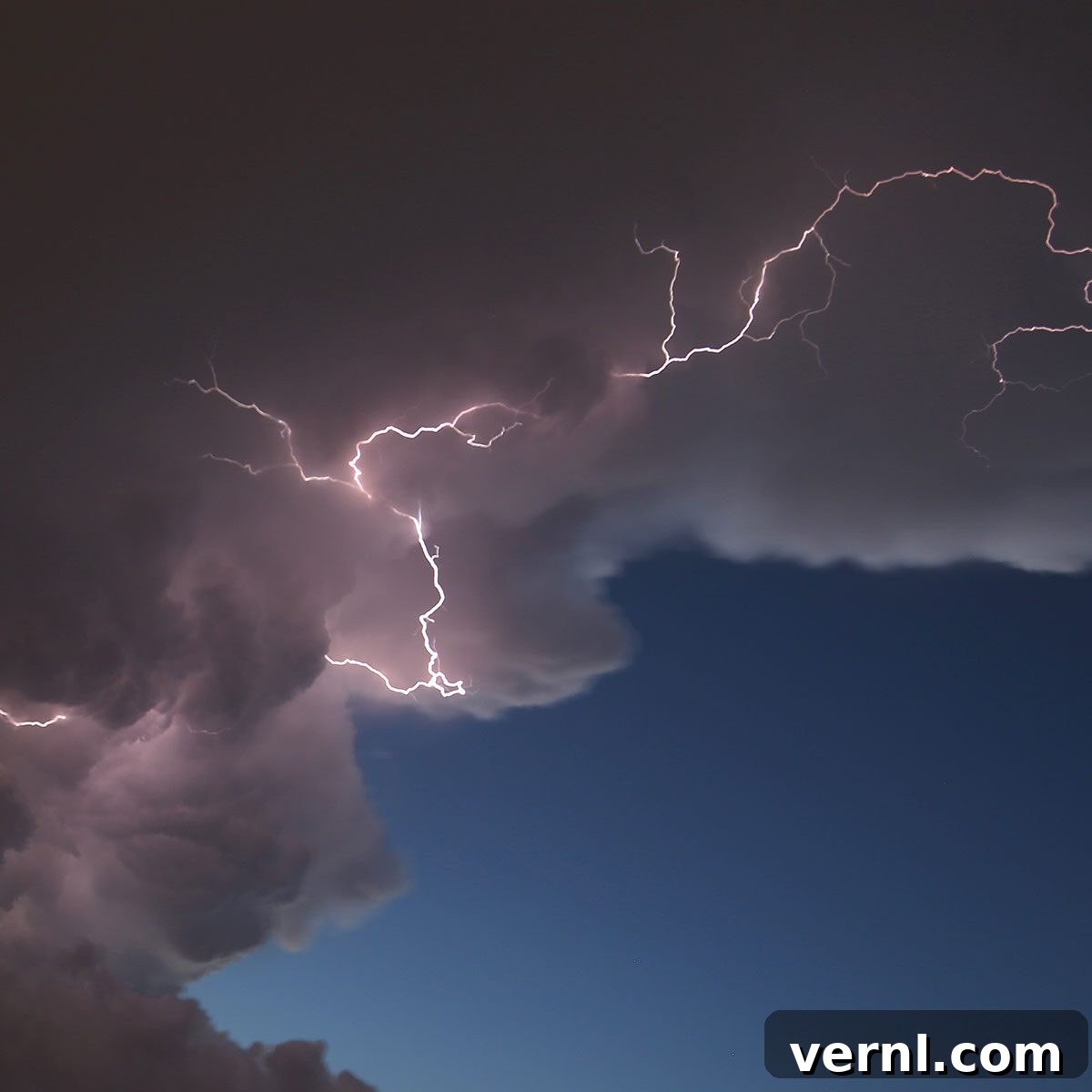
Demystifying “Heat Lightning”: What Those Silent Flashes Really Are
Picture this: It’s a warm, balmy summer evening. You’re relaxing outdoors, enjoying the twilight hours, when suddenly, flashes of light shimmer across the distant horizon. There’s no rumble of thunder, no crackle in the air, just silent, ethereal glows. Many people observing this phenomenon might confidently declare it “heat lightning,” believing that the intense summer warmth in the upper atmosphere is somehow generating these quiet sparks. It’s a captivating thought, a natural light show attributed to the very essence of summer.
But what if we told you that “heat lightning” isn’t a unique weather phenomenon at all? What if those silent illuminations are actually something far more common, yet equally intriguing? And perhaps more importantly, is this “heat lightning” dangerous, or can you safely enjoy the display?
In this comprehensive guide, we’ll delve into the science behind these mysterious flashes, debunk the popular myth of “heat lightning,” and equip you with essential knowledge about lightning safety. Prepare to uncover the truth and gain a deeper appreciation for the wonders of our atmosphere.
The Truth About “Heat Lightning”: It’s Just Distant Thunderstorms
Let’s get straight to the point: what many commonly refer to as heat lightning is simply lightning from a distant thunderstorm. There’s no special atmospheric heat that creates a unique, silent electrical discharge. The flashes you see are the exact same kind of lightning that produces roaring thunder and intense downpours closer to you.
The key to understanding this phenomenon lies in the fundamental differences between how light and sound travel through our atmosphere. Light travels incredibly fast – approximately 186,000 miles per second (300,000 kilometers per second). Sound, on the other hand, is significantly slower, moving at roughly 0.2 miles per second (343 meters per second) or about one mile every five seconds. This vast speed disparity is the entire reason “heat lightning” appears silent.
According to the Weather Channel, the human eye is remarkably sensitive and can perceive lightning flashes from a considerable distance, often up to 100 miles away. However, the human ear’s range for detecting thunder is far more limited, typically only registering the sound if the storm is within 10 to 15 miles. When a thunderstorm is beyond this 10-15 mile radius, the light from its flashes will still reach your eyes, but the accompanying thunder waves dissipate or are refracted by atmospheric conditions before they can reach your ears.
Why the Misconception? Connecting Heat and Lightning
The term “heat lightning” likely gained traction because these silent lightning displays are most frequently observed during warm summer evenings. Summer is prime season for thunderstorms, which are often fueled by the very heat and humidity that makes summer nights so muggy. People naturally draw a correlation between the warm weather and the silent flashes, leading to the assumption that the heat itself is responsible for this “special” kind of lightning. In reality, the heat simply creates the conditions for more frequent and often larger thunderstorms, making distant lightning more common to observe. Thus, the common myth of “heat lightning” was born – a fascinating example of how our perceptions can lead to widely accepted, yet scientifically inaccurate, beliefs.
Ultimately, whether you call it “heat lightning” or distant lightning, it’s all the same electrical discharge from a thunderstorm. The difference in how we perceive it is purely a matter of perspective and the physics of light and sound.
The Science of Lightning: What Causes These Powerful Flashes?
To truly understand distant lightning, it’s important to grasp the mechanics of how lightning forms. Lightning is essentially a massive electrostatic discharge that occurs within a storm cloud, between clouds, or between a cloud and the ground. It’s a spectacular display of nature’s power, capable of releasing immense energy.
Formation of a Lightning Bolt:
- Charge Separation: Inside a developing thunderstorm, strong updrafts and downdrafts cause ice crystals and water droplets to collide. These collisions lead to a separation of electrical charges. Lighter, positively charged particles tend to accumulate at the top of the cloud, while heavier, negatively charged particles settle at the bottom.
- Stepped Leader: When the charge difference becomes too great, a preliminary discharge called a “stepped leader” begins to descend from the cloud towards the ground. This leader is invisible to the naked eye and moves in a series of rapid steps.
- Upward Streamer: As the stepped leader approaches the ground, the ground beneath it develops an opposite positive charge. This charge builds until an “upward streamer” of positive charge rises to meet the leader.
- Return Stroke: The moment the stepped leader and the upward streamer connect, a powerful electrical current surges upward from the ground to the cloud, forming the visible lightning flash we call the “return stroke.” This is the bright flash we see.
Types of Lightning and Their Appearance:
Different types of lightning explain why distant flashes often appear as broad glows rather than distinct bolts:
- Cloud-to-Ground Lightning (CG): The most dangerous and recognizable type, this is when lightning strikes the earth. When seen from afar, a direct strike might still be visible, but often it’s obscured by the cloud.
- Intra-cloud Lightning (IC): The most common type, occurring within a single storm cloud. This is often what creates the “sheet lightning” effect, where the entire cloud appears to light up from within as the lightning illuminates the surrounding cloud particles.
- Cloud-to-Cloud Lightning (CC): Lightning that travels between two different storm clouds.
- Sheet Lightning: Not a separate type of lightning, but rather a description of how IC or CC lightning appears when the actual lightning channel is obscured by clouds or distance. The light is diffused by the cloud cover, creating a generalized glow across the sky. This is almost exclusively what people interpret as “heat lightning.”
Understanding Thunder: Why We Can’t Always Hear It
Thunder is the sound produced by lightning. When a lightning bolt discharges, the air along its path is superheated to temperatures hotter than the surface of the sun – sometimes reaching 50,000°F (27,760°C). This rapid heating causes the air to expand explosively, creating a shockwave that travels outwards as sound. The intensity and duration of the thunder you hear depend on several factors:
- Distance from the Lightning: As discussed, sound dissipates significantly over distance. The further away you are, the fainter the thunder, until it becomes completely inaudible.
- Atmospheric Conditions: Temperature inversions, humidity levels, and even wind can affect how sound waves travel. These factors can sometimes bend or block sound waves, making thunder less audible or even unheard, even if a storm isn’t extremely far away.
- Terrain and Obstacles: Hills, buildings, and other geographical features can block or muffle sound.
The well-known “flash-to-bang” method helps estimate distance: count the seconds between seeing a lightning flash and hearing the thunder. Divide that number by five, and you’ll get a rough estimate of the storm’s distance in miles (or divide by three for kilometers). If you can’t hear any thunder, the storm is likely beyond the safe hearing range, implying a distance greater than 10-15 miles.
Is “Heat Lightning” Dangerous? Prioritizing Lightning Safety
When it comes to the question of danger, the answer regarding “heat lightning” is nuanced. The good news is that if what you’re seeing is truly distant lightning with no audible thunder, then you are generally safe from direct lightning strikes at your current location. According to the National Weather Service, lightning can travel up to 12 miles from the thunderstorm generating it. This means if you can hear thunder, you are within striking distance, even if the storm appears far away or it isn’t raining where you are. The absence of thunder is your primary indicator of safety from direct strikes.
However, it is crucial to remember that all lightning is dangerous at its source. Even if the flashes you see are far away and pose no immediate threat to you, they are part of an active, potentially dangerous thunderstorm elsewhere. The critical takeaway is this: if you can hear thunder, you are close enough to be struck by lightning. This is why meteorologists and safety experts emphasize the simple but vital rule: “When thunder roars, go indoors!”
Essential Lightning Safety Tips:
Even when enjoying a distant light show, it’s always wise to be aware of general lightning safety, especially during the summer storm season:
- Seek Shelter Immediately: The moment you hear thunder, head indoors to a substantial building or a hard-topped, fully enclosed vehicle. Do not seek shelter under isolated trees, small open structures, or covered patios.
- Stay Indoors: Remain indoors for at least 30 minutes after the last clap of thunder. Lightning can strike before, during, and after rainfall, and even from seemingly clear skies (often called “bolt from the blue”).
- Avoid Water: Do not bathe, shower, or wash dishes during a thunderstorm, as lightning can travel through plumbing.
- Unplug Electronics: Unplug sensitive electronic devices and appliances to protect them from power surges. Avoid using corded phones (cell phones are generally safe indoors).
- Stay Away from Windows and Doors: Keep clear of windows, doors, and porches.
- Avoid Conducting Materials: Do not touch concrete floors or walls, which may contain metal rebar. Stay away from metal pipes, electrical outlets, and wires.
So, go ahead and spend some time watching your next “heat lightning” display, but always with a watchful eye on local weather conditions and a readiness to seek shelter if any distant rumbles of thunder begin to approach. Even if the term “heat lightning” might not be technically accurate, the sight of distant storms silently illuminating the night sky remains a fairly captivating and beautiful natural event—one that’s truly pretty cool to look at.
Embracing the Beauty and Wonder of Distant Lightning
While the scientific explanation removes some of the mystery surrounding “heat lightning,” it certainly doesn’t diminish the awe and wonder of observing such a display. These distant light shows are a powerful reminder of the immense energy at play within our atmosphere and the fascinating ways physics shapes our perception of weather phenomena.
Next time you witness those silent flashes across the horizon on a warm evening, you’ll know the true story: it’s not a special kind of lightning born of heat, but rather the visible grandeur of a faraway thunderstorm. You can appreciate the beauty, understand the science, and most importantly, stay safe by recognizing the difference between a distant, harmless light show and a nearby, potentially dangerous storm. Enjoy the spectacle, but always with respect for the power of nature.