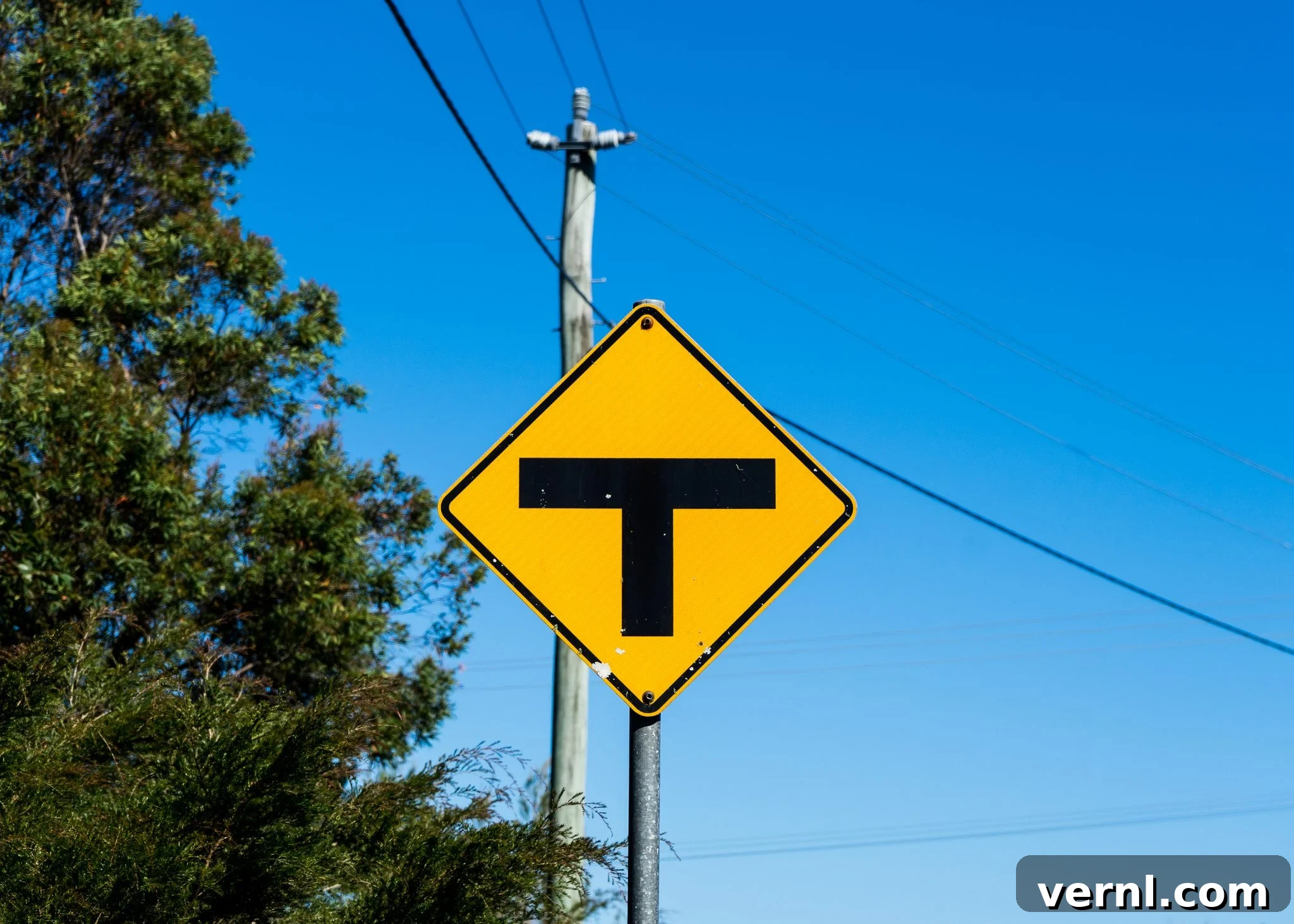
Unless you’re a seasoned traffic engineer with an encyclopedic knowledge of roadway regulations, or perhaps a new driver fresh from studying for your learner’s permit, you likely don’t have the meaning of every single street sign memorized. Most drivers are familiar with the essential ones – the prominent stop signs, the crucial yield signs, and those signs that punctuate their daily commute. However, the vast and varied world of traffic signage can present unexpected challenges. What happens when you encounter a sign that looks unfamiliar, perhaps resembling a piece from the classic game Tetris? This peculiar “Tetris road sign” can be puzzling, but understanding its message is vital for navigating the roads safely.
Before we delve into the specific symbols that make up the “Tetris piece” on these unique road signs, it’s essential to first grasp the fundamental principles of road sign design. The color and shape of a sign are not arbitrary; they are critical elements that immediately convey a broad category of information to drivers, even before the specific symbol or text is processed. In the case of the Tetris road sign, its distinctive yellow diamond shape provides significant clues about its purpose and urgency. Let’s explore what these foundational characteristics indicate.
Decoding Road Signs: The Language of Color and Shape
Road signs are designed for instant recognition and clear communication, transcending language barriers through universal symbols, colors, and shapes. This standardized approach ensures that drivers, regardless of where they are, can quickly interpret critical information. The “Tetris road sign” is no exception to these fundamental design principles, employing both color and shape to convey its primary message.
The Significance of Yellow: A Universal Warning
According to authoritative sources like the Virginia Department of Motor Vehicles (DMV), numerous factors contribute to the strategic design of every road sign. Among these, different colored road signs are specifically chosen to convey distinct types of information, creating a visual shorthand for drivers. Yellow signs, such as the intriguing “Tetris-shaped” road signs, universally serve as a prominent warning. They signal to drivers that there is an impending hazard, a change in road conditions, or an unusual situation ahead that requires increased caution and attention.
Yellow is meticulously chosen for warning signs due to its high visibility, especially during daylight hours and against various backgrounds. Its bright hue stands out effectively, drawing the driver’s eye to potential dangers such as curves ahead, slippery roads, pedestrian crossings, or, as in our case, unusual intersection layouts. This immediate visual cue prepares the driver to anticipate and react to conditions that might not be immediately apparent, significantly enhancing road safety. Unlike regulatory signs (which are often white) that dictate rules, or guide signs (which are green) that provide directional information, yellow signs are purely proactive, alerting you to a potential issue before you encounter it directly.
The Importance of Shape: Instant Recognition on the Road
Just as color plays a pivotal role in signaling the meaning of a sign, its geometric shape is equally crucial for rapid interpretation, often even before the driver can read any text or fully discern a symbol. The shape of a road sign provides an instantaneous identifier, a design choice specifically engineered to aid quick recognition, even in adverse conditions like heavy rain, fog, or low light, or if the sign is partially obscured.
- Octagon (Eight-Sided): The stop sign is uniquely an octagon. This distinct shape ensures that drivers can instantly recognize a “STOP” command, even from a distance or if the sign’s color has faded, allowing for a swift and decisive reaction. It’s the only sign of its kind, making its message unmistakable.
- Pentagon (Five-Sided): Pentagonal signs are reserved exclusively for school zone warnings and school crossings. This unique shape immediately alerts drivers to the presence of children and the need for extreme caution and reduced speed in these areas.
- Triangle (Three-Sided, Pointing Down): The inverted triangle is the universally recognized symbol for a yield sign. Its shape instantly communicates the requirement to give way to other traffic, preparing drivers to slow down and stop if necessary.
- Diamond (Four-Sided): Diamond-shaped signs, like our focus, the “Tetris road sign,” are consistently used for general warnings. This shape indicates a potential hazard or unusual condition ahead that requires the driver’s attention and often, a reduction in speed. Other common diamond signs warn of curves, narrow bridges, or deer crossings.
- Rectangle/Square: Most other signs, including many regulatory signs (like speed limits or no-passing zones) and guide signs, are typically squares or rectangles. For these signs, drivers must rely more heavily on the specific color, text, and symbols to fully understand their message, as the shape itself is less unique.
Thus, when you encounter a “Tetris road sign,” its yellow color unequivocally states, “Warning!” and its diamond shape reinforces this message, signaling that you are approaching a situation that demands your heightened awareness and preparation.
What Does the “Tetris Road Sign” Truly Mean? Unraveling the Symbols
Having established that “Tetris road signs” are yellow diamonds, firmly placing them in the category of warning signs, we can now turn our attention to the specific symbols embedded within them. Not all road signs feature lettering; many, including these distinctive “Tetris-shaped” signs, rely entirely on graphic symbols to convey their message. This is where the resemblance to Tetris pieces becomes apparent, as these symbols visually depict the upcoming road configuration.
Warning: An Unusual Intersection Ahead
At its core, the “Tetris road sign” is a crucial warning about an unusual, non-standard, or complex intersection situated just ahead. These are not your typical four-way stops or simple T-junctions; instead, they represent junctions where the angles are irregular, the number of intersecting roads might be unconventional, or the layout could be offset or staggered in a way that is not immediately intuitive. Such intersections can be confusing, increase the risk of collisions, and demand a higher degree of driver attention and decision-making.
The explicit purpose of these signs is to give drivers advance notice, allowing them sufficient time to anticipate the unusual layout, reduce speed, and mentally prepare for the maneuvers required. By visually representing the unique geometry of the intersection, the sign aims to prevent last-minute surprises, reduce driver hesitation, and ultimately enhance safety for all road users. Ignoring such a warning could lead to misjudgments, improper lane positioning, or unexpected encounters with cross-traffic.
Interpreting the Symbols: A Visual Guide to Intersections
The exact shape of the “Tetris piece” on the sign is a direct, simplified representation of the road you are currently on and how other roads will intersect with it. Each symbol is a miniature map, guiding your expectations for the upcoming junction:
-
The Cross or Plus-Sign Symbol: A Four-Way Intersection
If the symbol on your “Tetris road sign” resembles a cross or a plus sign, it indicates that you are approaching a four-way intersection. While this might sound standard, the “unusual” aspect typically refers to specific characteristics that differentiate it from a typical right-angle intersection. This could mean:- Staggered Intersections: Where the intersecting roads are slightly offset, meaning cross-traffic might not come from a perfectly opposite direction.
- Skewed Angles: The roads might not meet at 90-degree angles, creating unusual sightlines or turning radii.
- Unequal Priority: While a four-way, one of the intersecting roads might have different right-of-way rules or merge points that require extra vigilance.
Drivers should prepare for traffic approaching from multiple directions and be ready to observe right-of-way rules, which might be governed by stop signs, traffic lights, or yield signs at the actual junction.
-
The Three-Legged Symbol: A Three-Way or Y-Intersection
A symbol depicting three distinct legs signifies a three-way intersection. These can take several forms:- Y-Intersections: Where two roads merge into one, or one road splits into two, often at acute angles. These require careful observation of merging or diverging traffic patterns.
- Offset T-Intersections: Similar to a T-intersection, but where the intersecting road is not perfectly perpendicular or is slightly offset, making the junction less straightforward.
In a three-way intersection, you’ll need to be especially mindful of traffic entering or exiting the main thoroughfare from a single side. These junctions can sometimes have complex yield scenarios or require sharp turns.
-
The T-Shaped Symbol: A T-Intersection with a Dead End Ahead
If your “Tetris-shaped” road sign prominently displays a T-shaped symbol, it carries a very specific and critical message: you are approaching a T-intersection where the road you are currently on ends. You cannot continue straight through this intersection because the roadway terminates. Instead, you will be required to turn either left or right. This warning is particularly important to prevent drivers from accidentally driving off the road or into an unexpected obstruction at what might otherwise appear to be a continuous path. It demands a clear decision and maneuver to avoid a hazardous situation.
Rare Cases: Custom Road Signage
While the symbols described above cover the vast majority of “Tetris road signs,” there might be extremely rare instances where you encounter a highly specialized, custom-designed sign. These are typically commissioned by local authorities for uniquely intricate or hazardous intersections that defy standard symbolic representation. However, even in these rare cases, the fundamental principles remain: the sign will almost certainly be a yellow diamond, signaling a warning, and its symbol will strive to graphically represent the unusual road layout. With a foundational understanding of road sign principles, you can generally decipher the intent of such unique warnings.
Driving Safely at “Tetris Sign” Intersections
Understanding the meaning of a “Tetris road sign” is just the first step; the true value lies in how you apply this knowledge to your driving. These signs are placed strategically to mitigate risks associated with unexpected road configurations. Here’s how to approach such intersections with enhanced safety and confidence:
- Anticipate and Slow Down: As soon as you see a yellow diamond “Tetris” warning sign, immediately reduce your speed. This gives you more time to process the information, observe the actual road layout, and react appropriately. Aggressive driving into an unknown or complex intersection is a recipe for disaster.
- Read the Road, Not Just the Sign: While the sign provides an excellent heads-up, it’s crucial to visually scan the intersection itself as you approach. Look for additional clues such as pavement markings (arrows, yield lines, stop bars), traffic lights, or supplementary regulatory signs (e.g., “Yield Ahead” or “Stop Ahead”).
- Observe Traffic Patterns: Pay close attention to traffic flowing from all directions indicated by the sign’s symbol. In unusual intersections, traffic might merge, diverge, or cross in unexpected ways. Be particularly vigilant for vehicles that might not be following standard right-of-way rules or seem confused themselves.
- Prepare for Maneuvers: Based on the symbol and your destination, mentally prepare for the required turn, merge, or yield. Signal your intentions early and ensure you are in the correct lane well in advance. Hesitation at complex intersections can be dangerous.
- Practice Defensive Driving: Always assume other drivers might not understand the intersection or might make errors. Maintain extra following distance, avoid blind spots, and be ready to brake or take evasive action if necessary.
- Be Aware of Your Surroundings: Look for pedestrians, cyclists, and other vulnerable road users who might also be navigating the complex junction. Their movements can be unpredictable in such environments.
The Indispensable Role of Road Sign Standardization
The consistent design and meaning of road signs, including the “Tetris road sign,” are not accidental. They are the result of stringent national and international standardization efforts. In the United States, for instance, the Manual on Uniform Traffic Control Devices (MUTCD) sets the standards for all traffic signs, signals, and pavement markings. This comprehensive guide ensures that a “STOP” sign means the same thing in California as it does in New York, and that a yellow diamond warning sign conveys the same urgency across all states.
This standardization is critical for several reasons:
- Enhanced Safety: Uniformity eliminates confusion, reduces driver reaction time, and minimizes misinterpretations, directly contributing to a lower incidence of accidents.
- Facilitates Travel: Drivers can travel across different regions, states, and even countries with confidence, knowing that the fundamental language of the road remains consistent.
- Efficient Traffic Flow: Clear and consistent signage helps drivers make timely decisions, which is essential for maintaining smooth traffic flow and preventing bottlenecks.
- Legal Enforcement: Standardized signs provide clear legal guidelines for traffic enforcement, ensuring that rules are understood and applied uniformly.
The “Tetris road sign” fits perfectly within this standardized framework as a specific type of warning sign designed to address particular road complexities. Its adherence to the yellow diamond standard immediately communicates its function, making it an effective tool for preventing accidents at potentially hazardous intersections.
Conclusion: Empowering Drivers Through Understanding
The “Tetris road sign” might initially appear enigmatic, but its purpose is straightforward and crucial for safe driving. It is a yellow diamond, signifying a warning, and its internal “Tetris piece” symbol is a visual blueprint of an unusual or complex intersection ahead. Whether it’s a four-way junction with staggered entries, a challenging three-way merge, or a T-intersection that requires an obligatory turn, these signs provide invaluable advance notice.
Understanding these unique warnings empowers you as a driver. It allows you to anticipate potential challenges, adjust your speed, and prepare your maneuvers well before you are caught off guard. By heeding the message of the “Tetris road sign” and approaching such intersections with caution and informed awareness, you contribute significantly to your own safety and the safety of everyone else on the road. Stay vigilant, stay informed, and enjoy a safer journey.
Source
Signs, Signals, and Parking Pavements, Virginia Department of Motor Vehicles.