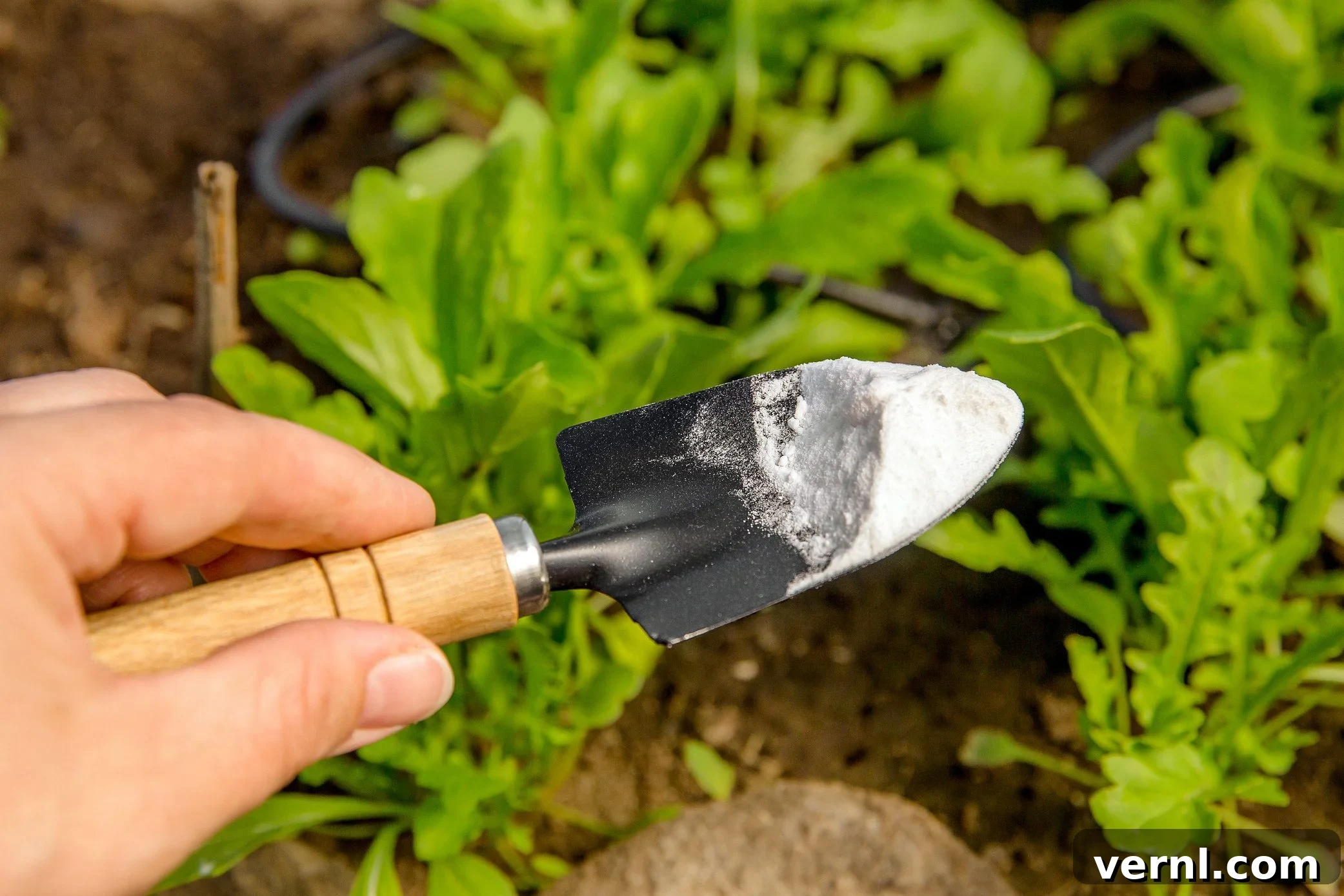
In the vast realm of home remedies and natural solutions, certain kitchen staples often achieve legendary status. Much like the widely acclaimed castor oil or the incredibly versatile apple cider vinegar, baking soda, also known as sodium bicarbonate, frequently appears on lists of cure-alls. It’s lauded for its purported benefits in everything from household cleaning and deodorizing to addressing minor health ailments. Gardeners, too, have enthusiastically embraced this unassuming white powder, often promoting it as a safe, healthy, and eco-friendly method to tackle common gardening challenges such as persistent pests and debilitating plant diseases.
However, with the constant influx of gardening tips and the growing interest in organic solutions, a critical question inevitably arises: Is the widespread acclaim for baking soda in the garden simply another appealing hack that’s too good to be true? While the allure of a simple, inexpensive solution to complex gardening problems is undeniably strong, a deeper, evidence-based investigation into its actual efficacy and potential drawbacks is absolutely essential for any responsible gardener.
“Like most things in gardening, the answer is, it depends,” explains Em Shipman, executive director of KidsGardening.org. Her organization focuses on educating gardeners of all ages about effective and sustainable practices. “Overall, in a pinch, there are certainly some very specific and limited uses for baking soda, and when applied correctly and judiciously, it can offer some localized benefits. However, it’s absolutely crucial to approach its use with a clear understanding of its inherent limitations and potential risks to your garden’s ecosystem.”
Shipman continues with a vital cautionary note that highlights the delicate balance in gardening: “The very chemical properties that make baking soda effective for certain tasks can also be its undoing in other contexts. In the same way it might be used to deter specific insect pests or help control minor weed outbreaks in very confined areas, incorrect application can just as easily harm beneficial insects that are vital for maintaining a healthy ecosystem, or even burn desirable landscape plants if concentrations are too high or the application method is inappropriate.” Understanding this fine line between aid and detriment is paramount to responsible and successful gardening practices.
Unpacking Baking Soda: Its Chemistry and Influence on Gardens
At its chemical core, baking soda is sodium bicarbonate (NaHCO₃), a simple alkaline salt compound. When this familiar white crystalline powder is dissolved in water, it undergoes a chemical dissociation, breaking apart into sodium ions (Na⁺) and bicarbonate ions (HCO₃⁻). This fundamental chemical transformation is key to understanding its potential effects and limitations when introduced into the garden environment.
The Dual-Edged Nature of Sodium for Plant Health
Sodium, in very minute, almost trace quantities, is indeed a micronutrient that some plants require for specific metabolic functions. However, the critical emphasis here is on “minute quantities.” Plants, across the board, are generally very sensitive to excessive sodium levels. High concentrations of sodium, whether present in the soil or directly applied to plant foliage, can lead to a severe condition known as ‘salinity stress.’ This stress fundamentally interferes with a plant’s ability to absorb essential water and nutrients, even if these resources are abundantly present in the soil. Essentially, the high salt concentration in the soil or on the plant surface draws water out of the plant roots and cells through osmosis, leading to rapid dehydration, stunted growth, distinctive leaf burn, and in severe instances, irreversible plant death. This osmotic imbalance is one of the primary and most significant concerns when considering baking soda as a widespread or frequent garden treatment.
The Critical Role of pH: A Defining Factor for Plant Vitality
Another incredibly crucial aspect of baking soda’s chemistry, particularly relevant to gardening, is its inherent alkalinity. When baking soda is mixed with water, the resulting solution typically yields a pH level of approximately 8.3. For the vast majority of garden plants, optimal growth and nutrient uptake occur within a slightly acidic to neutral pH range, typically spanning between 6.0 and 7.0. A pH of 8.3 is significantly alkaline and falls well outside the preferred range for most fruits, vegetables, ornamental plants, and even many turf grasses. Soil pH directly and profoundly impacts the availability and solubility of essential nutrients to plants. When the pH is too high (alkaline), certain vital micronutrients, such as iron, manganese, and zinc, become less soluble and thus less accessible for plant uptake. This often leads to visible nutrient deficiencies, characterized by chlorosis (a distinct yellowing of leaves), stunted growth, and an overall decline in plant vigor, even if these nutrients are technically present in the soil. Therefore, while baking soda might appear innocuous as a common kitchen item, its powerful chemical properties—specifically its elevated sodium content and high pH—mandate an extremely cautious and informed approach when contemplating its application within the delicate and complex ecosystem of a garden.
Baking Soda as a Weed Killer: An Application with Significant Limitations
The enticing prospect of using an everyday kitchen staple to eradicate stubborn weeds is undeniably appealing to many gardeners seeking natural alternatives. And, from a purely technical standpoint, baking soda can indeed kill plants, including various types of weeds. The mechanism of action is relatively straightforward: direct application of dry baking soda onto plant foliage, or spraying a highly concentrated solution, delivers a lethal dose of sodium directly to the plant tissue. This overwhelming concentration causes the plant cells to desiccate rapidly and severely disrupts their internal physiological processes, ultimately leading to the weed’s demise.
However, the practical application of baking soda as a broad-spectrum weed killer, particularly within cultivated garden beds, is far from an ideal solution. The very solubility of sodium bicarbonate, which makes it effective against an intended weed, also poses a significant and often unavoidable risk to desirable plants nearby. When applied to weeds, especially in a soluble form, the sodium can readily leach into the surrounding soil. As it dissolves and spreads through the soil profile, it can easily reach the root zones of your prized flowers, vegetables, or shrubs, causing severe damage, inhibiting growth, or even inadvertently killing them. This inherent lack of selectivity makes it an extremely hazardous choice for targeted weeding within an actively planted area where beneficial plants are present.
Em Shipman wisely advises, “If you have some small weeds emerging in the cracks of a sidewalk, patio, or walkway—areas where you’re looking to eliminate growth with less-harmful chemicals and where the surrounding environment is hardscape—baking soda can be a somewhat useful solution, especially when the weeds are young and contained. The impermeable environment of pavement cracks significantly minimizes the risk of the sodium spreading to other desirable plants.” She further emphasizes the most reliable approach: “But for those persistent weeds nestled amongst your cultivated plants in garden beds, the most reliable, safest, and truly effective method for your entire garden’s long-term health remains the tried-and-true approach: simply pulling them by hand. This ensures that only the unwanted plants are removed, without introducing potentially harmful chemicals, altering crucial soil chemistry, or damaging your valuable crops.”
Baking Soda for Fungal Diseases: A Mixed Bag of Inconsistent Results
The internet is a vast repository of homemade recipes promising to cure or prevent a wide variety of common plant diseases, with baking soda frequently featuring as a key ingredient, particularly for fungal infections like the ubiquitous powdery mildew. The theoretical basis behind its use is that the alkaline nature of baking soda can temporarily alter the pH on the leaf surface, thereby creating an environment that is less hospitable for fungal spores to germinate and proliferate. Some formulations also suggest that the bicarbonate ions themselves can disrupt the cell walls of fungal pathogens, rendering them ineffective.
However, rigorous scientific backing for these widespread claims is often weak, inconsistent, or altogether inconclusive. As Shipman points out with a critical perspective, “There is little strong, peer-reviewed scientific evidence to conclusively confirm or deny the broad efficacy of these homemade formulas and their consistent ability to cure or prevent a wide range of fungal diseases across different plant species and environmental conditions.” While a very dilute baking soda spray *might* offer a temporary deterrent or slightly slow the spread of certain superficial fungal issues, such as powdery mildew, especially when applied as a preventative or at the very first sign of infection, it is absolutely crucial to understand its severe limitations.
“A baking soda spray might provide a temporary measure in a pinch, and it can potentially slow the initial spread of some fungal diseases, particularly if caught early,” Shipman adds. “However, it will not cure already existing, established damage caused by fungal infections, and there’s a significant and ever-present risk that too strong a concentration, or frequent and improper application, will actually burn leaves, causing phytotoxicity and further stressing an already compromised plant.” This burning can manifest as unsightly brown spots, scorched leaf edges, a general decline in overall leaf health, or even permanent tissue damage, which can often be more detrimental to the plant than the fungal infection itself.
For more reliable, scientifically proven, and sustainably effective fungal disease control that is also safer for the environment and the beneficial inhabitants of your garden, consider well-established organic alternatives. These include products such as neem oil, which acts as both an antifungal agent and provides insecticidal properties, making it a versatile and effective organic solution. Other effective options include specific organic fungicides formulated for particular diseases, which have undergone rigorous testing for both efficacy and safety for plants, pollinators, and beneficial microorganisms. Prevention through good air circulation, proper watering, and choosing resistant varieties remains the best defense.
Baking Soda for Insect Pest Control: The Real Active Components
Many eager DIY gardening enthusiasts frequently turn to baking soda as a key ingredient in homemade insecticide sprays. These concoctions often combine baking soda with water and a surfactant like common dish soap or horticultural oil. The underlying logic here often stems from a general belief that “natural is always better” or a fundamental misunderstanding of how these complex mixtures truly work against pests.
While such homemade mixtures might appear to be somewhat effective against certain soft-bodied insects like aphids, spider mites, or whiteflies, it is highly probable that baking soda itself is not the primary active ingredient doing the actual work of pest control. As Em Shipman clarifies with expert insight, “It’s far more likely that the soap or the horticultural oil in these DIY solutions is doing most of the work to deter or control the insect population, rather than the baking soda itself.”
Understanding the Critical Role of Surfactants
Soaps (specifically insecticidal soaps) and horticultural oils act as powerful surfactants. This means they significantly reduce the surface tension of water, allowing the solution to spread and coat objects more effectively. When these substances are sprayed directly onto insects, they can thoroughly coat their delicate bodies, effectively suffocating them by blocking their breathing pores (known as spiracles). Furthermore, soaps and oils can disrupt the waxy protective layer of an insect’s exoskeleton, leading to rapid dehydration and eventual death. Baking soda, on the other hand, does not possess these specific physical mechanisms of action against insects in any significant or reliable way. While extremely high concentrations might theoretically have some desiccant effect, it is generally not the main insecticidal component or the reason for any perceived effectiveness in these popular DIY recipes.
For truly effective, safe, and responsible insect pest management, it is generally much better to use products specifically designed, tested, and approved for insect control. This includes commercially available insecticidal soaps, pure neem oil, or other organic pesticides that are formulated to target specific pests without causing undue harm to beneficial insects, the broader environment, or human health. Adopting Integrated Pest Management (IPM) strategies, which prioritize prevention, thorough monitoring, and the use of the least toxic methods first, always represents the most sustainable, effective, and environmentally conscious approach to maintaining a healthy, pest-free garden.
Baking Soda and Compost Piles: A Temporary Mask, Not a Cure
Just as baking soda is famously utilized in refrigerators to absorb unwanted odors, some gardeners attempt to use it to “freshen up” smelly compost piles. The underlying principle is similar: baking soda (sodium bicarbonate) can react with and neutralize certain acidic gases and volatile organic compounds that often contribute to unpleasant smells in decomposing organic matter. If applied directly to the surface of the pile and thoroughly mixed in, it can indeed provide a temporary reduction in noticeable odor.
However, it is crucial to understand that this is typically a symptomatic treatment rather than a genuine cure for the underlying problem. In the vast majority of cases, foul odors emanating from a compost pile are a clear and direct indicator of an imbalance in the composting process itself. Specifically, unpleasant smells, which are often ammonia-like, sour, or sulfurous, usually arise from an excess of nitrogen-rich “green” materials (such as fresh grass clippings, kitchen scraps, or fresh manure) coupled with insufficient carbon-rich “brown” materials (like dry leaves, straw, shredded newspaper, or wood chips).
When the nitrogen-to-carbon ratio in a compost pile is too high, and especially if the pile becomes excessively wet and compacted, it can quickly lead to anaerobic conditions (a severe lack of oxygen). Under these oxygen-deprived circumstances, different types of microorganisms take over the decomposition process, producing noxious and foul-smelling gases as undesirable byproducts. Simply masking these odors with baking soda does not address the core issue of an unbalanced or poorly aerated compost pile, which will continue to decompose inefficiently and smell bad.
As Shipman insightfully recommends, “Adding adequate carbon-rich materials, such as dead leaves, shredded newspaper, wood chips, or straw, is a far better, more sustainable, and truly effective alternative to merely masking odors.” She elaborates on the multitude of benefits: “This proactive approach will not only absorb the excess liquids that often contribute to unpleasant odors and foster anaerobic conditions but, more importantly, it will help re-establish and maintain the proper carbon-to-nitrogen ratio. This balanced environment creates the ideal conditions for the beneficial aerobic microbes that efficiently break down organic matter, naturally stop the smell, and ultimately produce high-quality, nutrient-rich finished compost that your garden will absolutely thrive on.” Regular turning of the compost pile is also vital, as it introduces oxygen, prevents anaerobic pockets from forming, and promotes healthy, odorless decomposition.
Baking Soda as a Fertilizer: A Detrimental Myth to Dispel
The notion that baking soda could somehow serve as a beneficial fertilizer for garden plants is a persistent and unfortunately misleading myth within some gardening circles. This idea likely stems from a fundamental misunderstanding of plant nutrient requirements and the specific chemical composition of baking soda. While it is true that sodium is a micronutrient needed by a select few plants, and even then only in incredibly small, almost trace, amounts, advocating for baking soda as a general-purpose fertilizer is ill-advised and potentially quite harmful to most garden plants.
As previously discussed, baking soda’s primary components are sodium and bicarbonate ions, and its solution is notably highly alkaline. Introducing significant or regular amounts of sodium into the soil will almost certainly lead to a detrimental excess of this element. Elevated sodium levels can be toxic to the vast majority of plants, severely inhibiting their ability to absorb crucial water and essential nutrients. This can lead to a cascade of negative effects including stunted growth, visible leaf scorch or burn, and ultimately, even plant death. Furthermore, the high pH of baking soda can significantly disrupt the delicate and finely tuned soil chemistry, making other essential nutrients less soluble and thus less available for uptake by plant roots, even if those nutrients are physically present in the soil in adequate quantities. This problematic condition is frequently referred to as ‘nutrient lockout,’ where nutrients are present but inaccessible to plants.
“A much better and truly effective way to provide plants with the diverse array of nutrients they need for robust growth, vibrant health, and bountiful production is by regularly incorporating well-rotted compost or utilizing other natural, balanced organic fertilizers,” advises Shipman. Organic soil amendments like mature compost, aged animal manure, or balanced granular organic fertilizers release nutrients slowly and steadily over time. Critically, they also improve the overall soil structure, enhance water retention, and foster a healthy, thriving microbial ecosystem within the soil. These methods support long-term soil fertility and promote plant vitality in a sustainable manner, completely unlike the short-term, potentially detrimental effects of adding baking soda to your garden soil.
Baking Soda and Sweeter Tomatoes: An Unproven and Risky Claim
Among the most enduring and widely circulated gardening myths involving baking soda is the intriguing claim that sprinkling it around the base of tomato plants will somehow result in significantly sweeter fruit. The purported logic behind this popular hack suggests that because baking soda is an alkaline substance, its application would reduce the acidity of the soil directly surrounding the tomato roots. A less acidic soil, the theory extrapolates, would then lead to less acid being taken up by the plant, thereby producing tomatoes with a higher sugar-to-acid ratio and, consequently, a noticeably sweeter flavor profile.
Unfortunately, despite its widespread appeal and persistent presence in gardening lore, there is absolutely no clear, compelling scientific evidence to support this claim. Em Shipman unequivocally states, “There is no clear scientific evidence for this particular claim.” The sweetness and complex flavor characteristics of tomatoes are intricate traits influenced by a multitude of factors, the most significant of which are primarily genetic. The specific variety of tomato chosen for cultivation plays the most crucial and defining role in determining its inherent sweetness, acidity, and overall flavor profile. Beyond genetics, numerous environmental factors such as ample sunlight exposure, consistent and appropriate watering practices, balanced soil nutrients, and proper soil type all contribute significantly to the development of optimal fruit flavor.
While soil pH undeniably influences nutrient availability for plants, directly and drastically altering it with baking soda in a way that would significantly impact fruit sweetness is highly unlikely and, critically, carries considerable risks to plant health. As Shipman further explains, “It is unlikely that baking soda would have any significant or measurable effect on tomato sweetness, and critically, it may cause serious problems with excess soil sodium.” Artificially raising the soil pH and increasing sodium levels around sensitive tomato plants can severely hinder their ability to absorb vital water and essential nutrients, leading to stressed plants, stunted growth, reduced yields, and potentially smaller, less flavorful, or even damaged fruit. Focusing on selecting naturally sweet tomato varieties, providing excellent growing conditions, and maintaining balanced soil health through proven organic practices will yield far superior results than relying on unproven and potentially harmful baking soda applications.
FAQ: Common Questions About Using Baking Soda in the Garden
Is baking soda safe for all plants?
No, baking soda is absolutely not safe for all plants, and its widespread or indiscriminate use in the garden can be quite detrimental. The high sodium content and significantly alkaline pH of baking soda, especially when mixed with water, can harm or even kill many plants. This is particularly true for young, delicate seedlings, or plant species that are naturally sensitive to high salt concentrations or alkaline conditions. It can cause visible leaf burn, inhibit crucial water and nutrient uptake, and severely disrupt the overall soil chemistry that is absolutely essential for healthy and vigorous plant growth. Consequently, it should be used with extreme caution, very sparingly, and only for very specific, limited applications where its effects can be carefully controlled and isolated from desirable plants.
How often should I apply baking soda to my garden?
Generally speaking, you should not regularly apply baking soda to your garden beds or directly onto the foliage of most plants. Due to its high sodium levels and pronounced alkaline pH when mixed with water, frequent or indiscriminate application can lead to a harmful buildup of salts in the soil and create an unfavorable pH environment that hinders nutrient absorption and overall plant health. Instead of relying on regular baking soda applications, it is far more advisable to focus on proven, sustainable organic gardening practices. These include maintaining healthy soil structure and fertility with regular additions of compost, providing adequate and consistent water, ensuring proper drainage, and utilizing targeted, scientifically-backed solutions for specific pest and disease control issues as they arise.
Can baking soda harm beneficial insects?
Yes, highly concentrated baking soda solutions, or even the addition of surfactants like soap or horticultural oil often found in DIY sprays, can indeed harm beneficial insects such as ladybugs, predatory mites, lacewings, and crucial pollinators like bees. While baking soda itself may not be a direct insecticide in the same manner as some chemical pesticides, the indiscriminate spraying of any foreign substance on plant foliage can negatively affect these helpful creatures that are vital for natural pest control, pollination, and maintaining a balanced ecosystem within your garden. Always prioritize and implement methods that protect and actively encourage beneficial insect populations to thrive.
About the Expert
Em Shipman is the executive director of KidsGardening.org, a prominent non-profit organization dedicated to fostering a love for gardening and creating invaluable opportunities for children and youth to learn and grow through hands-on gardening experiences. Her extensive expertise lies in promoting sustainable, environmentally friendly gardening practices and effectively educating gardeners of all ages on safe, effective, and scientifically sound methods for plant care and ecological stewardship.