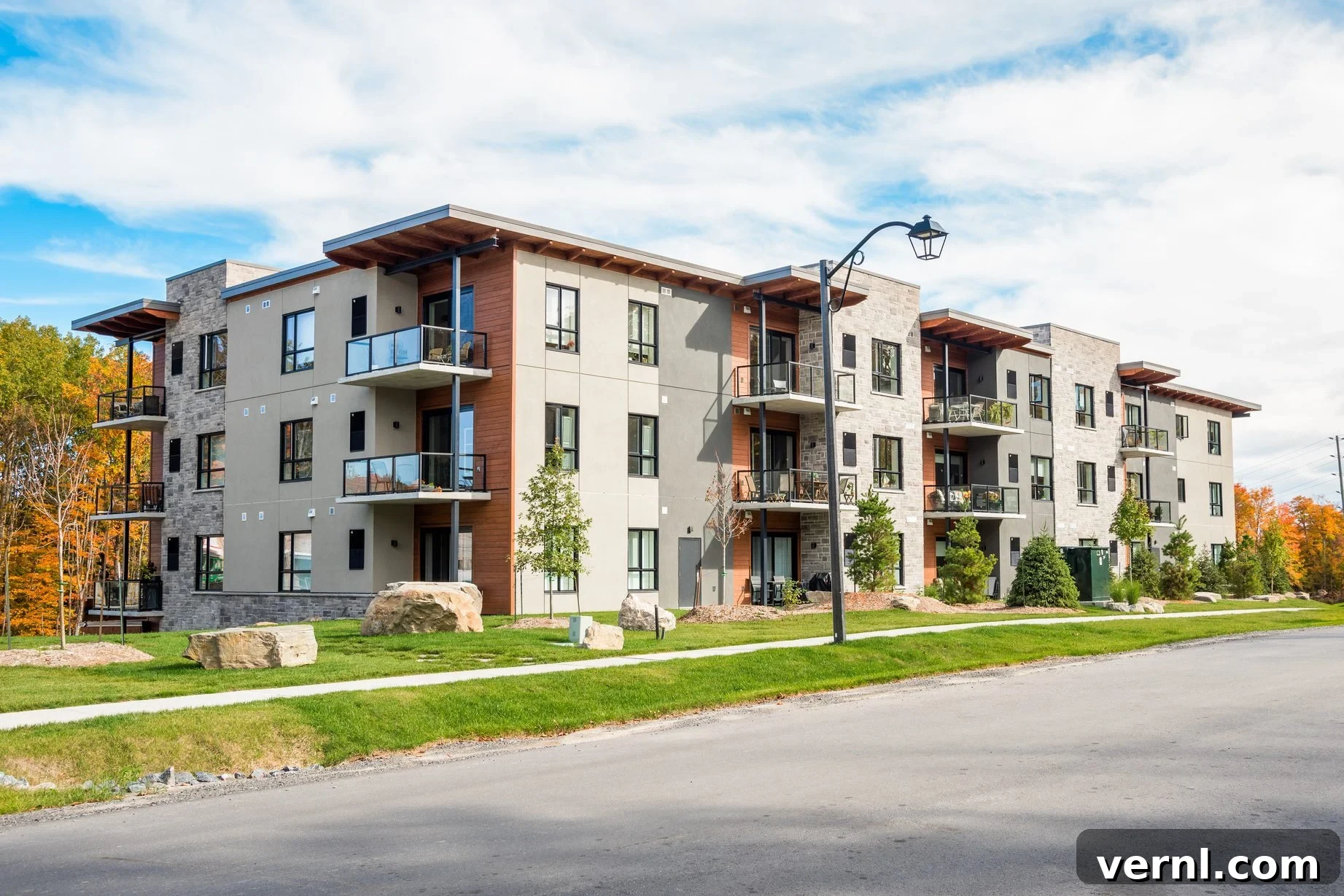
Navigating the world of housing options can often feel like deciphering a complex puzzle, especially when comparing what appear to be similar choices from the outside. Take apartments and condominiums, for instance. From the street, many multi-unit residential buildings look strikingly similar, making it challenging to differentiate between an apartment complex and a condominium community. However, beneath this shared exterior lies a fundamental distinction that profoundly impacts everything from finances and responsibilities to lifestyle and long-term investment potential. At its core, the key difference is straightforward: you rent an apartment, while you own a condo.
This simple division between renting and owning sets the stage for a multitude of unique characteristics for each housing type. When you step inside and explore various units, the implications of ownership become immediately apparent. Units within an apartment complex are often designed for uniformity and ease of management. This means you’ll typically find consistent features across all units—standard plumbing fixtures, similar carpeting, and sometimes even a consistent furniture package if rented furnished. This is a deliberate choice made by the landlord or property management company, who holds the ultimate authority over major design decisions and the overall aesthetic of the building.
Condominium units, conversely, exude a distinct personality, largely because each is individually owned. While the architectural footprint and basic layout of units within a condo building may share common elements, owners are empowered to personalize their living spaces. This freedom extends to choices like replacing carpeting, painting walls in their preferred hues, upgrading kitchen appliances, and even, in some cases, undertaking structural modifications, provided these changes adhere to the community’s rules and regulations. This ability to imbue a home with individual style is a significant draw for many prospective condo owners.
To gain a deeper understanding of these distinctions and help prospective residents make informed decisions, we consulted with Paul Lazaga, a seasoned real estate broker from California. His insights offer valuable perspectives on the intricacies of renting an apartment versus the commitments of owning a condominium, providing essential guidance for anyone weighing these popular housing options.
Condo vs. Apartment: Understanding the Core Differences in Management and Lifestyle
The operational and managerial structures are perhaps the most significant points of divergence between apartments and condominiums, directly impacting residents’ daily lives and long-term financial commitments. In an apartment complex, a single entity—the landlord or a property management company—assumes full responsibility for the upkeep and maintenance of the entire property, including individual units and common areas. The costs associated with these services are invariably factored into the monthly rent paid by tenants. This landlord-tenant relationship defines most aspects of residing in an apartment, from the initial move-in to daily living and eventual move-out. Rules governing the use of the premises, including shared amenities such as swimming pools, fitness centers, or communal lounges, are meticulously detailed within the legally binding lease agreement that tenants sign.
Tenants occupy an apartment for a specified duration, typically a year, as stipulated in their lease. Upon the expiration of this term, they must sign a new lease to continue their tenancy. This renewal process often presents an opportunity for landlords to adjust the rent, a common occurrence, especially in highly competitive or “hot” rental markets where demand consistently outstrips supply. This dynamic can lead to unpredictable housing costs and a lack of long-term financial stability for renters.
Condominium buildings, by contrast, operate under a fundamentally different ownership model. The building and its common areas—such as lobbies, hallways, roofs, exteriors, and shared amenities—are collectively owned by all the individual unit owners. These owners form what is known as the Homeowners Association (HOA), a legally constituted entity responsible for the collective management and maintenance of the property. The HOA’s board of directors, elected from among the owners within the complex, oversees the maintenance of the grounds, establishes community rules, and manages the budget funded by monthly HOA fees paid by each owner.
A crucial advantage for condo owners is the inherent stability that comes with ownership. Because each individual owns their unit, they are not subject to eviction or arbitrary rent increases, provided they remain current with their mortgage payments and HOA fees. This provides a sense of security and permanence that renting simply cannot offer. While apartment dwellers can simply call their landlord when something needs fixing within their unit, condo owners are generally responsible for maintaining and repairing the interior of their own units. However, this responsibility can vary significantly based on the specific HOA’s governing documents.
As real estate broker Paul Lazaga emphasizes, “It’s very important to read the HOA rules, so you don’t get blindsided. Some HOAs cover major repairs like window replacement and some don’t. Laws governing HOAs vary from state to state.” This highlights the critical necessity for prospective condo buyers to thoroughly review the HOA’s Covenants, Conditions, and Restrictions (CC&Rs) and bylaws before committing to a purchase. Understanding the scope of HOA responsibilities versus individual owner responsibilities is paramount to avoiding unexpected expenses and ensuring a clear understanding of what you are financially and logistically accountable for. It’s also insightful to consider the nuances between an apartment and a house, as each presents its own unique set of responsibilities and benefits.
Condo Costs vs. Apartment Costs: A Financial Perspective
The financial implications of choosing between a condo and an apartment represent one of the most significant decision points, largely because a condo purchase is a substantial real estate investment. Moving into a condo typically entails a higher initial financial outlay compared to renting an apartment, but it also offers the potential for long-term wealth building and equity appreciation. According to Paul Lazaga, prospective condo owners can generally anticipate their property appreciating in value by an average of 3% annually over several years. “It fluctuates,” Lazaga notes. “Some years the appreciation is less while other years it’s more. But 3% is a reliable long-term average.” This steady appreciation makes a condo an attractive and often wise investment, particularly for first-time homebuyers looking to enter the property market and build equity.
The initial cost to purchase a condo typically includes a down payment, which commonly ranges around 20% of the property’s purchase price. Lazaga suggests that with a representative national median price of $500,000 for a condo, the average down payment would be approximately $100,000. Beyond this initial capital, owners face ongoing monthly expenses. The average monthly mortgage payment can be around $3,000 at prevailing interest rates, to which monthly HOA fees must be added. These fees, which Lazaga estimates to range from $200 to $600 per month, cover the maintenance of common areas, shared amenities, and often include master insurance policies for the building’s exterior. Additionally, condo owners are responsible for property taxes and their individual homeowner’s insurance policy.
Despite these considerable costs, the financial benefits of condo ownership are compelling. With every mortgage payment, owners build equity in their property, effectively converting a housing expense into an accumulating asset. Coupled with the property’s potential for appreciation, this allows owners to grow their net worth over time. Furthermore, homeowners often benefit from tax deductions on the interest paid on their mortgage, offering another financial advantage that is unavailable to renters.
In contrast, the financial entry barrier for an apartment is considerably lower. When moving into an apartment, the primary upfront costs typically involve the first month’s rent, the last month’s rent (in some jurisdictions), and a security deposit. The amount of the security deposit is set by the landlord and is regulated by state and local laws. For instance, in California, landlords are permitted to collect up to three months’ rent as a security deposit for a furnished apartment. In California’s competitive rental market, where an average two-bedroom apartment might rent for $1,500, securing a furnished unit could require an upfront payment of $4,500 or more just for the security deposit, in addition to the first and last months’ rent. Beyond these initial payments, renters are responsible for their monthly rent and may also need to pay for utilities, internet, and trash pickup, depending on the terms outlined in their lease agreement. While these costs are ongoing, they typically do not contribute to asset building or offer the same tax benefits as homeownership.
Condo Owner vs. Apartment Tenant Responsibilities: A Matter of Control and Accountability
The delineation of responsibilities is a critical factor distinguishing apartment living from condo ownership, fundamentally influencing daily routines and long-term financial obligations. When you rent an apartment, your specific responsibilities are clearly articulated and legally binding within your lease agreement. This document serves as the ultimate guide to your obligations as a tenant and the landlord’s duties as the property owner.
Unless explicitly stated otherwise in the lease, apartment tenant responsibilities are typically limited to maintaining the interior of your unit in a clean and habitable condition and ensuring no damage beyond normal wear and tear occurs. Major repairs and maintenance items, such as replacing a faulty faucet, repairing a broken water heater, installing new carpeting, or addressing structural issues, fall squarely under the landlord’s purview. Similarly, the upkeep of the entire building and the property grounds—including common areas, landscaping, snow removal, garbage disposal services, and security measures—are generally covered by your monthly rent and managed by the landlord or property management company. This hands-off approach to maintenance is a significant appeal for many renters, offering peace of mind and predictable housing expenses without the added burden of unexpected repair costs.
Conversely, the responsibilities of condo owners are governed by the specific rules and bylaws of the Homeowners Association (HOA), an entity designed to manage the shared aspects of the community. HOAs typically take on many of the landlord-like services for the common areas, providing essential services such as grounds maintenance, comprehensive security, waste disposal, and upkeep of shared amenities like pools, gyms, and clubhouses. However, because an HOA is fundamentally a type of community governed by its residents, the specific scope of rules and responsibilities can vary considerably, depending on the unique characteristics of the building, its residents, and the amenities available.
A key distinction for condo owners is their individual accountability for the maintenance and repairs within their own unit. This includes everything from appliance failures and plumbing leaks to interior cosmetic updates. While some HOAs may cover certain major repairs to the building’s exterior components (like roofs or external walls) or specific structural elements, the onus for interior unit maintenance almost always rests with the owner. This can be viewed as a potential downside, as it introduces the possibility of unforeseen expenses. However, as Paul Lazaga pragmatically notes, “If you own a home, you have to pay for maintenance.” This sentiment underscores a fundamental aspect of homeownership: the costs of upkeep are an integral part of protecting and preserving your investment. Embracing these responsibilities is essentially the price you pay for the autonomy and long-term financial benefits that come with owning your living space.